As much as I love John Bromley’s songs (see #337), I would not have predicted that my blog featuring his classic “Weather Man” would be my second most popular of 2022. Well, as someone once said, “You might need a weatherman to know which way the blogs blow.”
“If You Are There With Me” is another wistful and wonderful song by Bromley. He recalls that “[t]wo well known session singers (Yvonne “Sue” and Heather “Sunny” Wheatman) brought the song to life with their counterpart melody. I don’t think I should claim credit for their counterpoint vocal lines. It was probably Graham Dee who came up with the idea for the counter harmony part.” (liner notes to Bromley’s Songs expanded edition of Sing).
349) Tony Worsley and the Fabulous Blue Jays — “Oh, How Can It Be?”
Tony’s ‘65 cover of the Birds’s (see #33, 99, 220) “How Can It Be” is “considered by many to be superior to the original” (Paul Culnane, http://www.milesago.com/artists/worsley.htm) and is “a savage take” on the song (Mike Star, http://rockasteria.blogspot.com/2012/07/). Alec Palao’s liner notes to the Hot Generation comp say that “[w]ith a guitar sound like cut glass, their cover . . . exaggerates the inherent power of the song, resulting in less an imitation and more a celebration.” I love the Birds, but the Blue Jays’s version truly soars, swoops and sings (and stomps)!
What is it about that Aussie beat? Mike Stax:
According to popular stereotypes, Australians prefer their beer strong and their football played by their own rules: hard’n’fast. It’s an attitude that frequently extends to their music. Rock’n’roll down under has long held a reputation for being hard, fast, loud and delivered with an untamed, youthful abandon analogous to the land itself. In Australia’s mid-60s beat scene this wild spirit flourished, manifesting itself in the music of hundreds of young bands, some of which, fortunately, made it onto vinyl. Unfortunately, with a few notable exceptions (the Easybeats, the Missing Links, the Masters Apprentices), most of these amazing records remain largely unknown and unreleased outside of their homeland. . . .
For a few years, no one soared higher than Tony Worsley & the Fabulous Blue Jays. Paul Culnane recounts that:
In the wake of the incredible success enjoyed by pioneering Aussie ‘beat’ acts Billy Thorpe & the Aztecs and Ray Brown & the Whispers in 1964, just about every local A&R man, artist manager and would-be talent scout in the country was on the lookout for similar acts . . . . [I]mpresarios . . . would take . . . seasoned groups and team them with a fresh-faced front man with the requisite pin-up appeal for the young ladies (remember — these were the “scream years” of Aussie pop . . . ). And so it was that Tony Worsley & The Fabulous Blue Jays, one of the most accomplished and exciting of these groups, came to be. Tony was born . . . in England . . . and emigrated . . . when he was 15. Tony had already set his sights on a show biz career [and] was determined to fulfill that dream in his adopted country. By day he worked as an apprentice rigger in the Brisbane dockyards, but at night he patrolled the dance halls, waiting for his chance to get up on stage . . . . “One time . . . some people in the crowd were yelling out for ‘Little Sister’, by Elvis, ‘cos it was big hit at the time … And I knew the words, so I got up. And the next minute I was on there for an hour, and that all started from there!” . . . Tony quickly developed into a consummate performer, gigging around Brisbane’s dance circuit . . . . His outrageously long collar-length hair, wild stage presence and repertoire of Merseybeat tunes . . . earned him his early nickname “Brisbane’s Beatle”. Tony had come to the attention of Ivan Dayman, a pop entrepreneur, and a budding ‘svengali’ figure . . . . Dayman’s offer of AU£35 per week . . . . was a huge salary for the times . . . as late as 1966, even the members of The Small Faces . . . were being paid just UK£20 per week each! . . . Dayman promoted the group in package extravaganzas up and down the coast . . . . [H]e soon gained a reputation as a wild man on and off the stage . . . . 1965 was . . . the peak of their meteoric career. . . . Probably the most notorious show from this period was the now-legendary 4BC Sound Spectacular concert in Brisbane in December 1965. [W]hen Tony and The Blue Jays hit the stage things had started to get out of hand, and by the time . . . The Easybeats came on a full-scale riot had broken out, with kids breaking down barriers . . . storming the stage and smashing chairs and equipment. Police stopped the Easys after only 17 minutes and . . . . the[y] only barely escaped the frantic fans, who stopped their ‘getaway’ car and stomped all over it . . . .
Oh, and Worsley reminisces that “to me it was never artistic or financial, it was always the chicks.” (liner notes to Hot Generation)
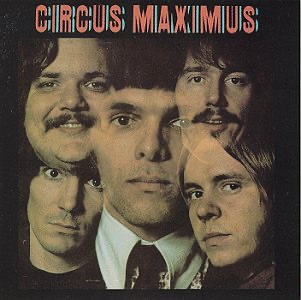
348) Circus Maximus — “You Know I’ve Got the Rest of My Life to Go”
Geoffrey Himes recounts that:
[Jerry Jeff Walker] was born Ronald Clyde Crosby on March 16, 1942, in Oneonta, N.Y. He joined the National Guard and went AWOL under the name of Jerry Ferris, thanks to the borrowed ID of a fellow guardsman [Who is he, Don Draper?!]. He hitchhiked around the country and wound up in Louisiana. “The folk music boom of the Fifties and Sixties barely touched New Orleans,” Chris Smither told me in 2014. “The Quorum Club on Esplanade had folk acts, and I used to go down there to hang out. This guy Jerry Ferris played there and I thought he was pretty good. Many years later I opened for him when he was calling himself Jerry Jeff Walker. But it was a fringe thing in New Orleans; it has always been a horn and keyboard town.” [I]n Greenwich Village, Ferris renamed himself Jerry Walker after Harlem jazz pianist Kirby Walker. He wasn’t making much headway as one of a thousand guitar-strumming, singer-songwriter folkies that had popped up like mushrooms in the wake of Bob Dylan. So he joined a psychedelic-rock band called Circus Maximus for two albums, before drifting back to the folk scene in the Village.
As Bruce Eden notes in All Music Guide, Circus Maximus was “[a] precursor to the cosmic cowboy movement, [a] folk rock/outfit [that] had more than a touch of psychedelia and plenty of country. Jerry Jeff Walker got his start here.” Ochsfan says:
Had this group received a little more exposure during its brief existence, they would undoubtedly be spoken of in the same reverential tones as Buffalo Springfield. Indeed, the competition in songwriting between Jerry Jeff Walker and Bob Bruno mirrors the duel between Neil Young and Steve Stills. Circus Maximus added enough psychedelic touches to be in step with the times, but not so many that they completely obscured the country-folk base of their sound. If The Byrds had kept David Crosby instead of making Sweetheart of the Rodeo, you’d have something pretty close to what’s found here. Jangly guitars mingle with close harmonies and frenzied keyboards, but none of it sounds forced. . . . Bruno is clearly the heavier, more psychedelicized of the two. . . . “Rest of My Life To Go” [is a] high-energy, guitar-drenched rave-up . . . .
Richie Unterberger, of course, has a different point of view:
[Their ’67 album is a] jumble of folky electric guitars, Farfisa organs, and eclectic lyrics . . . . [M]uch of this psychedelic folk-rock sounds quite dated. . . . Some of the . . . songs (such as “You Know I’ve Got the Rest of My Life to Go” . . . .) are awkward derivations of the Byrds’ jangly folk-rock.
All Music Guide
OK, Richie, I knew awkward, awkward was a friend of mine, “You Know I’ve Got the Rest of My Life to Go” is no awkward. In fact, it’s awesome!
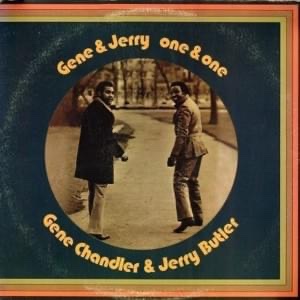
347) Gene Chandler & Jerry Butler — “You Just Can’t Win (By Making that Same Mistake Again)”
Two soul greats combine forces to make a wonderful album — ‘70’s Gene & Jerry One & One — and no one buys it. Well, the album did produce two minor R&B hits, including “You Just Can’t Win,” which reached #32 on the R&B chart (#94 on Billboard’s Hot 100) in January of ‘71. Andrew Hamilton writes in All Music Guide that:
Gene Chandler achieved a million in sales with Mel & Tim (“Backfield In Motion”) . . . and some minor R&B hits with Simtec & Wylie . . . . Both acts were unknown until Chandler’s discovery, yet they made the charts. What would two name artists do? That prospect energized this project . . . . [T]hey all pooled their talent to come up with material and production ideas to make Gene & Jerry: One and One a success. . . . Despite its dismal sales, this is a good album of uptown male duets by two of soul’s greatest.
Jerry Butler needs no introduction, but Craig Lyle notes, also in AMG, that:
[His] career spans four decades; he recorded more than 50 albums, and his voice is one of the most distinguished in all of music. As soulful as ever, yet smooth as ice, his nickname “The Ice Man” epitomizes his demeanor — and sound.
Gene Chandler is a bit less well known — outside of “Duke of Earl” — but Richie Unterberger provides a good overview in AMG:
Gene Chandler is remembered by the rock & roll audience almost solely for the classic novelty and doo wop-tinged soul ballad “Duke of Earl” . . . a number one hit in 1962. He’s esteemed by soul fans as one of the leading exponents of the ’60s Chicago soul scene, along with Curtis Mayfield and Jerry Butler. Chandler never approached the massive pop success of that chart-topper (although he occasionally entered the Top 20), but he was a big star with the R&B audience with straightforward mid-tempo and ballad soul numbers in the mid-’60s . . . .
Nobody’s talkin’, everybody’s singin’ “That’s the Bag I’m In.” Take one classic semi-comic song and listen to two radically different but fab and buzz-worthy interpretations.
344) Fred Neil — That’s the Bag I’m In”
This sly ‘66 album track was also a ‘68 B-side to Neil’s original version of “Everybody’s Talkin’”, which Harry Nilsson famously took to #6 in August ‘69. Matthew Greenwood writes in All Music Guide that:
Primarily known for introspective, emotionally deep songs that truly make Fred Neil the father of the singer/songwriter genre, it’s not always readily apparent that Neil had a sense of humor. “That’s the Bag I’m In” certainly shows that he indeed does. With its litany of trouble and depressing circumstances . . . it’s one of the few folk songs that can’t help but make you laugh. Guided by a simple yet effective bluesy groove, the song has a wonderfully funky quality that mirrors the lyrics.
Richie Unterberger writes in AMG that:
Moody, bluesy, and melodic, Fred Neil was one of the most compelling folk-rockers to emerge from Greenwich Village in the mid-’60s. . . . For all his tangential influence, Neil himself remained an enigmatic, mysterious figure. His recorded output was formidable but sparse.
The Fabs transformed the song into a formidable ‘66 garage rocker — the A-side of the only single by the Fullerton, California band. On the Flip Side says:
The Fabs . . . played the SoCal circuits with bands like The Seeds and The Arrows. They made one and only one single in 1967 . . . . The A-side of the double-sided gem is the superb cover of folkster Fred Neil’s That’s The Bag I’m In. The Fabs add a defining bass line that lifts this far above other versions and change some lyrics to highlight their teen angst LA lifestyle a bit more.
Another humdinger, this time from Fullerton, California’s The Fabs. They take an already brilliant “everything I do seems to go wrong” song by legendary singer-songwriter Fred Neil and transform it from a subtle folk number into a garage stomper. Some of the lyrics are changed in the process; it seems The Fabs needed to address some of their own problems – like not being able to get the girl.
Buzzy recorded his friend Neil’s song with his band Music on the ‘70 album Music. Joe Viglione writes regarding the legendary asterix that:
Linhart auditioned for Tennessee Williams, and Williams’ office immediately called to invite [him] to be on staff as an actor . . . That same evening Linhart saw Fred Neil and Neil asked [him] to play vibes with him. “I called . . . Williams’ office the next day, I was young and didn’t quite realize what was happening . . . . I wanted to play with [Neil] so badly that I called [the] office back and said, ‘Could you please tell him I’m very sorry but I can’t work with him this season (laughing now at the absurdity of what he was doing) but I certainly would enjoy working with him some time in the future.'” So he joined the folk-rock scene “and started really starving.” He began hanging out with Tim Hardin, Fred Neil, Dylan. . . .
Let there be Light. The Idle Race (see also #30) and its “cheerfully trippy” (Bruce Eder, All Music Guide) first album, ‘68’s The Birthday Party, are the divine sparks that lit the Electric Light Orchestra. Fittingly, this gorgeous and fleeting album track and B-side is titled “The Morning Sunshine.” Bruce Eder writes that:
“Morning Sunshine[“ is] one of the prettiest songs to come out of the entire Birmingham music scene and display[s] a languid guitar flourish that anticipates any number of ELO songs circa A New World Record . . .
[T]he Idle Race earned plenty of critical acclaim but little commercial success . . . . They did, however, help launch the careers of several British rockers of note, most significantly Jeff Lynne, who first presented his talents to the world on the group’s 1968 debut album, The Birthday Party. The band also introduced Lynne to Roy Wood, paving the way for their later work together in the Move and Electric Light Orchestra. . . . The Birthday Party, was an album whose impact and influence would far outstrip its meager sales figures . . . [It] quickly earned praise for its witty and sparkling tunes and inventive arrangements and production . . . . The album was championed by influential disc jockeys John Peel and Kenny Everett . . . [but it failed to] find[] an audience.
In accord is David Wells:
Having debuted in the UK with the October 1967 single Imposters of Life’s Magazine, Jeff Lynne and his merry men were quickly adopted by the nascent Radio One, [with] their hook-laden melodies, quirky lyrics and slight underground frisson making them acceptable to everyone . . . . Kenny Everett was also a big fan, describing hem as “second only to the Beatles” . . . . But despite their relationship with Radio One . . . The Idle Race just couldn’t buy a hit. . . . While [The Birthday Party] attracted attention within the industry — Kenny Everett adored it . . . [it] failed to engage the hearts, minds and wallets of the public.
Record Collector: 100 Greatest Psychedelic Records: High Times and Strange Tales from Rock’s Most Mind-Blowing Era
Well, the 70’s were just a few years away, and the world was soon about to fall in love with Jeff Lynne. . .
342) Keith Everett — “She’s the One Who Loved You”
I don’t play hometown favorites. We’ll, actually I let YouTube do the playing — witness the Del-Vetts from Highland Park, Illinois (see #250) and today’s selection — Keith Everett (real name Keith Gravenhorst) from the bordering town of Deerfield. I went to Highland Park High School. My sister went to Deerfield.
This ‘66 A-side is a very cool song, with a Greek chorus hectoring* a guy for letting the girl who truly loved him get away.
But whatever notoriety Everett possesses (and it ain’t much**) has come from his prior single — “Don’t You Know”/“Conscientious Objector.” Chris Bishop says that “Don’t You Know” “is a fine ballad, while the flip is an outrageous indictment of conscientious objectors . . . .” (https://garagehangover.com/keitheverett/) Man, I have never really delved into that subgenre. Here are some of the lyrics to “Conscientious Objector” —
“They call themselves the conscientious objectors. But all they’re tryin’ to do is tryin’ to infect us with their fear and their shame. They hide under the name of conscientious objectors. They might as well be defectors. The way they act, well keep it up boy the way you’ve been goin’. And who can tell son, you’ve got no way of knowin’ that tomorrow we might be the way that Vietnam is today. And you’ll be sorry you fools for the things that you do. You’re conscientious objectors. You might as well be defectors. The way you act.”
Wow, that makes “The Ballad of the Green Berets” sound like Abbie Hoffman wrote it! I checked — “Conscientious Objector” is not on Spotify. If it was, Neil Young would have to put his songs back on just so he could pull them off again!
Anyway, Bishop says that “Don’t You Know” “did well in Chicago, entering WCFL charts in March, and reaching as high as #10 two months later.” Yellow Paper Suns informs us that Everett’s “music career stalled somewhat when he was posted to Vietnam shortly after ‘Don’t You Know’ started to make inroads on the charts. Presumably, the follow up was released whilst he was fighting the yellow man.” (https://yellowpapersuns.com/2011/12/01/keith-everett-the-chant/)
* I hope you caught that I said “Greek chorus hectoring.”
** Matt Grayer has put out this desperate plea:
I ask anybody who knows anything about this artist . . . to please, PLEASE contact me or submit it to this site. I have spoken to a few old-timers in the Chicagoland area who claim to remember the record but know nothing of its history or what the deal was with Keith Everett, despite the fact that the song “Don’t You Know” appears to have charted. However, it is the “B” side that gets this collector all hot and bothered. Songs like this are what dreams are made of. I included the “A” side of the single to show that right-wing folk-rockers have feelings, too.
341) The Remains — “Why Do I Cry”(May 26, 1966 live in the studio version)
“Why Do I Cry,” the band’s second A-side (’65) (see also #125), was a hit in the Remains’s home town of Boston. Mark Deming in All Music Guide calls the song “swaggering” while Nuggets says it “demonstrates how the Remains were producing material easily on par with the best British groups of the period.” I think they’re crying about that ball that went through Bill Buckner’s legs, but wait, that was ‘86.
Now that I have brought up a sore subject, I’m gonna double down and post a picture of me getting a champagne shower as I celebrate the Mets winning the ’86 World Series! —
Deming goes on to write that “[a]mong garage rock obsessives, the Remains have long been the stuff of legend,” that “[i]n New England, few bands of the ’60s are remembered with greater awe,” and that “[they] were tougher, smarter, and tighter than the vast majority of their competition . . . . mid-’60s American rock & roll at it’s best,” but that they “had trouble making an impression outside of New England.” The band broke up in ’66 following its inability break through nationally.
As Mike Stax explains in the liner notes to volume 2 of the Garage Beat ’66 comp:
The band was . . . dissatisfied with the sound they were getting in the studio, feeling it captured little of the fire of their legendary live shows. So . . . [s]till geared up from a gig . . . the previous night, the band assembled at the studio on the morning of May 26[, 1966], gulped down some coffee, then proceeded to rip through a full-throttle live set . . . . The highlight of the session was [singer and songwriter Barry] Tashian’s own “Why Do I Cry,” a raucous, high-energy performance that creams the more disciplined rendition they’d done for Epic the previous year. [T]he tape was shelved and more or less forgotten until it was exhumed for release decades later.
The group, formerly the Liberators, was named by their manager Reg Calvert (who had brought fame to the Fortunes). Peter Chambers writes that:
Reg was an impresario, running clubs all over the country. [His] Clifton Hall became a ‘pop-school’, an academy of beat where new talent could be nurtured. Along with the likes of Danny Storm, The Fortunes and Screaming Lord Sutch, Pinkertons Assorted Colours were soon to become part of Reg Calvert’s unique empire. With the new name came the new image, brightly coloured suits were the order of the day, really putting the colour into Pinkertons. . . . Front man Sam ‘Widge’ Kempe was re-christened Samuel ‘Pinkerton’ Kempe and given an amplified auto-harp . . . to become the trademark of the band visually and musically. Although it was an unusual instrument for a beat band, the Lovin’ Spoonful had also experimented with the auto-harp . . . . [Their debut single, “Mirror, Mirror,” reached #8 on the UK chart, but while] Magic Rocking Horse . . . should have been huge . . . just as it was released . . . Reg Calvert was to lose his life in a bizarre shooting incident. Who knows if the lack of promotion and the lack of a manager contributed to low sales. Whatever the reason, it failed to chart . . . .
After the failure of “Magic Rocking Horse,” the band changed labels and changed names to the Flying Machine. In ’69, the Machine flew all the way up to #5 in the U.S. with “Smile a Little Smile for Me.”
* Vernon Joynson points out that “[a]s there was no colour TV[, Reg Calvert] insisted on the ‘assorted’ tag, which the group particularly hated and hassled him to drop until the day he died, subsequently hassling his successors until they agreed.” (Tapestry of Delights Revisited).
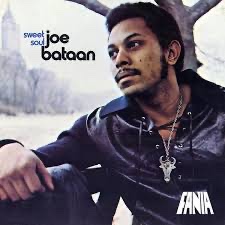
Joe Bataan (see #55). Boogaloo. Not down Broadway, we’re talking 106th and Lexington.
Richard Pierson in All Music Guide tells us that:
Born Peter Nitollano, of African-American/Filipino parents, Joe Bataan grew up in Spanish Harlem, where he ran with Puerto Rican gangs and absorbed R&B, Afro-Cuban, and Afro-Rican musical influences. . . . Self-taught on the piano, he organized his first band in 1965 and scored his first recording success in 1967 with “Gypsy Woman” on Fania Records. The tune was a hit with the New York Latin market despite its English lyrics . . . and exemplified the nascent Latin soul sound. In early anticipation of the disco formula, “Gypsy Woman” created dance energy by alternating what was fundamentally a pop-soul tune with a break featuring double-timed handclaps.
Don Snowden, also in AMG, says Bataan “shot to popularity in Latin music circles by covering soul hits, starting with a radical revision of Curtis Mayfield and the Impressions’ [see #118, 285] ‘Gypsy Woman’ that’s brassy and built around the chorus.” Mtume ya Salaame says the “only thing the Mayfield song and the Bataan song seem to share is the title and chorus. Joe’s song is louder, wilder and considerably more infectious, both musically and lyrically.” (http://www.kalamu.com/bol/2006/10/15/joe-bataan-“gypsy-woman”/).
Bataan himself describes “Gypsy Woman” in a must-hear interview:
“Gypsy Woman,” everyone knows was a Curtis Mayfield song. . . . I could pick songs. I knew songs that had the potential to be something, even though they were before. I knew songs that I could attempt to do differently so people might get a refreshing ear. That’s what I did with “Gypsy Woman.” I took the same song, put different music to the same lyrics and we had what we call a cha-cha with a backbeat. It was “Gypsy Woman.” This was one of the first that crossed over into the American charts. That was one of my first songs and it really put Joe Bataan on the map. I was really gearing for the Latin community, but it got a big black audience also. For a long time, you had people who loved Latin music, but they couldn’t understand it. If I said… [says something fast in Spanish], you wouldn’t know what I was talking about. What it did was allow the other masses that normally wouldn’t listen to Latin music, because it was done in Spanish, to listen to this. Some people called it boogaloo, I preferred Latin soul, and that’s probably why I survived those other boogaloo artists, because I had the mindset to change and say I was doing Latin soul and that’s what I’ve been known for 40 years.
What is boogaloo? Mtume ya Salaame, quoting an unnamed source, says:
Boogalu resonated particularly with African-American audiences. . . . Boogalu was inspired by the interaction between African-American dancers and Latin musicians in New York at nightclubs such as Palm Gardens Ballroom. They recount stories of how the structure and tone of Boogalu songs . . . were developed in an effort to appeal to African-American dancers who were not responding to their traditional mambos and cha cha chas.
Oliver Wang goes deep on Bataan:
[A] cohort of mostly Puerto Rican Americans—Nuyoricans—were coming of age, seeking a stake for their generation’s sonic sensibilities. Into that moment strode Joe Bataan, knife in hand. . . . [A]s a kid, he ran deep with the Nuyorican crowd . . . . In his teens, he helped lead a local Puerto Rican street gang called The Dragons, but a few stints in the pen encouraged him to seek a different path. He turned to music. . . . [I]n 1966, a “new breed” of Latin music was bubbling up in New York that would enrapture Bataan and his band: boogaloo [which] began as a dance craze . . . . By 1966, the dance had made its way into New York ballrooms and it was here that Nuyorican house bands began to tinker with it, giving birth to a distinctive Latin boogaloo style. . . . [A] young record executive trying to get his new Latin label off the ground . . . Jerry Masucci of Fania Records.. . . . found [with Bataan] more than just a musician; here was a voice that could sell to black, white, and Latino audiences. . . . [T]he first single Bataan recorded for Fania nodded to an earlier soul classic: The Impressions’ 1961 hit, “Gypsy Woman.” However, Bataan’s “Gypsy Woman” wasn’t a cover version. Beyond an opening line that riffed on Curtis Mayfield’s songwriting, Bataan changed everything else: the lyrics, the arrangement, the instrumentation, etc. Whereas The Impressions’ mellow original had more in common, aurally, with a bachelor pad exotica record, Bataan’s song was ferociously uptempo and unmistakably Afro-Cuban, opening with a lively piano montuno and background singers yelling, “She smokes, hot hot, she smokes!” . . . Other boogaloo breakout hits in 1967 . . . boasted memorable hooks but the singing was middling at best. By comparison . . . Bataan demonstrated that he could be a quadruple threat: singer, songwriter, pianist, and bandleader.
Here is a second helping of Glass (see #309). Light in the Attic Records says that “‘House of Glass’ is the impressive opening track, full of tension and convincing vocals over some 13th Floor Elevators style grooves”. (https://lightintheattic.net/releases/1758-electric-band). And Nathan Ford writes that:
Why more people don’t rave about this major label gem is a complete mystery to me. Lead single “House of Glass” has a menacing Doors vibe and almost sounds like a prototype for eighties neo-psychedelia in general. It’s reason enough to pick up a copy, but there’s plenty more to be enjoyed within including excursions into folky and country terrain and heaps of massive fuzz guitar leads.
Yeah, the song does sound like it was written in the ‘80’s or 90’s. Change the title to “House of Trash” or “House of Thrash”, and you’ve got a grunge hit!
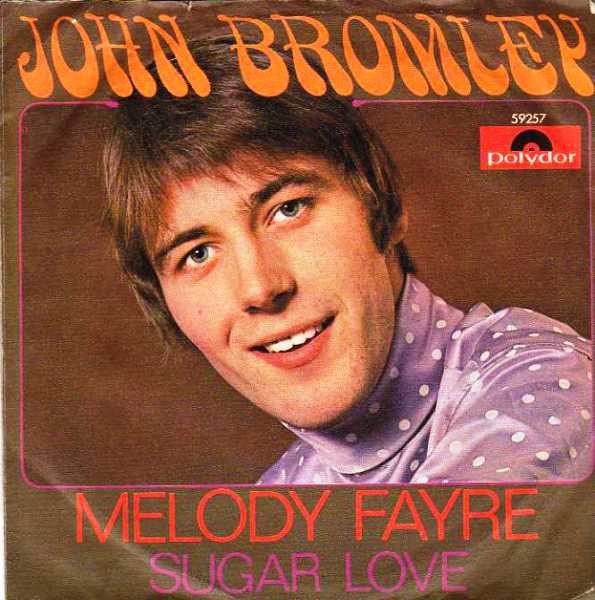
English songwriter John Bromley has written “over 200 works with over 60 recorded and performed worldwide by major artists such as Shirley Bassey, Sacha Distel, Petula Clark, Richard Harris, Paul Anka . . . John Farnham”, Jackie De Shannon and the Ace Kefford Stand. (Facebook). He also recorded some of his songs in the 60’s, releasing them as singles (backed by The Fleur De Lys [see #32, 122]) which were eventually collected on his sole album, ’69’s Sing.
Bromley “never thought of himself as a singer. . . . “I was really only interested in performing on my own original recorded demos. . . .” (liner notes to the CD reissue of Sing). The way he was discovered comes right out of a movie:
[He was working in a record shop in London when Graham Dee] overheard a bored Bromley busking behind the shop’s counter with a cheap plastic guitar. Graham was . . . trying to place the tune that was being sung. . . . [and] was suitably impressed to learn that the song that he thought he recognized, “What a Woman Does”, was actually a John Bromley original. . . . “He asked me to hold on and he ran around the corner and came back five minutes later asking if I could slip away for twenty -minutes to record a demo of the song.” . . . Dee ran off with the demo to Atlantic Records’s European managing director Frank Fenter[, who] was impressed enough by what he heard to rush John into his office the very next day. John was shocked, “Frank loved the song . . . . he offered me a recording contract for three singles and one album on the spot! I was hoping to get one of my songs placed with a major act by Frank, not a recording contract for myself.”
Mark Johnston’s liner noes to the CD reissue of Sing
Bromley wrote the B-side “Weather Man” with Graham Dee. He relates (liner notes) that the song “is a child’s song, but it was also a grown-up song about unrequited love.” “Weather Man” is indisputably “a classic slice of British sunshine pop” (liner notes). Reviewers often comment on how it and other of Bromley’s songs are imbued with the spirit of Paul McCartney: Marmalade Skies call it a “perfect little McCartneyesque tune” (http://www.marmalade-skies.co.uk/toytown3.htm), Rob Jones calls Bromley’s songs “Macca-esque psychedelia” (https://thedeletebin.com/2014/09/01/john-bromley-sings-so-many-things/), and John Reed calls Bromley “a singer-songwriter firmly rooted in the Macca tradition – and it’s possible to hear echoes of Beatles ballads such as Yesterday or Eleanor Rigby in many of his compositions.” (https://recordcollectormag.com/reviews/album/john-bromley-songs). I would venture to guess that Paul would be quite pleased to have written this beautiful and anodyne song.
If Bromley’s singles had been released a year or two earlier, they would likely have received the rapturous reception they deserved. Rob Jones perceptively notes that:
[B]y 1969, there had been a bit of a shift where this approach was concerned since the height of the psych period in 1966-67. The world had become less optimistic and open to whimsy by then, two years after the summer of love, and after some of the figureheads of the civil rights movement were no more. British psychedelia had begun to mutate into a more “progressive” and serious direction to contrast the nostalgic and twee nature of what psych bands had created. King Crimson’s In the Court of the Crimson King is a good example of a darker, and less romanticized musical and thematic landscape from bands in Britain by the end of the 1960s when Bromley’s record came out. Perhaps this is why [Sing], didn’t take off. Bromley eventually left the music business for a time, escaping the ins and outs of an often callous industry. This record has been a sought-after treasure for vinyl collectors over the years since, an artifact perhaps of a lost era that is attached, ironically, to a new kind of hazy nostalgia for many. Listening to this song now, it’s easy to appreciate its charms . . . .
How can Kaleidoscope not bring a smile to your face and send you into a childhood reverie? (see #154) As David Wells says, it is “one of the most fondly remembered of the more cultish UK pysch pop bands, even if their fey sensitivity and high whimsy quotient is viewed with some suspicion by admirers of the more visceral, R&B-derived end of the psychedelic market” (Record Collector: 100 Greatest Psychedelic Records) — yeah, admirers like Richie Unterberger:
Highly esteemed by some collectors, Kaleidoscope epitomized certain of the more precious traits of British psychedelia with their fairy-tale lyrics and gentle, swirling folky sound. At times they sound like a far more melodic and accessible Incredible String Band. Their folky ballads have aged best, and although there’s some period charm to be found throughout their two albums, it’s all a bit too cloying to rank among the finest unknown psychedelia. Although they had a solid underground reputation in Britain, they never found wide success, and evolved into a similar group, Fairfield Parlour, by the end of the ’60s.
All Music Guide
As to “A Dream for Julie,” ZebedyZak comments:
After their sad flop with their debut single [“Flight from Ashiya”], Kaleidoscope tried again . . . . “A Dream For Julie” is a splendid piece of psych with sparkling keyboards and a guitar sound similar to the previous single. Add to that Peter Daltrey’s superb voice (and listen to those lyrics!) and we have one perfect single. It was, sadly, another miss. Once again, I don’t know why. Surely there were enough girls called Julie to appreciate this one in 1968.
Why indeed didn’t every Julie in the UK buy the ’45?! Julie Christie should be ashamed (unless she can produce a 45)!
Nuggets II also sends its accolades:
[It is] a classic specimen of what has become known as “fairytale psych.” The mostly English purveyors of this subgenre often drew from the fantasy world of their childhood storybooks. . . . “A Dream for Julie” is one of the genre’s most effective works, employing a bright, engaging melody and some sparkling guitar passages that successfully steer a course just wide of tweeness.”
Ah, “Shakin’ All Over,” it sends quivers down my backbone. The song has a long and proud pedigree, beginning as a #1 UK hit for (and written by) Johnny Kidd & the Pirates in ’60, then a #1 Canadian hit in ’65 for Chad Allan & the Reflections/The Guess Who, then thrillingly performed by the Who at the University of Leeds in ’70. But to my mind, the best version of this chestnut is the ’65 A-side by the Lords.
As John Einarson relates, “the record that put Winnipeg [and the Guess Who] on the [Canadian] national map” was born in England:
[Johnny] Kidd . . . explained, “When I was going round with a bunch of lads and we happened to see a girl who was a real sizzler, we used to say that she gave us ‘quivers down the membranes.’ It was a standard saying with us referring to any attractive girl. I can honestly say that it was this more than anything that inspired me to write Shakin’ All Over.”
[Toronto’s] Quality Records . . . sent out radio-play copies across the country of a 45-rpm single mysteriously credited simply to Guess Who? With everything British dominating both the pop charts and the collective consciousness of teens, it was nearly impossible for homegrown recording artists to gain national airplay on radio stations. [The label] decided to hoodwink radio programmers . . . gambling on the fact the distinct British style and infectious sound of the 45, along with the ambiguous identity, would pique interest. The ruse worked. Within weeks, Shakin’ All Over was charting coast to coast, and by March it was either No. 1 or in the top 5 on every major radio station nationally. It was then that the mystery was revealed. Guess Who? was none other than Winnipeg quintet Chad Allan & the Expressions. Suddenly, Winnipeg became the rock ’n’ roll capital of Canada. What’s more, the single broke down the regional barriers that had prevented Canadian recording artists from achieving cross-country success. “The importance of Shakin’ All Over cannot be overestimated for the Canadian pop music landscape of early 1965,” states writer/broadcaster Bob Mersereau . . . . “There had been plenty of regional hits from local artists . . . that got the kids in say, Vancouver or Halifax all excited. But [n]ational No. 1s were reserved for the Beatles, and after them came a dozen more British Invasion artists. [R]egional acts barely had a prayer. But before programmers knew it, they’d been tricked into giving the mystery band an even playing field. Then the kids took over . . . .” What is further astonishing about the success of Shakin’ All Over is it was not the intended hit. It was [a] B-side . . . .
All well and good, but what about the Lords? Richie Unterberger writes in All Music Guide that:
Quite popular in [Germany], the Lords made no impression in the English-speaking world . . . . The[y] are one of those groups that have to be heard to be believed. Although they had the requisite moptop haircuts, their repertoire was surprisingly anachronistic at times, drawing heavily from not only German drinking songs, but American folk tunes, Lonnie Donegan’s skiffle, and the pre-Beatle British rock of Johnny Kidd and the Pirates. Whatever they covered [including “Shakin’ All Over”] — they made their own with frantically fast tempos, heavily accented Teutonic vocals (virtually all of their material was in English), and heavy overuse of tremelo guitar lines with mucho reverb, whammy bar, and Lesley organ-like effects. . . . [T]hey were fun, and they had the hearts of true rockers . . . . [T]hese covers are so eccentric, done as they are with heavy German accents and a hepped-up Merseybeat-like rhythm, that it’s a lot better and more interesting than most such cover-dominated albums of the time.
332) Freedom’s Children — “Stories Towards the North (Parts 1 & 2)”
As Nick Warburton writes in Ugly Things:
One of the best rock bands the world never heard? . . . Just another one of those “what if” stories by your average ’60s rock aficionado bent on hyping their favourite obscure band[?]* But in the case of South African acid-rock legends Freedom’s Children, there is some justification in the hyperbole. Formed at the height of the hated apartheid era, Freedom’s Children swiftly became South Africa’s most innovative sons, incomparable to anyone both musically and politically . . . culminating in the groundbreaking Astra album [’70], arguably one of the era’s most overlooked recordings. The problem was no one was listening beyond South Africa. . . . [N]ow with the cloak of apartheid lifted and a growing interest among ’60s aficionados of the hidden treasures to be found beyond British and American shores, perhaps the brilliance of Freedom’s Children’s music can finally be appreciated.
That quote is taken from Nick’s riveting, hilarious and moving retrospective and interview with band members. I highly recommend reading the whole thing. Here are a few tantalizing tidbits:
When Freedom’s Children tried to establish a profile in England during 1969, [as a result of] British policy on the apartheid system, most of the band’s members were refused work permits and could only play gigs illegally. All hope of establishing themselves on the burgeoning London rock scene was thwarted and with it any chance of launching the band on the international stage.
[T]he man responsible for providing the creative spark that drove the group through its glory years was poet, songwriter and bass player Ramsay MacKay[, who] was actually born in the Scottish Highlands [and a]rriv[ed] in South Africa . . . aged 7 . . . .
[As to the band’s name:] “You don’t call yourself Freedom’s Children in South Africa without a good reason,” says MacKay. “We were banned on most radio. Freedom’s Children meant something back then.” . . . [The] record label . . . was so scared of getting into trouble that it issued the group’s early recordings under the name, Fleadom’s Children. (Producer Billy Forrest later explained that . . . government-funded radio stations refused to play their singles as Freedom’s Children.)
[I]n March 1967, the group announced that it would be holding a “freak-out” . . . . According to MacKay, the band’s use of strobe lights was possibly the first time they had been used outside California. . . . “Due to the strobe lights and the intensity of volume people had epileptic fits. At this period in time, nobody knew that strobe lights gave people epileptic fits. This is how the band became notorious, because of society, the press, the police and even the Mayor of Durban who all tried to suppress [our supposed] brainwashing the youth.” So intense were the shows that some people ended up being hospitalised. . . . “It became known as having a ‘frothy’ and was quite a cultural event as people started having ‘frothies’ without being epileptic, but probably just stoned.”
[At] an audition to back American soul singer Geno Washington . . . “[h]e was just telling us, ‘play funky man, play funky’. . . . [W]e were this acid-freak group. We were looking at each thinking, ‘What the hell is funky?'”
[Mackay:] “South Africa [was] an extreme country because of the total cruelty and then everyone normalises it. That could drive you crazy on its own, and if you took acid on top of it…”
Astra remains a startling[] piece of work and dare I say it, a seminal album from that era. . . . [that created] an atmosphere that reflects perfectly the turmoil which characterised the apartheid era . . . . [with an] overall sense of isolation, fear and repression. . . . [and a vocal which] growls with anger at the injustice of the political situation home and abroad.
[“W]hen the Americans landed on the moon . . . we took all our beds and put them in a semicircle around this little black and white TV,” explains MacKay on the inspiration behind his writing for the album. “Anyway, we took this acid and when they landed on the moon we were tripping. It was such an experience, I shall never forget it and that’s what Astra appeared out of.”
As to “Slowly Towards the North,” which comes off like a solemn organ/bagpipe-led procession, Astra‘s CD reissue liner notes state:
There are many fans who believed that Astra, with songs like the Kid Who Came From Hazareth, the Homecoming and Slowly Towards the North, was based on the life of Jesus. Not so says [lead guitarist] Julian [Laxton:] “It was a concept album, but the story about the album being about Christ is not true. But who knows what was in Ramsay’s head when he wrote the songs. He was interested in many different things and read a lot, so he got his ideas from all over the place.” . . . Slowly Towards the North was — “I think”, says Julian — about his dream of one day returning to his native Scotland.
333) John and Philipa Cooper— “Man in a Bowler Hat”
Apparently Freedom’s Children’s lead guitarist Julian Laxton was involved in the recording of The Cooperville Times, the Coopers’s only album (’69), even though “he can’t remember the album, band or session.” (http://therockasteria.blogspot.com/2014/01/philipa-and-john-cooper-cooperville.html?m=1). Well, just like the saying goes, “If you remember the ’60s, you really weren’t there.”
The album is “[s]pooky psychedelic folk rock . . . featuring the unmistakable guitar sounds of Julian Laxton” and “[u]nquestionably one of the rarest South African albums ever” (https://www.lpcdreissues.com/item/cooperville-times-2), a “South African psych-pop rarity . . . buried so far beneath the drifts of history that even the skilled archivists of the Shadoks label had a hell of a time digging up the original recordings for reissue.” (James Allen, All Music Guide).
Allen goes on:
Recorded right in the psychedelic sweet spot of 1968 and released the following year, The Cooperville Times is the only album by brother-and-sister duo John & Philipa Cooper. It blends the pop and folk ends of the ‘60s U.K. psych spectrum . . . . All the hallmarks of the paisley-patterned era are here — Baroque bits of harpsichord accompaniment, pastoral flute lines, tremolo guitar — just the sort of touches guaranteed to make psych collectors foam at the mouth.** . . .
As to the enchanting “Man in a Bowler Hat,” Allen says:
[W]hile [John’s] got a strong melodic sense with memorable hooks to spare, his lyrics are particularly meritorious; on the surface, they seem to delve into the trippy, canyons-of-your-mind territory so common to psychedelia, but a closer listen reveals that Cooper has a well-developed sense of poetic imagery, and a gift for surreal settings. When he sings about the “Man in a Bowler Hat,” for instance, he’s in keeping with the surrealist tradition of the legendary Magritte painting that is the song’s namesake.
John Samson concurs:
“Man In A Bowler Hat” tips it’s, erm, hat to the artist Rene Magritte . . . and his picture of a man in a bowler hat (you know the one). It’s a folky tune that weaves a grating fiddle and searing, if somewhat muted guitar . . . . Lyrically, [it] seems to try capture the emotions while wondering round an exhibit by Magritte . . . . suggest[ing] someone lost in the surrealism of the artist’s work. But these lines could equally be applied to listening to this song. Somewhat surreal, certainly magical and rather dreamy, it will have your mind spinning around.
This amazing album has the same class as those by Billy Nichols, Duncan Browne and Blossom Toes. . . . full of ideas and masterfully played. This album would have been a great success if it was produced in the UK. It just has the right feel, with the combination of great songs with a ‘60s art vibe. . . . a perfect slice of ’69 underground folk-rock.
I normally shy away from ultrarare psych nuggets. The fetishization of a recording’s rarity can and often does obscure any clear-eyed assessment of the music itself, and when discussions about a record revolve around the object and not the music, well, those discussions are more appropriate for Antiques Roadshow . . . . So, yes, discussing the [album] would be entirely conducive to crate-digging one-upsmanship (look what I found!) and nothing more,*** except for the insignificant trifling issue that its first four songs [including “The Mad Professor”] are actually stupendously deliciously excellent. It’s true: Even when considered on their own merits and not as crate-digging artifacts, these songs are great. . . . Perhaps one of the rarest albums from South Africa.
** So that’s what was wrong with me! I thought I had been bitten by a rabid dog . . .
*** Yeah, this hits pretty close to home too!
334) John and Philipa Cooper — “The Mad Professor”
Ioannis Katsigiannis says of this song, also from Cooperville, that:
The Mad Professor” is a fairly standard axe-wailer recast by its explosive intro and unusually funky drum pattern (which is absolutely begging to be sampled by the RZA) into something at once odder and more engaging. . . .
The song sort of reminds me of McCartney’s oft-maligned “Maxwell’s Silver Hammer” (in a good way!).
331) The Tallifer Group — “This Happiness Feeling”
“This Happiness Feeling” was the A-side (’68) of the only single by this Aussie band. It is the PERFECT sunshine pop song — perfect melody — perfect lyrics. Well, the sun does shine a lot in Australia. “Micko’s Aussie Rock & Pop Legends (..well mostly)” posted the song on YouTube and says:
A terrific psych/folk single by little known Aussie band The Tallifer Group. . . . was the only recorded evidence of the band . . . released in October 1968. I’ve heard The Tallifer Group were from Sydney, however “This Happiness Feeling” only briefly charted in Melbourne, reaching #39 & staying for 2 weeks so they may have hailed from that city.
Such a perfect song, and yet the Tallifer Group is so little known that Micko makes this desperate plea: “So who were The Tallifer Group &/or T.R. Brinstead [(the songwriter)?] I can’t find any other band listing for him. And does anyone know the other band members, where the band came from & what happened to them[?]
Tom does Sam and Dave! — from his ’67 album 13 Smash Hits and ’68 album Tom Jones’ Fever Zone (and an A-side in Lebanon). Stephen Cook says of the album in All Music Guide that:
Tom Jones dives into a soul bag to bring on the hot flashes, lending his sweat-drenched vocal thrusts to . . . Sam and Dave[‘s] “Hold On, I’m Coming” . . . . [Fever Zone] will have you and your guests screaming for some good scotch to wash those fever-busting aspirin down.
Hallelujah — Jones’s version is so lascivious that he makes Sam and Dave sound like choirboys (not an easy feat)! Of course, Tom Jones needs no introduction, but I’ll just note that:
Tom Jones is one of the most popular vocalists to emerge from the British Invasion. . . . [H]is vocal style, a full-throated, robust baritone with little regard for nuance or subtlety, remained a swaggering constant. . . . No matter the style or song, Jones’ powerful, one-of-a-kind voice is instantly recognizable . . . . “It’s Not Unusual,” released in early 1965, became a number one hit in the U.K. and a Top Ten hit in the U.S. The heavily orchestrated, over-the-top pop arrangements perfectly meshed with Jones’ swinging, sexy image . . . .
Stephen Thomas Erlewine AMG
And I’ll note that he has a new album — Surrounded By Time — out at 80 years of age which topped the UK charts!
“Game of Love” is a track on Ike and Tina’s (see #212) most successful album, ’70’s Workin’ Together, which reached #25 (yes, the “Proud Mary” album). As Stephen Thomas Erlewine writes in All Music Guide, Workin’ Together “feels like a proper album, where many of the buried album tracks are as strong as the singles.” That pretty much sums up “Game of Love.” Revered rock critic Robert Christgau commented that “[s]omeone named Eki Renrut contributes a pretty fair do-right-man song.” (https://www.robertchristgau.com/get_chap.php?k=T&bk=70). It’s a do-right-man song all right. It take a lot of chutzpah or obliviousness for a man like Ike to write a song like this — a line in the sand for a jerk of a boyfriend — for Tina. Yeah, that was Ike all right!
“Plus Rien,” a ’67 B-side, is another wonderful exercise in yé-yé by Annie Philippe (see #206). It has a soaring melody but bitter lyrics that say good riddance to a lover.
What is yé-yé? Matt Collar explains:
Yé-yé pop showcased young, cherubic-voiced female singers framed against dance-ready beats and rock & roll hooks in songs often riddled with thinly veiled sexual innuendo. It was bubblegum pop meets softcore porn and it was massively successful in Europe from the late ’50s through the ’60s.
[N]o amount of money was spared in a song’s production, and subsequently many of Philippe’s cuts, including tracks like . . . “Plus Rien[]” . . . are lush productions replete with orchestral flourishes, ripe horn parts, vibrant backing vocals, and, as always, the fertile guitar buzz of an electric rock quartet underpinning it all.
Richie Unterberger, All Music Guide’s master of the putdown and the backhanded compliment, says this of Philippe:
[She was a] secondary French pop-rock singer of the 1960s who had her moments . . . [Her songs were characterized by] consciously over-cute girlish delivery, bouncy tunes, and (perhaps inadvertently) eclectic production, in which Spectorian arrangements, American girl-group influences, smooth mainstream French pop orchestrations, melancholy ballads, groovy jazzy organs, bad Dixielandesque show tunes, and more all swam in the same stream. Philippe was not quite as overtly childish in her vocal style as [France] Gall was. On the other hand, her material was not quite as interesting.
SMOKE!!! But I’m not sure the comments are justified. For me at least, Annie’s best songs — such as “Plus Rien” — reach the absolute pinnacle of yé-yé. Maybe I’m a sucker for bad Dixielandesque show tunes?
Forget Astrid Kirchherr, “Mr. Clock” is the ultimate expression of rock ‘n’ roll existentialism — from the perspective of a grandfather clock questioned as to whether it would have been better had the person that made it never made it at all. The song also sounds very reminiscent of the New York Rock Ensemble’s “Mr. Tree” (see #40), except that “Mr. Clock” came first. Jason calls it “quirky” and a “successful foray[] into 1966 psychedelia.” (http://therisingstorm.net/fapardokly-fapardokly/); Mark Prindle calls if a “dark artsy arpeggiator” (http://www.markprindle.com/fapardokly.htm); and Kevin Rathert calls it “a mellow tune, with [the] drums . . . a perfect affectation of the track’s title, along with climbing bass . . . more gorgeous vocal harmonies, and coo coo bird sound effects providing a perfect ending.” (https://www.psychedelicbabymag.com/2017/06/fapardokly-fapardokly-1967-review.html). I find it enchanting.
Who was Fapardokly? Well, it was largely Merrell Fankhauser. As Richie Unterberger tells us in All Music Guide:
[T]here was never a group called Fapardokly;* the 12 songs on their self-titled album were recorded by Merrell & the Exiles, a Southern California [surf rock] group headed by legendary cult folk-rocker Merrell Fankhauser. That group cut several singles for the tiny Glenn label before heading off in a psychedelic direction and mutating into H.M.S. Bounty [see #10, 235]. The equally tiny UIP label decided to gather a few of the Glenn singles, add a few more psychedelically oriented tracks that Merrell and his group had recorded, and release the package as the work of . . . Fapardokly.
And the name? Merrell Fankhauser reveals its origin:
We got a gig at a little club in Pismo Beach [California] called ‘The Cove’. And we soon had a dedicated following, but we didn’t have a name for the band! I wanted to go in a more psychedelic direction and I sat down with a pen and paper and took the first two letters of the members last names and it came out FA (Fankhauser) – PAR (Parrish) – DO – (Dodd) KLY – (Dick Lee). FAPARDOKLY.**
The album is rightfully considered a classic. Unterberger says that “[a]lthough it was not recorded or intended as a unified work, [the album] stands as one of the great lost folk-rock classics of the ’60s.” Jason agrees, calling “[t]he whole album . . . a mini gem of mid 60s folk-rock.” Rather calls it “top flight from beginning to end.” What did Fankhauser think?
We thought some of the Fapardokly songs were great but [it] mixed several years of songs that were not in the correct order they were recorded in and we thought that was wrong, and we hated the weird picture on the back that Glen rushed us into a funky studio in Hollywood to shoot, and said that’s good . . . . We really didn’t think the album would do much, little did we know this album would become one of the most collectible and valuable albums of the 60’s. A sealed mint copy can still bring $1,000!
What happened next? Well, Fankhauser says it involved outlaw bikers (sort of like Angels Die Hard comes to life!) —
We just kept playing as Fapardokly at The Cove in Pismo and I took a few of the LP’s to producers and managers in L.A. One night a motorcycle club called Satan’s Slaves came into the Cove and took over. They made us play one of my new originals ‘Rich Mans Fable’ (later to be on the ‘HMS Bounty’ LP) for over a half hour, and ordered us not to stop till they told us. The owner of the club and the bar maids just stood scared behind the bar and watched this like it was a strange scene from a 50’s movie! When the motorcycle gang had their fun they backed a Harley up to the front door, revved it up and filled the place with smoke and roared off into the night . . . .
** Mark Prindle cheekily suggests that the name “successfully ensur[ed] that the band would remain every bit as obscure as The Beatles would’ve had they called themselves “LEMCCHAOSTAR”.” Hmmm, I don’t know. I think the Beatles would have done OK even if they had called themselves Epstein and the Four Blokes Who Will Like Each Other Until Yoko Won’t Take a Hint.


 Brace for the Obscure (60s rock)! / Off the Charts: 60s Rock Revelations😊