Yes, you heard right, Herman’s Hermits. As Vernon Joynson says, the Hermits “were one of the more lightweight [British] pop acts of the sixties but they were one of our most successful exports to the States and released several good three-minute pop singles.” (The Tapestry of Delights). By ’67, the band’s fortunes were beginning to wane. Yet, as Al Campbell writes in All Music Guide:
While Herman’s Hermits couldn’t keep up with the revolutionary sounds created in 1967 by the Beatles, Cream, or Jimi Hendrix, they did manage to release pop records that steadily revealed maturity, especially evident on Blaze, their final MGM studio release. . . . Unfortunately, the teen idol image of front man Peter Noone was becoming a double-edged sword, as he was starting to be replaced by a new generation of teen idols, while not being able to make the transition into hip 1967.
’67’s Blaze wasn’t even released in the UK, but did reach #75 in the U.S. Graham Reid says that “[a]t a stretch – yes, a bit of stretch admittedly – it was like Revolver as presented by a clever but lightweight pop band who’d smoked a little marijuana.” Well, I guess Revolver was presented by a clever but super-heavyweight pop band who’d been dosed with LSD (thanks, dentist Riley) (elsewhere.co.nz/absoluteelsewhere/7803/hermans-hermits-blaze-reconsidered-2017-going-out-to-a-blaze-of-indifference/). Blaze‘s “Upstairs, Downstairs,” written by the great Graham Gouldman (see #226), is, as Al Campbell says, a great lost pop song.
Bruce Eder rightly says in All Music Guide that “Tim Hollier was one of the most unfairly neglected of folk-based artists to come out of late-’60s England . . . .” Eder goes on to say that:
[Hollier’s] brand of trippy, quietly elegant psychedelic folk-rock deserving an infinitely wider hearing than it got . . . . Hollier recorded his first album, Message to a Harlequin, in mid-1968; released in October of that year, it was a tremendous showcase for [his] excellent voice and challenging, psychedelic-flavored songs, elaborately produced . . . . The album — although not especially successful in England — even managed to get a U.S. release . . . . Hollier made slow progress in finding an audience over the ensuing year . . . . [H]is self-titled, self-produced second album [from which today’s two songs are taken. was released] in the summer of 1970. It failed to sell, and a year later a similar fate befell his third album, Sky Sail, released on Philips. . . . A stripped-down album compared to its predecessor, [the] self-titled second album is filled with pleasant, catchy folk-based tunes, with . . . most of the songs loaded to overflowing with memorable hooks . . . .
What got Hollier interested in music? His answer is refreshingly honest (if possibly tongue-in-cheek):
As a snotty 15 year old, playing Apache at Frizington Veterans Club was the best way to meet girls – but they were the days of playtex girdles, and that was a hurdle indeed. I only did it only for the sex, in other words!
What was the London folk music scene like when he started out? —
Wonderful. I spent many a very stoned evening . . . playing in clubs like Bunjies, The Troubadour and the Half Moon with Paul Simon, Jo-Ann Kelly, Roy Harper and eventually Nick Drake too.*
298) Tim Hollier — “Seagull’s Song”
Dear Spirit says that:
[“Seagull’s Song” is a]n obscure gem of beautiful, melancholic, psychedelic folk rock . . . . It’s my understanding that all folk albums of this era were legally required to contain at least one song dedicated to a bird, and “Seagull’s Song” takes care of that obligation right off the bat.
Yes and yes. I’m not even gonna mention Jonathan Livingston Seagull! Dr. Schloss says that:
This [album] is sort of a slightly psyched-up ‘Tim Buckley-lite” affair . . . . Although folk-rock is clearly the order of the day, the band does work up a groovy head of steam to give the songs a nice sonic push when needed. Most of the tunes here are pretty solid, though only a few really stand out. Despite some really clunky, cliched lyrics, “Seagull Song” worms its way into your head with a fine folk melody and some groovy guitar and flute leads bouncing about in the background. . . . Hollier is a Brit and the echoes of that islands folk traditions are on display here. Still, it’s clear that Hollier likely had a large pile of L.A. folk-rock vinyl taking up space in his ‘flat.’ This set isn’t really a mindblower. It’s probably not going to change your life, but it’s a very groovy concoction while it’s playing . . . .
I generally disagree with the good doctor. The songs are generally stunning, even mindblowing, and “Seagull’s” is possibly life-altering, but it’s lyrics could indeed by called clunky (though definitely not crunky).
299) Tim Hollier — “Maybe You Will Stay”
Is it just me, or does the melody of this song of generous spirit sound eerily reminiscent of Bob Dylan’s “Every Grain of Sand,” released a decade later? I can’t find anyone else noting the similarities before, but I maybe in the hour of Dylan’s deepest need . . . .
* More from Tim Hollier on performing in London. When asked by Record Collector whether he played live much, he responded:
As often as I could. I played on the BBC many times – John Peel always gave me a gig. One memorable gig was at the Wigmore Hall, of all places, with Amory Kane and Rick Cuff, in May ‘69. During our final number, Evolution, David Bowie suddenly appeared on stage in full space suit and performed a dance, ending with his almost naked body stricken on the stage. There were rumours of a live album of these events, but nothing emerged. I finally crashed as a performer at the Queen Elizabeth Hall, playing with Sarstedt and David McWilliams. For once I was headlining, my parents were in the audience and my oldest friends were onstage with me. But just before I went on my manager gave me a huge joint, and thereafter things became absolutely miserable. The BBC recorded it but it wasn’t much good, and I never played live again.
297)The Master’s Apprentices — “Wars or Hands of Time”
Richie Unterberger in All Music Guide calls this ‘66 B-side an “undiscovered classic,” Greg Shaw calls it “one of the greatest powerpop records of all time,” and Nuggets II says that:
[It is] one of the era’s most affecting [Vietnam] antiwar songs. . . . [U]nlike the typical protest merchants, who struck a stance of fist-shaking moral outrage, the Masters took a simpler, more effective course, outlining the intense personal impact war can have on people’s lives. The track describes a couple’s last embrace on a beach as a soldier bids his lover goodbye . . . .
Powerpop? Garage all the way! The song did reach #13 in Australia. It should have everywhere.
As to the Master’s Apprentices, Unterberger says that “[o]ne could easily make the case for designating the[m] as the best Australian rock band of the ’60s. . . .” They were even dubbed “the second Easybeats” at the time (liner notes to the Hands of Time comp). Unfortunately, the band never reached its true potential as guitarist and songwriter Mick Bower suffered a nervous breakdown and had to leave the band.
The band’s name reflected the group’s humbleness before bluesmen John Lee Hooker, Muddy Waters, Elmore James and Jimmy Reed and its other musical idols (Hands of Time). Just like Oasis’s album Standing on the Shoulder of Giants, except that in the Master’s’ case, it likely was a genuine sentiment.
[Carter] exemplified the gritty, earthy sound of Muscle Shoals R&B, fusing the devastating poignancy of the blues with a wicked, lascivious wit to create deeply soulful music rooted in the American South of the past and the present. Born . . . in Montgomery, AL, Carter was blind from birth. . . . He ended 1968 with a superbly funky Christmas single, the raunchy “Back Door Santa[.”]
The song’s legacy has unfortunately been besmirched. As Sean Maunier laments:
Clarence Carter’s raunchy 1968 recording of “Back Door Santa” is an iconic anti-Christmas song, but somewhere along the line, someone made the mistake of telling Bon Jovi, who then decided to cover it with full-throated, aggressively horny sincerity. This has the dubious honor of being perhaps the single most off-putting song you could have sing-shouted at you over arena rock guitars.
I thought Sean must have been exaggerating. Then I listened to the Bon Jovi version. Talk about desecration. 🤮🤮🤮. It belongs in the Rock and Roll Hall of Shame.
In ’70, Web released I Spider, its third and final album. New singer Dave Lawson (who, earlier in life, took piano lessons with Stan Tracey, the “godfather of British jazz” (Dave Lawson liner notes to the CD reissue of I Spider)) wrote all the material, “transform[ing] Web into a jazz-rock outfit with progressive rock and blues leanings” (Geoffrey Feakes, therockasteria.blogspot.com/2017/12/web-i-spider-1970-71-uk-exceptional) and giving the album a “heavy and menacing” atmosphere (Vernon Joynson, Tapestry of Delights Revisited). Maybe because they rehearsed in a monastery and a nunnery (Dave Lawson)? Jo-Ann Greene says in All Music Guide that “[m]oving strongly into progressive rock, the band strode far afield from the psychedelic meanderings they’d undertaken on their last set . . . .”
After the release of the album, Web promptly morphed into Samurai, “prompted by a lack of finance and also frustration over their name constantly being misspelt on billings.” (Feakes) Sometimes “Webb,” sometimes “The Webb.” (Dave Lawson). The band broke up because its name was being misspelt?! It should have been called The Wuss. Thank God the band members hadn’t named themselves Lynyrd Skynyrd!
As to “Love You,” a relentless barn burner, Greene states that ‘[d]ramatic shifts in dynamic . . . drive [the song, a] showcase for horn player Tom Harris, with John Eaton’s vicious, buzzing bassline powering the whole second half of the piece and providing furious encouragement to Tony Edwards’ fuzz-drenched guitar.”
Here are three wistful, often somber, but always stirring songs reflecting the onset of winter.
291) The Bee Gees — “Lonely Winter”
If the song’s subject got a Saturday night fever, it was probably because it was so cold outside. While the Bee Gees recorded this song in ’66, it was actually written by Carl Keats (Carl Groszman) of the Aussie band Steve & the Board:
The Bee Gees recorded . . . “Lonely Winter” in exchange for Carl Keats’s band Steve and the Board recording a revised version of Barry[ Gibb]’s “Little Miss Rhythm and Blues”. Each group was to have a song on their new album that was written by a member of the other group.
The Boards also released the song. Richie Unterberger in All Music Guide notes that the band “made some decent if derivative British Invasion-style records in the mid-’60s.” He calls “Lonely Winter” the highlight of their sole album, a “brooding, sublimely melodic rockaballad.” He opines that the Bee Gees’s version had “better vocals and a slightly fruitier arrangement.”
Here is Steve & the Board’s version:
292) Agincourt — “Though I May Be Dreaming”
This gentle song has some of the coldest opening lyrics I have ever heard — “Everything changes when winter comes o my love. Gone are the promises made in the summer of love.” Agincourt was composed of songwriters Peter Howell and John Ferdinando and vocalist Lee Menelaus:
During the mid-1960s, deep in the Sussex countryside of southern England, aspiring musicians . . . Howell and . . . Ferdinando [recorded Agincourt’s only album Fly Away] in a spare bedroom, an advertisement bringing Lee Menelaus, whose lilting voice provided a stirring female counterpart to theirs. Much of this psychedelic folk oddity has a quaint innocence fitting of the era . . . . [It was p]ressed in minute quantity on a[] private press . . . .
Richie Unterberger, the undisputed master of the left-handed compliment, says in AMG that:
[The album is] nice second-tier British folk-rock, and though the adjective “haunting” is overused in description of this genre in general . . . Howell and . . . Fernando really had that aspect down, with a greater pop savvy than most people working in the U.K. folk-rock field. . . . [I]t’s . . . a combination of folk-rock (of the contemporary rather than traditional British variety), a bit of psychedelia, and a bit of swooning pop. Certainly it’s got more drive and catchy pop melodies than most of the plentiful oodles of obscure barely pressed British folk-rock releases of the early ’70s, though there are similarities in the gentleness of the approach and the wistful, slightly sad melodies. As these kind of U.K. folk-rockish rarities go, it’s certainly one of the better ones — not on the level of the most famous British folk-rockers, mind you, but among the upper tier of things you should check out if you’re accumulating unknown albums in that realm.
Richie, give it a rest. Listen to Tim Lukeman, who nails what was so special about Agincourt:
The slightly psychedelic, pastoral-folk sound is lovely, innocent, wise, and utterly evokes a time & feeling now long gone, when poetry & reflection were major concerns of the sensitive, thoughtful young seeker . . . and if it proved a short-lived dream that faded as all dreams do, it was still a beautiful dream. Put this on, sit back & listen by candlelight as evening falls, and you’ll be transported to another, far more gentle reality – one that remains filled with hope even in the face of human frailty & weakness. . . . There really was a time when people could make & enjoy music like this, and actually mean it, without glib irony or snark.
If the U.S. Patent Office issued patents for rock sub-genres, Leopold would likely have one for acid folk. In any event, he is justly legendary. Stanton Swihart in AMG gives the backstory:
At a time when the antiwar movement and the LSD-based drug culture were inseparable and indistinguishable from the counterculture, Leopold was entirely invested in the culture, living on the streets of Philadelphia, New York, and Boston, crashing in the apartments and barns of a wide-ranging net of friends, playing on street corners by day and small coffeehouses at night.
In June 1970, he recorded the Experiments in Metaphysics LP, which was printed in a single run of 300 copies. . . . [It was] an accomplished and unique piece of progressive folk with political overtones. [M]ost of the . . . albums . . . were given away on a Philadelphia street corner in one afternoon in August . . . . [It was r]ecorded live during a five-hour session in the basement of a shoe-repair shop . . . . [T]he music is gorgeous, first-rate progressive folk. . . . Leopold creates a proto-gothic ambience full of dark and brooding imagery that is much less cartoonish than most of what passes as “acid,” while maintaining that music’s visceral punch. . . . exquisitely intelligent and forward-looking. Leopold’s mood is much more pious than most music that came out of the psychedelic era . . . there is something aged and wise about Leopold’s music. . . .
Patrick The Lama rightly hails Leopold:
A person in attendance remembers it as “. . . one incredible evening of altered and accentuated creativity”. . . . Perry Leopold sounds as big a star as Tim Buckley. He was inventing a genre, and he may even have known it. Maybe that’s why the label of his 1970 record says “Acid Folk”, about 25 years before that term became trendy.
The band formed in 1966 as The Sentrys, when the members were teenage classmates at the American School of Paris. They developed a following among the local American community by playing cover versions of contemporary hits. They came to the notice of recording scouts, and eventually signed with CBS, who marketed them as Les Irrésistibles. The arrangement included British carmaker Triumph as a corporate sponsor, and the company’s TR5 roadster featured prominently in the group’s first video and early publicity photos.
289) The British North-American Act — “Only a Dream”
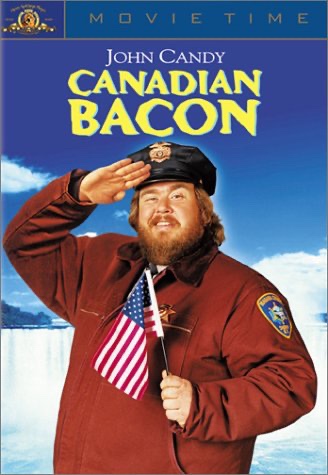
OK, I featured Paul Revere and the Raiders’s “Midnite Ride” (see #109). So, it is only fair that I play the colonially-outfitted British North-American Act — named after the British statute which created Canada in 1867.* Just to note that the lovely “Only a Dream” is not about the time that John Candy invaded Canada.
The [band] was formed in Montreal during the mid 1960s around the guitar duo of Rick Elger and Bob Allen (both British immigrants), Kirk Armstrong on bass, drummer Dave McCall, and Andy Bator on organ, originally from Hungary. They played the local area, infusing their own psychedelic mix into light pop and folk/rock for a year or so, before signing a deal with Now Records. Label brass tried to give the band an identity and had them dress in period costumes, hoping to duplicate the success Paul Revere & The Raiders had enjoyed, albeit a few years earlier. The formula was simple – keep the songs short (the whole album clocked in at under 30 minutes), and the arrangements even simpler with some fuzz guitar and overworked organ.
The band’s lone album has “sunshine pop elements of The Association and The Turtles along with more roots oriented songs a la Buffalo Springfield” (https://www.rockmyworldcanada.ca/british-north-america-act). Mark Deming says in All Music Guide that:
[It is a] gentle and likable fusion of folk-rock and psychedelia, with a bit of garage rock creeping in around the edges. [M]ost . . . follows a gentle[] and tripp[y] path [including] the bittersweet “Only a Dream.” The light, poppy touch of many of these songs makes sound just a bit behind the times for 1969 — while most of their peers were cranking up their amps and dropping acid, these guys were seemingly following more benign pursuits, both musically and recreationally . . . [The album has] engaging and likable pop that deserves a wider hearing among fans of the music of the era.
* As an aside, I was listening to some Revolutionary War re-enactors at (George Washington’s estate) Mount Vernon on Friday night when the family went to see Christmas fireworks. Some English tourists came up and said they wanted to enlist with the British troops! Talk about a British Invasion!
OK, after the precious “Pentecost Hotel”, let’s switch to some heavier British psych. “On Love”, Skip Bifferty’s* jaundiced dissertation on the subject, was their first A-side and the band’s crowning achievement, with Vernon Joynson calling out its “very catchy, insistent riff” and the liner notes to the Skip Bifferty comp saying — entirely accurately — that it had “a blistering killer fuzz guitar riff underpinning [the] superb soulful Spencer Davis like vocals.” The single, though, failed to chart. The liner notes explain that the leading pirate radio stations, Radio Caroline and Radio London, “loved it, and gave it heavy rotation, but due to the BBC’s playlist policy at the time, [Radio One] failed to pick [it] up . . . .” Bruce Eder in All Music Guide explains that after the single’s failure, the band “redefined themselves more in the direction of flower power with their next few records . . . . A dispute with [manager Don] Arden caused the band to walk out en masse, and they next appeared together under the pseudonym Heavy Jelly, cutting an eight-minute single (“I Keep Singing That Same Old Song”) that charted in a few European countries.”
Bifferty was “discovered playing an early gig at the Marquee by . . . Arden, who soon secured them a contract with RCA. Based in London, they regularly appeared on John Peel’s ‘Top Gear’ . . . .” (Vernon Joynson). Arden had told them that “in 9 months you’ll be as big as the Stones” (Skip Bifferty liner notes). Yet, Joynson points out that “[d]espite having more commercial appeal than many underground acts, they failed to break through . . . .” Bruce Eder sums up the essence of the band:
At its core, this was a ballsy, hard-playing band that recognized the need for a solid rock & roll base to this kind of [pop psych] music. . . . . In all, it’s cheerful psychedelia with a hard edge and some great virtuoso playing, pleasingly heavy guitar, soaring choruses, and eerie psych-pop lyrics evoking variant states of mind, somewhat akin to Pink Floyd’s early singles laced with the kind of heavy edge that the Creation brought to the genre.
“Self described illusion here, the game that you see is called loving. Hear my point before the game, at least let you know what’s coming. . . .”
* There was no one named Skip Bifferty in Skip Bifferty. Vernon Joynson explains that, apparently, the band named itself after a “cartoon character of their own invention.”
Oh, and the Kingsmen — yes, of “Louie, Louie” immortality — gave the song a shot:
Steven McDonald surmises in All Music Guide that “[i]t must have been a rude surprise for Kurt Cobain and company to be hit with a lawsuit over the name of their band once they became internationally successful.” Yes, Nirvana from the 60’s sued Nirvana from the 90’s. Was this a SNL skit? Like their audiences overlapped! Talk about samsara! Stewart Mason, also in AMG, says that:
One of the most entertaining things to do on websites that allow customer reviews of CDs is read the apoplectic fury Kurt Cobain’s fans have for the original Nirvana, the cultily-adored British psych-pop group from the late ’60s. Much of that misguided and ill-informed venom seems to be directed toward . . . Nirvana’s 1967 debut [album, The Story of Simon Simopath].
Smells like teen spleen! In any event, McDonald goes on:
Nirvana appeared in 1967 . . . led by Patrick Campbell-Lyons from Ireland, and Alex Spyropoulos from Greece. They were quickly signed to the fledgling Island label . . . when [Chris] Blackwell recognized a need to hook into the exploding psychedelic genre of the time. The first LP to emerge was the science-fiction concept album The Story of Simon Simopath, which yielded their second single, “Pentecost Hotel” . . . . The band’s early performances yielded something of an audience, but this did not translate into explosive sales in England or America, though the band achieved some success in Europe.
Mason nails Simopath:
An unashamedly twee early concept album, The Story of Simon Simopath . . . sounds, like most rock concept albums, like a collection of unconnected songs forced together by the story written in the liner notes. Ignoring the rather silly story (something about a boy who wishes he could fly), what’s left is a regrettably brief but uniformly solid set of well-constructed psych-pop tunes with attractive melodies and rich, semi-orchestrated arrangements.
As does Jim Wirth:
A head-shop fairytale, it charts the adventures of a depressed youngster who finds happiness on the far side of the cosmos after becoming a space pilot, its monstrous tweeness mitigated by brilliant, primary-coloured songs . . . .
Wirth notes that “Pentecost Hotel” is the “lush centrepiece” of Simopath, “promis[ing] a refuge for ‘people with a passport of insanity’, a moving exemplar of how Nirvana hinted at emotional fragility behind their crushed-velvet wall of sound.” And Melanie Blue’s liner notes to the CD reissue of Simopath effuses that “‘Pentecost Hotel’ boast[s] a superb orchestral score . . . combining a haunting melody with a sing-a-long chorus — perfect pop!” Yes, yes it is. But, as Blue’s notes note, “No dice! Radio One was having none of it — although over in Europe sales were much better.”
I would have loved to see a mash-up of the two Nirvanas. Imagine Cobain setting “Pentecost Hotel”‘s lyrics to music!
This ‘68 A-side by the Swedish band uses the same melody as the Herd’s ‘68 B-side “Our Fairy Tale” with largely different lyrics. Makes sense, as both were written by Andy Bown and the Herd’s Peter Frampton. See http://www.45cat.com/record/mgm1443. I guess the Swedes achieved Herd immunity!
Both songs are unapologetically giddy, sharing similar sentiments — “You will be happy with me in our fairy tale” vs. “Happiest days of our life (are here again)” — and sharing significant lyrics, but I think “Halycon Days” just works better. The words even sound more natural coming out of Swedish mouths. Maybe that explains ABBA?
As to the Tages, Richie Unterberger opines in All Music Guide that:
The[y] were without a doubt, the best Swedish band of the ’60s and one of the best ’60s rock acts of any sort from a non-English speaking country. Although the group’s first recordings were pretty weak Merseybeat derivations, in the mid-’60s they developed a tough, mod-influenced sound that echoed the Who and the Kinks. More than any other continental group, the Tages could have passed for a genuine British band . . . . Big throughout Scandinavia, the group actually made a determined effort to crack the English market in 1968, playing quite a few U.K. shows and releasing records there; they failed, and disbanded at the end of the year.
And Nostalgia Central tell us that:
The band released a number of singles and LPs in their native Sweden to considerable success, making the Swedish Top 10 more than a dozen times. Though remembered as one of the finest non-English speaking bands of the 1960s, they failed to ever really break into the US or UK markets. In . . . 1967 . . . they signed directly to Parlophone and one of their singles . . . was the (at the time) very controversial She’s Having A Baby Now which many radio stations refused to play because of the subject matter. The Tages also produced one of the world’s first psychedelic albums, named Extra Extra in 1966. Then they wanted to create a pop-music that was totally Swedish by learning old Swedish folk-music. After this, they produced their fifth and last album – named Studio – at Abbey Road in 1967. The album is very influenced by Swedish folk music and psychedelia and is remembered as the finest album from the sixties from a non-English speaking country (it has been called the ‘Sgt Pepper Of Sweden’).
Another glorious, but lesser known, selection from Keep on Pushing, the Impressions’s 1st top 10 album (see #118).
John Bush writes
[T]he album featured all the hallmarks of an Impressions set: impeccably smooth harmonies, the dynamic horn charts of Johnny Pate, and many more of [Curtis] Mayfield’s irresistible songs (each with a clever spin on the usual love lyric as well as a strong sense of melody). . . . Keep on Pushing was . . . an excellent introduction for pop audiences just waking up to the inspirational power of soul music’s finest group.
Former Third Bardo lead singer Jeff Monn released an incredible album in ’68 (see #98). Orchestration courtesy of Peter Schickele — the one and only P.D.Q. Bach. The title song is Monn’s vain fantasy of a girlfriend crawling back to him. Of course it’s called “Reality”!
281) Sonny Bono — “My Best Friend’s Girl Is Out of Sight.”
Ah, Sonny. His sole solo album, his late ’67 psychedelic opus Inner Views, is not well known — Bruce Eder notes that it “disappeared without a trace of its passing.” (https://www.allmusic.com/artist/sonny-bono-mn0000036402/biography) However, those who have been turned on to it seem to have polar opposite reactions — delight or derision. Nathan Ford fondly writes that:
Sonny briefly dropped Cher (and a lot of LSD by the sound of it) for this surprisingly hip psychedelic opus. There are sitars all over the place and the lengthier tracks . . . have the slightly unhinged quality of Eric Burdon’s San Francisco narratives. It all fits together marvelously as an album and has moments that suggest a wiggier Lee Hazlewood. Why this potential cult favourite has remained largely unchampioned is a mystery to us.
In 1967 Sonny Bono did the unthinkable. He departed from Cher . . . and made his own album. Inner Views is not well known, and definitely not renowned, but it does deserve serious respect. . . . By the time Inner Views was released Sonny was 32. He was past his party heyday and was actually quite conservative in nature. He did not smoke pot or partake in any other kinds of drugs. [H]is age and maturity are a major factor in the content of this album while showing some serious songwriting skills. . . .
On the other hand, Serene Dominic is deliciously and hilariously bitchy in the great new online journal Psychedelic Scene Magazine:
Everybody who made a record before 1967 has at least one bad psychedelic moment and this week you’d better sit down, kids. Sonny Bono’s Psychedelic Skelton in the Closet wants to bum you out. . . . Sonny, who had a voice like the horn on a Hyundai[, f]or some unexplained reason . . . cut an entire album by himself . . . . Its cover is a hideous etching of Sonny sitting peacefully with a smokey genie of Cher billowing next to him . . . . In Sonny’s autobiography And The Beat Goes On, he admits, “I tried chasing the newer sound for awhile but could never get a handle on it. The LP Inner Views was my attempt at psychedelic music. . . .” [S]onny understands the requirements of this new music (to take drugs and do everything to excess) but stubbornly refuses to follow through with those requirements (by doing everything to excess stone cold sober) . . . . There aren’t two grooves pressed together on the whole first side that escape contamination from squiggly sitar runs . . . . [l]ike the dull droning buzz of a dying bee or the hum of a faulty air conditioner . . . .
My verdict? Well, I’m playing a cut, aren’t I? Whether or not it is a guilty pleasure, in my mind’s eye, Inner Views is pure pleasure. As to “My Best Friend’s Girl Is Out of Sight,” I think the song is out of sight. Lindsay Planer says that the “ragtime rhythm that drives the tale of jealousy on . . . comes off . . . as hopelessly antediluvian.” (https://www.allmusic.com/album/inner-views-mw0000206094) Wait, isn’t that a compliment? Think of Dylan and the Band’s Before the Flood.
I’m still diggin’ on “My Best Friend’s Girl.” And I’m still diggin’ on Sonny. I even got to work with the man when he was a Member of the U.S. House Judiciary Committee. Don’t think I won’t select another cut or two from Inner Views. Well, I’d threaten more, but the album only had five songs!
282) Cher — “Masters of War”
In ’68, Cher cut the best cover version of “Masters of War” that I have heard. Yes, you heard right, Cher the protest singer, the Zimmerwoman. Joe Viglione wonders whether “the song was describing behind-the-scenes at the Bono household?” (https://www.allmusic.com/album/inner-views-mw0000206094) Yeah, well, the personal is political!
283)Sonny & Cher — “Leave Me Be”
The song is a cover of the Zombies’s ’64 A-side that S&C included on ’66’s The Wonderous World of Sonny & Cher. Richie Unterberger calls the album “pleasant Spectorian mid-’60s pop-rock (heavy on the bells and glockenspiel especially)” and says that S&C’s “taste in cover material was eclectic and for the most part good [including] the Zombies’ obscurity ‘Leave Me Be’ . . . .” (https://www.allmusic.com/album/wonderous-world-of-sonny-cher-mw0000030214) Well, Cher the Zombie-killer kills it. Man, when she snarls “better leave me alone,” the venom just drips off the grooves.
This gorgeous ’69 single was the first by the showband* from Ballymena, Northern Ireland, led by Cahir O’Doherty:
By early December, 1968 . . . the band were “the only Northern group the young kids in Dublin really want to know about. . . . Cahir is a great favourite with almost everybody.” . . . Charismatic lead singer Cahir O’Doherty had good looks and talent, but the group never quite made it out of the beat group scene. [In 1969] they announced they were becoming a showband. Heralded as a new mod “super showband-group,” they took ex-members of Granny’s Intentions and the Fire Brigade and became a seven piece. [T]he band released its first single, Sing Me A Sad Song and took to the ballroom circuit. . . . [Later, O’Doherty] was a major player on the Irish stage, taking starring roles in both Jesus Christ Superstar and as Pharaoh in Joseph and His Amazing Technicolor Dreamcoat.
When Irish teenagers started to hear the new rock n’ roll from the US and the UK, reflecting the changing tastes, the Irish Showband was born. They played upbeat rhythm and blues and pop music with one aim – to get people dancing. A second wave of showbands arrived in the late sixties and early seventies playing a rock, blues and soul style . . . .
‘66 A-side is a teenage wanderlust bucket list from the Bristol, Connecticut band. The song had the honor of being included on the 1st Pebbles LP compilation in ‘79. Richie Unterberger says in All Music Guide that it “was a tough but melodic garage-pop original.” Nuggets calls it “a transcendent ’60s rock ‘n’ roll record” and “an almost perfect creation” — “[t]hat the song wasn’t a huge hit . . . is shameful . . . .” Dave Furgess declares that:
[It] is quite simply one of the top 10 USA garage 45’s of the era. Musically it comes on as strong as 1966 Byrds blended with the toughness of the early Who. Lyrically it is in the same ballpark as Third Bardo’s “I’m 5 Years Ahead Of My Time” & The Who’s “I Can See For Miles” in that it is a teenage declaration of intent.
Oz may be a darling of critics and collectors, but I admit that this ‘68 carnival ride of a B-side to “Muffin Man” (Oz’s best-known song and 1st A-side) is the group’s only song I think is really cool. I guess you can chalk it up to the Peter Principle.* By the way, Richard Metzger at Dangerousminds.net says that “Muffin Man” might be “the greatest/goofiest song ever written”. Well, it is certainly goofy. I once played it to my kids to celebrate their consumption of some blueberry muffins. In the Netherlands, the single hit #6, but didn’t hit the top 50 in the UK.
In any event, the band consisted of Brummies who moved to London to seek stardom:
They decided that while Birmingham’s club scene could provide work, it didn’t offer the kind of prospects for a recording career that they had in mind, and so they headed to London. Their songwriting ability got them snatched up by Sparta Music. And for a manager, they had no less a figure than Barry Class, who was best known for his most successful client, the Foundations (of “Build Me Up Buttercup” fame). Class lived up to his last name by setting the group up in a luxury apartment on Park Lane, in London’s exclusive Mayfair district, long a fashionable locale for movie stars and theater performers seeking to put on a big front in their lives. It made for a fair amount of press access and good press, as well as impressing various record company executives, accustomed to dealing with up-and-coming bands living in near squalor.
Bruce Eder, All Music Guide
However, as summed up by John Tracy’s liner notes to their sole album’s CD reissue:
They achieved in a short period of time success — with the likelihood of more to come — that many of their peers in the late-1960s could only dream of, yet for reasons that we’ll probably never know, simply imploded when they needed to sustain.
* According to Investopedia, the principle “is an observation that the tendency in most organizational hierarchies, such as that of a corporation, is for every employee to rise in the hierarchy through promotion until they reach a level of respective incompetence.”
This is the B-side of Christopher’s only single (’70), a biting indictment of ultra-competitiveness in the “whoever dies with the most toys wins” vein.
It appears that Christopher is actually Christopher Neil, who, according to Wikipedia, “is an Irish record producer, songwriter, singer, and actor” who “started in the mid-sixties as a singer with Manchester group the Chuckles.” He produced records for, among others, A-ha, Celine Dion, Cher, Gerry Rafferty, Rod Stewart, Sheena Easton and the Moody Blues. In the ’70s, he played Jesus in Jesus Christ Superstar . . . and later that decade starred in two British sex comedies — Adventures of a Private Eye and Adventures of a Plumber’s Mate (in addition to writing and singing the theme songs). Well, no one can say that he was typecast!
276) The Charles Kingsley Creation — “Summer Without Sun”
Joe Meek produced this wonderful Merseybeat ballad by Welsh brothers Charles and Kingsley Ward. If the November ’65 A-side were written and released a year or two earlier, I’m sure it would have been a big hit in the UK and the U.S. However, everything probably worked out for the best, as after the single flopped, the brothers converted part of their farm into the fabled Rockfield residential recording studios, and the rest (Dave Edmunds, Oasis, Stone Roses . . .) is rock history.
Here is a trailer for the Rockfield Studio documentary:

 Brace for the Obscure (60s rock)! / Off the Charts: 60s Rock Revelations😊