THE GREATEST SONGS OF THE 1960s THAT NO ONE HAS EVER HEARD
645) Duffy Power — “I Saw Her Standing There” (alternate version)
What a wild, happening ’63 cover of “I Saw Her Standing There” by the great Duffy Power (see #638). Duffy’s first take is even better than his A-side, but the Beatles told him it was “too jazzy”! Well, it is gloriously jazzy, in a Austin Powers/Quincy Jones “Soul Bossa Nova” sort of way. Yeah, baby!
Colin Harper:
[Duffy] recorded I Saw Her Standing There on 20 February 1963, [and] he was only the second artist to cover Lennon/McCartney on record. At that time [they] were trying to establish themselves as songwriters for other artists already considered successful and had written the song with him in mind. Duffy was backed by the Graham Bond Quartet, including John McLaughlin (guitar), Jack Bruce (bass) and Ginger Baker (drums) . . . . When word came back that “the boys” found it “too jazzy”, it was re-recorded, toned down, a month later. The group, plus Duffy, toured together and guested on the BBC radio show Pop Go the Beatles.
Bruce Eder adds that “the most impressive aspect of the recording, given its early date, was Power and the band’s thorough reinvention of song, a strong hint of just how much talent and ambition resided behind that fading teen idol persona.” (https://www.allmusic.com/artist/duffy-power-mn0000120231)
Pay to Play! The Off the Charts Spotify Playlist! + Brace for the Obscure 60s Rock Merchandise
Please consider helping to support my website/blog by contributing $6 a month for access to the Off the Charts Spotify Playlist. Using a term familiar to denizens of Capitol Hill, you pay to play! (“relating to or denoting an unethical or illicit arrangement in which payment is made by those who want certain privileges or advantages in such arenas as business, politics, sports, and entertainment” — dictionary.com).
The playlist includes all the “greatest songs of the 1960’s that no one has ever heard” that are available on Spotify. The playlist will expand each time I feature an available song.
All new subscribers will receive a Brace for the Obscure 60s Rock magnet. New subscribers who sign up for a year will also receive a Brace for the Obscure 60s Rock t-shirt or baseball cap. See pictures on the Pay to Play page.
When subscribing, please send me an e-mail (GMFtma1@gmail.com) or a comment on this site letting me know an e-mail address/phone number/Facebook address, etc. to which I can send instructions on accessing the playlist and a physical address to which I can sent a magnet/t-shirt/baseball cap. If choosing a t-shirt, please let me know the gender and size you prefer.
Just click on the first blue block for a month to month subscription or the second blue block for a yearly subscription.
The most successful Hungarian rock band in history, Omega was formed in 1962 in Budapest by a group of friends. . . . As with many other rock groups of the early ’60s, the band’s repertory largely consisted of songs by popular British bands of the period. Only in 1967, when they were joined by Gábor Presser (keyboards, vocals), did they began recording their own songs and issuing a few singles. Presser’s mixture of rock with elements of jazz and folk proved to be a winning formula. In 1968, John Martin, the manager of the Spencer Davis Group, invited them for a tour in Great Britain . . . . The band sealed their success with two subsequent LPs [including] 10,000 lépés (10,000 Steps) (1969) [from which today’s song is taken]. Their 1969 song “Gyöngyhajú lány” (The Girl with Pearls in Her Hair) became their first international hit and was later reworked by the Scorpions into “White Dove” in the mid-’90s.
Pay to Play! The Off the Charts Spotify Playlist! + Brace for the Obscure 60s Rock Merchandise
Please consider helping to support my website/blog by contributing $6 a month for access to the Off the Charts Spotify Playlist. Using a term familiar to denizens of Capitol Hill, you pay to play! (“relating to or denoting an unethical or illicit arrangement in which payment is made by those who want certain privileges or advantages in such arenas as business, politics, sports, and entertainment” — dictionary.com).
The playlist includes all the “greatest songs of the 1960’s that no one has ever heard” that are available on Spotify. The playlist will expand each time I feature an available song.
All new subscribers will receive a Brace for the Obscure 60s Rock magnet. New subscribers who sign up for a year will also receive a Brace for the Obscure 60s Rock t-shirt or baseball cap. See pictures on the Pay to Play page.
When subscribing, please send me an e-mail (GMFtma1@gmail.com) or a comment on this site letting me know an e-mail address/phone number/Facebook address, etc. to which I can send instructions on accessing the playlist and a physical address to which I can sent a magnet/t-shirt/baseball cap. If choosing a t-shirt, please let me know the gender and size you prefer.
Just click on the first blue block for a month to month subscription or the second blue block for a yearly subscription.
THE GREATEST SONGS OF THE 1960s THAT NO ONE HAS EVER HEARD
643) Barbara Lewis — “Baby That’s a No No”
Here is a late career classic that should have been a single, should have been a hit! Barbara grew up near Ann Arbor, Michigan, my home for law school. The Michigan Rock and Roll Legends Hall of Fame notes that she was discovered by former Ann Arbor disc jockey Ollie McLaughlin and that she is ranked “second to only Aretha Franklin in terms of chart success for female solo artists from the state of Michigan”. (https://michiganrockandrolllegends.com/index.php/mrrl-hall-of-fame/298-barbara-lewis)
“No No” appeared on Barbara’s ‘70 album for the Stax subsidiary Enterprise Records. Richie Unterberger says that:
Although this late-’60s album isn’t nearly as well known as Barbara Lewis’ poppier mid-’60s hits, this is excellent sweet soul that avoids slickness. . . . Lewis recorded this set of strong soul-pop in Chicago.
[The album] gave her sound a grittier approach, without compromising the smooth and poppy elements integral to the singer’s appeal. It passed mostly unnoticed . . . .
Pay to Play! The Off the Charts Spotify Playlist! + Brace for the Obscure 60s Rock Merchandise
Please consider helping to support my website/blog by contributing $6 a month for access to the Off the Charts Spotify Playlist. Using a term familiar to denizens of Capitol Hill, you pay to play! (“relating to or denoting an unethical or illicit arrangement in which payment is made by those who want certain privileges or advantages in such arenas as business, politics, sports, and entertainment” — dictionary.com).
The playlist includes all the “greatest songs of the 1960’s that no one has ever heard” that are available on Spotify. The playlist will expand each time I feature an available song.
All new subscribers will receive a Brace for the Obscure 60s Rock magnet. New subscribers who sign up for a year will also receive a Brace for the Obscure 60s Rock t-shirt or baseball cap. See pictures on the Pay to Play page.
When subscribing, please send me an e-mail (GMFtma1@gmail.com) or a comment on this site letting me know an e-mail address/phone number/Facebook address, etc. to which I can send instructions on accessing the playlist and a physical address to which I can sent a magnet/t-shirt/baseball cap. If choosing a t-shirt, please let me know the gender and size you prefer.
Just click on the first blue block for a month to month subscription or the second blue block for a yearly subscription.
THE GREATEST SONGS OF THE 1960s THAT NO ONE HAS EVER HEARD
642) Al Kooper — “Anna Lee (What Can I Do For You)”
A glorious Band-y cut from Kooper’s second solo album, ’69’s You Never Know Who Your Friends Are, a song, as Ian McFarlane says, that is full of “swooping, soulful intensity” (liner notes to CD reissue of You Never Know Who Your Friends Are)
Kooper should have long ago been inducted into the Rock & Roll Hall of Fame. Bruce Eder says that Kooper “by rights, should be regarded as one of the giants of ’60s rock, not far behind the likes of Bob Dylan and Paul Simon in importance.” (https://www.allmusic.com/artist/al-kooper-mn0000509524) Yup.
Kooper should also have been inducted into the Chutzpah Hall of Fame. As the famous story goes, he bluffed his way into a Bob Dylan recording session. They took up Like a Rolling Stone, and as Richard Havers describes it:
“I’ve got a great organ part for the song,” [Kooper] told . . . producer [Tom Wilson]. “Al, . . you don’t even play the organ.” Before Kooper could argue his case, Wilson was distracted and so the twenty-one-year-old, “former guitar player,” simply walked into the studio and sat down at the B3. . . . During a playback of tracks in the control room, when asked about the organ track, Dylan was emphatic: “Turn the organ up!”
[H]e was a very audible sessionman on some of the most important records of mid-decade . . . . Kooper also joined and led, and then lost two major groups, the Blues Project and Blood, Sweat & Tears. He played on two classic blues-rock albums in conjunction with his friend Mike Bloomfield. As a producer at Columbia, he signed the British invasion act the Zombies just in time for them to complete the best LP in their entire history; and still later, Kooper discovered Lynyrd Skynyrd and produced their best work.
Pay to Play! The Off the Charts Spotify Playlist! + Brace for the Obscure 60s Rock Merchandise
Please consider helping to support my website/blog by contributing $6 a month for access to the Off the Charts Spotify Playlist. Using a term familiar to denizens of Capitol Hill, you pay to play! (“relating to or denoting an unethical or illicit arrangement in which payment is made by those who want certain privileges or advantages in such arenas as business, politics, sports, and entertainment” — dictionary.com).
The playlist includes all the “greatest songs of the 1960’s that no one has ever heard” that are available on Spotify. The playlist will expand each time I feature an available song.
All new subscribers will receive a Brace for the Obscure 60s Rock magnet. New subscribers who sign up for a year will also receive a Brace for the Obscure 60s Rock t-shirt or baseball cap. See pictures on the Pay to Play page.
When subscribing, please send me an e-mail (GMFtma1@gmail.com) or a comment on this site letting me know an e-mail address/phone number/Facebook address, etc. to which I can send instructions on accessing the playlist and a physical address to which I can sent a magnet/t-shirt/baseball cap. If choosing a t-shirt, please let me know the gender and size you prefer.
Just click on the first blue block for a month to month subscription or the second blue block for a yearly subscription.
THE GREATEST SONGS OF THE 1960s THAT NO ONE HAS EVER HEARD
641) The Cape Kennedy Construction Company — “The First Step on the Moon”
Back to the moon! Here is the A-side from the Company’s only single — released in the UK on July 25, 1969, four days after Neil Armstrong became the first human to walk on the moon. (https://www.45cat.com/record/pt265) Talk about a great tie-in! Vernon Joynson calls the Company “[a] totally obscure group” and calls the single “a weird and wonderful 45.” (The Tapestry of Delights Revisited) Yup. This is, well, a “moonshine” pop gem that perfectly encapsulates the joy and wonder and hope for a unified humanity generated by the first moon landing. Unless it was all a hoax. : )
“To be the one who will make the first step on the moon. If only I could be the one. . . .”
Pay to Play! The Off the Charts Spotify Playlist! + Brace for the Obscure 60s Rock Merchandise
Please consider helping to support my website/blog by contributing $6 a month for access to the Off the Charts Spotify Playlist. Using a term familiar to denizens of Capitol Hill, you pay to play! (“relating to or denoting an unethical or illicit arrangement in which payment is made by those who want certain privileges or advantages in such arenas as business, politics, sports, and entertainment” — dictionary.com).
The playlist includes all the “greatest songs of the 1960’s that no one has ever heard” that are available on Spotify. The playlist will expand each time I feature an available song.
All new subscribers will receive a Brace for the Obscure 60s Rock magnet. New subscribers who sign up for a year will also receive a Brace for the Obscure 60s Rock t-shirt or baseball cap. See pictures on the Pay to Play page.
When subscribing, please send me an e-mail (GMFtma1@gmail.com) or a comment on this site letting me know an e-mail address/phone number/Facebook address, etc. to which I can send instructions on accessing the playlist and a physical address to which I can sent a magnet/t-shirt/baseball cap. If choosing a t-shirt, please let me know the gender and size you prefer.
Just click on the first blue block for a month to month subscription or the second blue block for a yearly subscription.
THE GREATEST SONGS OF THE 1960s THAT NO ONE HAS EVER HEARD
640) The Floor —“Hush”
An anodyne treat from Denmark, this pop psych/folk rock wonder comes from the band’s only album. Richie Unterberger calls the song “delicately folky” with “a beguiling winding melody”. (https://www.allmusic.com/album/1st-floor-mw0001449509) Yup. As Shakespeare might say, something is groovy in the state of Denmark!
Unterberger goes on to tell us that:
Evolving out of the Hitmakers, the Danish band Floor made one pop-psychedelic album in 1967, 1st Floor. . . . [I]ndebted to [the] poppier side of British psychedelia, it’s a diverse record with some strong material, incorporating ornate, classical-influenced arrangements, singalong Brit-pop melodies, and cheerful pop/rock harmonies.
[L]ittle of the material was written by the band. . . . [b]ut it’s nonetheless decent, tuneful material with some attractive vocal harmonies . . . .
According to a Danish website (courtesy of Google Translate):
[The Hitmakers made their recording] debut in the summer of 1963 with the Beatles[‘] I Saw Her Standing There. In 1963-64 [they] toured a lot in Finland with great success . . . . [T]hey were the warm-up band for the Beatles in K.B. Hallen, 4 June 1964. . . . [T]he Hitmakers had to wait for an actual Danish breakthrough until Stop the Music, December 65, which was launched in TV’s »Klar i Studiet«. [They h]ad great success in 1966 with the parody album Træd an ved makronerne. In November 1966, the group was on a short tour in England . . . .
In the summer of 1967, the Hitmakers changed their style to a softer flower-power-inspired pop. Expanded in autumn 1967 with and the group changed its name to The Floor. Despite two singles and the very ambitious 1st Floor-LP . . , which had been one of the most expensive Danish rock productions to date, the group did not manage to maintain its previous popularity. . . . Floor disbanded in the summer of 1968…. The Hitmakers were definitely among the top groups of the barbed wire* era . . . .
* Danish Wikipedia notes that “barbed wire music”/”Pigtrådsmusik” “is a Danish expression from the early 1960s. . . . originally a derogatory term for Danish rock music, which referred to the ‘noisy’ guitar sound.” (https://da.wikipedia.org/wiki/Pigtr%C3%A5dsmusik)
Pay to Play! The Off the Charts Spotify Playlist! + Brace for the Obscure 60s Rock Merchandise
Please consider helping to support my website/blog by contributing $6 a month for access to the Off the Charts Spotify Playlist. Using a term familiar to denizens of Capitol Hill, you pay to play! (“relating to or denoting an unethical or illicit arrangement in which payment is made by those who want certain privileges or advantages in such arenas as business, politics, sports, and entertainment” — dictionary.com).
The playlist includes all the “greatest songs of the 1960’s that no one has ever heard” that are available on Spotify. The playlist will expand each time I feature an available song.
All new subscribers will receive a Brace for the Obscure 60s Rock magnet. New subscribers who sign up for a year will also receive a Brace for the Obscure 60s Rock t-shirt or baseball cap. See pictures on the Pay to Play page.
When subscribing, please send me an e-mail (GMFtma1@gmail.com) or a comment on this site letting me know an e-mail address/phone number/Facebook address, etc. to which I can send instructions on accessing the playlist and a physical address to which I can sent a magnet/t-shirt/baseball cap. If choosing a t-shirt, please let me know the gender and size you prefer.
Just click on the first blue block for a month to month subscription or the second blue block for a yearly subscription.
THE GREATEST SONGS OF THE 1960s THAT NO ONE HAS EVER HEARD
639) Herman’s Hermits — “Busy Line”
Herman’s Hermits (see #300, 613) will be the new Monkees. They will get the respect they deserve. Don’t take my word for it. Just listen to Altrockchick:
They were one of the most successful bands of the invasion years (the #1 pop act in the U.S. in 1965), in large part because of their uncanny ability to make people smile. Peter Noone was the terminally cute boy that every girl’s mother wanted as a son-in-law, and the band seemed much less rough around the edges than the other invaders, including The Fab Four. . . . Once they faded from the scene, they apparently became something of a joke, a group of lightweights who made it because of exquisite timing and Herman’s irresistible sweetness: the British version of The Monkees, another band whose reputation suffered after they departed from the scene. . . . [But a]t their best, they performed with sincere and unrestrained joy and made people feel good about everyday life. . . . [T]hey did pop songs as well as anyone before or since. I refuse to apologize for liking Herman’s Hermits! . . . [W]hen they were on, enjoying themselves and the music, they had the ability to express the sweet and honest emotions of youth in a way that reminded people how sweet those innocent feelings were. Compare and contrast that to the celebration of suicidal tendencies in 90’s teen rock and I’ll take Herman’s Hermits every time, as uncool as that may be. So, yes, this dominant, leather-clad, sadistic, cigarette-smoking, vodka-guzzling, martial-arts-trained, whip-wielding terror of a woman has absolutely no guilt about expressing her appreciation for Herman’s Hermits . . . .
Time and “hip” critics haven’t exactly been kind to Herman’s Hermits . . . . Which I say bullshit to. The Hermits ran a pretty good race, staying the course until around 1970 . . . but a six-year career was not a bad thing. Especially when you see how quickly most of their contemporaries in the original British Invasion disappeared without a whimper by early-to-mid 1966. Although they may have been perceived as lightweight, they were actually quite an astute and damned fine band. Nowhere better is this personified than by two of their original tracks . . . from their criminally-overlooked (and final) album from 1967, Blaze, [including] “Busy Line” . . . Herman’s Hermits are deserving of a serious re-appraisal.
Anyway, “Busy Line” is a delightfully melancholy song written by the Hermits’ Karl Green, Keith Hopwood and Derek Leckenby. “The band members were even beginning to write fine songs themselves. . . . “’Busy Line’ [is a] good example[.”] (https://returnofrock.com/hermans-hermits-albums-ranked/) Green remembers that:
When Blaze was first conceived I remember seeing it as a vehicle to try and grow as a band, and write some music that reflected my own preferred tastes in music. . . . I . . . wrote Busy Line . . . . [We] tried to break the HH mold a little and give the band a grittier edge that I felt we needed to grow musically, but sadly Peter started to get more and more dissatisfied with being in the band after this album, and wanted to pursue his solo career . . . .
[B]ehind The Beatles and The Rolling Stones the band ranked third in record sales in the United States as part of the “British Invasion”. . . . With lead singer Peter Noone successfully exploited/marketed as a teen idol in the States their target market was, unlike the top two, decidedly slim (the attention span of prepubescent girls was probably not a fair bet to hedge your company on). . . . “Sgt. Pepper” had all but slain everyone of the “beat group” era save The Hollies and though Herman’s Hermits still managed chart hits in the U.K., their day was pretty much done in the U.S. “Blaze” . . . was unleashed on the U.S. record buying public in October 1967 where it managed to reach the depressing #75 on the LP slots (it’s predecessor “There’s A Kind of Hush” clocked out at #17). It utilized two previously released U.S. singles, “Don’t Go Out Into The Rain” (May 1967, #17) and Donovan’s “Museum” (September 1967, #39), their B-sides and a slew of other new tracks. It was not released in the U.K. What’s most fascinating is it’s front sleeve. There’s a quadruple color photo image of the band squatting near a pastoral riverbank in their finest . . . without a title or band name to be seen. Deceiving as the photo may be . . . it’s actually quite good.
Pay to Play! The Off the Charts Spotify Playlist! + Brace for the Obscure 60s Rock Merchandise
Please consider helping to support my website/blog by contributing $6 a month for access to the Off the Charts Spotify Playlist. Using a term familiar to denizens of Capitol Hill, you pay to play! (“relating to or denoting an unethical or illicit arrangement in which payment is made by those who want certain privileges or advantages in such arenas as business, politics, sports, and entertainment” — dictionary.com).
The playlist includes all the “greatest songs of the 1960’s that no one has ever heard” that are available on Spotify. The playlist will expand each time I feature an available song.
All new subscribers will receive a Brace for the Obscure 60s Rock magnet. New subscribers who sign up for a year will also receive a Brace for the Obscure 60s Rock t-shirt or baseball cap. See pictures on the Pay to Play page.
When subscribing, please send me an e-mail (GMFtma1@gmail.com) or a comment on this site letting me know an e-mail address/phone number/Facebook address, etc. to which I can send instructions on accessing the playlist and a physical address to which I can sent a magnet/t-shirt/baseball cap. If choosing a t-shirt, please let me know the gender and size you prefer.
Just click on the first blue block for a month to month subscription or the second blue block for a yearly subscription.
THE GREATEST SONGS OF THE 1960s THAT NO ONE HAS EVER HEARD
636) Duffy Power — “Mary Open the Door”
This stunning number from the British blues legend “is a fine soulful blues-rock Power original” (Richie Unterberger, https://www.allmusic.com/artist/duffys-nucleus-mn0001805601), unlike pretty much anything he ever recorded. Diana Donald comments on YouTube that:
Duffy and I wrote this together, not that I got credit for it! Always suspected it was about me as it was my middle name and he used to say this a lot! Love it. . . . He was way ahead of his time, before Clapton, Mayell et al and with his problems I think it was just the wrong time which was a shame.
Duffy Power was one of several British vocalists . . . signed to the Larry Parnes stable. When Parnes, Britain’s first rock impresario, visited a Saturday morning teenage show . . . to hear a band early in 1959, he also saw the young Ray Howard win a jive competition. Parnes was so impressed when he heard him sing that he signed him up. He was 17 . . . . wearing leopard skin jackets and gold lame waistcoats . . . . Duffy made no headway as a recording artist although his stage performances were stunning. It was while with Parnes that he met Billy Fury and Dickie Pride and the three became firm friends . . . . Convinced he was never going to make it under Parnes’ management, Duffy parted company with him in late 1961, but things did not go well. . . . “My gigs as a rock’n’roll singer . . . were getting weaker. I was going out in blue and gold lame suits, but the girls’ screams were dying out. . . . [T]he money wasn’t coming in . . . .” One night he tried to commit suicide by gassing himself, but was rescued by a chance call from a friend, who took him to a blues club to recover and there, for the first time, he discovered the music he really wanted to play.
He teamed up with the newly formed Graham Bond Quartet featuring Ginger Baker, Jack Bruce (both later members of Cream) and John McLaughlin. . . . [H]e later supplemented his solo career by joining Alexis Korner’s Blues Incorporated. . . . [But] by 1968 Duffy was out of work and broke again. Only this time his troubles were aggravated by drug taking and he succumbed to mental illness. For a time he became a recluse, writing songs alone in his flat . . . .
Duffy was born Ray Howard in . . . London . . . . Coming into music through skiffle and dance competitions, he was discovered by Parnes . . . and renamed. The six singles he then recorded on the Fontana label between 1959 and 1961 were typical ersatz American numbers of the era. Duffy left Parnes . . . and during his career’s second phase on Parlophone recorded five superb singles between 1963 and 1964, revealing a hugely versatile, emotive voice, on material (some self-written) finally worthy of it.
In parallel with his mainstream pop career, Duffy had become consumed with the blues. Alexis Korner was his early mentor. Duffy was by then suffering from mental health problems. Ian Anderson, now editor of Folk Roots magazine, recalls seeing Duffy give extraordinarily intense mid-60s performances at the London folk cellar Les Cousins where he appeared to be a man “with the Devil in hot pursuit”.
Temporarily without a record contract in 1965, Duffy threw himself into songwriting and blues-based performing. After fronting an LP by Alexis Korner’s Blues Incorporated, Sky High (1965), he began recording a series of remarkable publishing demos for Marquis Music, with a world-class pool of collaborators [including “Mary”] . . . . “The resemblance to Billie Holiday is the most striking thing about Duffy Power,” suggested a Gramophone writer, when some of these recordings emerged as the surprisingly successful LP Innovations in 1971. “At his finest he communicates the same sense of emotional involvement, the same distraught lyricism.”
Duffy recorded three versions of “Mary”. As Richie Unterberger writes:
In 1966 and 1967 he was the head of a temporary group called Duffy’s Nucleus . . . . There was just one single billed to Duffy’s Nucleus, “Mary Open the Door”/”Hound Dog,” in January 1967. . . . The best and most rock-oriented take [of “Mary”] came out on the 1970 album Innovations (although it had been recorded in the mid-’60s) . . . . The Duffy’s Nucleus version is differentiated from the Innovations one by the presence of horns and female backup singers, and in 1969, he did an acoustic rendition for the Spark album Duffy Power.
Pay to Play! The Off the Charts Spotify Playlist! + Brace for the Obscure 60s Rock Merchandise
Please consider helping to support my website/blog by contributing $6 a month for access to the Off the Charts Spotify Playlist. Using a term familiar to denizens of Capitol Hill, you pay to play! (“relating to or denoting an unethical or illicit arrangement in which payment is made by those who want certain privileges or advantages in such arenas as business, politics, sports, and entertainment” — dictionary.com).
The playlist includes all the “greatest songs of the 1960’s that no one has ever heard” that are available on Spotify. The playlist will expand each time I feature an available song.
All new subscribers will receive a Brace for the Obscure 60s Rock magnet. New subscribers who sign up for a year will also receive a Brace for the Obscure 60s Rock t-shirt or baseball cap. See pictures on the Pay to Play page.
When subscribing, please send me an e-mail (GMFtma1@gmail.com) or a comment on this site letting me know an e-mail address/phone number/Facebook address, etc. to which I can send instructions on accessing the playlist and a physical address to which I can sent a magnet/t-shirt/baseball cap. If choosing a t-shirt, please let me know the gender and size you prefer.
Just click on the first blue block for a month to month subscription or the second blue block for a yearly subscription.
THE GREATEST SONGS OF THE 1960s THAT NO ONE HAS EVER HEARD
637) John Cale — “Gideon’s Bible”
What, the Velvet Underground’s classically-trained demon’s first solo album was . . . pure pop pleasure?! Yup, and peak pleasure is “Gideon’s Bible”, though I have to admit the lyrics are fairly inscrutable.
As Brendan says, “Cale proves he’s got mad pop song skills to match his solid, driving piano stomping. No doubt some of these songs should have been hits.” (http://therisingstorm.net/john-cale-vintage-violence/) And as Syd Fablo says:
John Cale’s solo debut is shocking. One might have expected some all-out avant-rock akin to what Cale did with The Velvet Underground. Maybe some droning classical compositions . . . . [or] maybe even something like the albums he produced for The Stooges and Nico. Instead he delivered a Bee Gees Odessa, a Beach Boys Sunflower, or something along those lines at least.
John Cale had the strongest avant-garde credentials of anyone in the Velvet Underground, but he was also the Velvet whose solo career was the least strongly defined by his work with the band, and his first solo album, Vintage Violence, certainly bears this out. While the banshee howls of Cale’s viola and the percussive stab of his keyboard parts were his signature sounds on The Velvet Underground and Nico and White Light/White Heat, Cale’s first solo album, 1970’s Vintage Violence, was a startlingly user-friendly piece of mature, intelligent pop whose great failing may have been being a shade too sophisticated for radio. Cale’s work with the Velvets was purposefully rough and aurally challenging, but Vintage Violence is buffed to a smooth, satin finish . . . . Cale has rarely sounded this well-adjusted on record, though his lyrical voice is usually a bit too cryptic to stand up to a literal interpretation of his words. If Cale wanted to clear out a separate and distinct path for his solo career, he certainly did that with Vintage Violence . . . .
Pay to Play! The Off the Charts Spotify Playlist! + Brace for the Obscure 60s Rock Merchandise
Please consider helping to support my website/blog by contributing $6 a month for access to the Off the Charts Spotify Playlist. Using a term familiar to denizens of Capitol Hill, you pay to play! (“relating to or denoting an unethical or illicit arrangement in which payment is made by those who want certain privileges or advantages in such arenas as business, politics, sports, and entertainment” — dictionary.com).
The playlist includes all the “greatest songs of the 1960’s that no one has ever heard” that are available on Spotify. The playlist will expand each time I feature an available song.
All new subscribers will receive a Brace for the Obscure 60s Rock magnet. New subscribers who sign up for a year will also receive a Brace for the Obscure 60s Rock t-shirt or baseball cap. See pictures on the Pay to Play page.
When subscribing, please send me an e-mail (GMFtma1@gmail.com) or a comment on this site letting me know an e-mail address/phone number/Facebook address, etc. to which I can send instructions on accessing the playlist and a physical address to which I can sent a magnet/t-shirt/baseball cap. If choosing a t-shirt, please let me know the gender and size you prefer.
Just click on the first blue block for a month to month subscription or the second blue block for a yearly subscription.
THE GREATEST SONGS OF THE 1960s THAT NO ONE HAS EVER HEARD
636) The Searchers — “Crazy Dreams”
The Searchers’ chart successes dwindled in the latter half of the ‘60’s, but they still released exquisite singles, ones that deserved to be hits. One of the best was this barnstorming psychy ‘67 B-side, written by John McNally and Mike Pender. Who ever thought that the Searchers would sing “Sitting up here in the sky. I don’t care ’cause I’m high.”?!
As hair grew longer and riffs got wilder elsewhere in Pop, as other first-generation Beat Boom names were falling by the wayside, the Searchers were graduating into mild string-laden protest . . . . [u]ntil eventually the[y] slide out of the Top Forty with a row of goodish 1966 forty-fives [including] one called “Popcorn Double Feature” [see #352].
Pay to Play! The Off the Charts Spotify Playlist! + Brace for the Obscure 60s Rock Merchandise
Please consider helping to support my website/blog by contributing $6 a month for access to the Off the Charts Spotify Playlist. Using a term familiar to denizens of Capitol Hill, you pay to play! (“relating to or denoting an unethical or illicit arrangement in which payment is made by those who want certain privileges or advantages in such arenas as business, politics, sports, and entertainment” — dictionary.com).
The playlist includes all the “greatest songs of the 1960’s that no one has ever heard” that are available on Spotify. The playlist will expand each time I feature an available song.
All new subscribers will receive a Brace for the Obscure 60s Rock magnet. New subscribers who sign up for a year will also receive a Brace for the Obscure 60s Rock t-shirt or baseball cap. See pictures on the Pay to Play page.
When subscribing, please send me an e-mail (GMFtma1@gmail.com) or a comment on this site letting me know an e-mail address/phone number/Facebook address, etc. to which I can send instructions on accessing the playlist and a physical address to which I can sent a magnet/t-shirt/baseball cap. If choosing a t-shirt, please let me know the gender and size you prefer.
Just click on the first blue block for a month to month subscription or the second blue block for a yearly subscription.
THE GREATEST SONGS OF THE 1960s THAT NO ONE HAS EVER HEARD
635) Olympic — “Everybody”
The great and pioneering Czech band — going strong after 60 years! — gives us this infectious and buoyant gem off of its second album, ’69’s Pták Rosomák (The Bird Wolverine). Even if it is about a bar fight (I think)! The album is “absolutely psychedelic. . . . [b]ewitching mood, surrealistic lyrics, experiments with guitar feedback, dreamy ballads and mind-bending fuzzy guitar solos . . . .” (Peter Markovski, https://www.psychedelicbabymag.com/2016/09/1960s-1970s-psychedelia-in.html)
Pavla Horáková tells us:
The band got together in 1963 and started as a backing group, playing with pop singers at the Semafor theatre where many famous Czech musicians and singers began their careers. In the days when Beatlemania was in full swing around the world, Olympic realised they could do without outside singers and guitarist Petr Janda became the band’s leader and singer. Soon their first hit was born, called “Dej mi vic sve lasky” or “Give Me More Love”. In 1968, the band released their first album, called Zelva, The Turtle. The songs mostly featured slightly awkward lyrics and charming Beatles-like melodies. The Soviet-led occupation of Czechoslovakia found the band on holiday in France. Immediately a lot of offers came their way chances to record albums and tour in the West. But the guys decided to return home. A year later, another album was out.
Olympic were given their name in 1963 while they were regularly performing at one of the “hippest” venues in Prague of that time, the music club Olympik. . . . Since the late 1950s they had been playing in legendary rock’n’roll groups . . . . [T]he actual launch of their unprecedented professional career was November 11, 1963 when Olympic debuted as the house band for the first rock’n’roll musical “Ondrá? podotýká” at the renowned Semafor Theatre. This early line-up comprised about seven musicians, including a saxophonist. In the spring of 1964 Olympic entered the Supraphon recording studios for the first time, and they instantly made Czech music history again. The resulting “big beat” series of 7″ singles was released in collaboration with the popular Mladý svet (trans. Young World) magazine, with Olympic backing top Czech vocalists on four records out of five, including Eva Pilarová and Karel Gott. Olympic initially continued to work for Supraphon as a backing band on several singles whenever the fashionable rock backbeat was required. Yet for themselves they had chosen another pioneering path: instead of slavishly performing cover versions of Western hits like the majority of other Czech beat groups, they began to write and sing their own songs with Czech lyrics. In 1967, the group was offered to record the first-ever Czechoslovak profile beat album. The recording sessions took place between January and October 1967, and the LP was released in early 1968. The second Supraphon album, Pták Rosomák (trans. The Bird Wolverine), was recorded in December 1968 and January 1969. Apart from loads of hip psychedelia, it also included earlier hits . . . . and again it was an enormous success on the domestic market. . . . The band revisited France to work on a new record but it was eventually cancelled . . . . After considering emigration at first, Olympic returned to Prague in August 1969, in spite of the cheerless political situation. Since they weren’t a band with many “offending” messages or with an overly rebellious attitude, the communist censors let them carry on. “Kufr” was a hit in late 1969, and even bigger hits followed in 1970 in the form of more pop-oriented songs. Jedeme, jedeme (trans. “Riding On, Riding On”) was their third album for Supraphon, recorded in September 1970. It contained fresh versions of several songs originally written for the previously-cancelled French LP, and it shows a slight shift towards progressive rock.
Pay to Play! The Off the Charts Spotify Playlist! + Brace for the Obscure 60s Rock Merchandise
Please consider helping to support my website/blog by contributing $6 a month for access to the Off the Charts Spotify Playlist. Using a term familiar to denizens of Capitol Hill, you pay to play! (“relating to or denoting an unethical or illicit arrangement in which payment is made by those who want certain privileges or advantages in such arenas as business, politics, sports, and entertainment” — dictionary.com).
The playlist includes all the “greatest songs of the 1960’s that no one has ever heard” that are available on Spotify. The playlist will expand each time I feature an available song.
All new subscribers will receive a Brace for the Obscure 60s Rock magnet. New subscribers who sign up for a year will also receive a Brace for the Obscure 60s Rock t-shirt or baseball cap. See pictures on the Pay to Play page.
When subscribing, please send me an e-mail (GMFtma1@gmail.com) or a comment on this site letting me know an e-mail address/phone number/Facebook address, etc. to which I can send instructions on accessing the playlist and a physical address to which I can sent a magnet/t-shirt/baseball cap. If choosing a t-shirt, please let me know the gender and size you prefer.
Just click on the first blue block for a month to month subscription or the second blue block for a yearly subscription.
THE GREATEST SONGS OF THE 1960s THAT NO ONE HAS EVER HEARD
634) Georgie Fame – “Papa’s Got a Brand New Bag”
I love Georgie (see #103, 169), and not just because my mother used to call me Georgie! He has always been, per Max Bell, “the coolest of the cool” (https://www.udiscovermusic.com/artist/georgie-fame/) and it’s been way too long, so here is his irresistible and “fantastic” (Bell) intepretation of James Brown’s immortal classic. By the way, who else in the UK would have had the chutzpah to attempt a take on such an iconic number? It could only have been Georgie, because, as Bell says:
Georgie Fame . . . is one of British R&B music’s founding fathers. . . . [with immense] cultural influence. . . . The black music he championed with his band The Blue Flames brought new sounds to Swinging London and bossed venues like the Flamingo Club and the Marquee where he turned the English mod movement on to a whole bag of soul and authentic US urban and country sounds and also the ska and early reggae he heard in the Jamaican cafes and clubs in the Ladbroke Grove area of London. . . .
Georgie Fame’s swinging, surprisingly credible blend of jazz and American R&B earned him a substantial following in his native U.K., where he scored three number one singles during the ’60s. . . . Early in his career, he . . . peppered his repertoire with Jamaican ska and bluebeat tunes, helping to popularize that genre in England; during his later years, he was one of the few jazz singers of any stripe to take an interest in the vanishing art of vocalese, and earned much general respect from jazz critics on both sides of the Atlantic.
Today’s song is taken from Fame’s ’66 album Sound Venture with Harry South’s big band — per Bell, “a jazz-pop crossover with a crack horn section”. Uli Twelker notes that “[t]he album shot into the British album Top Ten, peaking at No. 9 and making the album Georgie Fame’s second best seller of all times after its predecessor Sweet Things.” (https://georgiefame.absoluteelsewhere.net/Archives/Reviews/SoundVenture/sound_ven3_reviews.html).
Twelker goes deep:
If you trundle through music encyclopedias, there is still the popular belief that Georgie Fame, of the “Flamingo All Nighters,” disbanded his guaranteed-to-party combo the Blue Flames in order to become a ’serious’ jazz interpreter; as if the fun had gone out the window with his impending big band album Sound Venture. For Georgie, the real, creative fun had started with this attractively orchestrated venture . . . . Rather than suddenly developing ‘an attitude,’ Fame had in fact started recording this eclectic yet breath-taking jazz collection as early as 1964, when his live audiences bopped but his singles still flopped. He had hired a virtual Who’s Who of whoever mattered in the UK, wherever and whenever ‘bebop or swing meant a thing.’ . . . But the young pro had run out of money in the process of putting up his own limited funds to hire his dream team of the British ‘Jazz Cream,’ and the project had been put on hold. Yet when Georgie’s Yeh Yeh–the Mongo Santamaria rhythm oil equipped with words by Vocalese pioneer Jon Hendricks–shot to Number 1, he had the welcome Sterling to finish his heartfelt and ambitious LP. . . . American GIs had given Georgie some serious Bronx Funk by then, and he leads the Harry South Big Band through James Brown’s Papa’s Got A Brand New Bag.
In 1966 I was 12 and already a big Georgie Fame fan. I’d got “Yeh Yeh” and “Getaway” and “In The Meantime” and I loved the Fame At Last EP. I saved up for a few weeks to buy Sound Venture. I went to this store in Richmond to buy it — the same place I bought my first guitar. It was such a hip record. . . . [T]his was a swinging band and the line-up was a who’s who of the jazz scene. It had a huge impact on me because the songs were all over the place from James Brown to Willie Nelson. He was one of the first British R&B artists to discover James Brown, which was a big deal then because the only pop we heard was Brian Matthew four hours a week on the radio — the rest of the time it was tea-dance music, the Palm Court orchestra and Geraldo. There was no way we could have any personal knowledge of those original artists — and if we did the records were too expensive and I was too young to go to clubs to see them. Every record changes you a little, but Sound Venture knocked a wall down for me. . . . Apart from Zoot Money, nobody else in this country was doing what Georgie was doing. . . . When they write the history of the ’60s Georgie Fame is always left out, maybe because he only ever used guitars as rhythm instruments; he was always so underrated. . . . I’ve still got my original copy of Sound Venture. When I was a young man short of money I sold most of my records, including my Small Faces singles, but I kept Sgt Pepper, Revolver — and Sound Venture. I couldn’t sell it and I still play it.
Elvis did say that “Papa’s Got A Brand New Bag” “is my least favourite track [on the album] because it sounds really clunky, like they’re reading it off a chart, not like James Brown’s horn players at all”! (http://www.elviscostello.info/wiki/index.php/Mojo,_October_1999)
As to Fame’s early history, Bell tells us that:
[He] depart[ed] to London aged 16 to seek his fortune. He touted his talents up and down the legendary Tin Pan Alley area of Denmark Street just off Soho where he was spotted by impresarios Lionel Bart and Larry Parnes who christened him Georgie Fame – somewhat against his will. Working with touring rock and rollers like Joe Brown, Gene Vincent and Eddie Cochran young Fame became battle-hardened and was snapped up by Billy Fury in 1961 to lead his backing band The Blue Flames for whom he arranged and sang. The Blue Flames and Fury parted company and so Georgie took over . . . .
The[ Flames’] budding reputation landed them a residency at the West End jazz club the Flamingo, and thanks to the American servicemen who frequented the club and lent Fame their records, [Fame] discovered the Hammond B-3 organ, becoming one of the very few British musicians to adopt the instrument in late 1962. From there, the Blue Flames became one of the most popular live bands in London. In 1963, they signed with EMI Columbia, and in early 1964 released their acclaimed debut LP, Rhythm and Blues at the Flamingo. It wasn’t a hot seller at first, and likewise their first three singles all flopped, but word of the group was spreading. Finally, in early 1965, Fame hit the charts with “Yeh Yeh,” . . . . [which] went all the way to number one on the British charts . . . . His 1965 LP Fame at Last reached the British Top 20, and after several more minor hits, he had another British number one with “Getaway” in 1966. After one more LP with the original Blue Flames, 1966’s Sweet Thing, Fame broke up the band and recorded solo . . . . At the outset, Fame’s solo career was just as productive as before, kicking off with the Top Ten big-band LP Sound Venture . . . . [T]hanks to its success, he toured with the legendary Count Basie the following year.
Pay to Play! The Off the Charts Spotify Playlist! + Brace for the Obscure 60s Rock Merchandise
Please consider helping to support my website/blog by contributing $6 a month for access to the Off the Charts Spotify Playlist. Using a term familiar to denizens of Capitol Hill, you pay to play! (“relating to or denoting an unethical or illicit arrangement in which payment is made by those who want certain privileges or advantages in such arenas as business, politics, sports, and entertainment” — dictionary.com).
The playlist includes all the “greatest songs of the 1960’s that no one has ever heard” that are available on Spotify. The playlist will expand each time I feature an available song.
All new subscribers will receive a Brace for the Obscure 60s Rock magnet. New subscribers who sign up for a year will also receive a Brace for the Obscure 60s Rock t-shirt or baseball cap. See pictures on the Pay to Play page.
When subscribing, please send me an e-mail (GMFtma1@gmail.com) or a comment on this site letting me know an e-mail address/phone number/Facebook address, etc. to which I can send instructions on accessing the playlist and a physical address to which I can sent a magnet/t-shirt/baseball cap. If choosing a t-shirt, please let me know the gender and size you prefer.
Just click on the first blue block for a month to month subscription or the second blue block for a yearly subscription.
“Never Existed” is a melodic garage psycher that contrasts a relatively understated verse with a full-on chorus, courtesy in no small part to some ripping fuzz guitar (it has been suggested that Ronnie Weiss from Mouse and the Traps provided this). There are great lead and harmony vocals throughout and a scintillating break. And you simply can’t ignore lyrics such as “I thought I would cry, girl, but to my surprise, no tear can form, girl, without any eyes”!
[The] Baton Rouge, LA-based garage band . . . were formed in 1963 . . . . Drawing inspiration from the British Invasion, the group started its career playing Beatles and Rolling Stones covers. With the subsequent addition of lead vocalist and guitarist George Ratzlaff, the Basement Wall graduated from local frat gigs to nightclub dates as far away as Los Angeles, along the way becoming the highest-paid cover band in the southern U.S., according to the Louisiana Entertainment Association. In due time, the Basement Wall also began writing original material[ and] signing to the Senate label to issue their lone official single, “Never Existed[.]”
The band were regulars at venues across neighbouring Texas and even ventured as far afield as Los Angeles . . . . The single was a big regional hit and a number of other tracks were recorded for a possible album. This was rumoured to have been released at the time but it is now known to have “never existed”! The unreleased songs did finally see the light of day on a 1985 retrospective on the Cicadelic label called The Incredible Sound of the Basement Wall . . . . Keyboard player (and writer of both sides of the single) George Ratzlaff went on to Southern rockers Potliquor who recorded for the Janus label in the early 70s.
Pay to Play! The Off the Charts Spotify Playlist! + Brace for the Obscure 60s Rock Merchandise
Please consider helping to support my website/blog by contributing $6 a month for access to the Off the Charts Spotify Playlist. Using a term familiar to denizens of Capitol Hill, you pay to play! (“relating to or denoting an unethical or illicit arrangement in which payment is made by those who want certain privileges or advantages in such arenas as business, politics, sports, and entertainment” — dictionary.com).
The playlist includes all the “greatest songs of the 1960’s that no one has ever heard” that are available on Spotify. The playlist will expand each time I feature an available song.
All new subscribers will receive a Brace for the Obscure 60s Rock magnet. New subscribers who sign up for a year will also receive a Brace for the Obscure 60s Rock t-shirt or baseball cap. See pictures on the Pay to Play page.
When subscribing, please send me an e-mail (GMFtma1@gmail.com) or a comment on this site letting me know an e-mail address/phone number/Facebook address, etc. to which I can send instructions on accessing the playlist and a physical address to which I can sent a magnet/t-shirt/baseball cap. If choosing a t-shirt, please let me know the gender and size you prefer.
Just click on the first blue block for a month to month subscription or the second blue block for a yearly subscription.
THE GREATEST SONGS OF THE 1960s THAT NO ONE HAS EVER HEARD
I present three extraordinary and unheralded covers of the Beatles’ classic ballad “I’ll Be Back” — by Cliff Richard, Roger Nichols and the Small Circle of Friends, and The Buckinghams. They each bring out the horns, and each bring out something unique and special in the song, which is what a great song allows interpreters to do.
The final song on A Hard Day’s Night, “I’ll Be Back” was written mostly by John Lennon, and was a reworking of the chords to Del Shannon’s 1961 hit “Runaway”.
“‘I’ll Be Back’ is me completely. My variation of the chords in a Del Shannon song.” John Lennon, 1980, All We Are Saying, David Sheff
“‘I’ll Be Back’ was co-written but it was largely John’s idea. When we knew we were writing for something like an album he would write a few in his spare moments, like this batch here. He’d bring them in, we’d check ’em. I’d write a couple and we’d throw ’em at each other, and then there would be a couple that were more co-written. But you just had a certain amount of time. You knew when the recording date was and so a week or two before then we’d get into it.” Paul McCartney, Many Years From Now, Barry Miles
“I’ll Be Back” is a curious composition, containing no chorus but two bridges. Furthermore, its switches between A major and A minor in the introduction and ending leaving a sense of unfinished business. Lyrically, the song is one of Lennon’s most vulnerable. . . . [I]t was one of the first true instances of the raw confessional style which he would explore more fully on Help! Recorded on 1 June, 1964, “I’ll Be Back” took The Beatles 16 takes to get right. The first nine were the rhythm track, and the final seven were the double tracked and harmony vocals, plus an acoustic guitar overdub. . . . The Beatles tried different arrangements in the studio before settling on the final version. Takes two and three were issued on Anthology 1. The first of these shows how Lennon originally conceived “I’ll Be Back” as a waltz, though the recording breaks down with him claiming it too hard to sing. Take three, meanwhile, saw the first instance of the song in its more familiar 4/4 rhythm, though performed with electric rather than acoustic guitars.
In the midst of the psychedelic era, Cliff Richard made this deep and serious thrust at reestablishing his mainstream pop/rock credentials [’67’s Don’t Stop Me Now! album]. . . . Richard’s rock crooning on “I’ll Be Back” opens up a depth of disillusionment that the Beatles’ own rendition only approaches on the choruses — and the reed and brass-dominated arrangement coupled with Richard’s smooth vocal delivery does give the song some refreshing wrinkles.
As to Cliff Richard, who is not nearly as well-known in the U.S. as he should be, Stephen Thomas Erlewine says:
In the years after Elvis Presley but before the Beatles, Cliff Richard was the biggest thing in British rock & roll — and in the years after the Beatles, he was never far from the top of the U.K. charts. Arriving in 1958, just a couple of years after skiffle swept Britain, Richard was the first English singer to approximate the hip-shaking rebellion of American rock & roll with his 1958 debut single “Move It.” A smash hit right out of the gate, “Move It” kicked off an astonishing five decades’ worth of hits . . . . The earliest recordings, most made with his backing band the Shadows, were his hardest-rocking and undoubtedly his most influential, making an impression on almost the entire first generation of British rock & rollers. . . . [I]n 1995, he was made a Knight Bachelor in the British kingdom, proof of his iconic status.
In an interview with Gary James, Cliff talks some Beatles:
Q – John Lennon was a fan of yours. Did you get to meet him or any of The Beatles?
A – I did, only once or twice. Once, very, very early on. My guitarist Bruce Welch had a party at his house one night and when we got there, we were all on the same label, E.M.I. He said “The new band is here.” So, I met them all and talked for a while. John was always very interesting ’cause he was sort of off the wall. I found him difficult at first and then I realized he said things that probably he didn’t mean. They were just meant to shock a little. Anyway, we talked for a while and then we were in the kitchen and they were saying OK, we’ve had a couple of hits. They’d had “Love Me Do”, which was a start but nothing much. Then they had “Please Please Me” and they weren’t sure whether the next record was gonna be a hit. We sat there and they grabbed one of our guitars and played “From Me To You”. . . . It was obvious to us that this was gonna be a hit. But, that was almost the last time I met any of them other than I met Paul when they had a shindig at the old Abby Road studios, fifteen years after we’d been recording there. It’s strange because Paul said to me “We always felt that E.M.I. favored you and The Shadows.” I said “No. Wait a minute. Every time we rang up for the studio, studio two was our favorite, they always said The Beatles have got it.” He said “No. Whenever we rang up, they said you had it.” So this strange thing was going on. (laughs). We both thought that the other group was being favored by the record company, when in fact it wasn’t true at all.
Q – When Beatlemania was in full swing, how did you manage to keep your career going? Was it the fact that you made movies?
A – Yes. It’s difficult really to be analytical. I know I started five years before The Beatles. So, before Beatlemania we had Cliff and The Shadows mania. I’ve got these wonderful old clips of us arriving in places, airports being closed. I’ve got films where the west end got blocked. My second film, Summer Holiday, which was in ’62, I never made it to the premier. The police wouldn’t let me out of the car. There were too many people. . . . I guess I survived that Beatle period by continuing to do what I believed I should do. I made the records I wanted to make. My band and I had strength in our position because they also had a career as instrumentalists and had number one hit records alongside myself. So when we went on tour during that whole Beatlemania period, we never, ever played to less than a full house. And our records still reached number one. The Beatles weren’t a threat. They were merely competition, and competition does you no harm.
631) Roger Nichols and the Small Circle of Friends — “I’ll Be Back”
“I’ll Be Back” sounds positively glowing after it gets the ultimate L.A. sunshine pop treatment by the master, Roger Nichols. Matthew Greenwald tells us that:
[Roger Nichols and the Small Circle of Friends is a] true sleeper in the context of California pop. As a songwriter, Roger Nichols wrote with such luminaries as Paul Williams and Tony Asher (fresh from his collaboration with Brian Wilson on Pet Sounds . . .). The album is a lot of things at once. Soft pop, a smattering of rock, and a heavy dose of easy listening. The group itself has a great vocal blend. Nichols is joined by Murray MacLeod and his sister, Melinda. The three voices combined create a wonderful, soft sheen, equally effective on the ballads . . . and uptempo numbers . . . . The credits on the album are a virtual who’s who of California pop at the time. Among those who helped out on the project on one way or another are Lenny Waronker, Van Dyke Parks, Bruce Botnick, and Randy Newman. Superbly produced by Tommy LaPuma, the album unfortunately didn’t do very well at the time of its release, which is an incredible injustice. The music, though, holds up extremely well today, and is an authentic slice of California pop. Delicious.
Chicago’s Buckinghams (see #409, 413) were the biggest selling band in America in ’67. They give us what Phil Bausch calls “a very original arrangement” of “I’ll Be Back” and that “[Dennis] Tufano’s singing really makes it work[, i]t’s worth checking out.” (https://ontherecords.net/2020/04/the-buckinghams-theyre-playing-our-songs/)
It comes off their second album, Time & Charges. Richie Unterberger writes that:
Producer James William Guercio took on such a major role in the Buckinghams’ second album that he amounted to a more influential force, perhaps, than anyone in the band. He arranged, conducted, and wrote or co-wrote six of the ten selections. Most noticeably, there were orchestral arrangements, complete with tympanis and blaring horns, that wouldn’t have been out of place in film scores [or] large jazz bands . . . . Obviously he and/or the band were trying to be more experimental than they could on their hit singles . . . . Not nearly as rock-oriented as their debut album, it was a quirky failure . . . .
Pay to Play! The Off the Charts Spotify Playlist! + Brace for the Obscure 60s Rock Merchandise
Please consider helping to support my website/blog by contributing $6 a month for access to the Off the Charts Spotify Playlist. Using a term familiar to denizens of Capitol Hill, you pay to play! (“relating to or denoting an unethical or illicit arrangement in which payment is made by those who want certain privileges or advantages in such arenas as business, politics, sports, and entertainment” — dictionary.com).
The playlist includes all the “greatest songs of the 1960’s that no one has ever heard” that are available on Spotify. The playlist will expand each time I feature an available song.
All new subscribers will receive a Brace for the Obscure 60s Rock magnet. New subscribers who sign up for a year will also receive a Brace for the Obscure 60s Rock t-shirt or baseball cap. See pictures on the Pay to Play page.
When subscribing, please send me an e-mail (GMFtma1@gmail.com) or a comment on this site letting me know an e-mail address/phone number/Facebook address, etc. to which I can send instructions on accessing the playlist and a physical address to which I can sent a magnet/t-shirt/baseball cap. If choosing a t-shirt, please let me know the gender and size you prefer.
Just click on the first blue block for a month to month subscription or the second blue block for a yearly subscription.
THE GREATEST SONGS OF THE 1960s THAT NO ONE HAS EVER HEARD
629) Buddy Miles — “The Segment”
Ah, Buddy Miles (see #112, 221, 366). As Jamie Ludwig says, he was a “force of nature as a drummer, vocalist, and bandleader. ” He moves my soul.
Ludwig goes on:
“The Segment” is a piece of rock ’n’ soul perfection, whether it’s the two-and-a-half-minute studio gem from 1971’s A Message to the People or the dynamic, nearly 13-minute version from the double album Buddy Miles Live released later that year. Cowritten with saxophonist Hank Redd, the song describes the aftermath a breakup, and Miles wrings every drop of emotion out of its sparse lyrics with his smooth vocal melodies, full-bodied falsetto screams, and soulful call-and-response interplay with the high-octane horn section. It’s sweet, heavy as f*ck, and timeless, with zigzagging rhythms . . . and a final sense of triumph—you get the impression that the heartbroken narrator will eventually be OK.
As to A Message to the People, Victor W. Valdivia says:
In the league of funk-rock albums, A Message to the People is top-notch. Buddy Miles was easily one the better bandleaders of the early ’70s, and his ability to unite a group of talented players around well-crafted songs definitely makes this one of his best albums. . . . [T]he album is so good, it’s mystifying why it barely clocks in at a meager half-hour. . . . [T]he clavinet-laden “The Segment” [is] over just as [it’s] barely begun. . . . Why Miles felt the need to edit the material so severely is bizarre, since the album could easily have been twice as long and still hit its mark. It’s a testament to Buddy Miles’ talent that, as first-rate as the album is, it will leave any listener wanting more. Still, A Message to the People is every bit a funk classic.
Pay to Play! The Off the Charts Spotify Playlist! + Brace for the Obscure 60s Rock Merchandise
Please consider helping to support my website/blog by contributing $6 a month for access to the Off the Charts Spotify Playlist. Using a term familiar to denizens of Capitol Hill, you pay to play! (“relating to or denoting an unethical or illicit arrangement in which payment is made by those who want certain privileges or advantages in such arenas as business, politics, sports, and entertainment” — dictionary.com).
The playlist includes all the “greatest songs of the 1960’s that no one has ever heard” that are available on Spotify. The playlist will expand each time I feature an available song.
All new subscribers will receive a Brace for the Obscure 60s Rock magnet. New subscribers who sign up for a year will also receive a Brace for the Obscure 60s Rock t-shirt or baseball cap. See pictures on the Pay to Play page.
When subscribing, please send me an e-mail (GMFtma1@gmail.com) or a comment on this site letting me know an e-mail address/phone number/Facebook address, etc. to which I can send instructions on accessing the playlist and a physical address to which I can sent a magnet/t-shirt/baseball cap. If choosing a t-shirt, please let me know the gender and size you prefer.
Just click on the first blue block for a month to month subscription or the second blue block for a yearly subscription.
THE GREATEST SONGS OF THE 1960s THAT NO ONE HAS EVER HEARD
628) Richie Havens — “For Haven’s Sake”
A haunting, meditative and unforgettable song, released shortly before Havens made history at Woodstock. Carl Bookstein says it is “a melancholy blues, and beautiful.” (https://pennyblackmusic.co.uk/Home/Details?id=24934) and Hope Silverman calls it:
Sad, desperate and determined . . . a slow burning 7 minute epic composed by Richie and a true highlight from the . . . Richard P. Havens 1983 album. The instrumentation thickens as the song evolves and culminates in a dizzying coda where the honeyed buzz of the Havens voice, stray hand claps and undulating acoustic guitar intertwine in heart-stoppingly amazing fashion.
My fondest memory was realizing that I was seeing something I never thought I’d ever see in my lifetime – an assemblage of such numbers of people who had the same spirit and consciousness. And believe me, you wouldn’t want to be in a place with that many people if they weren’t like-minded! It was the first expression of the first global-minded generation born on the planet.
When Richie Havens was making his third album it appears as if George Orwell had really got under his skin. He’d become filled with a dread, “as if the next year was going to be 1984.” He decided to call the record 1983 and make it a double album that would serve as a monument for the times; mixing eloquent, politically conscious statements with rich soul covers that made the originals his own, including four Beatles songs.
Partly recorded at a July ’68 Santa Monica concert, 1983 captured each facet of Havens’ quiet but towering strength and liberated stage magic, driven by his distinctive open-tuned guitar scrabble on originals including . . . For Haven’s Sake . . . .
1983 remains a consummate document of the irrepressible spirit that riveted half a million at Woodstock four months after its release.
From the beginning, when he played Village folk clubs in the mid-Sixties, Havens stood out due to more than just his imposing height (he was six-and-a-half feet tall) and his ethnicity (African-American in a largely white folk scene). He played his acoustic guitar with an open tuning and in a fervent, rhythmic style, and he sang in a sonorous, gravel-road voice that connected folk, blues and gospel.
Pay to Play! The Off the Charts Spotify Playlist! + Brace for the Obscure 60s Rock Merchandise
Please consider helping to support my website/blog by contributing $6 a month for access to the Off the Charts Spotify Playlist. Using a term familiar to denizens of Capitol Hill, you pay to play! (“relating to or denoting an unethical or illicit arrangement in which payment is made by those who want certain privileges or advantages in such arenas as business, politics, sports, and entertainment” — dictionary.com).
The playlist includes all the “greatest songs of the 1960’s that no one has ever heard” that are available on Spotify. The playlist will expand each time I feature an available song.
All new subscribers will receive a Brace for the Obscure 60s Rock magnet. New subscribers who sign up for a year will also receive a Brace for the Obscure 60s Rock t-shirt or baseball cap. See pictures on the Pay to Play page.
When subscribing, please send me an e-mail (GMFtma1@gmail.com) or a comment on this site letting me know an e-mail address/phone number/Facebook address, etc. to which I can send instructions on accessing the playlist and a physical address to which I can sent a magnet/t-shirt/baseball cap. If choosing a t-shirt, please let me know the gender and size you prefer.
Just click on the first blue block for a month to month subscription or the second blue block for a yearly subscription.
THE GREATEST SONGS OF THE 1960s THAT NO ONE HAS EVER HEARD
627) Love Sculpture — “In the Land of the Few”
This single “flopped” (Vernon Joynson, The Tapestry of Delights Revisited), but it is a “superb” (http://www.makingtime.co.uk/lovesculp.html#.Y2M0hHbMK3A) psychedelic “mini-epic” with a “blistering [guitar] solo” (Mike Stax, liner notes to the Nuggets II comp) by a young Dave Edmunds.
As to LS, Making Time tells us that:
Love Sculpture was formed out of the Cardiff band The Human Beans in 1968. This band released a single Morning Dew, the Tim Rose song. The band’s first single was River to Another Day which was soon followed by a very fast version of Khachaturian’s Sabre Dance. The latter entered the top ten in December 1968. Two albums were released . . . Blues Helping and Forms and Feelings [on which today’s song appeared]. These showcased the band’s blues style . . . . Forms and Feelings was . . . was more experimental with classical music themes. . . . [T]he band split shortly after a US tour.http://www.
makingtime.co.uk/lovesculp.html#.Y2M0hHbMK3A
John Dougan adds:
[Love Sculpture was a] British blues-rock band of the late ’60s . . . [whose] lead guitarist . . . was the soon-to-be-famous Dave Edmunds. Like many similar bands of the times, Love Sculpture was really a showpiece for Edmunds’ guitar-playing talents . . . . They had a fluke hit in 1968 with a cover of the classical piece “Sabre Dance,” rearranged for guitar. After two LPs, Love Sculpture split up in 1970. Edmunds went on to solo success (“I Hear You Knockin'”) and a long, sometimes contentious relationship with ex-Brinsley Schwarz bassist Nick Lowe, which culminated in the great band Rockpile. Still, Love Sculpture . . . Is a hoot to listen. And Edmunds, full of youthful bravado and dazzling technique, certainly knows his way up and down a fret board.
Love Sculpture made an amazing leap forward in a relatively short space of time from their album of raw blues and soul covers . . . to the much more advanced psychedelic pop and quasi classical structures of Forms and Feelings. It starts with two memorable singles “In The Land of the Few”, complete with Byrds like jangly guitars . . . . [O]ne of the most enduring and exciting releases of the period.
Pay to Play! The Off the Charts Spotify Playlist! + Brace for the Obscure 60s Rock Merchandise
Please consider helping to support my website/blog by contributing $6 a month for access to the Off the Charts Spotify Playlist. Using a term familiar to denizens of Capitol Hill, you pay to play! (“relating to or denoting an unethical or illicit arrangement in which payment is made by those who want certain privileges or advantages in such arenas as business, politics, sports, and entertainment” — dictionary.com).
The playlist includes all the “greatest songs of the 1960’s that no one has ever heard” that are available on Spotify. The playlist will expand each time I feature an available song.
All new subscribers will receive a Brace for the Obscure 60s Rock magnet. New subscribers who sign up for a year will also receive a Brace for the Obscure 60s Rock t-shirt or baseball cap. See pictures on the Pay to Play page.
When subscribing, please send me an e-mail (GMFtma1@gmail.com) or a comment on this site letting me know an e-mail address/phone number/Facebook address, etc. to which I can send instructions on accessing the playlist and a physical address to which I can sent a magnet/t-shirt/baseball cap. If choosing a t-shirt, please let me know the gender and size you prefer.
Just click on the first blue block for a month to month subscription or the second blue block for a yearly subscription.
THE GREATEST SONGS OF THE 1960s THAT NO ONE HAS EVER HEARD
626) Paper Bubble — “Being Human Being”
How could such a “bouncy, singalong” and “happy-go-lucky” song (Richie Unterberger — who did not meant it as a compliment!, https://www.allmusic.com/album/scenery-mw0000786501) not have been a ’69 UK hit? Well, it wasn’t released as a single! David Wells says the song bears “a pronounced similarity to early Kaleidoscope [see #154, 336, 552], with strong melodic hooks, florid arrangements and poetic lyrics”. (liner notes to the CD comp Paper Bubble Behind the Scenery: The Complete Paper Bubble) Another Planet Music (publishing) says that it is “a classic piece of English whimsy, jaunty upbeat life affirming”. (https://anotherplanetmusic.net/publishing/brian-crane/) That is not puffery — it’s the truth!Steve Burniston adds that when the album “gets a bit too barefoot-in-the-park on Being Human Being, the band’s skilled delivery throughout helps compensate.” (http://rockasteria.blogspot.com/2019/10/paper-bubble-behind-scenery-complete.html?m=1)
Wells says of PB’s album Scenery [from which today’s song is drawn] that the “elegiac, post-psychedelic baroque pop soundscapes were tailor made for Paper Bubble’s honeyed vocal harmonies and melodic ambitions.” (liner notes to Paper Bubble Behind the Scenery: The Complete Paper Bubble) Unterberger calls it “somewhat precious British folk-pop-rock”! (https://www.allmusic.com/artist/paper-bubble-mn0000995908/biography) And Burniston adds that “[d]espite some impressive songs . . . fine vocals and most of the future Strawbs backing them, the album sunk on release.” (http://rockasteria.blogspot.com/2019/10/paper-bubble-behind-scenery-complete.html?m=1) Lee Connolly ponders the album’s marketing:
Scenery hit the streets in March 1970, issued . . . in both mono and stereo and inexplicably in two different coloured shades of blue. Who knows? It may just have been a printing error but as time goes by you’d like to imagine it was a marketing wheeze well ahead of its time to get fans to buy two copies. What Decca did resist however was the release of a single from the LP thus making radio play a rather difficult promotional outlet for the release. The LP did not otherwise appear to make a mark on the world.
liner notes to the CD comp Paper Bubble Behind the Scenery: The Complete Paper Bubble
As to PB’s history, listen to Jazz, Rock, Soul:
Paper Bubble began with a musical partnership between two singing guitarists from Shrewsbury, Shropshire, Terry Brake and Brian Crane. They eventually added bassist Neil Mitchell and hit the local folk circuit. In nearby Oswestry, they supported the Strawbs, an up-and-coming act whose co-founders, singing guitarists Dave Cousins and Tony Hooper, offered the trio a publishing deal with Strawberry Music. In 1969, Paper Bubble signed with Deram, the underground division of Decca. Cousins and Hooper produced their album and offered musical backing with three hired hands: bassist John Ford and drummer Richard Hudson (then of Velvet Opera) and keyboardist Rick Wakeman. Paper Bubble released Scenery in March 1970 on Deram. It features 11 Brake/Crane originals . . . . Deram issued no singles from Scenery. Mitchell left mere months after its release. Meanwhile, Hooper and Cousins — wanting the Scenery ambience for their own band — enlisted Wakeman, Hudson and Ford as official Strawbs.
Pay to Play! The Off the Charts Spotify Playlist! + Brace for the Obscure 60s Rock Merchandise
Please consider helping to support my website/blog by contributing $6 a month for access to the Off the Charts Spotify Playlist. Using a term familiar to denizens of Capitol Hill, you pay to play! (“relating to or denoting an unethical or illicit arrangement in which payment is made by those who want certain privileges or advantages in such arenas as business, politics, sports, and entertainment” — dictionary.com).
The playlist includes all the “greatest songs of the 1960’s that no one has ever heard” that are available on Spotify. The playlist will expand each time I feature an available song.
All new subscribers will receive a Brace for the Obscure 60s Rock magnet. New subscribers who sign up for a year will also receive a Brace for the Obscure 60s Rock t-shirt or baseball cap. See pictures on the Pay to Play page.
When subscribing, please send me an e-mail (GMFtma1@gmail.com) or a comment on this site letting me know an e-mail address/phone number/Facebook address, etc. to which I can send instructions on accessing the playlist and a physical address to which I can sent a magnet/t-shirt/baseball cap. If choosing a t-shirt, please let me know the gender and size you prefer.
Just click on the first blue block for a month to month subscription or the second blue block for a yearly subscription.
THE GREATEST SONGS OF THE 1960s THAT NO ONE HAS EVER HEARD
Two songs hand-selected for Halloween — “My Girlfriend is a Witch” and “Warlock” — one goofy pop rock and one an eerie prog apocalyptic vision.
624) October Country — “My Girlfriend Is a Witch”
And he seems tickled pink — “What a fate, a worshiper of magic for a date”! “Witch” was a ’68 A-side and album track for OC.
Bryan Thomas tells us about OC:
October Country was a six-piece Los Angeles-based harmony pop group probably best-remembered for their association with producer/composer/songwriter Michael Lloyd. Lloyd was already an accomplished songwriter by age 13, signing a publishing deal with L.A. producer Kim Fowler [see #89, 449], who later introduced him to entertainment mogul Mike Curb [see #57]. Fowler hopes that Curb would use some of Lloyd’s songs in the “teensploitation” films he was producing at the time. Instead, Curb gave Lloyd the opportunity to produce a handful of groups . . . . [including] a We-Five-ish folk-rock group, led by a pair of singing siblings, Caryle De Franca and her brother Joe. The group had already performed on the Sunset Strip scene, where they backed groups like the Rivingtons and thr Coasters. . . . [U]nder Lloyd’s supervision, [they] recorded the Lloyd-penned “October Country.” (After they left the studio, however, Lloyd overdubbed himself playing on many of the instruments, replacing their poorer performances). The group adopted the name October Country thereafter, and signed with Epic Records, which released that first single in late 1967. By the spring of 1968, the group’s second single, “My Girlfriend Is a Witch,” was released, followed a few months later by . . . Cowboys and Indians.” A self-titled LP was released that same year, but the group’s records failed to catch on outside of the L.A. area.
This 1968 album is one of the better examples of songwriter/producer/musician Michael Lloyd’s overall influence and impact on the West Coast-based genre. Lloyd — who was certainly influenced . . . [by] various psych-pop sounds of the Brit-pop invasion, even harmony vocal groups like the Bee Gees — always seemed to find interesting ways to incorporate various sophisticated instrumentation (organ, horns, harpsichord, and string arrangements) into his productions.
Paul Brett Sage was a progressive band in the best sense of the word, with an adventurous sound that was accessible to all, though they never lost sight of their origins. The group grew out of the folk duo of guitarist/singer Paul Brett and percussionist Bob Voice, and their . . . debut album . . . retain[s] a folksy bend . . . . Brett’s fiery licks and solos . . . paints rock right across the backwoods vista. . . . [and his] aggressive performance on both 12-string and electric guitar creates a “Warlock” worthy of the modern age. With the band’s prominent use of percussion [and] haunting flute, their strong melodies, and infectious choruses, Paul Brett Sage hovers between folk, rock, world, and pop; an album that deftly manages to be all things to all people.
PAUL BRETT began his career appearing (while still a teenager) as an uncredited backing guitarist on ROY HARPER’s 1966 debut ‘Sophisticated Beggar’ which is generally acknowledged as contemporary British folk classic . . . . The same can be said of AL STEWART’s ‘Zero She Flies’, recorded in 1969 with Brett again appearing as a nameless studio musician while other studio players such as Trevor Lucas and Gerry Conway of FOTHERINGAY do appear in the liner notes. Brett appeared (with credits) on the STRAWBS’ ‘Dragonfly’ studio album which was also recorded in 1969, and cut a couple of singles with ARTHUR BROWN. That same year he played guitar on most of ELMER GANTRY’S VELVET OPERA second and final release ‘Ride a Hustler’s Dream’, and closed out the decade as a member of the short-lived psych band FIRE [see #93], largely leading the studio effort for the now ultra-rare ‘The Magic Shoemaker’ LP. After his work with the STRAWBS Brett formed his own band (PAUL BRETT SAGE) and released three studio albums between 1970-1972.
Pay to Play! The Off the Charts Spotify Playlist! + Brace for the Obscure 60s Rock Merchandise
Please consider helping to support my website/blog by contributing $6 a month for access to the Off the Charts Spotify Playlist. Using a term familiar to denizens of Capitol Hill, you pay to play! (“relating to or denoting an unethical or illicit arrangement in which payment is made by those who want certain privileges or advantages in such arenas as business, politics, sports, and entertainment” — dictionary.com).
The playlist includes all the “greatest songs of the 1960’s that no one has ever heard” that are available on Spotify. The playlist will expand each time I feature an available song.
All new subscribers will receive a Brace for the Obscure 60s Rock magnet. New subscribers who sign up for a year will also receive a Brace for the Obscure 60s Rock t-shirt or baseball cap. See pictures on the Pay to Play page.
When subscribing, please send me an e-mail (GMFtma1@gmail.com) or a comment on this site letting me know an e-mail address/phone number/Facebook address, etc. to which I can send instructions on accessing the playlist and a physical address to which I can sent a magnet/t-shirt/baseball cap. If choosing a t-shirt, please let me know the gender and size you prefer.
Just click on the first blue block for a month to month subscription or the second blue block for a yearly subscription.
THE GREATEST SONGS OF THE 1960s THAT NO ONE HAS EVER HEARD
623) The Kinks — “Rosy Won’t You Please Come Home”
Mia Kulpa! I featured a song yesterday about a Rosy that I thought might have been written by Ray Davies. Turns out it wasn’t. To make amends, here is a song about a Rosy that was without question written by Ray, from the Kinks’ classic ‘66 album Face to Face. A wistful gem about the departure of Ray’s beloved sister to Australia. Enjoy!
About the song, Wikipedia cites Thomas Kitts, Ray Davies: Not Like Everybody Else, to tell us:
“Rosy Won’t You Please Come Home” was inspired mainly by Rosy Davies, the sister of Ray . . . . She, along with her husband, Arthur Anning, had moved to Australia in 1964, which devastated Ray to a great extent. On the day that they moved, Ray Davies broke down on the beach after a gig. “I started screaming. A part of my family had left, possibly forever. … I collapsed in a heap on the sandy beach and wept like a pathetic child”, Davies said of the incident. Dave Davies added, “All of a sudden, the fact that they were really leaving finally hit Ray. He ran to the sea screaming and crying.” Rosy and Arthur’s departure later inspired the premise for the Kinks’ 1969 concept album, Arthur (Or the Decline and Fall of the British Empire).
About Face to Face, Maggie Stamets says:
Coming amidst the extraordinary outpouring of great British music in the year 1966, which included the Beatles’ Revolver, the Who’s A Quick One and the Stones’ Aftermath, Ray and the Kinks more than held court with the extraordinary Face To Face, a non-stop blast of garage-pop gems replete with the Davies’ typically acid social commentary. . . . Though less well-remembered than the work of their more celebrated contemporaries, Face To Face finds the Kinks writing and innovating at a pace equivalent to even the Lennon-McCartney juggernaut. And they were just getting started.
Face to Face [is] one of the finest collections of pop songs released during the ’60s. Conceived as a loose concept album, Face to Face sees Ray Davies’ fascination with English class and social structures flourish, as he creates a number of vivid character portraits. [His] growth as a lyricist coincided with the Kinks’ musical growth. Face to Face is filled with wonderful moments . . . . classics like “Rosy Won’t You Please Come Home,” . . . making the record one of the most distinctive and accomplished albums of its time.
Pay to Play! The Off the Charts Spotify Playlist! + Brace for the Obscure 60s Rock Merchandise
Please consider helping to support my website/blog by contributing $6 a month for access to the Off the Charts Spotify Playlist. Using a term familiar to denizens of Capitol Hill, you pay to play! (“relating to or denoting an unethical or illicit arrangement in which payment is made by those who want certain privileges or advantages in such arenas as business, politics, sports, and entertainment” — dictionary.com).
The playlist includes all the “greatest songs of the 1960’s that no one has ever heard” that are available on Spotify. The playlist will expand each time I feature an available song.
All new subscribers will receive a Brace for the Obscure 60s Rock magnet. New subscribers who sign up for a year will also receive a Brace for the Obscure 60s Rock t-shirt or baseball cap. See pictures on the Pay to Play page.
When subscribing, please send me an e-mail (GMFtma1@gmail.com) or a comment on this site letting me know an e-mail address/phone number/Facebook address, etc. to which I can send instructions on accessing the playlist and a physical address to which I can sent a magnet/t-shirt/baseball cap. If choosing a t-shirt, please let me know the gender and size you prefer.
Just click on the first blue block for a month to month subscription or the second blue block for a yearly subscription.
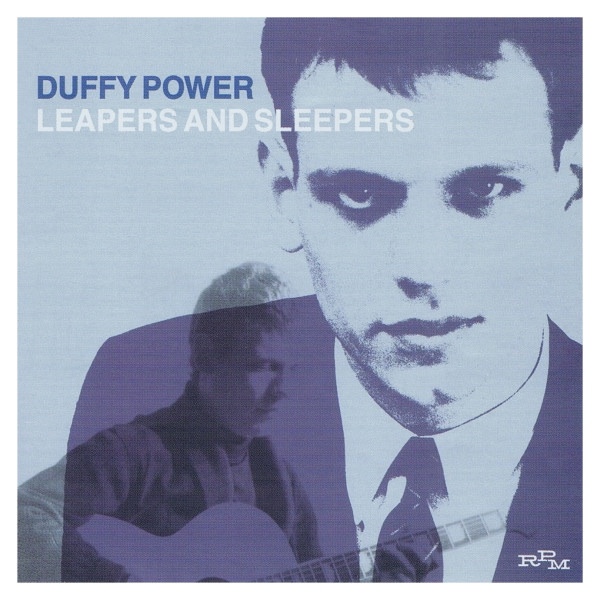
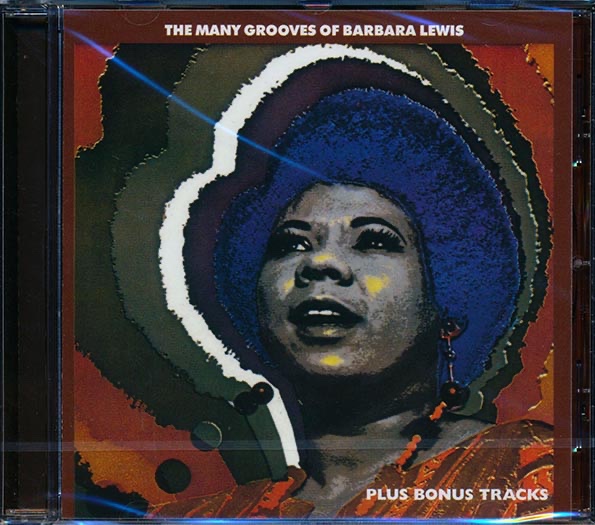


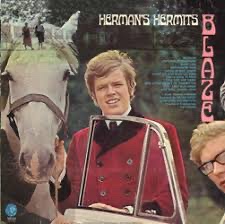


 Brace for the Obscure (60s rock)! / Off the Charts: 60s Rock Revelations😊

.jpg)
