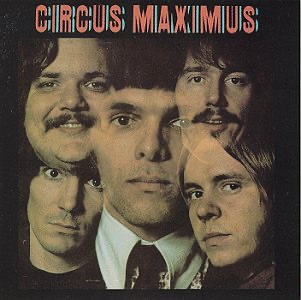
If ever there was a group named for our times . . . A-side of the first of two singles (‘66) by the group all the way from Thunder Bay, Canada. The Plague later evolved into the Lexington Avenue and Jarvis Street Revue variants.
Songwriter/singer/sax player Tom Horricks notes on YouTube that “[t]he song was played on WLS and was going to be a ‘hit’ until the record company went bankrupt the next day.” Erik Lindgren’s liner notes on the 30 Seconds Before the Calico Wall! garage comp say that it is “haunting, snarling . . . [a] brilliant slice of punkadelia.” Yup.
This A-side to their second single (‘69) and putative album track is my blog’s second selection from Visualize, THE great lost American album of the sixties. Richard Frost’s commentary: “The record didn’t do well for us.” I guess I can’t blame Andrew Loog Oldham for this one.
The legendary Joe Meek produced this song, the A-side of the Edinburgh band’s only single (’66). “Down” is “a frantic piece which almost borders on total mayhem at times” (Vernon Joynson), “a beehive orgy of frenzied guitars” (Richie Unterberger in All Music Guide) with an “almost psychotically unhinged lead vocal” (David Wells’s Joe Meek Freakbeat comp liner notes), a song which “merge[s] mania with almost instant oblivion[, a] frantic, almost tortured piece [where] there is, somewhere, the merest hint of melody, but it’s mostly overlooked as the band breaks into mayhem” (Rubble).
The Church was a short-lived Boston pop psych group that formed in ’67, released an album in ‘68 and disbanded after a brief tour. Two of its members then joined Ultimate Spinach. Oh, and the Church’s drummer was Chevy Chase. Yes, the “I’m Chevy Chase and you’re not”/SNL/Clark Griswold Chevy Chase.
The album track “Blueberry Pie” included what is widely regarded (by me at least) as the best throwaway line in pop-psych history: “I’ve been to the zoo and Max’s Kansas City* too. The atmosphere is nice there at night. The animals are not as uptight.”
*The storied NYC nightclub Max’s Kansas City opened in ‘65. It was a favorite hangout of Andy Warhol and his gang. The Velvet Underground, Marc Bolan, David Bowie and Iggy Pop often played.
243) James Carr — “Pouring Water on a Drowning Man”
A ‘66 single and track from his debut album, “Pouring Water” reached #85 in November ’66 (#23 R&B). Steve Huey says in All Music Guide that:
One of the greatest pure vocalists that deep Southern soul ever produced, James Carr is often mentioned in the same breath as Otis Redding, Percy Sledge and Aretha Franklin in terms of the wrenching emotional power in his delivery. . . . [H]e was plagued for much of his life by severe depression that made pursuit of a career — or, for that matter, even single recording sessions — extraordinarily difficult, and derailed his occasional comeback attempts.
And Thom Jurek says, also in All Music Guide, that:
If ever there was a soul singer who rivaled Otis Redding’s raw, deep emotional sensuality, it was James Carr . . . . one of the last country-soul singers to approach any chart given to him as if it was a gift from God. . . . The 12 songs here, many of them covered by other artists, are all soul classics merely by their having been sung and recorded by Carr.
This ’68 A-side was one of three singles by the London based group. Vernon Joynson says the song is “rather ordinary.” That is nuts. This haunting song was chosen to lead off the first volume of the fabled Fading Yellow comps, and it was a perfect choice.
241) Neil Sedaka — “Cold Girl”
Neil Sedaka?! Yes, you heard right, Neil F’ing Sedaka! He co-wrote this ’66 song with Carole Bayer Sager, but never released it. A shame — a very kinky song, the kind you don’t take home to mother (especially the kind of mother who loves Neil Sedaka). Bobby Sherman did record a terrible version as a ’67 B-side.
Another selection from the Headstone Circus. Singer Glenn Faria — who was in Bill Clinton’s class at Georgetown University — recalls that the Circus “was a fun band and we had some wild times during the late sixties. It was a great time to be alive, to be in a popular band, and of course the women were flocking around us continuously.” Sounds like he may be confusing being in the band with hanging out with Clinton? Just sayin.
The Chicken Shack was the Perfect band, until it wasn’t.
The Shack was a British blues-rock band that rivaled Fleetwood Mac in popularity for a time and featured Christine Perfect on keyboards. But then, as Richie Unterberger says in All Music Guide:
[S]he quit the music business to marry John McVie and become a housewife, although, as the world knows, that didn’t last too long. Chicken Shack never recovered from Christine’s loss, commercially or musically.
From Pandamonium comes . . . deep, calming Thoughts and Words. As Vernon Joynson says, “[Martin] Curtis and [Bob] Ponton had been the founders and mainstays of Pandamonium but, tired of record company inteference, resolved in 1969 to proceed as a stripped-down duo.” Bob Ponton himself recollects (in the liner notes to the CD reissue of Thoughts and Words’ eponymous ’69 album from which today’s song is drawn):
It got me down. I went to bed and couldn’t get up for a month.
We were furious at the way we’d been treated, so decided to ditch the production-heavy approach and make more simple, straightforward music together instead.
We were getting more and more into acoustic sounds and absolutely loved the Incredible String Band.
As to the album, Ponton calls it “‘classical folk’ — many of [the] chord progressions are straight out of Bach.” Vernon Joynson calls it “a dainty collection of earnest folk-pop.” Richie Unterberger says in All Music Guide that:
Thoughts and Words itself is by and large pleasant folk-rock, but lacked either the identity or strong material necessary to make a strong impression on the late-’60s British rock scene. Certainly they were a versatile group, as “Morning Sky” was about as close as any U.K. act came to approximating the sounds of the Byrds circa 1967.
I have never disagreed more with Richie Unterberger than with his first sentence. The album is stellar. Unfortunately, as the CD reissue’s liner notes note:
Despite the LP receiving enthusiastic notices in IT, Melody Maker and elsewhere, Liberty [the record label] did little to promote it and sales were sluggish. Morning Sky, the album’s soaring opener . . . didn’t gain momentum.
‘69 B-side from Voorburg’s own Sandy Coast Skiffle Group, no make that Sandy Coast Five, no make that Sandy Coast Rockers, jeez, just call them the Sandy Coast. Of course, the Coast is most remembered for the time that Washington Redskins running back John Riggins told it “come on, loosen up, Sandy baby, you’re too tight.” See https://ftw.usatoday.com/2013/07/john-riggins-sandra-day-oconnor-loosen-up.
Today’s song was Holland’s answer to Petula Clark’s “Downtown.”
235) Merrell Fankhauser & H.M.S. Bounty — “Things (Goin’ Round in My Mind)”
Another selection (and single) from Merrell Fankhauser’s classic ‘68 album. I know it’s classic, because Merrell himself says it is “one of the rare, lost psychedelic gems of the late 60’s” (CD reissue liner notes).
As Psychedelicbabymag.com reports:
[The singles unfortunately] received virtually no support from the label due to its recent signing of Neil Diamond, and despite gigging with such national acts as Canned Heat, CTA (later Chicago) and The Blues Image, among others, achieved only moderate sales.
H.M.S. Bounty? No, Merrell did not grow up on Pitcairn Island. It was a nod to the British Invasion!
233) Bob Seger and the Last Heard — “East Side Story”
234) Bob Seger and the Last Heard — “Persecution Smith”
Bob Seger was writing and performing garage rock classics in the mid-sixties? Who knew?! Well, if you lived in Detroit at the time, you knew. And offering a spot-on impersonation of Bruce Springsteen — decades before “Johnny 99” — and a hilarious parody of the other Bob (Dylan)? Who knew?!
Dave Marsh said in Rolling Stone in ‘78 that:
Bob Seger began it rougher than most. He grew up in Ann Arbor[, Michigan]. It was tough enough to be a townie in a college town, but it was far worse if your father went off when you were ten, leaving your mother, you and your brother to tiny apartments, cooking on hot plates.
Wow, I went to law school in Ann Arbor, and I didn’t know!
Then came the music. Cut to Mark Deming in All Music Guide:
[Seger’s mid-sixties singles are] as passionate and powerful a celebration of “the big bad beat” as you could hope for, and Seger’s first step into inarguable greatness. . . . proof that Seger was a major talent as a singer, songwriter, and frontman right from the start, and this is as good as Midwestern rock of the mid-’60s gets.
The record cost $1200, cheap even in those days; it sold more than 50,000 copies, almost all of them in Detroit. Cameo-Parkway soon picked it up for national distribution, but couldn’t spread it. . . . . [The] lyric . . . antedated Bruce Springsteen’s fantasies of juvenile street violence by a decade : . . .
232) Paul and Ritchie and the Cryin’ Shames — “Come on Back”
The [Decca] Freakbeat Scene comp calls this ’66 B-side “one of the most exhilarating British records of the mid-to-late 1960s, a riot of manic vocals, frenzied guitar and florid organ playing.” Yup. The Real Life Permanent Dreams comp says it has a “magnificently neurotic vocal matched by a savage garage punk backing and a vague Eastern influence.” Yup.
What is astounding is that the single’s A-side was the standard “September in the Rain,” recorded by everyone from Frank Sinatra to Sarah Vaughan! WTF? Who in God’s name was the target audience?
OK, you definitely knew about the Sonics if you lived in the Pacific Northwest in the mid-sixties. But their fame only extended regionally, which is a shame, because if any band can be said to have rocked, the Sonics ROCKED! Mark Deming cuts to the chase in All Music Guide:
Of all the garage bands that made a glorious racket in the 1960s, few if any were louder, wilder, or more raw than the Sonics, a Tacoma, Washington quintet whose over the top style, complete with roaring guitars, pounding drums, and the fevered howls of lead singer Gerry [Roslie], anticipated the mania of punk and pushed rock & roll deep into the red zone during their 1963-1966 heyday. The Sonics were stars in Washington, but it took a while for the rest of the world to catch on, and in time they would become one of the most fabled bands on the Pacific Northwest rock scene.
In the Pacific Northwest, a place where bands in the ’60s were renowed for raw, honest, hard-kickin’ rock ‘n’ roll, the Sonics kicked just that much harder and faster, smashing out some of the roughest, toughest, screamin’est rock ‘n’ roll ever heard.”
So, anyway, as the story goes (Mark Deming again):
For their first single, the Sonics took one of their few original tunes and changed it from a number about a proposed dance craze into a cautionary tale about a treacherous female; the results, “The Witch,” had a dark, sinister undercurrent and . . . was louder and crazier-sounding than anything else a Northwest band had committed to tape. Backed with a manic cover of Little Richard’s “Keep A’ Knockin’,” the single was too much for many local radio stations, but eventually it broke through in enough smaller markets that the record became a major hit in the Northwest; enough so that rather than continue to pay publishing royalties to Little Richard for the B-side, the band recorded another original, “Psycho,” that soon turned the 45 into a two-sided hit.
Ahh! Man, I’m feeling supersonic, give me gin and tonic! Yet, sax player Rob Lind remembers that after laying “The Witch” down, “[w]e felt we had totally screwed up.” Maybe because as Bob Bennett remembers, “instead of recording to make something sound good, we recorded just to kick ass!” (quotes from the liner notes to the CD reissue of the Sonics’s first album Here Are the Sonics).
OK, pop quiz, match the Nuggets summary and the lyrics with the song:
Rosalie tear[s] his throat apart, Bob “Boom Boom” Bennett inflict[s] cruel violence on his drums, and [there’s an] utterly destructive guitar break from Larry Parypa.
[O]ne of the most raucous, hard-drivin’ slabs of rock ‘n’ roll mayhem ever waxed, with Gerry Roslie’s screaming vocals and Larry Parypa’s depraved, string-strangling guitar break . . . .
From Gaye’s ’69 album M.P.G. that yielded two big hits comes this overlooked gem, which Jack Egan called in Rolling Stone in August of that year “my particular favorite; Marvin again strides through the song, building the intensity as his voice goes through an exquisite range of changes.” Gaye beat Led Zeppelin to the punch (“Going to California” in ’71).
The Mops were Japan’s self-proclaimed first psychedelic band! They formed in 1966 as an instrumental group (like the Ventures) and, then, according to Discogs:
In the summer of 1967 their manager visited San Francisco, and was very excited about the hippie movement. He brought a copy of a Jefferson Airplane album back with him to Japan, which he impressed the Mops with. The band became enthusiastic about the new sounds . . . .
Though, according to Outsider Japan’s version of the Mops’s origin story:
The Mops were pressured by their manager to become a psychedelic rock band, as he had just returned from a trip to San Francisco and brought back a copy of Jefferson Airplane Takes Off . . . for the band to listen to. . . . [I]n order to sign the deal JVC Records (the Japanese wing of Victor Records) was offering, they would have to do so.
Live, [they] used psychedelic lighting effects and played blindfolded to stimulate themselves to hallucinogenic heights (obtaining LSD was next to impossible in Japan at the time). [They also] experimented in various ways to achieve their psychedelic sounds. However, by the time their first single “Asamade Matenai” had charted at the lower end of the Japanese top 40, other bands had caught up with their psychedlic stylings, pushing the Mops to all kinds of ruses in order to substantiate their claim as Japan’s premier psychedelicians — and in drug free Japan, this was not an easy task. Huge lighting rigs began to appear at Mops shows, and flangeing, Wah-way pedals and fuzz boxes saturated their live sounds, while the band themselves grew their hair even longer, adopted granny glasses, and played blind-folded in order to disorientate themselves and stimulate natural psychedlic effects. The Mops not only displayed an amazing adeptness at copying Psychedelia but also 60s American Garage Punk.
The Mops album of April 1968 Psychedelic Sound in Japan [from which today’s song was taken] was full of flower power flourishes, including cosmic artwork, ethnic clothing, fuzz guitars and sitar playing. . . . . To complete the band’s hippie vibe, at their album release party they passed out banana peels to journalists.
Richie Unterberger opines in All Music Guide that:
As a whole, the record’s an interesting if flawed relic of a time when Japanese rock was just finding its feet, with a clumsy yet endearingly passionate force.
From the stunning album by the Welsh band named after Dylan’s double LP. Bruce Eder says in All Music Guide that:
The group took part in the Middle Earth Club’s Magical Mystery Tour, which brought them an initial splash of press exposure. They were also fortunate enough to open for the Jefferson Airplane on the latter group’s British tour. . . .
BoB also played at the Isle of Wight Festival (as did Dylan), but they never managed to garner widespread popularity.
Eder notes that their ‘69 album Contrasts “showed more of the early but burgeoning influence of progressive rock, while retaining their early psychedelic coloration.” It is from that album that I take BoB’s reimagining of McCartney’s “Eleanor Rigby,” one of the greatest covers of a Beatles song I have ever heard. Not everyone shares my assessment. Vernon Joynson opines that it is “[a]mong the [album’s] few blatant missteps . . . a needless horn enhanced cover.” However, David Wells notes in the CD reissue’s liner notes that:
[T]he performance that garnered most critical attention was a bold, dramatic reshaping of Eleanor Rigby [demonstrating that] Blonde on Blonde had the requisite blend of artistic nerve and instrumental prowess to compete at the highest levels.
I have taken “The Impossible Years” from songwriter extraordinaire (“For Your Love,” “Evil Hearted You,” and “Heart Full of Soul” for the Yardbirds, “Bus Stop” and “Look Through Any Window” for the Hollies, and “No Milk Today” for Herman’s Hermits) Graham Gouldman’s ’68 album The Graham Gouldman Thing. Dave Thompson in All Music Guide notes that the album is “[l]argely compris[ed of] Gouldman’s own versions of the songs he had written for others, the album (which would be released in America only) was prefaced with a new single, “No Milk Today” . . . . It flopped.” (“https://www.allmusic.com/artist/graham-gouldman-mn0000152446/biography) “Impossible” was released as a single the prior year by Wayne Fontana.
Let me go out on a limb and dare say that this unreleased gem from a wonderful band from Brighton has quite profound lyrics. The Span started out as a soul band and morphed into psychedelia. They never “made it.” Vernon Joynson explains:
[T]he BBC invited them to feature in a documentary focusing on the life of a pop group on the way up. What could have been their big break, however, turned out to be a tour de force of unintentional comedy. A Year in The Life: Big Deal Group . . . detailed their increasingly desperate efforts to make it in toe-curling detail. One of the most revealing films ever made about the realities of the music business. . . .
The Tapestry of Delights Revisited
Part of a promo clip for “Time” from A Year in The Life: