The liner notes to the Book a Trip: The Psych-Pop Sounds of Capitol Records comp tell us that:
The Teddy Neeley Five . . . were fixtures of Sunset Strip nightclubs and elite Hollywood parties. . . . [T]hey were playing gigs at the Red Velvet, The Trip, The Daisy, and even The Cocoanut Grove, which was considered a coup for a rock act at that time. Personally signed by Capitol president Alan Livingston, the band cut several singles prior to their 1967 LP, simply titled Teddy Neeley (although the entire band is on the cover). “Autumn Afternoon” was not included on the LP, but Capitol must’ve had faith in the track since it appeared on not one but two 45 releases.
For a little more history on Ted, Steve Leggett writes that:
Ted Neeley came to the public’s attention when he played and sang the title role in . . . Jesus Christ Superstar, both on-stage and onscreen, and then followed it up with a role in the original theatrical production of the Who’s Tommy. A singer, drummer, actor, composer, vocal arranger, and record producer, Neeley . . . . signed his first record deal in 1965, at age 22, with Capitol Records, releasing an album, the self-titled Teddy Neeley, on the imprint with his group the Ted Neeley Five. [He p]ossess[ed] a baritone singing voice that could rise octaves into a controlled, on-pitch rock-era scream when necessary . . . . Neeley released a solo album . . . in . . . 1974, then took the role of Billy Shears in Sgt. Pepper’s Lonely Hearts Club Band on the Road. He continued doing musical theater, acting as well in various television dramas during the 1970s and 1980s, including Starsky and Hutch . . . . Meanwhile, he performed live shows with his band Pacific Coast Highway.
Pay to Play! The Off the Charts Spotify Playlist! + Brace for the Obscure 60s Rock Merchandise
Please consider helping to support my website/blog by contributing $6 a month for access to the Off the Charts Spotify Playlist. Using a term familiar to denizens of Capitol Hill, you pay to play! (“relating to or denoting an unethical or illicit arrangement in which payment is made by those who want certain privileges or advantages in such arenas as business, politics, sports, and entertainment” — dictionary.com).
The playlist includes all the “greatest songs of the 1960’s that no one has ever heard” that are available on Spotify. The playlist will expand each time I feature an available song.
All new subscribers will receive a Brace for the Obscure 60s Rock magnet. New subscribers who sign up for a year will also receive a Brace for the Obscure 60s Rock t-shirt or baseball cap. See pictures on the Pay to Play page.
When subscribing, please send me an e-mail (GMFtma1@gmail.com) or a comment on this site letting me know an e-mail address/phone number/Facebook address, etc. to which I can send instructions on accessing the playlist and a physical address to which I can sent a magnet/t-shirt/baseball cap. If choosing a t-shirt, please let me know the gender and size you prefer.
Just click on the first blue block for a month to month subscription or the second blue block for a yearly subscription.
[The EGVO — sounds like an olive oil] emerged from R&B/soul act The Five Proud Walkers after experiencing a conversion to psych following a support slot beneath Pink Floyd. Well… who wouldn’t? Their upbeat blend of the new scene with the primal beats of their earlier work got them noticed.”
The band began to get quite a following and played clubs and university gigs all over the country and at London venues like the Marquee and 100 club and Electric garden. They would also occasionally play at the Speakeasy where Jimi Hendrix would jam with them . . . .
The urgent, brilliant Flames, which they cut as their first single, became a cult hit, and a fledgling Led Zeppelin incorporated the song into their act. Unfortunately, that was as close as [they] got to the big time, but their debut remains a rather superb slice of British psych-pop. . . . [I]t’s the group’s more general mastery of melody and rhythm that marks this album out. Rather like The Zombies and, more obviously, The Beatles, [they] found a tune wherever they looked, and the results stand up with much of the period because of that.
Why didn’t they make it big? Jo-Ann Greene says that:
Although labeled a psychedelic band in their day, the Opera never sat comfortably in that strawberry field, partially because of the diversity of their sound, but also due to the simple fact they were just too far ahead of their time even for the psyched-out crowd. In fact, [the band] continued to sound thoroughly modern for decades, while their myriad musical meanderings took them down wayward byways that later became stylistic highways — at least in their native U.K. So it’s no surprise then, that this band would have slotted perfectly into the Britpop scene, or going back further in time, into the R&B-drenched mod scene.
ELMER GANTRY’S VELVET OPERA, a very long name for a short living British band formed in 1967 during the peak of British Psychedelia, but despite their formation era, they were one of the most advanced bands from their era, blended with great respect R&B, Jazz Psychedelia a la early Pink Floyd and a touch of The Nice style . . . . Despite being a very good and incredibly advanced album for their era, never reached the popularity deserved, because it was too hard and eclectic for the average listener, but still remains as one of the most powerful and elaborate albums from the pre King Crimson Progressive Rock era.
Oh, and where did that name come from? Marmalade Skies clears it up:
Velvet Opera was chosen initially, which was amended to Elmer Gantry’s Velvet Opera within days after Dave [Terry] turned up to a session wearing a long black cape and a preachers hat and had to endure some piss-taking from the rest of the band (Elmer Gantry was the fictional hero of a Sinclair Lewis novel and 1960 film about a preacher). . . .
Pay to Play! The Off the Charts Spotify Playlist! + Brace for the Obscure 60s Rock Merchandise
Please consider helping to support my website/blog by contributing $6 a month for access to the Off the Charts Spotify Playlist. Using a term familiar to denizens of Capitol Hill, you pay to play! (“relating to or denoting an unethical or illicit arrangement in which payment is made by those who want certain privileges or advantages in such arenas as business, politics, sports, and entertainment” — dictionary.com).
The playlist includes all the “greatest songs of the 1960’s that no one has ever heard” that are available on Spotify. The playlist will expand each time I feature an available song.
All new subscribers will receive a Brace for the Obscure 60s Rock magnet. New subscribers who sign up for a year will also receive a Brace for the Obscure 60s Rock t-shirt or baseball cap. See pictures on the Pay to Play page.
When subscribing, please send me an e-mail (GMFtma1@gmail.com) or a comment on this site letting me know an e-mail address/phone number/Facebook address, etc. to which I can send instructions on accessing the playlist and a physical address to which I can sent a magnet/t-shirt/baseball cap. If choosing a t-shirt, please let me know the gender and size you prefer.
Just click on the first blue block for a month to month subscription or the second blue block for a yearly subscription.
THE GREATEST SONGS OF THE 1960s THAT NO ONE HAS EVER HEARD
687)The Canterbury Music Festival — “First Spring Rain”
Call this ’68 A-side baroque pop, call it soft pop, call it sunshine pop, call it pop psych, but call it a masterpiece by the CMF (see #358).
If you are looking for ultra-rare Softpop, you’ve come to the right place! Only 150 copies were pressed (in order to establish copyright) [of] Rain & Shine [on which “First Spring Rain” also appeared], an almost willfully secret psych-pop masterpiece of sorts, on the obscure and collectable BT Puppy label out of New York City, owned by the legendary Tokens . . . . [It is] scarily collectable . . . .
The plucked guitars, the gliding string arrangement and the lush backing vocals will either send you into a soft pop heaven or dull the nerves of the more jaded. I for one am transported”.
And Steve Stanley notes that for the single (the band’s first):
[T]hey were credited as We Ugly Dogs — a choice the Tokens were none too exited about. Remembers [band leader] Roger [Germelle], “The Tokens said we had to change our name” . . . . In spite of this minor conflict, the tune was a “pick hit” in sixteen states in Billboard and was number one in Duluth, Minnesota, even managing to outsell the Beatles. . . . The second pressing was released under the name Canterbury Music Festival.
liner notes to CD reissue of Rain & Shine
Tim Sendra says that “the label really had no distribution and the[ CMF’s] one shot at the big time slipped away.” (https://www.allmusic.com/album/rain-shine-mw0000042587) Phil Margo, a Token and co-owner of BT Puppy, says that “[m]y personal regret is that this band . . . had quality material, but the distribution wasn’t there to back it up. . . . I wish more stuff had happened for them.” (liner notes to the CD reissue of Rain & Shine) Roger Germelle says that “I never [even] knew an LP was released! . . . It must have been released after we split up.” (liner notes) The LP, if a a copy could be found, was selling for $300, but then the “soft pop aficionados at Rev-Ola in the UK” (https://www.gullbuy.com/buy/2003/9_2/canterburymusicfest.php) had to ruin all the fun by reissuing the album on CD!
[It is] a ’60s pop delight. There’s a shimmering and delicate sheen to the album, like rain falling on a bed of leaves in the fading days of Autumn. . . . [T]he sweet harmony vocals and the sunshine sadness of the lyrics . . . all combine together for a host of amazing songs.
The album mixed some decent if innocuous original compositions . . . with less impressive material supplied to them by their producers, the Tokens. Though at their best they were adept at soft pop-rock songs with string arrangements, accomplished harmonies, and a tinge of psychedelia, the record was weighed down by Tokens-devised tunes with a more gimmicky bubblegum-psych flavor.
Richie, for once, is actually out-snarked by his fellow All Music Guide critic Tim Sentra:
The music remained unheard until [a label] decided to reissue the album. The question that arises here is: Did they need to? Yes and no — mostly no. . . . Anyone who isn’t a sunshine pop fanatic will wonder why [the label] bothered, as most of the tunes are pretty insubstantial and sometimes downright embarrassing . . . . Unless you are a sunshine pop nut with a fat bankroll, you can rest easy with the knowledge that you aren’t missing anything . . . .
Pay to Play! The Off the Charts Spotify Playlist! + Brace for the Obscure 60s Rock Merchandise
Please consider helping to support my website/blog by contributing $6 a month for access to the Off the Charts Spotify Playlist. Using a term familiar to denizens of Capitol Hill, you pay to play! (“relating to or denoting an unethical or illicit arrangement in which payment is made by those who want certain privileges or advantages in such arenas as business, politics, sports, and entertainment” — dictionary.com).
The playlist includes all the “greatest songs of the 1960’s that no one has ever heard” that are available on Spotify. The playlist will expand each time I feature an available song.
All new subscribers will receive a Brace for the Obscure 60s Rock magnet. New subscribers who sign up for a year will also receive a Brace for the Obscure 60s Rock t-shirt or baseball cap. See pictures on the Pay to Play page.
When subscribing, please send me an e-mail (GMFtma1@gmail.com) or a comment on this site letting me know an e-mail address/phone number/Facebook address, etc. to which I can send instructions on accessing the playlist and a physical address to which I can sent a magnet/t-shirt/baseball cap. If choosing a t-shirt, please let me know the gender and size you prefer.
Just click on the first blue block for a month to month subscription or the second blue block for a yearly subscription.
Sundazed Records, which released for CD Introspection: A Faine Jade Recital, Jade’s only album (from which today’s song is drawn), says “The brilliant psychedelic rock ‘n’ roll of Faine Jade passed through the orange-colored skies of 1968 like a pink and lavender comet, then was gone . . .” (http://tyme-machine.blogspot.com/2009/04/faine-jade-introspection-faine-jade.html) Michael Saltzman says of the LP that:
[It is] one of the most highly-coveted lost psych classics, and it’s obvious why. Fronting a sparse combo complemented by a distant droning organ, the bespectacled Jade (born Chuck Laskowski in Long Island, New York) sings quirky, melodic tunes drenched in the flavour of their time. The feel is tense and fractured, with stabs of trebly guitar and jittery percussion, but the songwriting remains pithy and pop-radio accessible. . . . [S]urprisingly, Jade claims he hadn’t heard of Barrett at the time of recording).
It’s hard to imagine that a 20-year-old New York guitarist fresh out of garageland would have been infatuated with Syd Barrett in 1968. However, Faine Jade’s 1968 album sounds as if he was besotted with Pink Floyd’s first LP, which was barely known in the States at the time. Jade’s vocals and songwriting uncannily evoke an American Syd Barrett with their evocative, cryptic lyrics, thick organs, and psychedelic guitar lines. . . . “Cold Winter Sun” never fail[s] to inspire comparisons to Barrett when played for those unfamiliar with Jade. Faine, it’s fair to say, is somewhat blunted in comparison to Barrett’s madcap edge. More laid-back and grounded, he also deals more explicitly with hippie-era concerns like being hassled for being different and the necessity of being compassionate toward your brother, without being sappy or preachy.
Pay to Play! The Off the Charts Spotify Playlist! + Brace for the Obscure 60s Rock Merchandise
Please consider helping to support my website/blog by contributing $6 a month for access to the Off the Charts Spotify Playlist. Using a term familiar to denizens of Capitol Hill, you pay to play! (“relating to or denoting an unethical or illicit arrangement in which payment is made by those who want certain privileges or advantages in such arenas as business, politics, sports, and entertainment” — dictionary.com).
The playlist includes all the “greatest songs of the 1960’s that no one has ever heard” that are available on Spotify. The playlist will expand each time I feature an available song.
All new subscribers will receive a Brace for the Obscure 60s Rock magnet. New subscribers who sign up for a year will also receive a Brace for the Obscure 60s Rock t-shirt or baseball cap. See pictures on the Pay to Play page.
When subscribing, please send me an e-mail (GMFtma1@gmail.com) or a comment on this site letting me know an e-mail address/phone number/Facebook address, etc. to which I can send instructions on accessing the playlist and a physical address to which I can sent a magnet/t-shirt/baseball cap. If choosing a t-shirt, please let me know the gender and size you prefer.
Just click on the first blue block for a month to month subscription or the second blue block for a yearly subscription.
THE GREATEST SONGS OF THE 1960s THAT NO ONE HAS EVER HEARD
685) Head West — “Some Day”
A sinuous/funky/jazzy rock song by a future member of Fleetwood Mac. Vernon Joynson says the song’s “vocals have a haunting quality and the song . . . has a certain charm”. (The Tapestry of Delights Revisited) It’s highly reminiscent of Manfred Mann Chapter III.
Wita Records hails the LP:
Head West, a trio as explosive as it was short-lived, recorded in 1970 a digest of soul, funk and psychedelic rock, a la Sky Stone . . . . [They] brilliantly recorded this fantastic blend . . . characteristic of the late 1960s, a musical fusion in which Sly and Family Stone were the masters. The record is remarkable for the quality of the production, for the magnificent soulful vocal harmonies, supported by the wild roar of Robert Hunt’s Hammond organ. But it was certainly Henry Moore’s heavy breakbeats and solid grooves that . . . the advent of sampling, gave this album a second life. Many artists and producers have recycled the drum parts with their formidable sound and efficiency. . . . Head West was born from the ashes of the Los Angeles soul band the Seven Souls . . . . [and] record[ed] this one and only record and a few singles. . . . Recorded in France in 1970 for Vogue records, these tracks are also a French production . . . .
Singer, songwriter, and guitarist Bob Welch enjoyed a brief streak of mainstream success in the late ’70s after a four-year, pre-phenomenon stint in Fleetwood Mac. In 1971, Welch replaced Jeremy Spencer . . . . Welch’s finest Fleetwood Mac moment was the dreamily jazzy “Hypnotized” on Mystery to Me. Welch was asked to stay despite the addition of Lindsey Buckingham and Stevie Nicks, but he departed and formed a hard rock trio called Paris. The band . . . released two poorly received albums in 1976. Welch then decided to craft blatantly commercial pop music, and he succeeded with 1977’s French Kiss, which went platinum and featured the hit singles “Sentimental Lady” . . . and “Ebony Eyes.” . . . Welch released . . . more albums through 1983, but sales steadily declined. . . . In 1994, he filed a lawsuit claiming he was underpaid royalties during his tenure. The case was settled out of court, but Welch says Fleetwood Mac retaliated by having him excluded from the band’s 1998 Rock and Roll Hall of Fame induction.
Pay to Play! The Off the Charts Spotify Playlist! + Brace for the Obscure 60s Rock Merchandise
Please consider helping to support my website/blog by contributing $6 a month for access to the Off the Charts Spotify Playlist. Using a term familiar to denizens of Capitol Hill, you pay to play! (“relating to or denoting an unethical or illicit arrangement in which payment is made by those who want certain privileges or advantages in such arenas as business, politics, sports, and entertainment” — dictionary.com).
The playlist includes all the “greatest songs of the 1960’s that no one has ever heard” that are available on Spotify. The playlist will expand each time I feature an available song.
All new subscribers will receive a Brace for the Obscure 60s Rock magnet. New subscribers who sign up for a year will also receive a Brace for the Obscure 60s Rock t-shirt or baseball cap. See pictures on the Pay to Play page.
When subscribing, please send me an e-mail (GMFtma1@gmail.com) or a comment on this site letting me know an e-mail address/phone number/Facebook address, etc. to which I can send instructions on accessing the playlist and a physical address to which I can sent a magnet/t-shirt/baseball cap. If choosing a t-shirt, please let me know the gender and size you prefer.
Just click on the first blue block for a month to month subscription or the second blue block for a yearly subscription.
THE GREATEST SONGS OF THE 1960s THAT NO ONE HAS EVER HEARD
683) Alex Harvey — “Midnight Moses”
Here is another magical selection from Alex Harvey’s ’69 solo LP Roman Wall Blues (see #440). Harvey redid the song with the Sensational Alex Harvey Band in ’72 and its hard rock core became apparent. Eric Kamau in Classic Rock History names the song the 6th best SAHB songs. (https://www.classicrockhistory.com/top-10-the-sensational-alex-harvey-band-songs/)
The song became a heavy metal cover favorite. Listen to the versions by Britny Fox and the Dead Daisies.
Anyway, in the age of COVID, I am reevaluating the song. Consider — “I had an afternoon fever when I flew off to Geneva.” Just a lazy rhyme? Or a premonition of pandemic? Maybe the song was more about a “Midnight (Typhoid) Mary” than a “Midnight Moses.”
“Midnight Moses” ties together Harvey’s solo album and SAHB in another respect. When asked by Klemen Breznikar “how did the Sensational Alex Harvey Band come about?”, lead guitarist Zal Cleminson recalls that:
Our respective managers organised a meeting and rehearsal with Alex in Glasgow. Alex played us the riff to ‘Midnight Moses’ and asked if we could play it. We instantly beat the shit out of it and he obviously liked what he heard.
Oh, for those who don’t know Alex, William Ruhlmann says:
Alex Harvey was a British journeyman rocker who enjoyed a brief period of widespread popularity in the mid-’70s after decades of struggle. Growing up in [Glasgow,] Scotland, he turned to music in his late teens . . . . In 1969, he released Roman Wall Blues, his first solo effort in five years. Up to this point, none of his musical efforts had attracted much attention. But in the early ’70s, he recruited the Scottish band Tear Gas . . . christening the resulting quintet the Sensational Alex Harvey Band.
Pay to Play! The Off the Charts Spotify Playlist! + Brace for the Obscure 60s Rock Merchandise
Please consider helping to support my website/blog by contributing $6 a month for access to the Off the Charts Spotify Playlist. Using a term familiar to denizens of Capitol Hill, you pay to play! (“relating to or denoting an unethical or illicit arrangement in which payment is made by those who want certain privileges or advantages in such arenas as business, politics, sports, and entertainment” — dictionary.com).
The playlist includes all the “greatest songs of the 1960’s that no one has ever heard” that are available on Spotify. The playlist will expand each time I feature an available song.
All new subscribers will receive a Brace for the Obscure 60s Rock magnet. New subscribers who sign up for a year will also receive a Brace for the Obscure 60s Rock t-shirt or baseball cap. See pictures on the Pay to Play page.
When subscribing, please send me an e-mail (GMFtma1@gmail.com) or a comment on this site letting me know an e-mail address/phone number/Facebook address, etc. to which I can send instructions on accessing the playlist and a physical address to which I can sent a magnet/t-shirt/baseball cap. If choosing a t-shirt, please let me know the gender and size you prefer.
Just click on the first blue block for a month to month subscription or the second blue block for a yearly subscription.
THE GREATEST SONGS OF THE 1960s THAT NO ONE HAS EVER HEARD
683) The Human Expression — “Every Night”
Mesmerizing and haunting ‘66 B-side by a hugely talented L.A. band whose music, as Mark Deming says, “lurked somewhere in between garage rock and psychedelia” and who had “imaginative songwriters with a clever, slightly bent approach, and [a] guitar style [that] was an interesting mixture of traditional folk-rock jangle, tough fuzzy leads, and a willingness to . . . come up with unusual sounds.” (Mark Deming, https://www.allmusic.com/album/love-at-psychedelic-velocity-mw0000075613)
Like true nature’s children, they were most assuredly born to be wild. Man, they could have climbed so high and exploded into space, had they not declined to head out on the highway.
Bruce Eder tells us that:
[A]n obscure but beloved psychedelic band from Los Angeles. . . . The band played played local clubs and USOs, and built up a great reputation for their hot live performances . . . an intensely virtuoso musicality coupled with punk defiance and a charismatic projection of all of these elements. . . . A second single, “Optical Sound” b/w “Calm Me Down,” released in 1967, showed the group becoming more experimental, utilizing studio electronic effects. . . . It was impressive, but that single wasn’t the breakthrough that the band had hoped for. The Human Expression’s downfall came with the decision over what was to be their third single. Offered a pair of songs to choose from, they selected a number called “Sweet Child of Nothingness.” The one they rejected was a song [also] authored by Mars Bonfire [see #598] called “Born to Be Wild,” because [singer Jim] Qua[r]les had some doubts about the lyrics.
The Expression’s comp from Collectables tells of the band’s ability to turn a hostile crowd:
[The band began to get bookings at places like Gazzari’s in Los Angeles, as well as playing at USO clubs (not the band’s idea, but the record label’s). For a group like the Human Expression to play at a USO club in the mid 60s was like throwing a match on tinderwood. For example one time the band played a USO gig . . . . [with an] audience [of] about 800 crewcut marines. In walked The Human Expression with long hair, mod clothes and Beatle boots. The marines started hooting and hollering at the group, saying things like “Hey, honey,” or “Look at these fags.” Jim recalls that “we played for our lives, we knew if we didn’t, we wouldn’t get out of their alive!” By the third song, the crowd of marines were going wild with cheers.
liner notes to the Collectables label CD comp The Human Expression: Love at Psychedelic Velocity
Here is a demo, which Deming says “doesn’t reveal much except that the group’s early recordings were done in a really crummy-sounding studio”:
Pay to Play! The Off the Charts Spotify Playlist! + Brace for the Obscure 60s Rock Merchandise
Please consider helping to support my website/blog by contributing $6 a month for access to the Off the Charts Spotify Playlist. Using a term familiar to denizens of Capitol Hill, you pay to play! (“relating to or denoting an unethical or illicit arrangement in which payment is made by those who want certain privileges or advantages in such arenas as business, politics, sports, and entertainment” — dictionary.com).
The playlist includes all the “greatest songs of the 1960’s that no one has ever heard” that are available on Spotify. The playlist will expand each time I feature an available song.
All new subscribers will receive a Brace for the Obscure 60s Rock magnet. New subscribers who sign up for a year will also receive a Brace for the Obscure 60s Rock t-shirt or baseball cap. See pictures on the Pay to Play page.
When subscribing, please send me an e-mail (GMFtma1@gmail.com) or a comment on this site letting me know an e-mail address/phone number/Facebook address, etc. to which I can send instructions on accessing the playlist and a physical address to which I can sent a magnet/t-shirt/baseball cap. If choosing a t-shirt, please let me know the gender and size you prefer.
Just click on the first blue block for a month to month subscription or the second blue block for a yearly subscription.
THE GREATEST SONGS OF THE 1960s THAT NO ONE HAS EVER HEARD
682) Johnny Young — “Good Evening Girl”
This delightful pop psych B-side from down under was “written by three of the Easybeats but never recorded by that group, although it’s easily up to the standards of their better songs.” (Richie Unterberger, https://www.allmusic.com/album/hot-generation-1960s-punk-from-down-under-mw0000660957) The A-side was written by Barry Gibb. Talk about being penned by (Aussie) rock royalty!
As to Johnny Young, the definitive MilesaGo: Australasian Music and Popular Culture 1964-1975, says:
Like so many Aussie pop stars, Johnny was born overseas and came to Australia [at age three] during the huge influx of migrants after WWII. He was born Johnny Benjamin deJong in Rotterdam . . . . At the time of his birth his father Jan was stationed in Indonesia with the Netherlands armed forces . . . . As an adult Johnny discovered that [at the time,] his mother had a brief affair with a young Dutch singer — and he was the result of that romance. . . .
[He] began work as a trainee disc jockey on Perth radio, started singing at local dances, and spent eighteen months as lead vocalist with [a] local group . . . . In 1965, Johnny got his first break into TV when he became host of a local Perth pop show Club 17. . . . [I]n early 1966 . . . [t]he Easybeats visited Perth. They gave Johnny the ultimate seal of approval by presenting him with one of their new songs. “Step Back” . . . was issued as a single in May 1966 . . . . [and] became . . . the second biggest-selling Australian single of the Sixties . . . .
Johnny decided to heed the siren call of Swinging London. . . . On June 6, 1967 Johnny set sail for the UK and to mark his departure Clarion released his new single, “Lady” (backed by a[ Easybeats] original, “Good Evening Girl”), which reached #34 in July. The A-side, “Lady”, was a Barry Gibb song, which Barry had written specially for him. The story behind this is typical of Johnny’s good nature — while working in Brisbane, he ran into Barry Gibb, who was facing a long, arduous drive back to Sydney for a TV appearance. With typical generosity, Johnny paid Barry’s airfare, enabling to fly back to Sydney, so Barry returned the favour by presenting Johnny with the song. . . . Johnny failed to make a major impression on the UK scene, and he returned to Australia in January 1968 . . . .
With his pop career faltering, Johnny fell back on his early training as a DJ . . . . While in London, encouraged and coached by his friend Barry Gibb, he had begun to compose songs and he now began writing in earnest . . . . Over the next two years he had tremendous success — his credits include Russell Morris’ “The Real Thing” and “Part Three Into Paper Walls” [and] Ronnie Burns “Smiley” — all national #1 singles . . . .
[His] greatest success came with . . . the children’s talent quest cum variety show Young Talent Time, which premiered . . . in early 1971. It was a massive success . . . a genuine family show that appealed to everyone from eight to eighty . . .
Pay to Play! The Off the Charts Spotify Playlist! + Brace for the Obscure 60s Rock Merchandise
Please consider helping to support my website/blog by contributing $6 a month for access to the Off the Charts Spotify Playlist. Using a term familiar to denizens of Capitol Hill, you pay to play! (“relating to or denoting an unethical or illicit arrangement in which payment is made by those who want certain privileges or advantages in such arenas as business, politics, sports, and entertainment” — dictionary.com).
The playlist includes all the “greatest songs of the 1960’s that no one has ever heard” that are available on Spotify. The playlist will expand each time I feature an available song.
All new subscribers will receive a Brace for the Obscure 60s Rock magnet. New subscribers who sign up for a year will also receive a Brace for the Obscure 60s Rock t-shirt or baseball cap. See pictures on the Pay to Play page.
When subscribing, please send me an e-mail (GMFtma1@gmail.com) or a comment on this site letting me know an e-mail address/phone number/Facebook address, etc. to which I can send instructions on accessing the playlist and a physical address to which I can sent a magnet/t-shirt/baseball cap. If choosing a t-shirt, please let me know the gender and size you prefer.
Just click on the first blue block for a month to month subscription or the second blue block for a yearly subscription.
Seger settles into a shimmying, rockabilly-meets-R&B groove that probably made Mitch Ryder beam with paternal pride. The lyrics? Pure mid-century hipster cool: “He’s dressed real mod, from his head to his toe! He’s lost a little weight, but his jelly still rolls! . . . . Come on, Cupid! Don’t just stand there looking stupid!” There’s a reference to Batman, too, but you get the idea. Sock-hopping Yuletide fun.
Bob Seger was writing and performing garage rock classics in the mid-sixties? Who knew?! Well, if you lived in Detroit at the time, you knew. Dave Marsh said in Rolling Stone in ‘78 that:
Bob Seger . . . . grew up in Ann Arbor[, Michigan]. It was tough enough to be a townie in a college town, but it was far worse if your father went off when you were ten, leaving your mother, you and your brother to tiny apartments, cooking on hot plates.
Wow, I went to law school in Ann Arbor, and I didn’t know!
Then came the music. Cut to Mark Deming in All Music Guide:
[Seger’s mid-sixties singles are] as passionate and powerful a celebration of “the big bad beat” as you could hope for, and Seger’s first step into inarguable greatness. . . . proof that Seger was a major talent as a singer, songwriter, and frontman right from the start, and this is as good as Midwestern rock of the mid-’60s gets.
Sublime Stax single (‘70) by the Staple Singers, lamenting that people were “too busy fighting wars, trying to make it to Mars . . . too busy having fun, drinking with everyone”.
Rob Bowman:
[T]he Staple Singers embraced an impressive stylistic diversity while always staying true to their roots in gospel harmonies. Led by Roebuck “Pops” Staples, the quartet first rose to stardom in the gospel music community before detouring into folk and a socially conscious gospel and R&B hybrid, then enjoying their greatest success with a handful of soul music hits for Stax Records in the ’70s. Throughout their evolution, the constants in their work were the rich blend of their vocals, delivered with a churchy mix of joy and restraint . . . and in the Stax era, the glorious lead vocals of Mavis Staples. . . . [B]y 1937 [Pops] was singing and playing guitar with the Golden Trumpets . . . . Moving to Chicago four years later, he continued playing gospel music with the Windy City’s Trumpet Jubilees. A decade later [he] presented two of his daughters, Cleotha and Mavis, and his one son, Pervis, in front of a church audience, and the Staple Singers were born. The[y] recorded in an older, slightly archaic, deeply Southern spiritual style . . . . In 1968, the Staples signed with Memphis-based Stax. . . . [They] were now singing entirely contemporary “message” songs . . . . In 1970 . . . Al Bell started handling production chores, taking the group down the road to Muscle Shoals, and things got decidedly funky. . . .
‘67 garage “classic” gets you in the spirit, yeah! Jason Ankeny tells us that:
Houston psych-punks A440 formed in 1966 but did not release their first album until 12 years later. Roster information on the band’s earliest incarnation is slim . . . . [with three singles to their credit]. But A440 remained a constant of the Houston live scene for a decade until they signed to 20th Century Fox to release their debut LP Ulysses, the Greek Suite. . . . [T]he double-album set was a strange, rather anachronistic concept record inspired by ancient Greek myth that, released at the peak of the disco era, made absolutely no commercial impact.
Pay to Play! The Off the Charts Spotify Playlist! + Brace for the Obscure 60s Rock Merchandise
Please consider helping to support my website/blog by contributing $6 a month for access to the Off the Charts Spotify Playlist. Using a term familiar to denizens of Capitol Hill, you pay to play! (“relating to or denoting an unethical or illicit arrangement in which payment is made by those who want certain privileges or advantages in such arenas as business, politics, sports, and entertainment” — dictionary.com).
The playlist includes all the “greatest songs of the 1960’s that no one has ever heard” that are available on Spotify. The playlist will expand each time I feature an available song.
All new subscribers will receive a Brace for the Obscure 60s Rock magnet. New subscribers who sign up for a year will also receive a Brace for the Obscure 60s Rock t-shirt or baseball cap. See pictures on the Pay to Play page.
When subscribing, please send me an e-mail (GMFtma1@gmail.com) or a comment on this site letting me know an e-mail address/phone number/Facebook address, etc. to which I can send instructions on accessing the playlist and a physical address to which I can sent a magnet/t-shirt/baseball cap. If choosing a t-shirt, please let me know the gender and size you prefer.
Just click on the first blue block for a month to month subscription or the second blue block for a yearly subscription.
THE GREATEST SONGS OF THE 1960s THAT NO ONE HAS EVER HEARD
678) The Collage — “Any Day’s a Sunday Afternoon”
‘67 A-side is a self-written soft pop psych masterpiece by the Collage (see #415). Richie Unterberger feels that the song’s “psych-pop-circus feel . . . might have made for the best attempt at a hit single” for the band. (https://www.allmusic.com/album/the-collage-mw0002103702)
Unterberger gives us some history:
Part of the idea behind the formation of the Collage was to emulate the Mamas and the Papas’ lineup with a two-man, two-woman quartet of harmonizing singers. The group’s sole . . . album . . . has a yet more pronounced sunshine pop feel, as well as yet lusher production . . . . The songs have a sweeter tone, almost as if elements of the Mamas and the Papas and the 5th Dimension have been layered with production and songwriting a little more oriented toward an adult pop/variety entertainment audience. . . . There are some mild psychedelic touches, but also some hammy vaudevillian ones, and . . . the original songs had showtune-style melodies.
When Ron [Joelson] met Jerry [Careaga], according to Jerry:
[Ron] was a hippie poet, smoked grass, and, as a teenager, was friends with Bob Dylan. I was his polar opposite — with a short-haired, clean-shaven look courtesy of the Air Force — and was fascinated with his lifestyle and what he wrote. Ron’s poems were unstructured and freeform, with unusual metaphors. My songs were structured and commercial-sounding. I had begun writing in the mid-’50s as a teenager, but as a result of my military upbringing, I never ventured into the subversive culture of the beat generation. I didn’t smoke dope either. Ron’s lifestyle was all new to me, and it was fun.
Pay to Play! The Off the Charts Spotify Playlist! + Brace for the Obscure 60s Rock Merchandise
Please consider helping to support my website/blog by contributing $6 a month for access to the Off the Charts Spotify Playlist. Using a term familiar to denizens of Capitol Hill, you pay to play! (“relating to or denoting an unethical or illicit arrangement in which payment is made by those who want certain privileges or advantages in such arenas as business, politics, sports, and entertainment” — dictionary.com).
The playlist includes all the “greatest songs of the 1960’s that no one has ever heard” that are available on Spotify. The playlist will expand each time I feature an available song.
All new subscribers will receive a Brace for the Obscure 60s Rock magnet. New subscribers who sign up for a year will also receive a Brace for the Obscure 60s Rock t-shirt or baseball cap. See pictures on the Pay to Play page.
When subscribing, please send me an e-mail (GMFtma1@gmail.com) or a comment on this site letting me know an e-mail address/phone number/Facebook address, etc. to which I can send instructions on accessing the playlist and a physical address to which I can sent a magnet/t-shirt/baseball cap. If choosing a t-shirt, please let me know the gender and size you prefer.
Just click on the first blue block for a month to month subscription or the second blue block for a yearly subscription.
THE GREATEST SONGS OF THE 1960s THAT NO ONE HAS EVER HEARD
677) Ferguson Tractor — “12 O’Clock High”
Here is a fuzz/riff monster post-garage era (‘69) garage track, the A-side of the only single by a pretty unknown band. SF Scene calls it “a great sounding fuzz-a-delic track”. (https://m.youtube.com/watch?v=mHJtTI8YZB0). So have a Fuzzy Navel and enjoy!
Chris Bishop says that:
Ferguson Tractor was the vehicle . . . for D. Ferguson, who wrote both these songs. “12 O’Clock High” has strong fuzz guitar backing the vocals and what sounds like a Leslie speaker for the guitar’s wah effect on the chorus.
Pay to Play! The Off the Charts Spotify Playlist! + Brace for the Obscure 60s Rock Merchandise
Please consider helping to support my website/blog by contributing $6 a month for access to the Off the Charts Spotify Playlist. Using a term familiar to denizens of Capitol Hill, you pay to play! (“relating to or denoting an unethical or illicit arrangement in which payment is made by those who want certain privileges or advantages in such arenas as business, politics, sports, and entertainment” — dictionary.com).
The playlist includes all the “greatest songs of the 1960’s that no one has ever heard” that are available on Spotify. The playlist will expand each time I feature an available song.
All new subscribers will receive a Brace for the Obscure 60s Rock magnet. New subscribers who sign up for a year will also receive a Brace for the Obscure 60s Rock t-shirt or baseball cap. See pictures on the Pay to Play page.
When subscribing, please send me an e-mail (GMFtma1@gmail.com) or a comment on this site letting me know an e-mail address/phone number/Facebook address, etc. to which I can send instructions on accessing the playlist and a physical address to which I can sent a magnet/t-shirt/baseball cap. If choosing a t-shirt, please let me know the gender and size you prefer.
Just click on the first blue block for a month to month subscription or the second blue block for a yearly subscription.
[The Quiet Five] ma[d]e the lower reaches of the U.K. charts . . . releas[ing] half a dozen singles in 1965-1967 (one in the U.S. only) in various styles showcasing their accomplished vocal harmonies. The best of these, their debut, “When the Morning Sun Dries the Dew,” was written by guitarist/singer Keis Ife for Marianne Faithfull. While it[] . . . would have been appropriate for [her] . . . the Quiet Five ended up releasing it themselves, and it did nudge just inside the British Top 50. . . . Some of their work had fleeting similarities to other pop-oriented acts of the British Invasion, such as the Fortunes, Peter & Gordon, and the Tremeloes, but they never established too strong an identity of their own. . . [T]hey also backed Faithfull on a 1965 EP. . . . Ife left the group in 1967 to record as a solo act with MGM, and is best known for the late-’60s single on which he covered Joe South’s “Hush,” as this was the version that inspired the big cover hit of the same song by Deep Purple.
A London based group of musicians formed the Trebletones in 1961 . . . . Learning there was another Trebletones, [what are the odds of that?!] the group became The Vikings. . . . The Vikings’ manager, John Smith, had wanted a group he had seen, Patrick Dane and The Quiet Five, to turn professional. The group were not interested in touring, so the entire group was dropped and the Vikings group was brought in as replacements. . . . Kris Ife had written “When the Morning Sun Dries the Dew” for Marianne Fairhfull, but the song was considered to have hit potential, and the group were brought to Abbey Road Studios to record it . . . . Upon release, it charted at number 45. A cover of Fats Walker’s Honeysuckle Rose”, the second release, failed to chart. “Homeward Bound” from . . . Simon and Garfunkel . . . followed, but only achieved a chart placing of 44 as it met with competition from Simon and Garfunkel’s own version that went to Number 9. . . . The group moved to CBS records for one last single and then called it quits.
Pay to Play! The Off the Charts Spotify Playlist! + Brace for the Obscure 60s Rock Merchandise
Please consider helping to support my website/blog by contributing $6 a month for access to the Off the Charts Spotify Playlist. Using a term familiar to denizens of Capitol Hill, you pay to play! (“relating to or denoting an unethical or illicit arrangement in which payment is made by those who want certain privileges or advantages in such arenas as business, politics, sports, and entertainment” — dictionary.com).
The playlist includes all the “greatest songs of the 1960’s that no one has ever heard” that are available on Spotify. The playlist will expand each time I feature an available song.
All new subscribers will receive a Brace for the Obscure 60s Rock magnet. New subscribers who sign up for a year will also receive a Brace for the Obscure 60s Rock t-shirt or baseball cap. See pictures on the Pay to Play page.
When subscribing, please send me an e-mail (GMFtma1@gmail.com) or a comment on this site letting me know an e-mail address/phone number/Facebook address, etc. to which I can send instructions on accessing the playlist and a physical address to which I can sent a magnet/t-shirt/baseball cap. If choosing a t-shirt, please let me know the gender and size you prefer.
Just click on the first blue block for a month to month subscription or the second blue block for a yearly subscription.
THE GREATEST SONGS OF THE 1960s THAT NO ONE HAS EVER HEARD
675) George Gallacher and the Pathfinders — “Dawn”
How was this “[v]ery catchy, unknown psych gem with a great keyboard riff and beautiful vocals” (AldousLeary, https://m.youtube.com/watch?v=-4lhgFdGTBU) not a hit? Man, it wasn’t even released. George and the Pathfinders just recorded it “for a bit of fun” when they had some time on their hands! (http://www.richieunterberger.com/gallacher.html) The story begins when George Gallacher, lead singer and a main songwriter for Scotland’s glorious Poets (see #47, 86, 223, 489), leaves the band in ’67. He recalled (in an utterly enthralling and definitive interview with Richie Unterberger) that:
There were a few reasons why I left the band when I did. Andrew [Loog Oldham] was preoccupied with divorcing the Stones and there was very serious money being played for. So ourselves, Marianne [Faithfull], Chris Farlowe, and P.P. Arnold [all managed by Oldham as well] were neglected during this time and it was hardly inspiring. There were rifts in the band developing about what direction we should be going in. My main reason, however, was that [guitarist] Hume[ Paton]’s father–a millionaire business man–started interfering in things, knowing nothing about the game, and objecting to me objecting about his ignorance of music matters. His interference eventually drove Andrew and us apart, and by then I’d had had enough.
[George] stayed in London until the end of the ‘60s singing back-up on sessions for such as Keith Relf and Spencer Davis, doing A&R work, writing and recording for labels including United Artists, Fontana and Major Minor. Gallacher also taped some excellent songs of his own with backing by the pre-White Trash group, the Pathfinders, who included former Poets guitarist (and by then Gallacher’s brother-in-law) Fraser Watson. At least four titles exist on acetate only including “The Tailor,” “A Weathercock’s View Of Life,” and the more well-known “Dawn (A Portrait).” A little-known fact, however, is that in 1968 Gallacher also supplied lead vocals for an album project by a group called the Illusive Dream which remains unreleased to this day.
The Pathfinders had come down to London at my request, because I thought they were a tremendous band. I introduced them to the Shadows’ ex-drummer Tony Meehan and as you probably know, he eventually got them a deal with Apple, where, ironically, they suffered the same fate as the Poets., i.e. they fell victim to the politics created by the Lennon/McCartney feud. They were some band! As it happened I was working for United Artists at the time and had access to the Marquee studios, so one day as none of us had much to do we met at the studio and messed about with some ideas. That’s all it was, and all that “Dawn” is memorable for, in my opinion, is the keyboard riff, which Ronnie Leahy played. It was just a bit of fun.
Pay to Play! The Off the Charts Spotify Playlist! + Brace for the Obscure 60s Rock Merchandise
Please consider helping to support my website/blog by contributing $6 a month for access to the Off the Charts Spotify Playlist. Using a term familiar to denizens of Capitol Hill, you pay to play! (“relating to or denoting an unethical or illicit arrangement in which payment is made by those who want certain privileges or advantages in such arenas as business, politics, sports, and entertainment” — dictionary.com).
The playlist includes all the “greatest songs of the 1960’s that no one has ever heard” that are available on Spotify. The playlist will expand each time I feature an available song.
All new subscribers will receive a Brace for the Obscure 60s Rock magnet. New subscribers who sign up for a year will also receive a Brace for the Obscure 60s Rock t-shirt or baseball cap. See pictures on the Pay to Play page.
When subscribing, please send me an e-mail (GMFtma1@gmail.com) or a comment on this site letting me know an e-mail address/phone number/Facebook address, etc. to which I can send instructions on accessing the playlist and a physical address to which I can sent a magnet/t-shirt/baseball cap. If choosing a t-shirt, please let me know the gender and size you prefer.
Just click on the first blue block for a month to month subscription or the second blue block for a yearly subscription.
THE GREATEST SONGS OF THE 1960s THAT NO ONE HAS EVER HEARD
674) Appaloosa — “Bi-Weekly”
“Bi-Weekly” is an absolutely gorgeous “folk-baroque” song off of Appaloosa’s sole album (see #463). Richie Unterberger calls it one of “the album’s standouts” with “soaring orchestration and distinctive [Al] Kooper organ”. (http://www.richieunterberger.com/appaloosa.html). Oldscreamo describes a “full orchestra reflect[ing] the bustle of the city streets that the protagonist . . . wanders as he anticipates visits from a distant lover. A solemn oboe emulates his melancholy thoughts.” (https://rateyourmusic.com/release/album/appaloosa/appaloosa/)
Singer, songwriter and guitarist John Parker Compton himself reminisces that:
We recorded . . . “Bi-Weekly” live in CBS’ larger studio in the center of Manhattan with a horn section. Al [Kooper (see #642)] brought in Charlie Calello (Laura Nyro’s producer/arranger) to do the horn arrangements. Al also asked Laura Nyro’s guitar player to the session and he added the nice Glen Campbell-ish lead guitar on “Bi-Weekly.
I like . . . “Bi-Weekly” because of Charlie Calello’s brilliant arrangement. In hindsight, [it] should have been “the single,” with its radio-friendly Glen Campbell-sounding lead guitar part combined with the strings.
[It] bears the heavy scent of the ’60s coffeehouse scene, with overtones of jazz (there’s some nice saxophone work here) and Renaissance minstrel sounds (a la Steeleye Span) threaded through literate, melancholic singer-songwriter fare.
While Compton’s lyrics were occasionally on the clunky and fey side, I’m sure female college aged English majors were sent into fits of delirium by the sensitivity and insight . . . . Admittedly the set’s arty and delicate feel coupled with those touchy-feely lyrics spelled instant obscurity, but what a way to go down in flames.
When I was sixteen I attended a small boarding school in farm country in upstate New York and was fortunate to have a great English teacher who taught poetry brilliantly.. . . I wrote most of the songs for “Appaloosa” for my girlfriend at [the] . . . school.
As to Appaloosa and “folk-baroque”, Richie Unterberger relates:
Although the term somehow didn’t stick as part of standard rock criticism vocabulary, for a while in the late 1960s, there was a vogue of sorts for music that was described in the press as “folk-baroque[]” . . . . folk-oriented material with classical-influenced orchestration. . . . One of the most talented such acts was Appaloosa, whose self-titled 1969 LP matched . . . Compton’s thoughtful, melodic compositions to sympathetic arrangements . . . . In both its combination of instruments and the absence of a drummer, it was a most unusual instrumental lineup for a rock band, even at a time when boundaries and restrictions were routinely bent. The core quartet were bolstered by top session players (including members of Blood, Sweat & Tears) and, above all, producer Al Kooper, who also added a lot of his own keyboards and guitar to the album.
As to Appaloosa’s history and how the band hooked up with Al Kooper, Joslyn Layne explains that:
Compton co-founded the acoustic band Appaloosa with violinist Robin Batteau in the late ’60s. Both musicians had been heavily influenced by the folk scene in their hometown, Cambridge, MA. . . . [and] began playing the coffeehouse circuit together. [Compton] showed up at producer Al Kooper’s Columbia Records office in late 1968, hoping to show him his songs. Uninterested, Kooper [asked] the kid [then 18] to come back some other time. But a little while later, Kooper came in on Compton and Batteau performing for the office secretaries. Finally won over, [he] recorded their demo,* and within a year the newly signed musicians had released an album . . . . Appaloosa soon gave way to a duo project for Compton & Batteau [see # 468]. . . .
Robin and I had played the songs at coffeehouses for about a year before we recorded “Appaloosa.” . . . We recorded all of the songs as a live band, doing several takes and picking the best one. . . . I fondly remember how Clive Davis, Columbia’s president at the time, was such a gentleman to us and was super-friendly and supportive. Unfortunately, we didn’t have a manager so we had no one to talk to Columbia. We were just teenagers and so naive and amazed to be in a big city. . . .
Playing the Filmore East was exciting. We opened for the Allman Brothers. I remember Gregg Allman saying to us when we walked past their dressing room, “Hey, where are your groupies?” . . . We also opened for the Young Rascals at Harvard Stadium on a beautiful autumn day and we opened for Van Morrison in Boston.
* Well, maybe, maybe not. Compton tells Richie Unterberger that “[m]eeting Al Kooper was just a fluke. We were playing for some secretaries at Columbia while waiting for an appointment. Al Kooper walked by and instantly asked us if we would like to make a demo tape that night.”
Pay to Play! The Off the Charts Spotify Playlist! + Brace for the Obscure 60s Rock Merchandise
Please consider helping to support my website/blog by contributing $6 a month for access to the Off the Charts Spotify Playlist. Using a term familiar to denizens of Capitol Hill, you pay to play! (“relating to or denoting an unethical or illicit arrangement in which payment is made by those who want certain privileges or advantages in such arenas as business, politics, sports, and entertainment” — dictionary.com).
The playlist includes all the “greatest songs of the 1960’s that no one has ever heard” that are available on Spotify. The playlist will expand each time I feature an available song.
All new subscribers will receive a Brace for the Obscure 60s Rock magnet. New subscribers who sign up for a year will also receive a Brace for the Obscure 60s Rock t-shirt or baseball cap. See pictures on the Pay to Play page.
When subscribing, please send me an e-mail (GMFtma1@gmail.com) or a comment on this site letting me know an e-mail address/phone number/Facebook address, etc. to which I can send instructions on accessing the playlist and a physical address to which I can sent a magnet/t-shirt/baseball cap. If choosing a t-shirt, please let me know the gender and size you prefer.
Just click on the first blue block for a month to month subscription or the second blue block for a yearly subscription.
THE GREATEST SONGS OF THE 1960s THAT NO ONE HAS EVER HEARD
673) Thomas Edisun’s Electric Light Bulb Band
Vaudevillian pop-psych ’67 A-side by Louisiana forerunners to power-pop band Zuider Zee.
Igor Igorev tells us:
[This is a] previously unreleased album from 1967 by [an] obscure US psychedelic band . . . . Thomas Edisun played Beatlesque, psychedelic-pop/proto power-pop of the highest order with amazing songs and incredible harmony vocals. In 1967, just after ‘Sgt. Pepper’ had c[o]me out, the band decided to register their own psychedelic masterpiece, so they entered a rudimentary studio and recorded a whole album during a weekend, under the influence of “smoking” and “mind altering” substances. The album was never released, the tapes were stored in attics and basements and the band broke up with some of their members forming cult power-pop band Zuider Zee. “The Red Day Album” ranges from pure Emitt Rhodes-Macca pop to Forever Amber/Lazy Smoke styled lo-fi pop-sike and almost early Caravan keyboard freak-outs.
“The Red Day Album” was recorded and mixed from a Friday night to a Sunday evening, sometime on a week-end after the release of “Sgt Peppers” . . . .
Richard Orange . . . . met Gary Simon Bertrand . . . . [whose] mother . . . was also a cabaret owner from Paris, who had settled in Louisiana to continue her nightclub and cabaret ventures. “Edisun”, as they came to be called, continued honing their craft in several of [her] nightclubs and cabarets. . . . [and] would go on to win multiple “battle of the band” competitions and commanded larger and more adoring crowds. Before Richard Orange had reached his 18th birthday, Edisun would release a self-promoted single on the Tamm label [yes, today’s song] that received considerable radio airplay and attention . . . .
Orange would carry on his talent in “Zuider Zee”. He would write his first international hit song for Cyndi Lauper . . . . [and] write as staff-writer for groups and artists varied as “Starship” to Jane Wiedlin of “[the Go Go’s]” and Brazilian Pop Star Deborah Blando and “Missing Persons[‘]” Dale Bozzio.
Plastered with plucky and polished choruses, circled by experimental detours, The Red Day Album proves to be . . . ambitious and challenging . . . . The influence of the Beatles, the Kinks, the Zombies, and the Monkees can’t be denied, but all songs on the disc are original and sail beyond mere parroting. In fact, some of the expressions presented here are so peculiar that, if you didn’t already know, it would be impossible to tell exactly when the album was recorded. . . . A fondness for mixing vaudeville, cabaret styled moves, and dance hall music with modern maneuvers frequents much of the material . . . . Shaped of unusual hooks, melodies and arrangements, The Red Day Album makes for a very fine psychedelic pop experience. Not bound by rules, Thomas Edisun’s Electric Light Bulb Band aimed to craft a piece of music pairing conventional ideas with freaky insights, and if you ask me they succeeded in doing so.
Pay to Play! The Off the Charts Spotify Playlist! + Brace for the Obscure 60s Rock Merchandise
Please consider helping to support my website/blog by contributing $6 a month for access to the Off the Charts Spotify Playlist. Using a term familiar to denizens of Capitol Hill, you pay to play! (“relating to or denoting an unethical or illicit arrangement in which payment is made by those who want certain privileges or advantages in such arenas as business, politics, sports, and entertainment” — dictionary.com).
The playlist includes all the “greatest songs of the 1960’s that no one has ever heard” that are available on Spotify. The playlist will expand each time I feature an available song.
All new subscribers will receive a Brace for the Obscure 60s Rock magnet. New subscribers who sign up for a year will also receive a Brace for the Obscure 60s Rock t-shirt or baseball cap. See pictures on the Pay to Play page.
When subscribing, please send me an e-mail (GMFtma1@gmail.com) or a comment on this site letting me know an e-mail address/phone number/Facebook address, etc. to which I can send instructions on accessing the playlist and a physical address to which I can sent a magnet/t-shirt/baseball cap. If choosing a t-shirt, please let me know the gender and size you prefer.
Just click on the first blue block for a month to month subscription or the second blue block for a yearly subscription.
Best remembered as the vehicle for the earliest Nick Lowe . . . recordings, Kippington Lodge* stemmed from Lowe’s first band . . . which he formed with school pal, Brinsley Schwarz. On leaving school, Lowe . . . decided to go and see some more of the world leaving Schwarz [who] . . . formed Three’s A Crowd who were signed to EMI Records in 1967. Changing their name to Kippington Lodge they released their debut ‘Shy Boy’ in October. This effective pop song was accompanied by the equally good ‘Lady On A Bicycle’. At this point, Lowe returned to England and joined his friends in time for the second single ‘Rumours’ which was produced by Mark Wirtz. . . . To supplement their lack of income from record sales, Kippington Lodge became Billie Davies’ backing group and released three further singles during 1968-69. . . . The last single, a version of the Beatles’ ‘In My Life’, came out in April 1969 and, after doing as poorly as previous efforts, left the group at a loose end. . . . the name Kippington Lodge was dropped in favour of that of lead guitarist Brinsley Schwarz.
Pay to Play! The Off the Charts Spotify Playlist! + Brace for the Obscure 60s Rock Merchandise
Please consider helping to support my website/blog by contributing $6 a month for access to the Off the Charts Spotify Playlist. Using a term familiar to denizens of Capitol Hill, you pay to play! (“relating to or denoting an unethical or illicit arrangement in which payment is made by those who want certain privileges or advantages in such arenas as business, politics, sports, and entertainment” — dictionary.com).
The playlist includes all the “greatest songs of the 1960’s that no one has ever heard” that are available on Spotify. The playlist will expand each time I feature an available song.
All new subscribers will receive a Brace for the Obscure 60s Rock magnet. New subscribers who sign up for a year will also receive a Brace for the Obscure 60s Rock t-shirt or baseball cap. See pictures on the Pay to Play page.
When subscribing, please send me an e-mail (GMFtma1@gmail.com) or a comment on this site letting me know an e-mail address/phone number/Facebook address, etc. to which I can send instructions on accessing the playlist and a physical address to which I can sent a magnet/t-shirt/baseball cap. If choosing a t-shirt, please let me know the gender and size you prefer.
Just click on the first blue block for a month to month subscription or the second blue block for a yearly subscription.
THE GREATEST SONGS OF THE 1960s THAT NO ONE HAS EVER HEARD
671) Paul & Barry Ryan — “Pictures if Today”
The last single by Paul and Barry as a duo (’68) should have been a double A-side triumph (“Madrigal” being the B-side (see #88)). Delightful “psych-pop experimentation” indeed. (liner notes to the Paul & Barry Ryan: Have Pity on the Boys!: The Pop Hits and More 1965-1968 comp) Acid Revolver says that:
The A-Side [“Pictures of Today”] is a charming psychedelic pop song liberally sprinkled with sitar and orchestration, written by Peter Morris who also contributed songs recorded by The Orange Seaweed and City Smoke. It was perfect pop psych concoction for 1968 but it failed to hit the Charts. “Pictures Of Today” was produced by Steve Rowland who was also working with The Herd, DDDBM&T and P.J. Proby at the time.
The twin sons of popular singer Marion Ryan . . . were launched as a clean-cut act to attendant showbusiness publicity. Their debut single, ‘Don’t Bring Me Your Heartaches’ reached the UK Top 20 in 1965, and over the ensuing months the siblings enjoyed respectable, if unspectacular, chart placings with ‘Have Pity On The Boy’ and ‘I Love Her’. The Ryans shifted away from their tailored image with ‘Have You Ever Loved Somebody’ (1966) and ‘Keep It Out Of Sight’ (1967), penned, respectively, by the Hollies and Cat Stevens, but such releases were less successful. They split amicably in 1968 with Paul embarking on a songwriting career while Barry recorded as a solo act (see #264, 265, 266, 317). Together they created ‘Eloise’, the latter’s impressive UK number 2 hit and subsequent million seller, but ensuing singles failed to emulate its popularity.
Barry Ryan passed away last September 28th, at the age of 72. The (UK) Guardian‘s obituary says:
Barry’s life had its share of Dionysian excess – parties at his flat in Eaton Place were renowned; Jimi Hendrix spent his first night in London there. But he never forgot his roots. Born in Leeds, he was the son of Marion (nee Ryan) and Fred Sapherson. Fred left when the boys were two, and Barry and Paul were brought up by “Nana”, their adored grandmother, watched over by three loving “sisters” – technically their aunts, but who were roughly the same age as the twins – while Marion, who had had her boys as a teenager, pursued her singing career. She became a successful performer, rising to prominence in the 1950s with the band leader Ray Ellington, and was a regular on the television musical quiz show Spot the Tune. . . . At 16 Marion sent them to a kibbutz in Israel, where they lasted two weeks and were later discovered singing in a Tel Aviv nightclub. Now they knew what they wanted.
Marion suggested they try a career as singers. Her soon-to-be second husband, the American impresario Harold Davison, managed the brothers and, with further guidance from other leading lights in the record industry, Paul & Barry Ryan had five Top 30 hits. . . .
Styled and groomed for stardom, the image of the groovy singing twins living together in a pad in Swinging London could have come straight out of some retro Austin Powers type flick . . . . But it was all too true. . . .
liner notes to the CD release of ‘68’s Barry Ryan Sings Paul Ryan and ‘69’s Barry Ryan
Anyway, the Telegraph goes on:
A Cat Stevens song, Keep it Out of Sight, returned them to the upper echelons of the charts in 1967, but subsequent singles bombed. Paul then confronted Barry to tell him he no longer wanted to perform. “He had a nervous breakdown and wanted to quit show business,” Barry [said]. “He’d been frustrated about the fact we were getting nowhere. He didn’t like singing in public [but] thought he could write songs.” Eloise, included on the album Barry Ryan Sings Paul Ryan, proved that he could compose a hit and the brothers’ singer-songwriter partnership continued for several years. But future singles . . . were only mildly successful in Britain, compensated for by the fact that they charted well across Europe . . . . [H]e packed in singing in 1976 to become a [renowned] commercial and portrait photographer . . . . “The hits weren’t coming,” he [said]. “I was drinking a lot. I was slightly off the rails and I thought I’d had enough of this, and I discovered photography.”
Upon Barry’s death, the singer best known to us as Cat Stevens tweeted that:
Yesterday a good old buddy of mine passed away, his name was Barry Ryan. Our time together began back in the 60’s when he and his twin brother, Paul, were all tuxedo-suited, poppy teenage stars. I had written a song for Paul and Barry Ryan called “Keep It Out Of Sight” and so we began hanging out. . . . We were prone to raving—a lot. . . . When I contracted TB, it was Paul who gave me my first introductory book on Buddhism and meditation, The Secret Path, that inspired me to delve deep inside myself in search of ultimate answers to life’s questions. . . . When I spoke with [Barry] recently he told me he was fully at peace knowing he only had a short time left on this earth.
Pay to Play! The Off the Charts Spotify Playlist! + Brace for the Obscure 60s Rock Merchandise
Please consider helping to support my website/blog by contributing $6 a month for access to the Off the Charts Spotify Playlist. Using a term familiar to denizens of Capitol Hill, you pay to play! (“relating to or denoting an unethical or illicit arrangement in which payment is made by those who want certain privileges or advantages in such arenas as business, politics, sports, and entertainment” — dictionary.com).
The playlist includes all the “greatest songs of the 1960’s that no one has ever heard” that are available on Spotify. The playlist will expand each time I feature an available song.
All new subscribers will receive a Brace for the Obscure 60s Rock magnet. New subscribers who sign up for a year will also receive a Brace for the Obscure 60s Rock t-shirt or baseball cap. See pictures on the Pay to Play page.
When subscribing, please send me an e-mail (GMFtma1@gmail.com) or a comment on this site letting me know an e-mail address/phone number/Facebook address, etc. to which I can send instructions on accessing the playlist and a physical address to which I can sent a magnet/t-shirt/baseball cap. If choosing a t-shirt, please let me know the gender and size you prefer.
Just click on the first blue block for a month to month subscription or the second blue block for a yearly subscription.
Like a phoenix, the post-disaster Bar-Kays rose and soared and released the phenomenal Gotta Groove album (see #416). Jason Ankeny calls it, the reconstituted band’s first album after the tragic plane crash that took the lives of Otis Redding, four members of the Bar-Kays, and two others “a celebration of life and music that ranks among the funkiest, hardest-driving LPs ever released under the Stax aegis” (https://www.allmusic.com/album/gotta-groove-mw0000674644). Andrew Winistorfer says that they “hit the ground running [OK, not the best metaphor, all considering] with this funky instrumental album that imagines Funkadelic if they never had anyone who could sing. Come for the funk, stay for the delirious cover of the Beatles’ “Yesterday” that, given the album’s context, feels like a funeral processional.” (https://www.vinylmeplease.com/blogs/magazine/bar-kays-primer) Well, it starts off like one, but this “Yesterday” then begins to party like a New Orleans funeral procession, and even brings in an Ennio Morricone-style horn blast. Tower Records Japan says that the Bar-Kays’ version “featuring Ben Cauley’s smooth trumpet work, is decidedly reminiscent of Herb Alpert and the Tijuana Brass.” (https://tower.jp/item/162801?kid=gs162801) Yeah, that too. Hank Cherry opines that “’Yesterday,’ a delicacy in the hands of its writers, here is stewed into a greasy requiem, [the] stop-ground organ holding court until a middle eight eruption by the rest of the band dances along for a few bars before disappearing quick as it came.” (https://theweeklings.com/hcherry/2013/07/10/soul-seduction-the-bar-kays-gotta-groove/amp/)
[T]he Bar-Kays entered the US R&B chart [in ’69] with . . . Gotta Groove, the sound of which was very much up the same soul-rock alley as that of Sly and the Family Stone. It provided a taster for the burgeoning funk sound, but retained elements of . . . psychedelia . . . . Gotta Groove failed to cross over to the pop album chart, but spent four weeks on the R&B list and reached No. 40. It would be more than two years further down the line before the latter-day Bar-Kays established themselves as a chart force to be reckoned with, hitting the R&B top ten with ‘Son Of Shaft,’ and then another long gap before they emerged once again with the disco-funk of their most consistently successful sales period of the mid-1970s to the mid-’80s.
The Bar-Kays were formed in Memphis, Tennessee, in 1966, growing out of a local group dubbed the Imperials [and m]odeled on classic Memphis soul instrumental outfits like the Mar-Keys and Booker T. & the MG’s, the Bar-Kays . . . . [T]he band . . . caught the attention of Stax/Volt, which signed the sextet in early 1967. [T]he label began grooming [them] as a second studio backing group that would spell Booker R. & the MG’s on occasion. . . . “Soul Finger,” a playful, party-hearty instrumental punctuated by a group of neighborhood children shouting the title[,] reached the pop Top 20 and went all the way to number three on the R&B chart, establishing the Bar-Kays in the public eye . . . . Otis Redding chose them as his regular backing band that summer.
[D]isaster struck on December 10, 1967. En route to a gig in Madison, Wisconsin, Redding’s plane crashed into frozen Lake Monona. He, his road manager and four members of the Bar-Kay’s were killed. Trumpeter Ben Cayley survived the crash, and bassist James Alexander had not been on the flight; they soon assumed the heavy task of rebuilding the group. . . . [T]hey were used as the house band on numerous Stax/Volt recording sessions; they also backed Isaac Hayes on his groundbreaking 1969 opus Hot Buttered Soul. Still, they were unable to land a hit of their own [until the ’70’s, when they took off].
And Hank Cherry provides a marvelous summation of the album’s vibe:
Most other bands would have quit, started new bands, or given music a rest. Cauley and Alexander realized early after the crash that the only cure for the pain in their hearts was music, specifically the music of the Bar-Kays. With the jive kicking bravado of their youthful band still ringing in their heads, the two jumpstarted a new version of the band that first brought them fame. . . . Undeterred by the psychic wounds brought by Redding and [Martin Luther] King’s shocking deaths, perhaps even inspired by them, Cauley and Alexander headed into the studio with a new band. . . . Odds against them, the Bar-Kays made a record commensurate to or better than their first. . . . When Gotta Groove didn’t score the success of the Bar-Kay’s debut sending them out on an endless tour, Isaac Hayes employed the band to record his Hot Buttered Soul. . . . [which] is often considered the bench mark for soul music, and it gave the Bar-Kays their first number one hit, if only as the backing band. . . . [But] Gotta Groove’s innards deliver just as urgent a funk as Hayes’s issue, maybe more so. . . . Gotta Groove offers some of the best music the Bar-Kays ever made, new era funk abstractions layered right over top of their wound tight soul beginnings, providing categorically undeniable ass-wiggling goodness that’s all at once tender, compassionate and furious.
Pay to Play! The Off the Charts Spotify Playlist! + Brace for the Obscure 60s Rock Merchandise
Please consider helping to support my website/blog by contributing $6 a month for access to the Off the Charts Spotify Playlist. Using a term familiar to denizens of Capitol Hill, you pay to play! (“relating to or denoting an unethical or illicit arrangement in which payment is made by those who want certain privileges or advantages in such arenas as business, politics, sports, and entertainment” — dictionary.com).
The playlist includes all the “greatest songs of the 1960’s that no one has ever heard” that are available on Spotify. The playlist will expand each time I feature an available song.
All new subscribers will receive a Brace for the Obscure 60s Rock magnet. New subscribers who sign up for a year will also receive a Brace for the Obscure 60s Rock t-shirt or baseball cap. See pictures on the Pay to Play page.
When subscribing, please send me an e-mail (GMFtma1@gmail.com) or a comment on this site letting me know an e-mail address/phone number/Facebook address, etc. to which I can send instructions on accessing the playlist and a physical address to which I can sent a magnet/t-shirt/baseball cap. If choosing a t-shirt, please let me know the gender and size you prefer.
Just click on the first blue block for a month to month subscription or the second blue block for a yearly subscription.
THE GREATEST SONGS OF THE 1960s THAT NO ONE HAS EVER HEARD
669) Paul McCartney and Wings — “Tomorrow”
After playing a song honoring each day of the week, I thought I’d play one for tomorrow. So, here is Paul McCartney and Wings’ wonderful “Tomorrow”. What, you thought I’d do “Tomorrow Never Knows”?!
Tomorrow [is] perhaps the best song [on the album]. Still, the emotional tug of the verse melody alone makes you wish Paul had taken more time with the arrangement. It’s a sunny-sounding song with a surprisingly anxious lyric – a fretful Paul pleads with his love not to let him down while he puts his faith (not all that convincingly) in the escape the future offers. Allowed more time to breathe, its greatness may have shone a little brighter.
The album generated some inspired invective. Dave Connolly writes that “[i]t’s important to note that Wild Life isn’t just a cut below Paul’s usual work–it’s a cut below his worst work.” (https://progrography.com/paul-mccartney/wings-wild-life-1971/amp/) And John Mendelssohn wrote in the original Rolling Stone review that:
One somehow convinced of McCartney’s basic perversity might argue that he’s quite intentionally making mediocre music, knowing that his ex-partner will suffer more watching effortlessly-produced pop quasi-Muzak easily outsell his own anguish–predicated soul-barings. A more likely explanation for a theory holding that McCartney’s records have been deliberately second-rate is that he’s attempting to comment ironically on Lennon’s obsession with putting yet another huge hunk of his personality on every 12-inch vinyl disk by himself sticking to the most banal imaginable themes. . . . “Tomorrow” [is] archetypal post-Beatles McCartney: banal, self-celebrating lyrics full of many of the most tired rhymes in Western pop, sentiments that Jeanette MacDonald and Nelson Eddy would embrace without a moment’s hesitation; glossy, if unfocused production; pretty, eminently Muzakable melodies . . . .
Dylan inspired Wild Life, because we heard he had been in the studio and done an album in just a week. So we thought of doing it like that, putting down the spontaneous stuff and not being too careful. So it came out a bit like that. We wrote the tracks in the summer, Linda and I, we wrote them in Scotland in the summer while the lambs we gambolling. We spent two weeks on the Wild Life album all together. At that time, it was just when I had rung Denny Laine up a few days before and he came up to where we were to rehearse for one or two days.
Wild Life has been getting more respect as of late. Jamie Atkins says:
In a fantastically rebellious move, [McCartney] defied expectations by making Wings’ debut a raw, brilliantly sloppy and human album that sounds a lot like freedom. . . . All the things Wild Life was once disparaged for – its spontaneity, untidy corners, looseness and indifference to expectations – are reasons to cherish it . . . .
And Stephen Thomas Erlewine’s views are, well, hard to pin down:
[I]t feels like one step removed from coasting, which is wanking. It’s easy to get irritated by the upfront cutesiness, since it’s married to music that’s featherweight at best. Then again, that’s what makes this record bizarrely fascinating — it’s hard to imagine a record with less substance, especially from an artist who’s not just among the most influential of the 20th century, but from one known for precise song and studiocraft. Here, he’s thrown it all to the wind, trying to make a record that sounds as pastoral and relaxed as the album’s cover photo. He makes something that sounds easy — easy enough that you and a couple of neighbors who you don’t know very well could knock it out in your garage on a lazy Saturday afternoon — and that’s what’s frustrating and amazing about it. Yeah, it’s possible to call this a terrible record, but it’s so strange in its domestic bent and feigned ordinariness that it winds up being a pop album like no other.
Pay to Play! The Off the Charts Spotify Playlist! + Brace for the Obscure 60s Rock Merchandise
Please consider helping to support my website/blog by contributing $6 a month for access to the Off the Charts Spotify Playlist. Using a term familiar to denizens of Capitol Hill, you pay to play! (“relating to or denoting an unethical or illicit arrangement in which payment is made by those who want certain privileges or advantages in such arenas as business, politics, sports, and entertainment” — dictionary.com).
The playlist includes all the “greatest songs of the 1960’s that no one has ever heard” that are available on Spotify. The playlist will expand each time I feature an available song.
All new subscribers will receive a Brace for the Obscure 60s Rock magnet. New subscribers who sign up for a year will also receive a Brace for the Obscure 60s Rock t-shirt or baseball cap. See pictures on the Pay to Play page.
When subscribing, please send me an e-mail (GMFtma1@gmail.com) or a comment on this site letting me know an e-mail address/phone number/Facebook address, etc. to which I can send instructions on accessing the playlist and a physical address to which I can sent a magnet/t-shirt/baseball cap. If choosing a t-shirt, please let me know the gender and size you prefer.
Just click on the first blue block for a month to month subscription or the second blue block for a yearly subscription.
Yes, that Charles Manson. A song which does full justice to the moniker “acid folk”. Even more intriguing than the song is Manson’s relationship with the Beach Boys’ Dennis Wilson, who transformed it into 20/20′s “Never Learn Not to Love” and who never recovered from the psychic scars of his close encounter with “the Wizard”.
Lauren Bronston writes that:
In 1966, a 33-year-old Manson was discharged from prison and jumped right into the Summer of Love. He lived in the Haight-Ashbury area of San Francisco where he’d begun to cultivate his family of loyalists who would later become part of the Manson family. At the end of 1966, Manson insisted on moving to Los Angeles to start his music career . . . .
Charles Manson’s . . . [album LIE] and released . . . in 1970 while the Tate/La Bianca murders and subsequent Manson Family trials were still headline news. The album cover is an altered version of Manson’s likeness as it appeared on the cover of Life Magazine on December 19, 1969. On the record jacket the “F” has been removed, transforming “LIFE” into “LIE” in graphic denial of Manson’s guilt. . . . The mass media’s portrayal of Manson as the archetypal homicidal freak . . . permanently tarnished the common perception of ’60s counterculture . . . . Composer John Moran . . . has stated that “Until the murders, psychedelia had been associated with the idea of love. After Manson, and because of the way the media portrayed him, psychedelia became associated with flipping out and violence and fear.”
The Beach Boys give the song the Beach Boys treatment, and it shines (until you ponder its origins). Again, Lauren Bronston:
In the spring of 1968, Dennis Wilson, drummer for the Beach Boys . . . picked up two female hitchhikers. . . . [who u]nbeknownst to Wilson . . . were Patricia Krenwinkel and Ella Jo Bailey from the Manson family. . . . [They saw] Wilson . . . as another good-looking Angeleno to fool around with — not fully appreciating his . . . status as a Beach Boy. . . . [and] relish[ing] having a place to crash, particularly since it was a mansion. . . . Manson was drawn to Wilson for his connections in the music industry, and Wilson was enticed by Manson’s open pocket of drugs, women, and sense of spiritually. . . . often referr[ing] to Manson as “the Wizard.” . . . It wouldn’t be long before Wilson would start hosting parties filled with Manson’s guitar playing, LSD trips, and sex . . . . With the Manson clan staying with Wilson, they were slowly taking over his house. . . .
Wilson tried to get Manson some attention by taking him out to nightclubs to meet people from the music industry, including Neil Young . . . and [producer] Terry Melcher. . . . [but Manson] never wound up getting any deals. . . . Wilson himself would sign Manson . . . . [and] set up recording sessions with Stephen Desper . . . . Manson’s erratic behavior raised many red flags . . . . [and w]hen his criminal past was discovered, it was passed along to Wilson who at this point shelled out around $100,000 to pay for Manson and his family’s lifestyle of food, gifts and penicillin to control a gonorrhea outbreak. To avoid a confrontation, Wilson had deserted his leased house . . . . When the lease expired, Manson and his crew were kicked out . . . . Wilson . . . continued to try to help him out.
One of Manson’s songs, “Cease to Exist,” was of particular interest to Wilson who [procured the] rights to the song. . . . for some money and a motorcycle. . . . Wilson changed the lyrics, tune, and name to “Never Learn Not to Love.” Taking full credit, the song wound up on the Beach Boys’s album, 20/20, without the other members knowing [at the time that] it was written and created by Manson . . . . Wilson changed a key component of the lyric “cease to exist[ just come and say you love me” to “cease to resist, [come on say you love me]” . . . . Manson, who had no idea that Wilson was going to change the song so much, became enraged at this and laid a bullet on Wilson’s pillow to let him know “the bullet was for him.” Wilson cut ties with Manson immediately . . . .
With one door of opportunity closed to having a music career, Manson sought out one final option through Melcher, who tried to give Manson a shot but [ultimately] . . . withdraw his offer. . . . igniting hatred and anger . . . . Melcher and his wife would move out of [their house] having been scared of Manson, allowing its new occupants, Roman Polanski and Sharon Tate, to move in. It would be months later when Tate, and several guests, would be murdered by the Manson family because of a misunderstanding that Melcher still lived there.
Wikipedia cites Jon Stebbins’ book Dennis Wilson: The Real Beach Boy for the Manson quote “Dennis Wilson was killed by my shadow because he took my music and changed the words from my soul.” (https://en.wikipedia.org/wiki/Dennis_Wilson#CITEREFStebbins2000)
It sounds trite to call “666” haunting and apocalyptic, but here is a haunting and apocalyptic song by the mesmerizing Dave Bixby. Klemen Breznikar tells us that:
Dave’s definitive loner acid folk album, ‘Ode to Quetzalcoatl’, was recorded following a long period of time [he] spent in what he calls “the void”. A dark, depressive episode after a prolonged period of taking LSD almost daily. Dave came out of the void and turned to God, a journey and transformation ‘Ode to Quetzalcoatl’ documents. . . . Dave’s lived a vivid and fascinating life, beginning with his leadership within a Michigan-based Christian cult only known as “The Group”. Always a loner and an adventurer, Dave left the group after being sent to various corners of the country to launch new chapters, built a cabin and lived off the land.
For collectors of the downer/loner folk movement of the late ’60s . . . the solo debut from Michigan garage rocker-turned-born-again Xian Dave Bixby . . . go[es] for upwards of $2,000 on eBay. . . . Recorded after he spent a year playing solo and experimenting with LSD, Bixby laid down this album in a living room with the bare bones of amenities. . . . Bixby relies on the strength of his deeply faithful lyrics rooted in the Book of Revelations and the artist’s own personal drug-fueled Armageddon to carry his songs through the night.
[Ode]. . . was the work of a man in search of himself. . . . a brutally honest downer-folk album[. Then,] Bixby met and joined Don DeGraaf’s religious group. A charismatic Christian guru, DeGraaf quickly harnessed Bixby’s talent and got him to write and perform uplifting, utopian songs about finding the light and understanding yourself — which was what Bixby had written before, although this time the lyrics have lost their erstwhile aspect in favor of a more didactic style. [W]hereas Ode . . . simply chronicled a personal path to inner realization, Second Coming [see #531] is more about collective salvation, communal bonding, and proselytism.
Winter of 1968 I was not doing so well. Too many acid trips . . . . I quietly freaked out. I was in hell with no way to communicate it to anyone. Some months later my lead guitar buddy Brian MacInness introduced me to Don DeGraff I ended up in a prayer circle. . . . That night I did my own praying, fell asleep and a new spirit was born in me. . . . I saw people’s pain and fear, it was just like mine. I knew what to say to give comfort. Songs began to flood in to me, writing them down I sang them everywhere DeGraff had the first Group meeting at his house with about ten to twelve people and the numbers grew every week eventually needing a bigger building; then we out grew that building. I performed songs every Tuesday night at group meetings. These meetings grew to 300 people. I was asked many times to record an album. I selected twelve songs out of thirty I had written. Each song supported the next song in theme. The Quetzalcoatl story of a Christ like man walking the America’s captivated my imagination becoming the title for the LP. . . . In the studio it seemed a little lonely. ‘Ode to Quetzalcoatl’ is a lonely journey so it all worked well. . . . This album is a concept. Each song is a chapter in a book. The theme throughout is one of stepping out in faith and walking through the darkness into the light. . . . Apocalypse. [Asked in what state of mind he was when he recorded it, Bixby said] I felt new, humbled and grateful. When I prayed I got answers and direction. I was moving forward with out doubt. I was going through a metamorphosis with out words to describe my experience. I captured some of it in song.
Pay to Play! The Off the Charts Spotify Playlist! + Brace for the Obscure 60s Rock Merchandise
Please consider helping to support my website/blog by contributing $6 a month for access to the Off the Charts Spotify Playlist. Using a term familiar to denizens of Capitol Hill, you pay to play! (“relating to or denoting an unethical or illicit arrangement in which payment is made by those who want certain privileges or advantages in such arenas as business, politics, sports, and entertainment” — dictionary.com).
The playlist includes all the “greatest songs of the 1960’s that no one has ever heard” that are available on Spotify. The playlist will expand each time I feature an available song.
All new subscribers will receive a Brace for the Obscure 60s Rock magnet. New subscribers who sign up for a year will also receive a Brace for the Obscure 60s Rock t-shirt or baseball cap. See pictures on the Pay to Play page.
When subscribing, please send me an e-mail (GMFtma1@gmail.com) or a comment on this site letting me know an e-mail address/phone number/Facebook address, etc. to which I can send instructions on accessing the playlist and a physical address to which I can sent a magnet/t-shirt/baseball cap. If choosing a t-shirt, please let me know the gender and size you prefer.
Just click on the first blue block for a month to month subscription or the second blue block for a yearly subscription.


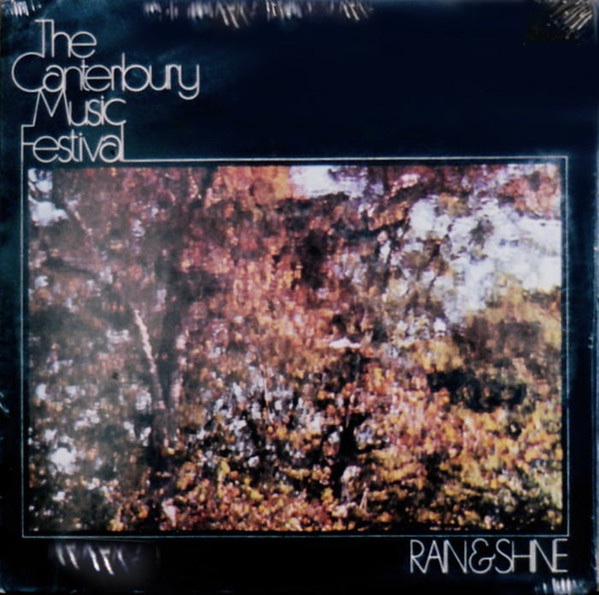
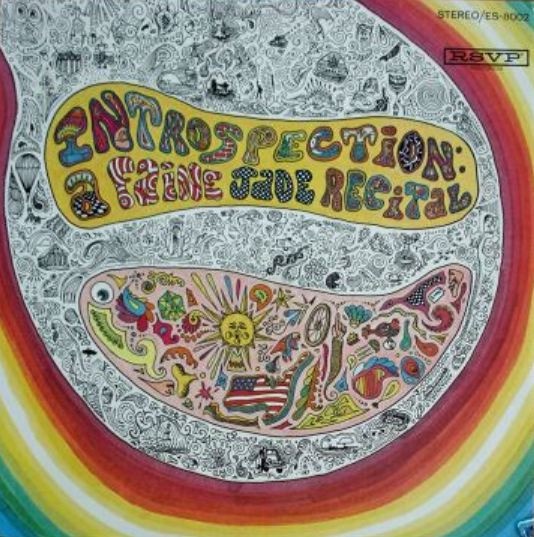
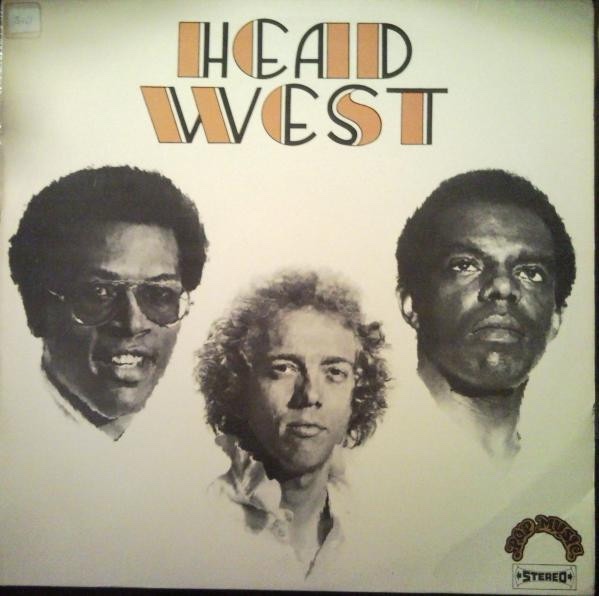
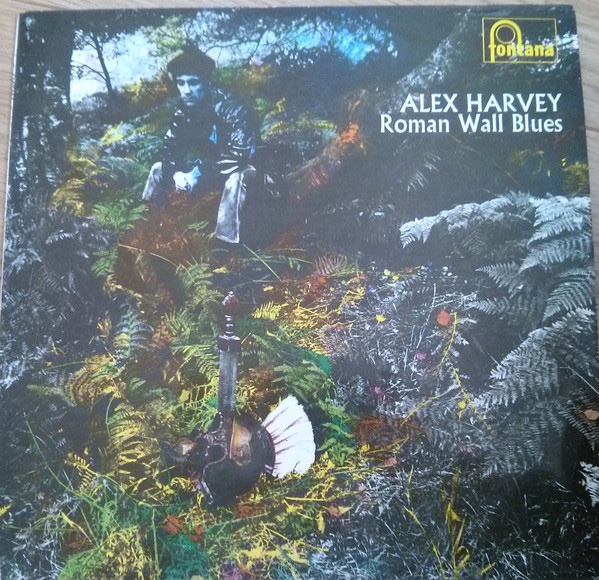
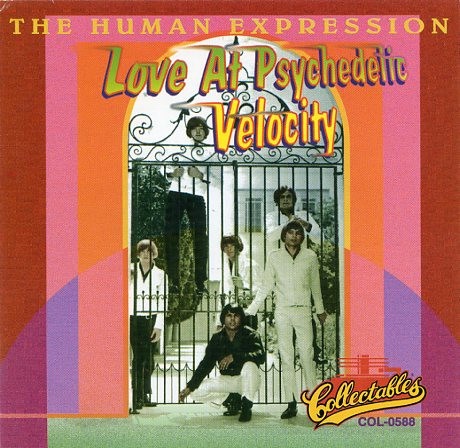
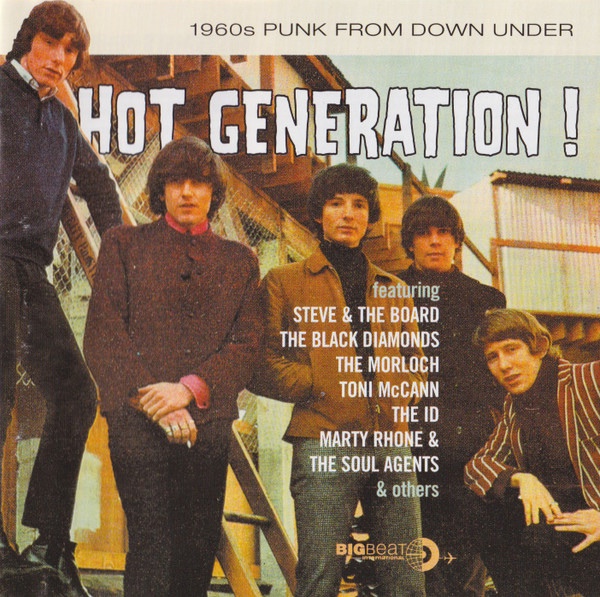
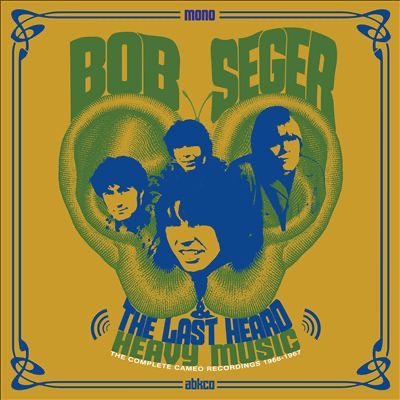
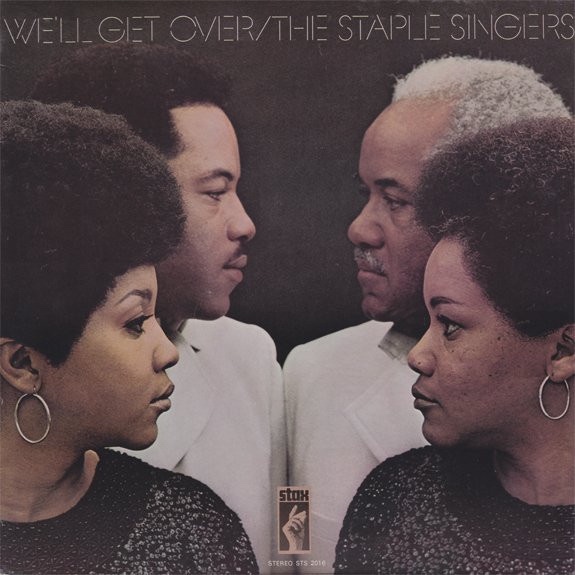

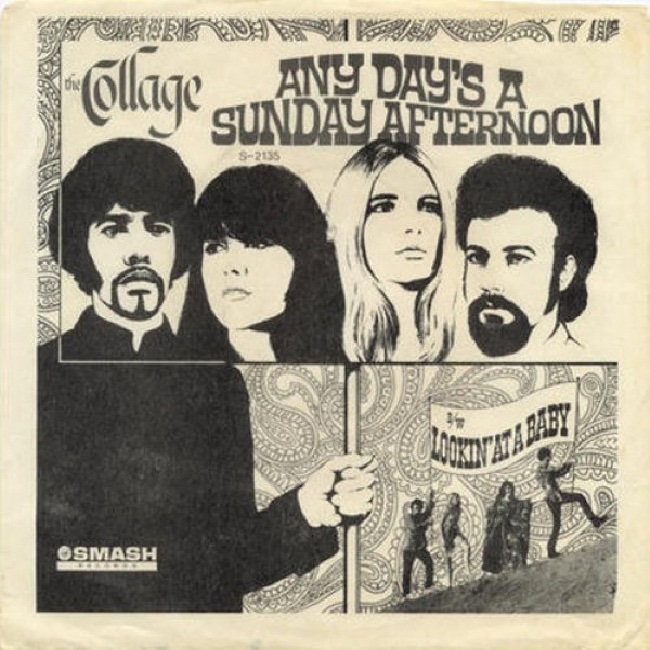


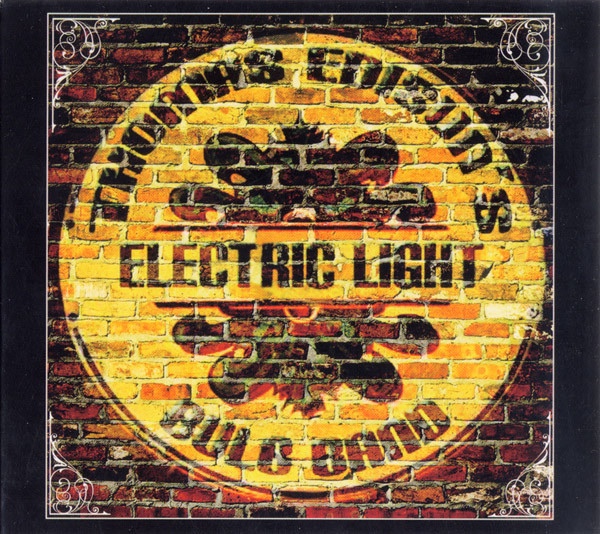

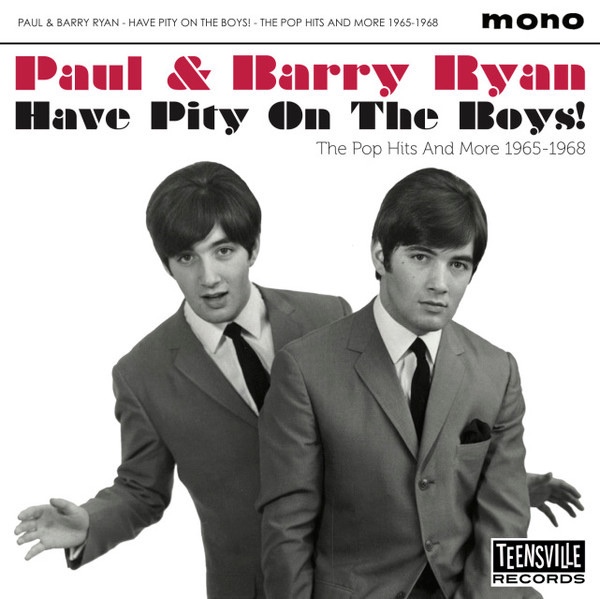
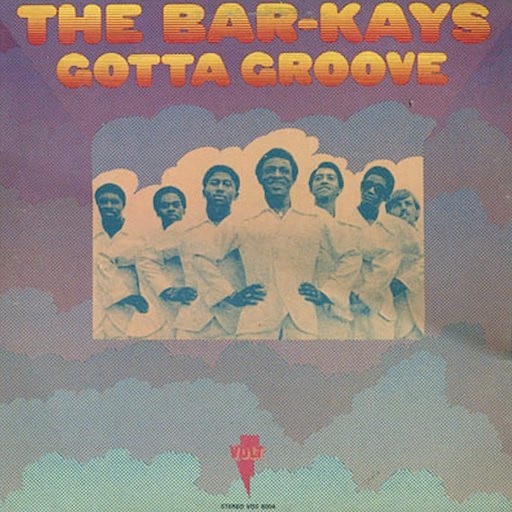

 Brace for the Obscure (60s rock)! / Off the Charts: 60s Rock Revelations😊

