The Hangmen — “Dream Baby”: Brace for the Obscure (60s rock)! — August 23, 2022

THE GREATEST SONGS OF THE 1960s THAT NO ONE HAS EVER HEARD

560) The Hangmen — “Dream Baby”

The Hangmen “60s’ize” a romantic Roy Orbison classic, mercilessly marching it up the Gallows Pole and down into the garage. OK, OK, I know Orbison released the song as a single in ’62, and that it reached #4 that March. But that was another era! And I know that the Hangmen’s label kept tightening the noose until the boys relented and agreed to record and release it as a single. But, as Chris Bishop says, they give it a “slamming beat and catchy guitar and sitar sounds.” (https://garagehangover.com/hangmen-what-a-girl-cant-do/). I love it!

The Hangmen were the pride of Washington, D.C. and NOVA. As Terence McArdle tells us, “[f]or a few weeks in 1966, at the height of Beatlemania, a rock band from suburban Montgomery County nudged the Beatles’ “Day Tripper” from the No. 1 spot in the local radio market [with their single “What a Girl Can’t Do”]. They called themselves the Hangmen, and they drove from gig to gig in a 1953 Cadillac hearse.” (https://www.washingtonpost.com/local/obituaries/a-local-life-tom-guernsey-md-musician-who-penned-regional-hit-in-the-1960s-dies-at-68/2012/10/20/b5a5248e-13d7-11e2-be82-c3411b7680a9_story.html)

We’ll, they hadn’t even recorded “What a Girl Can’t Do” — that was the Reekers (yes, that was the band’s name). As Bishop explains:

In early summer of ’65, the Reekers’ managers . . . played “What a Girl Can’t Do” for Fred Foster of Monument Records. . . . Foster signed . . . only Tom [Guernsey] as he was the songwriter and leader of the Reekers. Since [two of the other Reekers] were committed to college, Tom decided, against his own preferences, to work with the Hangmen as his band. Monument then released the Reekers’ recordings of “What a Girl Can’t Do” and “The Girl Who Faded Away” under the Hangmen’s name . . . .

Who, then, were the Hangmen — those Grim Reekers? Guernsey remembers that:

found all the band members just by asking around the campus and finding players—with the exception of the lead singer, Dave Ottley. George called the British embassy in Washington, D.C. and asked if anyone there knew of a British singer looking for a band. A good move, as it was how we hooked up with Dave [who was a hairstylist from Glasgow].

https://web.archive.org/web/20160304172402/http://60sgaragebands.com/hangmen.html

Anyway, after personnel changes including a new singer after Ottley returned to the UK, they went to Nashville to record an album. As Guernsey says:

We recorded our album Bittersweet in Nashville . . . doing our second single ‘Faces’ there. . . . [W]e really wanted to release “I Want To Get To Know You” as our third single, but Monument went with the Roy Orbison tune, ‘Dream Baby’ that they had us cover largely because they had the publishing on the song. I do have to say the album could have been better if we had taken Nashville more seriously at the time. I had produced the single ‘What A Girl Can’t Do,’ and was just 19 at the time and naively thought that I should be producing the album. Also, we all thought of Nashville as a foreign land of country music where people didn’t have a clue what we were trying to do. We didn’t realize until much later that we should have taken the whole project more seriously. I think we spent more time in Nashville bars than the studio. Oh well, it was fun.

I bet it was!

Check out the site’s new page: Stick It to the (Fish)Man: Feedback — the coolest comments I have received!

I have added a Facebook page for Brace for the Obscure 60s Rock! If you like what you read and hear and feel so inclined, please visit and “like” my Facebook page by clicking here.

Here’s Roy:

Pay to Play! The Off the Charts Spotify Playlist! + Brace for the Obscure 60s Rock Merchandise

Please consider helping to support my website/blog by contributing $6 a month for access to the Off the Charts Spotify Playlist. Using a term familiar to denizens of Capitol Hill, you pay to play! (“relating to or denoting an unethical or illicit arrangement in which payment is made by those who want certain privileges or advantages in such arenas as business, politics, sports, and entertainment” — dictionary.com).

The playlist includes all the “greatest songs of the 1960’s that no one has ever heard” that are available on Spotify. The playlist will expand each time I feature an available song.

All new subscribers will receive a Brace for the Obscure 60s Rock magnet. New subscribers who sign up for a year will also receive a Brace for the Obscure 60s Rock t-shirt or baseball cap. See pictures on the Pay to Play page.

When subscribing, please send me an e-mail (GMFtma1@gmail.com) or a comment on this site letting me know an e-mail address/phone number/Facebook address, etc. to which I can send instructions on accessing the playlist and a physical address to which I can sent a magnet/t-shirt/baseball cap. If choosing a t-shirt, please let me know the gender and size you prefer.

Just click on the first blue block for a month to month subscription or the second blue block for a yearly subscription.

Solomon Burke — “Home in Your Heart”: Brace for the Obscure (60s rock)! — August 22, 2022

THE GREATEST SONGS OF THE 1960s THAT NO ONE HAS EVER HEARD

559) Solomon Burke — “Home in Your Heart”

“Home in Your Heart” is my favorite Solomon Burke song and one of my favorite soul songs of all-time (thanks, Otis Blackwell!) If it doesn’t stir your soul, baby, you ain’t got one!

And I just realized that I am not alone. Ana-b says that it “is one of the greatest sides ever cut, anywhere, by anyone.” (http://dereksdaily45.blogspot.com/2012/06/solomon-burke-home-in-your-heart-bw.html?m=1) Poinconneur says that it “may be the most overlooked song in 60s soul.” (https://rateyourmusic.com/release/single/solomon-burke/words-home-in-your-heart/) Pianoporsche says that it is Burke’s “crowning achievement . . . . A restless riff mirrors the man’s unflappable dedication, and that all-important snare thwack spurs him on to the hallowed realm of soul outros where the singer flows. No unwarranted pauses or hasty retreats, just a full-throttle outpouring of desire. (https://rateyourmusic.com/release/single/solomon-burke/words-home-in-your-heart/) JurassicPunk posted in on YouTube, saying that “I was surprised to see that my personal fave of [Burke’s] and one of the best Soul songs ever, period, is not on here. So here it is.” (https://www.youtube.com/watch?v=6mRx17xycHs) Derek says that:

[T]here are so many moments . . . that are mindblowing; first off, whoever is behind the drum kit has a direct hotline to MY heart, and his stop time fills are not only impressive but so effective to complement the lyrics. Then there’s the matter of Solomon’s voice; in a world full of musical fakery, this is a man that fully believes what he’s singing here, and throws his entire soul into the performance, sending the microphone, preamps, and/or tape machine into distortion at JUST the right times, as the distortion drives home words that he wants to enunciate with even more color. It’s all capped off with a slightly sinister laugh at the outro…I’ve listened to it a dozen times this morning and I could easily listen a dozen more.

http://dereksdaily45.blogspot.com/2012/06/solomon-burke-home-in-your-heart-bw.html?m=1

As to Burke, Richie Unterberger tells us that:

While Solomon Burke never had a Top 20 hit, he was an important pioneer of early soul. On his 1960s singles for Atlantic, he brought a country influence into R&B, with emotional phrasing and intricately constructed, melodic ballads and midtempo songs. At the same time, he was surrounded with sophisticated “uptown” arrangements . . . . This combination of gospel, pop, country, and production polish was basic to the recipe of early soul. . . . [Burke] . . . was an important influence upon The Rolling Stones, who covered Burke’s “Cry to Me” and “Everybody Needs Somebody to Love” on their early albums. . . . He was preaching at his family’s Philadelphia church and hosting his own gospel radio show even before he’d reached his teens. He began recording gospel and R&B sides for Apollo in the mid- to late ’50’s. . . . Burke had a wealth of high-charting R&B hits in the early half of the ’60s . . . . [but] he wasn’t able to expand his R&B base into a huge pop following.

https://www.allmusic.com/artist/solomon-burke-mn0000031067

Oh, and did he invent the term “soul music”? Christian John Wikane writes that:

[I]n 1960 . . . Burke signed with Atlantic Records, home to Ray Charles, Ruth Brown, and LaVern Baker. At the time, Atlantic was the top rhythm and blues label in the world, but Burke took exception to the “rhythm and blues” moniker and did not hesitate to make his sentiments known. “They were a little upset with me because we [sic] didn’t want to sing rhythm and blues, per se, and be classified as a rhythm and blues artist, because of my religious convictions.” Burke suggested “soul” as an alternate classification to “rhythm and blues”.

https://www.popmatters.com/how-solomon-burke-got-to-nashville-2495734574.html

Check out the site’s new page: Stick It to the (Fish)Man: Feedback — the coolest comments I have received!

I have added a Facebook page for Brace for the Obscure 60s Rock! If you like what you read and hear and feel so inclined, please visit and “like” my Facebook page by clicking here.

Here, Solomon sings with the Derek Trucks Band in ’02:

Pay to Play! The Off the Charts Spotify Playlist! + Brace for the Obscure 60s Rock Merchandise

Please consider helping to support my website/blog by contributing $6 a month for access to the Off the Charts Spotify Playlist. Using a term familiar to denizens of Capitol Hill, you pay to play! (“relating to or denoting an unethical or illicit arrangement in which payment is made by those who want certain privileges or advantages in such arenas as business, politics, sports, and entertainment” — dictionary.com).

The playlist includes all the “greatest songs of the 1960’s that no one has ever heard” that are available on Spotify. The playlist will expand each time I feature an available song.

All new subscribers will receive a Brace for the Obscure 60s Rock magnet. New subscribers who sign up for a year will also receive a Brace for the Obscure 60s Rock t-shirt or baseball cap. See pictures on the Pay to Play page.

When subscribing, please send me an e-mail (GMFtma1@gmail.com) or a comment on this site letting me know an e-mail address/phone number/Facebook address, etc. to which I can send instructions on accessing the playlist and a physical address to which I can sent a magnet/t-shirt/baseball cap. If choosing a t-shirt, please let me know the gender and size you prefer.

Just click on the first blue block for a month to month subscription or the second blue block for a yearly subscription.
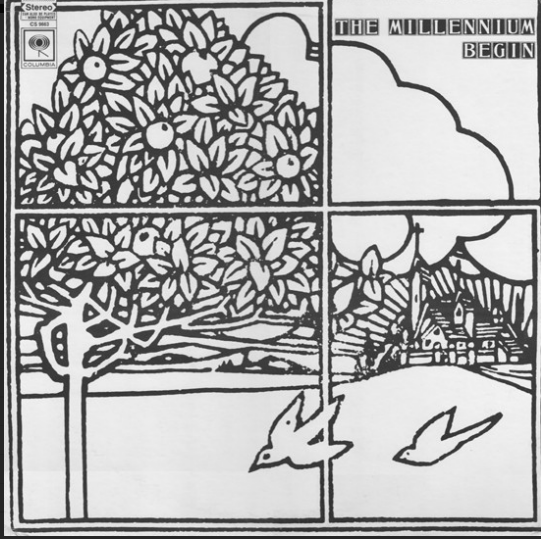
The Carolyn Hester Coalition — “Half the World”: Brace for the Obscure (60s rock)! — August 21, 2022

THE GREATEST SONGS OF THE 1960s THAT NO ONE HAS EVER HEARD

558) The Carolyn Hester Coalition — “Half the World”

Folkie turns psychedelic. OK, she doesn’t get booed at the Newport Folk Festival, but she does get her share of grief and eye-rolls. “[S]tarry-eyed idealism and girlish, high-pitched vocals” — yes, guilty as charged. But as starry-eyed songs sung with girlish, high-pitched vocals go, this is a great one. It almost makes me want to join the Peace Corps. Oh, and the career lesson here? Never turn down the “Puff the Magic Dragon” gig!

Bad-Cat says that:

Anyone into [Carolyn] Hester’s earlier incarnation as a folk singer is likely to find her decision to turn to a more happenin’/commercial sound disappointing.  On the other hand, anyone into this late-1960s psych-oriented effort is liable to find her earlier folk albums trite and dull. The thought of a folkie turning to psych is probably a major turnoff to many folks.  That’s unfortunate since once you get over Hester’s little girl lost voice, 1968’s “The Carolyn Hester Coalition” is surprisingly enjoyable. . . . “Half the World” offered up some excellent psych/rock . . . .    

https://fancy313.rssing.com/chan-6208908/all_p32.html

Alex Molotkow throws in that “the Coalition were her foray into psychedelia, featuring an all-male team of pros. The band survived for two albums . . . both of which bear the marks of Hester’s folk revivalist past: starry-eyed idealism and girlish, high-pitched vocals.” (https://exclaim.ca/music/article/carolyn_hester_coalition-_carolyn_hester_coalition_magazine) And Jeff Penszak says that she “retains her ties to her roots with high-pitched wailings on . . . the politically charged . . . ‘Half The World.’” (http://www.terrascope.co.uk/Reviews/Reviews_August09.htm)

Finally, Richie Unterberger gives some needed historical context (though I edit out much of his vitriol):

[Hester] was an important if marginal figure of the early-’60s folk revival, singing traditional material with a high voice in the manner of Joan Baez and Judy Collins (though with less command). . . . Hester herself was unable to make it as a folk-rocker despite a brief try, and unpredictably went into psychedelic music for a couple of albums before largely drifting out of the business . . . . In 1960, she made her second album [that] cast her very much in the thick of the folk revival . . . sung in her high, almost shaky and girlish voice. In the early ’60s, she was briefly married to author and folk singer/songwriter Richard Farina, who became friendly with Bob Dylan shortly after Dylan’s arrival in New York. While recording her third album . . . she invited Dylan, then almost unknown, to play harmonica on a few cuts. His work on the album helped bring him to the attention of [John] Hammond, who signed Dylan to Columbia . . . shortly afterwards. While other performers of the early-’60s folk revival made great strides forward in sales and influence . . . Hester remained relatively obscure. She turned down a chance to form a folk trio with Peter Yarrow and Paul Stookey, offered by manager Albert Grossman; that position went to Mary Travers . . . . [I]n sticking exclusively to traditional material, rather than covering songs by contemporary writers or writing anything herself, Hester was falling behind the folk curve. . . . In the late ’60s, Hester made the unexpected move to psychedelic music as part of the Carolyn Hester Coalition, who recorded a couple of little-known albums [which] were erratic but not half-bad, interspersing updates of traditional material . . . with moody and fuzzy folk-rockers. . . .

Carolyn Hester had been away from the recording scene for a few years when she re-emerged in the late 1960s as the centerpiece of the Carolyn Hester Coalition, a psychedelic- and folk-tinged rock group. It’s hard to read this as anything but an attempt to keep up with the times on the part of someone who missed the boat that made folk and folk-rock a commercial proposition. . . .

https://www.allmusic.com/artist/carolyn-hester-mn0000149166/biography, https://www.allmusic.com/album/the-carolyn-hester-coalition-mw0000818892

Check out the site’s new page: Stick It to the (Fish)Man: Feedback — the coolest comments I have received!

I have added a Facebook page for Brace for the Obscure 60s Rock! If you like what you read and hear and feel so inclined, please visit and “like” my Facebook page by clicking here.

Pay to Play! The Off the Charts Spotify Playlist! + Brace for the Obscure 60s Rock Merchandise

Please consider helping to support my website/blog by contributing $6 a month for access to the Off the Charts Spotify Playlist. Using a term familiar to denizens of Capitol Hill, you pay to play! (“relating to or denoting an unethical or illicit arrangement in which payment is made by those who want certain privileges or advantages in such arenas as business, politics, sports, and entertainment” — dictionary.com).

The playlist includes all the “greatest songs of the 1960’s that no one has ever heard” that are available on Spotify. The playlist will expand each time I feature an available song.

All new subscribers will receive a Brace for the Obscure 60s Rock magnet. New subscribers who sign up for a year will also receive a Brace for the Obscure 60s Rock t-shirt or baseball cap. See pictures on the Pay to Play page.

When subscribing, please send me an e-mail (GMFtma1@gmail.com) or a comment on this site letting me know an e-mail address/phone number/Facebook address, etc. to which I can send instructions on accessing the playlist and a physical address to which I can sent a magnet/t-shirt/baseball cap. If choosing a t-shirt, please let me know the gender and size you prefer.

Just click on the first blue block for a month to month subscription or the second blue block for a yearly subscription.

Q’65 — “Cry in the Night”: Brace for the Obscure (60s rock)! — August 20, 2022

THE GREATEST SONGS OF THE 1960s THAT NO ONE HAS EVER HEARD

557) Q’65 — “Cry in the Night”

“Cry” is the B-side to Q’65’s explosive ’66 A-side “The Life I Live” (see #108). It is equally as explosive, and some consider it superior. High Times says that the song “is possibly the most powerful 45 ever . . . . Wim Bieler more than makes up for his crimes against the English language with an impassioned vocal . . . while the lead and rhythm guitars lock horns on the break, resulting in the greatest guitar battle of the ’60s. ” (https://hightimes.com/culture/dutch-punk-in-the-1960s/amp/) Tim Sandra says that it “is the group’s best, a snarling garage stomper with nasty guitar breaks and sneering vocals.” (https://www.allmusic.com/album/beat-from-holland-vol-2-mw0000458895) Even apart from all that, it is very uplifting. Girlfriend treating you bad? “I put a rope around my neck. . . . Then I will rest in my coffin, and I don’t have to worry about ya. . . . I will never cry in the night.”

Bruce Eder gives some history:

The Dutch quintet could have held their own with [the Pretty Things or the Yardbirds] or the Animals without breaking a sweat . . . . Q 65 have remained one of Europe’s best-kept star-caliber musical secrets for more than 30 years.. . . [They] first got together in 1965, in the Hague . . . “the Liverpool of the Netherlands,” with a music scene that had been thriving since the end of the ’50s. . . . The group’s professed influences were American soul acts . . . yet somehow, when they performed, what they played came out closer in form and spirit to the likes of the Pretty Things . . . and the Yardbirds than it did to any of those soul acts, at least at first. . . .

https://www.allmusic.com/artist/q-65-mn0000379341

High Times calls them ugly, slobs, and less intelligible than a New York cab driver, and it means that as a compliment! —

Dutch punks from the ’60s [were] an entire generation of long-haired, kicks-crazed maniacs who invented “punk” . . . . One listen to [Q’65’s] lead vocalist is as good as a thousand when you’re talkin’ about comprehending Wim Bieler’s “command” of the English language. If articulation is your bag, you’d be better off hanging out with a New York cab driver! . . . [T]hese guys are damn ugly. . . . [and] are worshipped on a cult level worldwide largely due to their wild looks and pre-punk approach to playing R&B. In their heyday, they were in direct confrontation with the Outsiders [and there were] fist fights between their opposing fans at shows . . : . Q’65 were total slobs in their aggression; unintelligible forerunners of the Stooges. . . .

https://hightimes.com/culture/dutch-punk-in-the-1960s/amp/

Check out the site’s new page: Stick It to the (Fish)Man: Feedback — the coolest comments I have received!

I have added a Facebook page for Brace for the Obscure 60s Rock! If you like what you read and hear and feel so inclined, please visit and “like” my Facebook page by clicking here.

Pay to Play! The Off the Charts Spotify Playlist! + Brace for the Obscure 60s Rock Merchandise

Please consider helping to support my website/blog by contributing $6 a month for access to the Off the Charts Spotify Playlist. Using a term familiar to denizens of Capitol Hill, you pay to play! (“relating to or denoting an unethical or illicit arrangement in which payment is made by those who want certain privileges or advantages in such arenas as business, politics, sports, and entertainment” — dictionary.com).

The playlist includes all the “greatest songs of the 1960’s that no one has ever heard” that are available on Spotify. The playlist will expand each time I feature an available song.

All new subscribers will receive a Brace for the Obscure 60s Rock magnet. New subscribers who sign up for a year will also receive a Brace for the Obscure 60s Rock t-shirt or baseball cap. See pictures on the Pay to Play page.

When subscribing, please send me an e-mail (GMFtma1@gmail.com) or a comment on this site letting me know an e-mail address/phone number/Facebook address, etc. to which I can send instructions on accessing the playlist and a physical address to which I can sent a magnet/t-shirt/baseball cap. If choosing a t-shirt, please let me know the gender and size you prefer.

Just click on the first blue block for a month to month subscription or the second blue block for a yearly subscription.
The Humblebums — “Rick Rack”: Brace for the Obscure (60s rock)! — August 19, 2022

THE GREATEST SONGS OF THE 1960s THAT NO ONE HAS EVER HEARD

556) The Humblebums — “Rick Rack”*

A beguiling and unforgettable song by Gerry Rafferty from his Humblebum days that seems informed by his relationship with his abusive father. Alan Murray says that “[w]hen Gerry Rafferty [joined the Humblebums,] . . the songwriting and music leaps to another level. Rick Rack [is] truly memorable”. (https://www.livingtradition.co.uk/webrevs/tecd400.htm)

Stewart Mason notes regarding the album from which the song is drawn:

Rafferty . . . turned the duo’s original trad folk aesthetic into a prettier, poppier sound. . . . That dichotomy continues throughout, with Rafferty’s unapologetically pop songs and Connolly’s folk- and blues-based tunes alternating. Truthfully, Rafferty’s songs are better, with their lightly psychedelic arrangements suiting his whimsical lyrics. . . . [His] six songs . . . are uniformly excellent . . . .

https://www.allmusic.com/album/humblebums-mw0000852108

And Dangerous Minds adds:

The New Humblebums . . . began to achieve far greater success with their mix of Rafferty’s plaintive vocals and melodies and Connolly’s upbeat tunes and fine guitar playing. That same year, the duo released their first record together and band’s second album, The New Humblebums. The album was a major-hit in Glasgow and was well-received nationally. . . .

https://dangerousminds.net/comments/when_gerry_rafferty_and_billy_connolly_were_the_humblebums

Steve Huey provides some history of the clan:

Scottish folk outfit the Humblebums aren’t perhaps as well known as their two main individual members: Gerry Rafferty, who later scored hits with Stealers Wheel and as a solo artist, and Billy Connolly, who left music to become an internationally successful stand-up comedian. Conolly actually founded the group in 1965, along with guitarist Tam Harvey; both had been regulars on the Glasgow folk circuit . . . . The duo quickly became a popular attraction in Glasgow’s folk clubs, particularly as Connolly honed his humorous between-song patter . . . . After a few years of local celebrity, the Humblebums recorded their debut album . . . split between traditional folk songs and Connolly originals. Not long after[,] . . budding singer/songwriter . . . Rafferty approached the duo after one of their gigs for feedback on his original songs. He wound up being invited to join . . . . Rafferty’s songs soon took a prominent place in their repertoire, which led to friction with Tam Harvey; he departed around half a year [later]. Toward the end of 1969, [Rafferty and Connolly] entered the studio together and cut the second Humblebums LP . . . . With Rafferty’s pop instincts, the Humblebums grew more popular on the live circuit than ever, and they recorded another album in a similar vein . . . . However, there was growing dissension . . . Rafferty’s material had a more serious bent than Connolly’s lighthearted, dryly witty offerings, and Connelly’s comedy bits were taking up a large portion of the Humblebums’ stage show, to the point where Rafferty wanted him to cut the comedy altogether. . . . [T]he Humblebums broke up in 1971. Rafferty moved on to Stealers Wheel, best known for their hit “Stuck in the Middle With You,” and later went solo, scoring a huge hit with “Baker Street.” Connolly . . . in a few short years became one of the most popular comedians not only in Scotland, but the whole U.K. . . .

https://www.allmusic.com/artist/humblebums-mn0000766545

Michael Gray talks of Rafferty’s childhood:

Rafferty was born in Paisley, near Glasgow, an unwanted third son. His father, Joseph, was an Irish-born miner. His mother . . . dragged young Gerry round the streets on Saturday nights so that they would not be at home when his father came back drunk. They would wait outside, in all weathers, until he had fallen asleep, to avoid a beating. “If it wasn’t for you, I’d leave,” Mary told Gerry. Joseph died in 1963, when Gerry was 16. That year, Gerry left St Mirin’s academy and worked in a butcher’s shop and at the tax office. At weekends, he and a schoolfriend, Joe Egan [with whom he later formed Stealers Wheel] played in a local group, the Mavericks. . . . after Gerry’s song Benjamin Day failed as a Mavericks single, Gerry and Egan quit the group and Gerry joined Connolly’s outfit, the Humblebums . . . .

https://www.theguardian.com/music/2011/jan/04/gerry-rafferty-obituary

And Seamus Dubhghaill adds:

Inspired by his Scottish mother, who teaches him both Irish and Scottish folk songs, and the music of Bob Dylan and the Beatles, he starts writing his own material. . . . In the mid-1960s Rafferty earns money busking on the London Underground. In 1966 he meets fellow musician Joe Egan and they are both members of the pop band the Fifth Column.

https://seamusdubhghaill.com/tag/the-humblebums/

* Rick rack is braided trimming in a zigzag pattern, used as decoration on clothes.

Check out the site’s new page: Stick It to the (Fish)Man: Feedback — the coolest comments I have received!

I have added a Facebook page for Brace for the Obscure 60s Rock! If you like what you read and hear and feel so inclined, please visit and “like” my Facebook page by clicking here.

Here is the Peel session:

Here is the BBC Radio One session:

Pay to Play! The Off the Charts Spotify Playlist! + Brace for the Obscure 60s Rock Merchandise

Please consider helping to support my website/blog by contributing $6 a month for access to the Off the Charts Spotify Playlist. Using a term familiar to denizens of Capitol Hill, you pay to play! (“relating to or denoting an unethical or illicit arrangement in which payment is made by those who want certain privileges or advantages in such arenas as business, politics, sports, and entertainment” — dictionary.com).

The playlist includes all the “greatest songs of the 1960’s that no one has ever heard” that are available on Spotify. The playlist will expand each time I feature an available song.

All new subscribers will receive a Brace for the Obscure 60s Rock magnet. New subscribers who sign up for a year will also receive a Brace for the Obscure 60s Rock t-shirt or baseball cap. See pictures on the Pay to Play page.

When subscribing, please send me an e-mail (GMFtma1@gmail.com) or a comment on this site letting me know an e-mail address/phone number/Facebook address, etc. to which I can send instructions on accessing the playlist and a physical address to which I can sent a magnet/t-shirt/baseball cap. If choosing a t-shirt, please let me know the gender and size you prefer.

Just click on the first blue block for a month to month subscription or the second blue block for a yearly subscription.
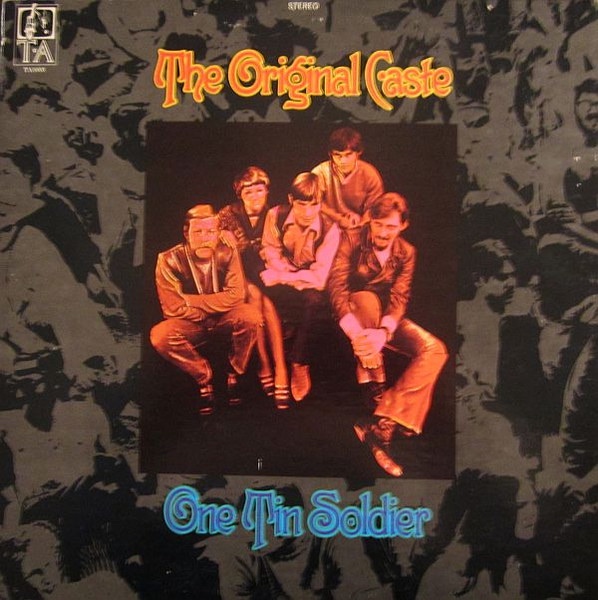
The Baroques — “Mary Jane”: Brace for the Obscure (60s rock)! — August 18, 2022

THE GREATEST SONGS OF THE 1960s THAT NO ONE HAS EVER HEARD

555) The Baroques — “Mary Jane”

From the lone single (’67) and the lone album by Milwaukee’s Baroques comes a classic psych/garage track “Mary Jane” that was banned for being a pro-marijuana song. But was it? Matt Kessler calls the song “a stand-out track which immediately grabs your attention with infectious electric piano . . . . accompanied by . . . vocals (that sound as if [the] voice box had been spliced with that of a bumble bee’s!) make this a truly unique listening experience. . . . of rhythmic ecstasy.” (https://moofmag.com/2018/01/05/album-review-the-baroques-1967/)

As to impact of “Mary Jane”, Sonic Hits reports that:

The Baroques formed in 1966. In January 1967 they signed a contract with Chess Records. By June 1967, both the album “Iowa” and single “Mary Jane” were released and banned in the same week. The ban was imposed by some local DJs whose stations directors thought “Mary Jane” was a pro-drug song about marijuana. [It was actually] an anti-drug song but no one got it. Instead The Baroques became infamous as “acid-heads” due to the “far-out” sounds on the record. At this point, [songwriter, singer and lead guitarist] Jay [Berkenhagen] had never tried drugs in his life. That soon changed and the band found itself pulling stunts at their live shows involving catapults, baby doll parts, and lip-synching onstage.

https://sonichits.com/video/The_Baroques/Mary_Jane

Matt Kessler adds that “local radio DJs. . . . wrongly assumed that “Mary Jane” was a pro-drug song, which was not at all the case. However, the band fed off this reputation, and began pulling wild and daring stunts during their concerts.”

As to the album as a whole, Jay Millar calls it “the perfect record. It takes elements of both garage and psych rock and is sort of the happy medium in between. It’s just so strange, and it has the charm and lyrical angst that can only be found in youth.” (https://www.jsonline.com/story/entertainment/music/2017/11/22/fifty-years-after-break-up-milwaukee-band-baroques-ready-rediscovery/889709001/)

Richie Unterberger adds that:

Popular only on a regional level, the Milwaukee group (originally called “The Complete Unknowns,” until someone probably realized how dangerously self-fulfilling it could be) was dominated by the morose compositions and low, odd vocal range of . . . Jay Berkenhagen . . . . With a slight garage feel, their unusual, occasionally oddball material was built around electric (sometimes “baroque”) keyboards and fuzz guitar riffs, which occasional detours into uplifting folk-rock and freak-out jamming. . . .

https://www.allmusic.com/artist/the-baroques-mn0000033563/biography

And Bob Koch adds that:

[The album] is somewhat of an anomaly when compared to many of the era’s more famous psychedelic touchstones; there’s nothing specifically mystical in the lyrics, or any coded drug references, or epic extended jams. . . . [It] is also notable for being released by Chicago R&B titan Chess Records. At the time Chess was looking for a way to break back into the rock market, a place they’d been largely absent from since The Beatles changed the rules of the game a few years before. It would end up being one of only a couple post-Fab Four rock albums on Chess . . . . [I]t sold fairly well regionally at the time . . . . It’s one of the more unique sounding garage-era albums, featuring an unconventional mix of mopiness and wackiness, hard-edged guitar and subtle harpsichord, droniness and catchiness. . . .

https://isthmus.com/arts/vinyl-cave/vinyl-cave-the-baroques-by-the-baroques/

Matt Kessler opines rapturously that:

[T]he [album’s] self-titled acid drenched magnificence .. . is extremely unique. . . . Their psychedelic/garage/pop hybrid was done by others, but the essence of darkness that is represented in this album makes their sound its own entity. . . . Some of these songs would undoubtedly fit perfectly inside movie scenes where a character may meet his or hers unfortunate demise
Extremely atmospheric, and filled with a moody fuzz guitar tone that segues into the bashing chorus where drummer Dean Nimmer lets loose with all of his might, finishing with an otherworldly psychedelic freakout.

Check out the site’s new page: Stick It to the (Fish)Man: Feedback — the coolest comments I have received!

I have added a Facebook page for Brace for the Obscure 60s Rock! If you like what you read and hear and feel so inclined, please visit and “like” my Facebook page by clicking here.

Here is a radio spot:

Pay to Play! The Off the Charts Spotify Playlist! + Brace for the Obscure 60s Rock Merchandise

Please consider helping to support my website/blog by contributing $6 a month for access to the Off the Charts Spotify Playlist. Using a term familiar to denizens of Capitol Hill, you pay to play! (“relating to or denoting an unethical or illicit arrangement in which payment is made by those who want certain privileges or advantages in such arenas as business, politics, sports, and entertainment” — dictionary.com).

The playlist includes all the “greatest songs of the 1960’s that no one has ever heard” that are available on Spotify. The playlist will expand each time I feature an available song.

All new subscribers will receive a Brace for the Obscure 60s Rock magnet. New subscribers who sign up for a year will also receive a Brace for the Obscure 60s Rock t-shirt or baseball cap. See pictures on the Pay to Play page.

When subscribing, please send me an e-mail (GMFtma1@gmail.com) or a comment on this site letting me know an e-mail address/phone number/Facebook address, etc. to which I can send instructions on accessing the playlist and a physical address to which I can sent a magnet/t-shirt/baseball cap. If choosing a t-shirt, please let me know the gender and size you prefer.

Just click on the first blue block for a month to month subscription or the second blue block for a yearly subscription.
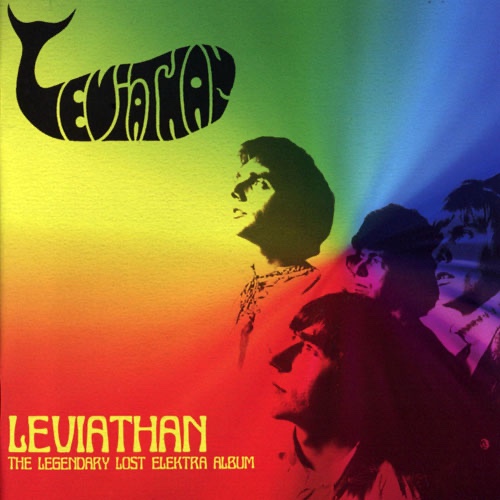
Dave Berry — “Its Gonna Be Fine”: Brace for the Obscure (60s rock)! — August 17, 2022

THE GREATEST SONGS OF THE 1960s THAT NO ONE HAS EVER HEARD

554) Dave Barry — “Its Gonna Be Fine”

Dave Berry brings to buoyant life a Barry Mann/Cynthia Weill composition that wasn’t done justice by Glenn Yarbrough (who reached #54 with it in ’65) or the New Christy Minstrels. Richie Unterberger says it “sound[s] very much like a mid-1960s uptown Philly soul production”. (https://www.allmusic.com/album/this-special-sound-of-dave-berry-mw0000836814) I say, if this song doesn’t banish your blues and put a skip in your step, you are truly in an uptown funk.

Nostalgia Central gives us a grounding:

In 1961 [Berry, born David Holgate Grundy] assumed his stage surname when invited to front The Cruisers . . . . [They] flogged a predominantly Chicago blues repertoire . . . [including] Dave’s idol (and namesake), Chuck Berry. . . . Berry’s big break came when Mickie Most . . . saw him perform . . . and [then] supervised a demo recording session for submission to Decca . . . . [Berry’s] stage presence was almost unclassifiable, and it was not enough for him to simply stand and sing a song. He made a point of appearing from behind pillars (it may take a full five minutes for him to emerge completely) and staring straight ahead while making strange beckoning arm-movements. These abstract hand-ballets would have seemed sinister were it not for the subtle merriment in his oriental eyes. . . . The Crying Game took Berry into the Top Five in September 1964 . . . . [and a] cover of Bobby Goldsboro’s Little Things restored Dave to the UK Top 10, but – apart from a disinclined 1966 recording of the sentimental Mama – this was his last bite of that particular cherry.

https://nostalgiacentral.com/music/artists-a-to-k/artists-d/dave-berry/

Richie Unterberger adds:

Briefly a big star in Britain in the mid-’60s, Dave Berry faced the same dilemma as several other British teen idols of the era: R&B was obviously nearest and dearest to his heart, but he needed to record blatantly pop material to make the hit parade. It was also obvious that Berry was in fact much more suited toward pop ballads than rough-and-tumble R&B, regardless of his personal preferences. At his peak, his output was divided between hard R&B/rockers and straight pop. Help from ace session players like Jimmy Page and John Paul Jones notwithstanding, his smooth voice was frankly ill-equipped to deliver the goods . . . on the bluesier items. He made a rather good go of it, on the other hand, with romantic pop/rock ballads . . . . [H]e never made the slightest impression on the U.S. market . . . .

https://www.allmusic.com/artist/dave-berry-mn0000959279

Check out the site’s new page: Stick It to the (Fish)Man: Feedback — the coolest comments I have received!

I have added a Facebook page for Brace for the Obscure 60s Rock! If you like what you read and hear and feel so inclined, please visit and “like” my Facebook page by clicking here.

Here is Glenn Yarbrough:

Here are the New Christy Minstrels:

Pay to Play! The Off the Charts Spotify Playlist! + Brace for the Obscure 60s Rock Merchandise

Please consider helping to support my website/blog by contributing $6 a month for access to the Off the Charts Spotify Playlist. Using a term familiar to denizens of Capitol Hill, you pay to play! (“relating to or denoting an unethical or illicit arrangement in which payment is made by those who want certain privileges or advantages in such arenas as business, politics, sports, and entertainment” — dictionary.com).

The playlist includes all the “greatest songs of the 1960’s that no one has ever heard” that are available on Spotify. The playlist will expand each time I feature an available song.

All new subscribers will receive a Brace for the Obscure 60s Rock magnet. New subscribers who sign up for a year will also receive a Brace for the Obscure 60s Rock t-shirt or baseball cap. See pictures on the Pay to Play page.

When subscribing, please send me an e-mail (GMFtma1@gmail.com) or a comment on this site letting me know an e-mail address/phone number/Facebook address, etc. to which I can send instructions on accessing the playlist and a physical address to which I can sent a magnet/t-shirt/baseball cap. If choosing a t-shirt, please let me know the gender and size you prefer.

Just click on the first blue block for a month to month subscription or the second blue block for a yearly subscription.
Ihre Kinder — “Hilf Mir” (“Help Me”): Brace for the Obscure (60s rock)! — August 16, 2022

THE GREATEST SONGS OF THE 1960s THAT NO ONE HAS EVER HEARD

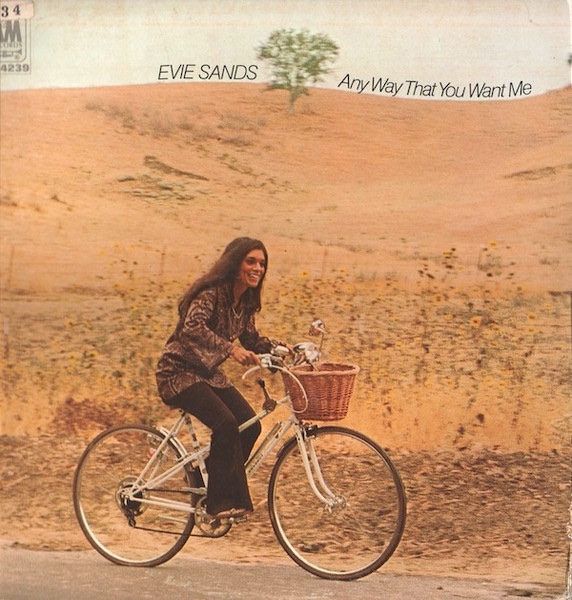
553) Ihre Kinder (Your Children) — “Hilf Mir” (“Help Me”)

John Lennon asked for “Help” and a year later Ihre Kinder pleaded “Help Me” — a wonderful folky psychy song with a killer electric guitar solo (think “Sound of Silence”). From the first album (’69) by the first German rock band to sing exclusively in German, and the beginnings of Deutschrock and Krautrock.

Prog Archives notes that “[t]heir music combined influences from the American protest song (Bob Dylan), white blues music from England and – in a cautious way – the typical German electronic rock music of the early 70s to a progressive und unique mixture.” And they did it in German. (http://www.progarchives.com/artist.asp?id=1925) Silly Puppy explains:

Ihre Kinder . . . introduced the then radical notion of crafting rock songs in its own German language. The band was a continuation from the earlier pop band Jonah & The Whales . . . . After releasing an all but ignored [cover of] “It Ain’t Me Babe,” the band called it quits[. After] assembling a new team of noise makers vocalist/keyboardist Sonny Hennig and financier Jonas Porst . . . created a new band from scratch. . . . [Ihre Kinder] was one of the pioneers of German language rock and was met with great skepticism for having done so. . . . [Record labels] were [not] interested in this strange style of rock sung in German and [the album had to be] release[d] independently. Despite all efforts this debut album was met with little interest and the newly gestated Deutschrock had to wait a few more years for cultural acceptance.

http://www.progarchives.com/artist.asp?id=1925

Edgar KlĂŒsener gives us more history:

They played acoustic folk and rich blues, oriental-tinged psycho-pop and rock-hard rock . . . [m]usically, the[y] . . . hardly differed from other German rock bands of the late sixties.  And yet they were the beginning of a revolution.  Because [they] sang exclusively in German . . . .  In the early 1970s, the German language was still a sacrilege in rock music.  Anglo-American idiom was cool, German, on the other hand, was discredited as the tongue-lashing of the escapist Musikantenstadl yodels and shallow-pink pop romanticism.  Anyone who was self-respecting as a German rocker sang in English . . . .  [The Kinder] . . . relied on poetic lyrics, a kind of psychedelic German beat lyrics, but could also be very clear and precise when they took up political topics.  In 1970, the readers of the magazine "Musikexpress" voted the group the best German blues band.  By then, at the latest, the band was well known even to high school students from the laboring suburbs . . . .  
Nuremberg was . . . the city of Photo-Porst.  In the 1960s, Hannsheinz Porst was at the head of the family business.  He was a dazzling figure, a communist dressed as a capitalist . . . [who] turned the market-leading photo discounter into an employee company. . . . [and] had undisguised sympathies for the [Soviet Union].  [T]he German press liked to describe [him] as a madman, a spy, an ideological arsonist, a crackpot or a traitor to the homeland who was dangerous to the public.  [H]is son Jonas. . . . played the impresario and put his father's dough into a recording studio that was to become the important nucleus of German rock culture - and he put it into the band "Your Children". The group's first album, financed and produced by Jonas . . . was initially rejected by German record companies as far too uncommercial.  The prevailing opinion in the recording industry was that the English and Americans were much better at rock music.  Who wanted to hear German lyrics? . . . .  In the end, a record company showed courage.  Philips released the album, but so half-heartedly that it almost went under without a word. 
https://www.spiegel.de/geschichte/popmusik-a-949347.html (courtesy of Google Translate)

I don’t think Silly Puppy liked their first album:

[Ihre Kinder] capture the zeitgeist of the beat era of the mid-60s while adding only small doses of the more contemporary sounds that were developing in the world of Krautrock. Honestly if it weren’t for the album’s status as first Deutschrock album [it] would be considered by most as utterly forgettable as the production is horrendously amateur, the pop hooks are bland and the singers sound like they got very drunk at a beer hall and jumped up on stage for the first time. . . .

http://www.progarchives.com/artist.asp?id=1925

Check out the site’s new page: Stick It to the (Fish)Man: Feedback — the coolest comments I have received!

I have added a Facebook page for Brace for the Obscure 60s Rock! If you like what you read and hear and feel so inclined, please visit and “like” my Facebook page by clicking here.

Pay to Play! The Off the Charts Spotify Playlist! + Brace for the Obscure 60s Rock Merchandise

Please consider helping to support my website/blog by contributing $6 a month for access to the Off the Charts Spotify Playlist. Using a term familiar to denizens of Capitol Hill, you pay to play! (“relating to or denoting an unethical or illicit arrangement in which payment is made by those who want certain privileges or advantages in such arenas as business, politics, sports, and entertainment” — dictionary.com).

The playlist includes all the “greatest songs of the 1960’s that no one has ever heard” that are available on Spotify. The playlist will expand each time I feature an available song.

All new subscribers will receive a Brace for the Obscure 60s Rock magnet. New subscribers who sign up for a year will also receive a Brace for the Obscure 60s Rock t-shirt or baseball cap. See pictures on the Pay to Play page.

When subscribing, please send me an e-mail (GMFtma1@gmail.com) or a comment on this site letting me know an e-mail address/phone number/Facebook address, etc. to which I can send instructions on accessing the playlist and a physical address to which I can sent a magnet/t-shirt/baseball cap. If choosing a t-shirt, please let me know the gender and size you prefer.

Just click on the first blue block for a month to month subscription or the second blue block for a yearly subscription.
Kaleidoscope — “Flight from Ashiya”: Brace for the Obscure (60s rock)! — August 15, 2022

THE GREATEST SONGS OF THE 1960s THAT NO ONE HAS EVER HEARD

552) Kaleidoscope — “Flight from Ashiya”

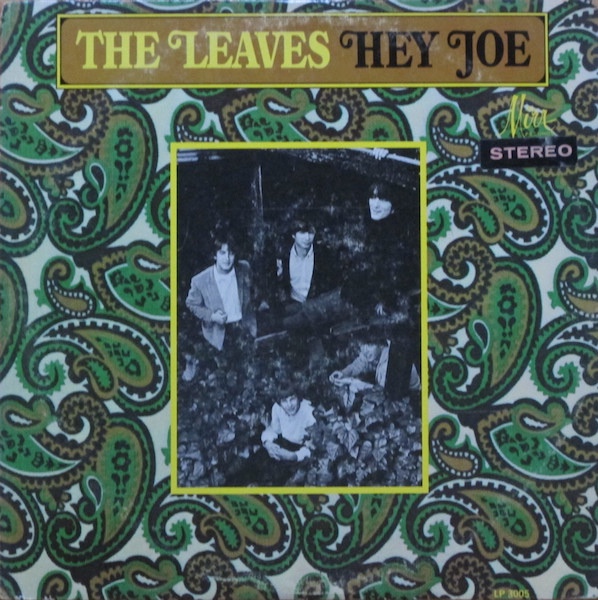
Kaleidoscope was one of the great unsung (until years later) U.K. pop psych bands (see #154, 336) and “Flight from Ashiya” was its first A-side. As Vernon Joynson relates, it was “an amalgam of pop and psychedelia, it told the story of the pilot of a crashing aeroplane. It picked up quite a lot of airplay but failed to chart.” (The Tapestry of Delights Revisited) Mike Stax calls it “a fabulous example of pop-psych storytelling . . . . [though] it is difficult to discern exactly what is happening . . . [involving] an ill-fated airplane trip and a stoned pilot. A deliberate sense of confusion reigns throughout. Is the flight doomed? Or is it a case of mass paranoia brought on by the smoke?” (liner notes to the Nuggets II comp) David Wells describes the song as “[p]redominently a lyrical rehash of The Bee Gees’ recent hit New York Mining Disaster (protaganist delivers in neurotic warble his thoughts on being cut off from the rest of civilization following a tragic accident). Flight from Ashiya was nonetheless a superb release that deserved to make more of a mark than it actually did.” (Record Collector: 100 Greatest Psychedelic Records: Hight Times and Strange Tales from Rock’s Most Mind-Blowing Era)

Dave Thompson writes that:

Between 1967 AND 1972, Kaleidoscope were one of the most adventurous, and intriguing, bands on the U.K. psych scene as they morphed into prog, folk and a wealth of other structures. . . . Signed initially to Fontana Records before shifting to the label’s prog imprint Vertigo, Kaleidoscope/Fairfield Parlour released some of the most glorious records of the era, three albums and a clutch of glorious 45s [including] “Flight From Ashiya,” [and] “A Dream for Julie[.]”

https://www.goldminemag.com/music-history/kaleidoscope-reignite-the-heady-days-of-u-k-psych-rock

Regarding the Bee Gees’ influence, Kaleidoscope singer and lyricist Peter Daltry recalls that:

[T]he Beatles’ Revolver changed everything. “Tomorrow Never Knows” was the catalyst. I was never entirely happy as the lyricist writing endless soppy love songs. The Beatles showed us all the way, followed closely at the time by the Bee Gees who wrote amazingly weird songs like “Lemons Never Forget” and the flawless “New York Mining Disaster 1941”. It didn’t kick start me into writing songs like “The Murder of Lewis Tollani” and “Dive into Yesterday”, as I used to assume; I have since found out that “Horizontal” came out after we were writing such songs – but it did show we were heading in the same direction. But don’t forget that psychedelia was very short-lived. It lasted not much more that eighteen months. It was that truly magical period between late ’66 to early ’68. 

https://bigtakeover.com/interviews/AConversationwithPeterDaltreyofKaleidoscopeUK

Daltry laments regarding Fontana, the band’s record label, that:

Fontana said they were going to give [“Flight”] a massive boost. It was the first single they’d ever put out in a colour sleeve, and I think its failure was our biggest disappointment. We were really expecting very big things . . . . It was a great track, and I still love it now. (Record Collector: 100 Greatest Psychedelic Records) [Regarding the band’s future single “Jenny Artichoke”: W]e all looked at one another and said, ‘Bloody hell, that’s a hit record, and the radio 
 because it was so limited in those days 
 they never stopped playing it. You could literally walk down the street and hear window cleaners whistling the thing. But the distribution arm of Fontana was absolute rubbish. They never got on board, they never got in tune with anybody else. It was never in the shops, and it didn’t get the sales.” (https://www.goldminemag.com/music-history/kaleidoscope-reignite-the-heady-days-of-u-k-psych-rock)

Might the song have been inspired by the ’64 Yul Brynner film Flight from Ashiya? —

Featuring an all-star cast and on-location shooting in Japan, where the story is set, three US Air Force rescue pilots must overcome their personal problems and differences to embark upon a dangerous mission to save raft-bound Japanese survivors from a murderous storm-tossed sea. As they head for their location, the film flashes back to chronicle the pasts of each pilot to make clear their mixed feelings about their upcoming assignment.

https://letterboxd.com/film/flight-from-ashiya/

Well, that’s not what they told the BBC (see the video below), but???

Check out the site’s new page: Stick It to the (Fish)Man: Feedback — the coolest comments I have received!

I have added a Facebook page for Brace for the Obscure 60s Rock! If you like what you read and hear and feel so inclined, please visit and “like” my Facebook page by clicking here.

Here is a “live” version from French TV:

Here it is actually live from the BBC:

Pay to Play! The Off the Charts Spotify Playlist! + Brace for the Obscure 60s Rock Merchandise

Please consider helping to support my website/blog by contributing $6 a month for access to the Off the Charts Spotify Playlist. Using a term familiar to denizens of Capitol Hill, you pay to play! (“relating to or denoting an unethical or illicit arrangement in which payment is made by those who want certain privileges or advantages in such arenas as business, politics, sports, and entertainment” — dictionary.com).

The playlist includes all the “greatest songs of the 1960’s that no one has ever heard” that are available on Spotify. The playlist will expand each time I feature an available song.

All new subscribers will receive a Brace for the Obscure 60s Rock magnet. New subscribers who sign up for a year will also receive a Brace for the Obscure 60s Rock t-shirt or baseball cap. See pictures on the Pay to Play page.

When subscribing, please send me an e-mail (GMFtma1@gmail.com) or a comment on this site letting me know an e-mail address/phone number/Facebook address, etc. to which I can send instructions on accessing the playlist and a physical address to which I can sent a magnet/t-shirt/baseball cap. If choosing a t-shirt, please let me know the gender and size you prefer.

Just click on the first blue block for a month to month subscription or the second blue block for a yearly subscription.
Willie Mitchell — “Everything Is Gonna Be Alright”: Brace for the Obscure (60s rock)! — August 14, 2022

THE GREATEST SONGS OF THE 1960s THAT NO ONE HAS EVER HEARD

551) Willie Mitchell — “Everything Is Gonna Be Alright”

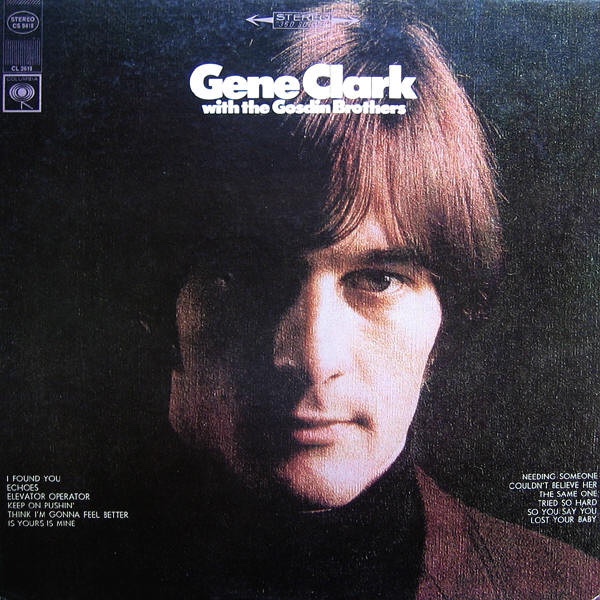
“Alright” is the A-side of one of my favorite double threat R&B singles, hitting #126 in November ’65. I featured its B-side a while back (see #181). No need for a shotgun wedding! “Everything is gonna be alright, alright, alright, alright. Here comes the preacher. There’s gonna be a wedding here tonight, alright, alright, alright, alright.”

As David Nager writes, “[i]f Al Green was the sanctified sex symbol of Memphis Soul, Willie Mitchell was its Hollywood matinee idol. Suave and dapper, impeccably attired and sporting a stiletto‑sharp pencil‑thin moustache, Mitchell was the courtly King of Sophisticated Funk, cutting a striking figure in the Mid‑South music scene from the 1950s [on] . . . . (https://memphismusichalloffame.com/inductee/williemitchell/)

Greg Prato gives some history:

After he was discharged from the Army in 1954, Mitchell moved back to Memphis, where he soon became a popular, local trumpet-playing bandleader — Elvis Presley hired his big band to play several private parties. By 1959, Mitchell had turned his attention to studio work and signed on with Hi Records; he is often credited as being the creator of the oft-copied and instantly recognizable Hi sound (churning organ fills, sturdy horn arrangements, a steady 4/4 drumbeat, etc.). Throughout the ’60s, Mitchell became a popular concert attraction on U.S. college campuses and he scored several moderately successful soul/dance hit singles, issuing a steady stream of solo releases . . . . When the founder of Hi Records . . . died in 1970, Mitchell suddenly found himself in charge of the label. [A] year [earlier], Mitchell had signed an up-and-coming soul singer named Al Green to the label. Under the guidance of Mitchell, Green’s career would soon skyrocket and he became one of the ’70s top soul artists, with Mitchell co-producing and engineering all of [his] albums from 1970 through 1976.

https://www.allmusic.com/artist/willie-mitchell-mn0000684830

David Nager adds that:

Most famous for producing Green’s stunning string of sweet‑and‑funky soul classics, Mitchell had already had several successful musical careers and was a star of the Memphis scene long before their paths met. . . . By . . . his teens [he] was a featured player in local bands . . . . [S]oon after his 1954 discharge Mitchell was leading his group at the Manhattan Club and other area spots. He later took over the house band at the Plantation Inn in West Memphis, one of the area’s top nightclubs and a place where young, white Memphis developed a taste for genuine R&B, paving the way for the music revolutions to come. There, Mitchell honed his leadership skills as well as learning the finer points of showmanship, arranging, management, and more. He was also playing band gigs on Beale, sweetening his sound at cotillions for the old cotton-money crowd and writing lead sheets and arrangements for Sun and other Memphis studios. . . . Observing his crowds from the bandstand every night, he knew what people wanted to hear and exactly what made them dance. . . . For much of the ‘60s, Mitchell kept a hectic schedule as a bandleader in clubs and as a session leader/musician/arranger at Hi. . . . In 1968, Willie Mitchell’s multiple musical personalities – arranger, bandleader and engineer – were in perfect harmony for the crossover hit “Soul Serenade” (#10 R&B, #23 pop). . . . [Later, a]long with Green, Mitchell built a lineup that turned Hi into the premier Southern soul label, with Ann Peebles, O.V. Wright, Otis Clay and Syl Johnson. 

https://memphismusichalloffame.com/inductee/williemitchell/

By the way, there is a great cover of the song, done in French by French rock star Dick Rivers! Jon O’Brien explains:

Dick Rivers is widely regarded as one of the first musicians to introduce France to the sounds of rock & roll. Born Herve Fornieri . . . he developed a love of Johnny Cash, Gene Vincent, and Elvis Presley from a young age, naming himself after the latter’s character in the 1957 film Loving You. After recording over 100 songs with the influential outfit Les Chats Sauvages, he went on to pursue a solo career in the early ’60s, scoring hits with the likes of “Baby John,” “Tu N’es Plus La,” and “Rien Que Toi,” before heading to Alabama in 1967 to work with some of America’s biggest blues musicians . . . .

https://www.allmusic.com/artist/dick-rivers-mn0000516428/biography

Check out the site’s new page: Stick It to the (Fish)Man: Feedback — the coolest comments I have received!

I have added a Facebook page for Brace for the Obscure 60s Rock! If you like what you read and hear and feel so inclined, please visit and “like” my Facebook page by clicking here.

Here is Dick Rivers:

Pay to Play! The Off the Charts Spotify Playlist! + Brace for the Obscure 60s Rock Merchandise

Please consider helping to support my website/blog by contributing $6 a month for access to the Off the Charts Spotify Playlist. Using a term familiar to denizens of Capitol Hill, you pay to play! (“relating to or denoting an unethical or illicit arrangement in which payment is made by those who want certain privileges or advantages in such arenas as business, politics, sports, and entertainment” — dictionary.com).

The playlist includes all the “greatest songs of the 1960’s that no one has ever heard” that are available on Spotify. The playlist will expand each time I feature an available song.

All new subscribers will receive a Brace for the Obscure 60s Rock magnet. New subscribers who sign up for a year will also receive a Brace for the Obscure 60s Rock t-shirt or baseball cap. See pictures on the Pay to Play page.

When subscribing, please send me an e-mail (GMFtma1@gmail.com) or a comment on this site letting me know an e-mail address/phone number/Facebook address, etc. to which I can send instructions on accessing the playlist and a physical address to which I can sent a magnet/t-shirt/baseball cap. If choosing a t-shirt, please let me know the gender and size you prefer.

Just click on the first blue block for a month to month subscription or the second blue block for a yearly subscription.

Pacific Drift — “God Has Given Me”: Brace for the Obscure (60s rock)! — August 13, 2022

THE GREATEST SONGS OF THE 1960s THAT NO ONE HAS EVER HEARD

550) Pacific Drift — “God Has Given Me”

Manchester United! — Pacific Drift was a brief stopover point for members/members-to-be of Wimple Winch, Sponge and Blodwyn Pig. The Drift’s sole album (’70) was, as David Wells describes, “a sparkling, West Coast-influenced amalgam of post-psychedelic pop and early progressive rock, skillfully weaving [together] wistful hippie laments and riff-laden rockers”. (http://rockasteria.blogspot.com/2011/03/pacific-drift-feelin-free-1970-uk.html?m=1) “God Has Given Me” is indeed sparkling, wistful, hippie, West-Coast (and we ain’t talkin’ Liverpool) -influenced prog rock.

All Music Guide notes that:

This UK band, formed in the late 60s, comprised Barry Reynolds (guitar/vocals), Brian Shapman (keyboards/vocals), Graham Harrop (bass) and Lawrence Arendes aka Larry King (drums). King, formerly of Liverpool’s Wimple Winch [see #49, 384], founded this new quartet from the ashes of Sponge, a jazz rock unit that imploded when saxophonist Jack Lancaster left in 1968 to join Blodwyn Pig. The quartet’s debut single, a version of Spirit’s ‘Water Woman’, was followed by a self-titled album in 1970. However, although they appeared live at the requisite underground haunts and festivals, Pacific Drift were unable to sustain a career and split up by the end of the year.

https://www.allmusic.com/artist/pacific-drift-mn0001169392

David Wells adds:

Released to widespread indifference back in January 1970, Manchester band Pacific Drift’s album Feelin’ Free surely deserved a better fate. . . . Though their sole album wouldn’t emerge until the dawn of the Seventies, Pacific Drift had been around for some while by that point. A product of the highly incestuous Manchester group scene of the mid-to-late Sixties, they had first come together in 1967 as the Sponge – essentially an updated, psychedelic-era version of the Tony Merrick Scene, with singer Merrick and guitarist Graham Harrop involved alongside other musicians, including an Asian drummer. But there were several early personnel changes, culminating with Merrick leaving in early 1968 to form a new Manchester ‘supergroup’, Sweet Marriage. Barry Reynolds . . . quit in late September to link up again with Jack Lancaster in Blodwyn Pig, Pacific Drift duly imploded. Brian Chapman hooked up with Chicken Shack, Graham Harrap reunited with a couple of his old Toggery Five colleagues in Young & Renshaw, and Larry Arends left the full-time music scene to move into photography.

http://rockasteria.blogspot.com/2011/03/pacific-drift-feelin-free-1970-uk.html?m=1

Check out the site’s new page: Stick It to the (Fish)Man: Feedback — the coolest comments I have received!

I have added a Facebook page for Brace for the Obscure 60s Rock! If you like what you read and hear and feel so inclined, please visit and “like” my Facebook page by clicking here.

Pay to Play! The Off the Charts Spotify Playlist! + Brace for the Obscure 60s Rock Merchandise

Please consider helping to support my website/blog by contributing $6 a month for access to the Off the Charts Spotify Playlist. Using a term familiar to denizens of Capitol Hill, you pay to play! (“relating to or denoting an unethical or illicit arrangement in which payment is made by those who want certain privileges or advantages in such arenas as business, politics, sports, and entertainment” — dictionary.com).

The playlist includes all the “greatest songs of the 1960’s that no one has ever heard” that are available on Spotify. The playlist will expand each time I feature an available song.

All new subscribers will receive a Brace for the Obscure 60s Rock magnet. New subscribers who sign up for a year will also receive a Brace for the Obscure 60s Rock t-shirt or baseball cap. See pictures on the Pay to Play page.

When subscribing, please send me an e-mail (GMFtma1@gmail.com) or a comment on this site letting me know an e-mail address/phone number/Facebook address, etc. to which I can send instructions on accessing the playlist and a physical address to which I can sent a magnet/t-shirt/baseball cap. If choosing a t-shirt, please let me know the gender and size you prefer.

Just click on the first blue block for a month to month subscription or the second blue block for a yearly subscription.
Barry Booth — “He’s Very Good With His Hands”: Brace for the Obscure (60s rock)! — August 12, 2022

THE GREATEST SONGS OF THE 1960s THAT NO ONE HAS EVER HEARD

548) Barry Booth — “He’s Very Good With His Hands”

Before “The Lumberjack Song”, before “Always Look on the Bright Side of Life”, before Monty Python, there was an “ode to a shy but dexterous model maker who is taken by a girl, but more at home with his wooden trains and aeroplanes.” (http://www.popgeekheaven.com/music-discovery/lost-treasures-barry-booth-diversions). Michael Palin and Terry Jones collaborated with Barry Booth, writing the lyrics to “a commercial flop [that] over the years . . . has gained a cult following and a reputation as a lost classic of British psychedelic chamber pop.” (https://www.barryboothmusic.com/biography)

Pop Geek Heaven tell us that:

Barry Booth is a most unlikely artist to have recorded one of the great lost chamber pop albums of the ’60s. When . . . Diversions!, was released in 1968, he was already thirty years old and had never recorded an album or even a single as an artist. Indeed, he had never intended to record Diversions! either. He was merely hoping to place some of the songs with other artists. That is, until iconic British producer Tony Hatch (The Searchers, Petula Clark, Jackie Trent) fell in love with the material and insisted that Booth record the album. Further evidence of his reticence is the fact he never again recorded as an artist . . . . Booth’s roots were in classical music and he studied composition and piano at the Royal Academy of Music in the late ’50s. Though accomplished, he was not a virtuoso pianist and, following a stint in the National Service playing in military orchestras and dance bands, Booth began to work as the bandleader for Roy Orbison in the mid-’60s. While working with Orbison, he began to collaborate with two young actors and comedians, Michael Palin and Terry Jones, whom he had met while working as the musical director for the British television series Five O’Clock Club. Booth commissioned the future Pythons to write some lyrics which Booth would then set to music. The resulting songs provided the entirety of the material on Diversions!. Booth brought some of the songs to Orbison and later to Hatch. While Orbison passed, Hatch was charmed by both the material and by Booth’s restrained and heartfelt vocal style. He talked Booth into recording the songs himself, with Booth arranging and conducting and Hatch producing. . . . The lyrics are whimsical, typically narrative, and often reflect a British Music Hall sensibility. . . . Two singles were released . . . [including] “He’s Very Good With His Hands” b/w “The King’s Thing” . . . . [It did not] chart[], though [it] was played by John Peel’s on his popular Top Gear show. . . .

http://www.popgeekheaven.com/music-discovery/lost-treasures-barry-booth-diversions

BarryBooth.com adds:

[At] the Royal Academy of Music in London. . . . [Booth] studied composition, harmony . . . counterpoint . . . and pianoforte . . . while flouting the Academy’s rules by playing professionally in the city’s jazz clubs by night. . . . In the early 1960s he worked on back-to-back national pop tours, as a bandleader and piano player for various acts including . . . Roy Orbison . . . .

[H]e put his classical training at the service of one of the support acts when he offered a simple solution to a vocal harmony line they were having trouble figuring out. He proposed that they use an inverted pedal-point, sustaining a single high note in harmony with the descending melody line. The proposal was accepted and consequently can be heard in the verses of the Beatles’ early hit Please Please Me. (Many years later, Elvis Costello would remember noticing it as a 9 year old boy. As described in Craig Brown’s One Two Three Four, he ‘listened intently to the disc as his father played it over and over again. He was startled by the vocal harmony line; the second singer seemed to be singing the same note repeatedly against the lead singer.’)

Orbison, the original inspiration for that song, was sufficiently impressed by Booth’s abilities to hire him as his musical director and piano player in his backing band . . . taking him on tours of Europe and North America. Booth first entered the US illegally, smuggled by Orbison over the Canadian border in the boot of a car after a work permit had failed to arrive on time. Booth continued to serve Orbison in this position for several years, before going on to enjoy a long career as a highly versatile musical director, arranger, composer and pianist . . . .

Diversions! consisted of musical settings of fourteen lyrics he had commissioned from two young writers he’d worked with in television: Michael Palin and Terry Jones . . . . Pitching the songs to producer Tony Hatch in the hope of landing them with established singers, Booth had inadvertently landed a deal to record them himself. . . . [It] is an example of how ambitious and inventive popular music was becoming at the time . . . . It is uniquely charming, whimsical, often cryptic and sometimes slightly sinister . . . .

https://www.barryboothmusic.com/biography

Check out the site’s new page: Stick It to the (Fish)Man: Feedback — the coolest comments I have received!

I have added a Facebook page for Brace for the Obscure 60s Rock! If you like what you read and hear and feel so inclined, please visit and “like” my Facebook page by clicking here.

Pay to Play! The Off the Charts Spotify Playlist! + Brace for the Obscure 60s Rock Merchandise

Please consider helping to support my website/blog by contributing $6 a month for access to the Off the Charts Spotify Playlist. Using a term familiar to denizens of Capitol Hill, you pay to play! (“relating to or denoting an unethical or illicit arrangement in which payment is made by those who want certain privileges or advantages in such arenas as business, politics, sports, and entertainment” — dictionary.com).

The playlist includes all the “greatest songs of the 1960’s that no one has ever heard” that are available on Spotify. The playlist will expand each time I feature an available song.

All new subscribers will receive a Brace for the Obscure 60s Rock magnet. New subscribers who sign up for a year will also receive a Brace for the Obscure 60s Rock t-shirt or baseball cap. See pictures on the Pay to Play page.

When subscribing, please send me an e-mail (GMFtma1@gmail.com) or a comment on this site letting me know an e-mail address/phone number/Facebook address, etc. to which I can send instructions on accessing the playlist and a physical address to which I can sent a magnet/t-shirt/baseball cap. If choosing a t-shirt, please let me know the gender and size you prefer.

Just click on the first blue block for a month to month subscription or the second blue block for a yearly subscription.
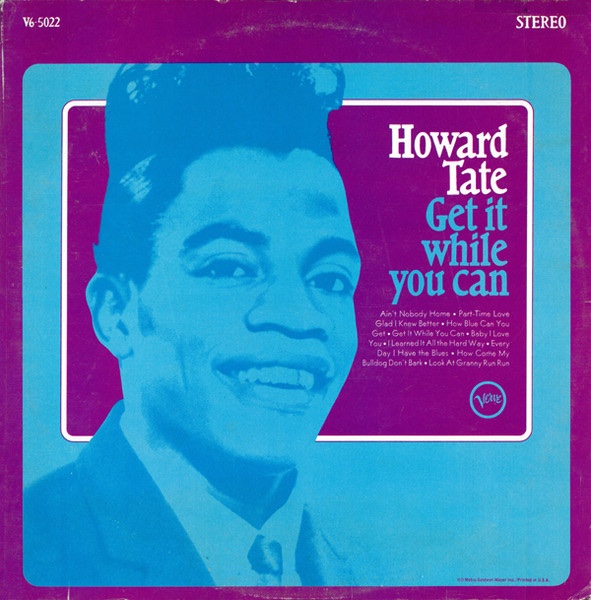
The Who — “Glittering Girl”: Brace for the Obscure (60s rock)! — August 11, 2022

THE GREATEST SONGS OF THE 1960s THAT NO ONE HAS EVER HEARD

547) The Who — “Glittering Girl”

Who-didn’t do it — why was this wonderful song left off The Who Sell Out? Glittering indeed!

Plus, thanks to Iowgens2:

This rare 1967 footage, excerpted from the German TV documentary Die Jungen Nachtwandler – London Unter 21 (which aired on July 3rd 1967 and was directed by Edmund Wolf) sees Pete Townshend running through an obscure and unreleased Who track named Glittering Girl in front of managers Kit Lambert and Chris Stamp at at his Wardour Street flat, and then with his bandmates (including a bare-chested Keith Moon) at the Saville Theatre.

https://m.youtube.com/watch?v=x-cYFPgUfm4

Check out the site’s new page: Stick It to the (Fish)Man: Feedback — the coolest comments I have received!

I have added a Facebook page for Brace for the Obscure 60s Rock! If you like what you read and hear and feel so inclined, please visit and “like” my Facebook page by clicking here.

Here is the live ‘67 footage:

Pay to Play! The Off the Charts Spotify Playlist! + Brace for the Obscure 60s Rock Merchandise

Please consider helping to support my website/blog by contributing $6 a month for access to the Off the Charts Spotify Playlist. Using a term familiar to denizens of Capitol Hill, you pay to play! (“relating to or denoting an unethical or illicit arrangement in which payment is made by those who want certain privileges or advantages in such arenas as business, politics, sports, and entertainment” — dictionary.com).

The playlist includes all the “greatest songs of the 1960’s that no one has ever heard” that are available on Spotify. The playlist will expand each time I feature an available song.

All new subscribers will receive a Brace for the Obscure 60s Rock magnet. New subscribers who sign up for a year will also receive a Brace for the Obscure 60s Rock t-shirt or baseball cap. See pictures on the Pay to Play page.

When subscribing, please send me an e-mail (GMFtma1@gmail.com) or a comment on this site letting me know an e-mail address/phone number/Facebook address, etc. to which I can send instructions on accessing the playlist and a physical address to which I can sent a magnet/t-shirt/baseball cap. If choosing a t-shirt, please let me know the gender and size you prefer.

Just click on the first blue block for a month to month subscription or the second blue block for a yearly subscription.
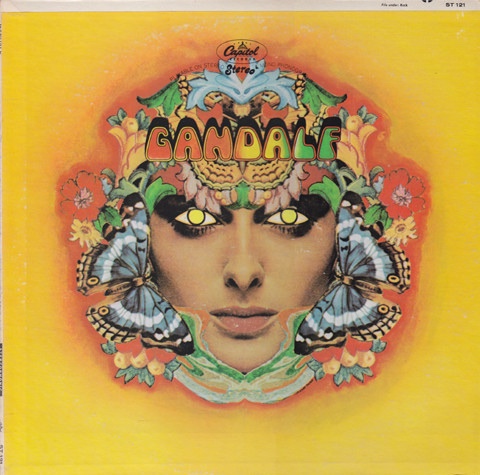
The Pickwick Papers — “You’re So Square”: Brace for the Obscure (60s rock)! — August 10, 2022

THE GREATEST SONGS OF THE 1960s THAT NO ONE HAS EVER HEARD

546) The Pickwick Papers — “You’re So Square”

B-side of the Papers’ only single (‘66) is a cover of a number that Elvis did in ‘57 for the Jailhouse Rock movie — and it works. I guess the moral of the story is — you can garageize Leiber and Stoller, but don’t name your garage band after a Charles Dickens’ novel!

This is an oft-covered song— Buddy Holly, John Lennon, Joni Mitchell, Cee Lo Green, etc. (https://secondhandsongs.com/performance/20093) — but nobody beats the Papers’ version. I just wish I could find out more about this Michigan garage band.

Per Song Facts:

This was one of the songs written by Jerry Leiber and Mike Stoller for Elvis for the film Jailhouse Rock.  It was one of four songs written during the famous Aberbach episode. . . .  Leiber and Stoller were in their motel room enjoying breakfast at the leisurely hour of 1 P.M. when Jean Aberbach, Elvis' music publisher, showed up to ask whether they had the songs for Jailhouse Rock yet.  When they admitted that they hadn't, Aberbach said that he was not leaving without them, and pushed the sofa against the door of the hotel room and went to sleep on it.  Leiber and Stoller wrote the songs and woke him up.  After handing him the songs, only then would he let them go!  By the time Elvis recorded "Baby I Don't Care," Elvis and Leiber and Stoller had really hit their stride working together.  Jerry Leiber reminisces, "The fourth song was the most fun because by then Elvis was deep into our producing style.  Our style wasn't anything more than being loose and having fun.  Elvis' initial shyness had totally melted away and he was completely in the spirit of the music."  Note the movie scene in the video to the right, where Elvis performs the song for a pool party.  Have you ever seen such a quiet, still, well-mannered audience of ladies in your life?  Of course, the filming was happening with Elvis lip-syncing . . . .

https://www.songfacts.com/facts/elvis-presley/youre-so-square-baby-i-dont-care

Check out the site’s new page: Stick It to the (Fish)Man: Feedback — the coolest comments I have received!

I have added a Facebook page for Brace for the Obscure 60s Rock! If you like what you read and hear and feel so inclined, please visit and “like” my Facebook page by clicking here.

Here’s Elvis:

Pay to Play! The Off the Charts Spotify Playlist! + Brace for the Obscure 60s Rock Merchandise

Please consider helping to support my website/blog by contributing $6 a month for access to the Off the Charts Spotify Playlist. Using a term familiar to denizens of Capitol Hill, you pay to play! (“relating to or denoting an unethical or illicit arrangement in which payment is made by those who want certain privileges or advantages in such arenas as business, politics, sports, and entertainment” — dictionary.com).

The playlist includes all the “greatest songs of the 1960’s that no one has ever heard” that are available on Spotify. The playlist will expand each time I feature an available song.

All new subscribers will receive a Brace for the Obscure 60s Rock magnet. New subscribers who sign up for a year will also receive a Brace for the Obscure 60s Rock t-shirt or baseball cap. See pictures on the Pay to Play page.

When subscribing, please send me an e-mail (GMFtma1@gmail.com) or a comment on this site letting me know an e-mail address/phone number/Facebook address, etc. to which I can send instructions on accessing the playlist and a physical address to which I can sent a magnet/t-shirt/baseball cap. If choosing a t-shirt, please let me know the gender and size you prefer.

Just click on the first blue block for a month to month subscription or the second blue block for a yearly subscription.
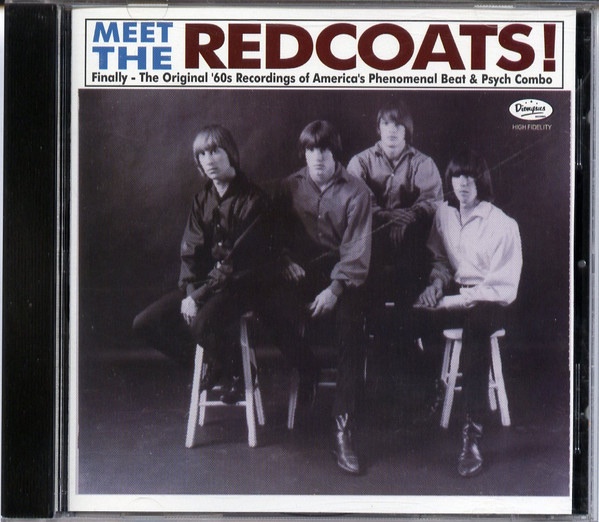
London Phogg — “The Times to Come”: Brace for the Obscure (60s rock)! — August 9, 2022

THE GREATEST SONGS OF THE 1960s THAT NO ONE HAS EVER HEARD

545) The London Phogg — “The Times to Come”

A-side of the Phogg’s only single (’68) is a sunshine pop supernova. As Richard Cameron says, it is a “unique juxtaposition of pop harmony vocals and fuzz guitar psychedelia”, a “kind of a sub-genre – “Sunshine Psych.” (https://www.youtube.com/watch?v=XLbHXRVuFr4). This could have been a contender against “I’d Like to Buy the World a Coke” — “That Coke on earth at last has come and now at last a new world has begun.” What do you say, Don Draper?

A bit about the band:

This Las Vegas ensemble formed in 1968 and was originally called the London Fog before they issued their one and only single. . . . The group won the 1968 Teen Scene Battle of the Rock & Soul Bands competition at the Las Vegas Ice Palace, which gave them the opportunity to record and issue their 45 (‘The Times To Come’ b/w ‘Takin’ It Easy’) on the A&M label in late 1968.

https://techwebsound.com/artist/?artist=319

Check out the site’s new page: Stick It to the (Fish)Man: Feedback — the coolest comments I have received!

I have added a Facebook page for Brace for the Obscure 60s Rock! If you like what you read and hear and feel so inclined, please visit and “like” my Facebook page by clicking here.

Pay to Play! The Off the Charts Spotify Playlist! + Brace for the Obscure 60s Rock Merchandise

Please consider helping to support my website/blog by contributing $6 a month for access to the Off the Charts Spotify Playlist. Using a term familiar to denizens of Capitol Hill, you pay to play! (“relating to or denoting an unethical or illicit arrangement in which payment is made by those who want certain privileges or advantages in such arenas as business, politics, sports, and entertainment” — dictionary.com).

The playlist includes all the “greatest songs of the 1960’s that no one has ever heard” that are available on Spotify. The playlist will expand each time I feature an available song.

All new subscribers will receive a Brace for the Obscure 60s Rock magnet. New subscribers who sign up for a year will also receive a Brace for the Obscure 60s Rock t-shirt or baseball cap. See pictures on the Pay to Play page.

When subscribing, please send me an e-mail (GMFtma1@gmail.com) or a comment on this site letting me know an e-mail address/phone number/Facebook address, etc. to which I can send instructions on accessing the playlist and a physical address to which I can sent a magnet/t-shirt/baseball cap. If choosing a t-shirt, please let me know the gender and size you prefer.

Just click on the first blue block for a month to month subscription or the second blue block for a yearly subscription.

George Harrison — “Circles”: Brace for the Obscure (60s rock)! — August 8, 2022

THE GREATEST SONGS OF THE 1960s THAT NO ONE HAS EVER HEARD

545) George Harrison — “Circles”

Unlike The Who’s “Circles”, George Harrison’s “Circles” is no instant party, but rather a haunting and groovy meditation on reincarnation! George wrote the song in Rishikesh and demoed it — with whispered voice and harmonium — at Esher, both in ‘68, but didn’t release it till ‘82.

As it is etched into the Beatles Bible:

“Upon their return from India, all four Beatles gathered at Kinfauns, Harrison’s Esher bungalow. They recorded demos of 27 songs, to be put forward as potential titles for the White Album. . . . One of the discarded titles was ‘Circles’, seemingly recorded alone by Harrison with just an organ accompaniment. . . . One of Harrison’s more philosophical songs . . . . Harrison eventually released a version of ‘Circles’ on his 1982 album Gone Troppo. It was recorded with a full band – including Billy Preston on organ and piano – and with largely different lyrics to those written in 1968.” (https://www.beatlesbible.com/songs/circles/)

Eager was not your grand mother’s bungalow. As Rob Sheffield describes:

“[T]hey met at George’s hippie bungalow in the Surrey countryside, decorated in the grooviest Indian style. . . . On the tape, you can hear them relax in an informal setting – they sit around the living room, banging guitars or tambourines or shakers, breathing in the joss stick. They recline on leather cushions – George and Patti don’t have anything so square as chairs.” (https://www.rollingstone.com/feature/the-beatles-esher-demos-the-lost-basement-tapes-that-became-the-white-album-630425/amp/)

Jordan Runtagh was not impressed:

“‘Circles’ . . . is an exceptionally dreary affair. . . . [that] utilizes what Richie Unterberger evocatively describes as ‘an eerie organ that seems to have been dragged out of a dusty, disused church closet.’ Harrison taped two tracks on the instrument – likely a harmonium – sketching a sparse, almost ghostly arrangement. The mood isn’t brightened by the solemn lyrics, which find Harrison contemplating the cyclical nature of humanity and the Hindi concept of reincarnation in a voice that barely raises above a whisper.” (https://www.rollingstone.com/music/music-lists/the-beatles-revelatory-white-album-demos-a-complete-guide-629178/)

Per owl.apps.net:

“The theme of the lyrics is reincarnation. The composition reflects the cyclical aspect of human existence as, according to Hindu doctrine, the soul continues to pass from one life to the next. . . . While some find it overly gloomy, others recognise the track as a highlight of a generally overlooked album. . . . ‘Circles’ was composed on an organ . . . as most of Harrison’s Indian-inspired melodies since 1966 had been . . . . [Simon] Leng writes of ‘fugue-like keyboard parts’ on the song and ‘bass figures’ that partly recall the works of Johann Sebastian Bach. The song’s lyrical theme is reincarnation, in keeping with Harrison’s immersion in Hindu philosophy. . . . Theologian Dale Allison highlights ‘Circles’ as the only Harrison song to use the term ‘reincarnate’ . . . . Harrison also quotes from the Chinese philosopher and author Lao-Tse, whose work Tao Te Ching inspired his 1968 composition ‘The Inner Light’ . . . . The choruses include the lines from Lao-Tse: ‘He who knows does not speak / He who speaks does not know’ . . . . On the released recording, Harrison concludes with a statement on how to break the circle of repetition: ‘When loss and gain and up and down / Becomes the same, then we stop going in circles.’ Allison interprets this conclusion, and Harrison’s worldview generally, as espousing the need to recognise the illusory nature of the material world, saying . . . ‘opposites are not opposites. To understand that up is down and that gain is loss is to be 
 on one’s way to escaping from the material world.’” (http://www.owlapps.net/owlapps_apps/articles?id=34611251&lang=en)

Wow, this is no “Savoy Truffle”!


Check out the site’s new page: Stick It to the (Fish)Man: Feedback — the coolest comments I have received!

I have added a Facebook page for Brace for the Obscure 60s Rock! If you like what you read and hear and feel so inclined, please visit and “like” my Facebook page by clicking here.

Here it is from Gone Troppo:

Pay to Play! The Off the Charts Spotify Playlist! + Brace for the Obscure 60s Rock Merchandise

Please consider helping to support my website/blog by contributing $6 a month for access to the Off the Charts Spotify Playlist. Using a term familiar to denizens of Capitol Hill, you pay to play! (“relating to or denoting an unethical or illicit arrangement in which payment is made by those who want certain privileges or advantages in such arenas as business, politics, sports, and entertainment” — dictionary.com).

The playlist includes all the “greatest songs of the 1960’s that no one has ever heard” that are available on Spotify. The playlist will expand each time I feature an available song.

All new subscribers will receive a Brace for the Obscure 60s Rock magnet. New subscribers who sign up for a year will also receive a Brace for the Obscure 60s Rock t-shirt or baseball cap. See pictures on the Pay to Play page.

When subscribing, please send me an e-mail (GMFtma1@gmail.com) or a comment on this site letting me know an e-mail address/phone number/Facebook address, etc. to which I can send instructions on accessing the playlist and a physical address to which I can sent a magnet/t-shirt/baseball cap. If choosing a t-shirt, please let me know the gender and size you prefer.

Just click on the first blue block for a month to month subscription or the second blue block for a yearly subscription.

McCully Workshop — “Rush Hour at Midnight”: Brace for the Obscure (60s rock)! — August 7, 2022

THE GREATEST SONGS OF THE 1960s THAT NO ONE HAS EVER HEARD

544) McCully Workshop — “Rush Hour at Midnight”

A cool boss’s nova rock track . . . from South Africa?! McCully Workshop, Inc. (’70) was the “superb South African band’s stunning debut album.” (The Forced Exposure website, https://mccullyworkshop.wordpress.com/about/) “Of all the albums we’ve heard from South Africa this one is topscore. What a beautiful masterpiece. Pepper-influenced underground music with great songs, lovely vocals, strong harmonies, great distorted guitarwork.” (Psychedelic-Music.com, https://mccullyworkshop.wordpress.com/albums/mccully-workshop-inc/)

Brian Currin writes that:

McCully Workshop is arguably one of South Africa’s finest pop rock bands. They started way back in the ’60’s, dominated the South African airwaves in the ’70’s, continued through the ’80’s and ’90’s and in the 21st century are still going strong.

https://mccullyworkshop.wordpress.com/about/

Currin provides some more history:

The McCullagh brothers, Tully . . . and Mike . . . . started as a folk-rock trio [in ‘65] with Richard Hyam and called themselves the Blue Three. Richard had been in a folk duo, Tiny Folk, with his sister Melanie. . . . “I had my own studio in the garage since I was 12” remembers Tully. . . . The brothers’ father, radio personality Michael Drin (his stage name), painted the name “McCully Workshop, Inc.” on the garage wall. “McCully” was an easier-to-spell version of McCullagh and the “Inc.” was a tongue-in-cheek addition. . . . Mike McCullagh [says] “In 1969 I was 22 and Tully was 16, along with Richard Hyam, his sister Melanie and Allan Faull the group started.” . . . Tully wrote ‘Why Can’t It Rain’ in the middle of the night and this became a hit single putting McCully Workshop on the charts for the first time[ and] dr[awing] the attention of the Gallo label, and they said they wanted an album. McCully Workshop signed probably the first independent licensing deal with a major label in South Africa. The ‘Inc.’ album shows a variety of styles and influences including The Beatles, Frank Zappa and Pink Floyd. “’Sgt Pepper’ was very important, as were the pop charts at the time”, recalls Tully. Another big influence, according to Tully, was The Moody Blues ‘Threshold Of A Dream’ which was released in April 1969.

https://mccullyworkshop.wordpress.com/albums/the-best-of-mccully-workshop/

Check out the site’s new page: Stick It to the (Fish)Man: Feedback — the coolest comments I have received!

I have added a Facebook page for Brace for the Obscure 60s Rock! If you like what you read and hear and feel so inclined, please visit and “like” my Facebook page by clicking here.

Pay to Play! The Off the Charts Spotify Playlist! + Brace for the Obscure 60s Rock Merchandise

Please consider helping to support my website/blog by contributing $6 a month for access to the Off the Charts Spotify Playlist. Using a term familiar to denizens of Capitol Hill, you pay to play! (“relating to or denoting an unethical or illicit arrangement in which payment is made by those who want certain privileges or advantages in such arenas as business, politics, sports, and entertainment” — dictionary.com).

The playlist includes all the “greatest songs of the 1960’s that no one has ever heard” that are available on Spotify. The playlist will expand each time I feature an available song.

All new subscribers will receive a Brace for the Obscure 60s Rock magnet. New subscribers who sign up for a year will also receive a Brace for the Obscure 60s Rock t-shirt or baseball cap. See pictures on the Pay to Play page.

When subscribing, please send me an e-mail (GMFtma1@gmail.com) or a comment on this site letting me know an e-mail address/phone number/Facebook address, etc. to which I can send instructions on accessing the playlist and a physical address to which I can sent a magnet/t-shirt/baseball cap. If choosing a t-shirt, please let me know the gender and size you prefer.

Just click on the first blue block for a month to month subscription or the second blue block for a yearly subscription.

The Lomax Alliance — “Try As You May”: Brace for the Obscure (60s rock)! — August 6, 2022

THE GREATEST SONGS OF THE 1960s THAT NO ONE HAS EVER HEARD

543) The Lomax Alliance — “Try As You May”

A-side of the Alliance’s only single (’67), which, per Steve Leggett, “combine[s] blue-eyed soul with a kind of British Invasion template.” Why wasn’t this a hit? Leggett also noted that:

Jackie Lomax . . . has always had a soulful voice, a bit like his contemporary Steve Winwood . . . (the two actually also look strikingly similar), but his considerable talent never translated . . . into international commercial success.

https://www.allmusic.com/album/lost-soul-lomax-alliance-solo-singles-demos-1966-1967-mw0002002690

This lack of success baffled the Beatles, who try as they may, couldn’t make Jackie Lomax (see #164, 425) a star, and it baffles me.m too. Brian Pendreigh writes that:

A lot of people thought Jackie Lomax should have been a big star. He had moody good looks, a great bluesy voice and a decent backing band that had considerable success in their own right under the name The Beatles. . . . Bill Harry, author of The Ultimate Beatles Encyclopedia, said his lack of chart success baffled The Beatles.

https://www.scotsman.com/news/obituaries/obituary-jackie-lomax-singer-1561004

And Bruce Eder writes that “Jackie Lomax should have been one of Liverpool’s homegrown rock & roll stars — that’s what the Beatles believed, and George Harrison and Paul McCartney both thought enough of his talent to back him variously as producers and record company executives at a critical juncture in all of their careers.” (https://www.allmusic.com/artist/jackie-lomax-mn0000130486/biography)

The Guardian gives some history:

Lomax had known the Beatles since their early days at the Cavern club and in Hamburg, when he was the singer and bass guitarist with the Undertakers, a popular Mersey Beat band noted for their energetic stage show, in which the musicians wore the frock coats, and sometimes top hats, appropriate to funeral directors in the wild west. . . . [T]he son of a millworker, the teenaged Lomax and his friend the drummer Warren “Bugs” Pemberton left their first band, Dee and the Dynamites, to join the Undertakers in January 1962. Like the Beatles, their stage act was developed during residencies at the clubs in and around Hamburg’s Reeperbahn . . . . [A] contract with Pye Records had produced four singles . . . but no hits [so] they tried to capitalise on the British invasion of the US charts by moving across the Atlantic. Left stranded and penniless in a motel in Canada, they disbanded and in 1967 Lomax and Pemberton formed their own group, the Lomax Alliance.

https://www.theguardian.com/music/2013/sep/17/jackie-lomax

Anorak Thing takes up the story:

[When the] Undertakers went belly up. . . . Lomax and drummer Bugs Pemberton hooked up with some NYC locals and began playing as The Lost Souls . . . and in early ’66 Brian Epstein saw them play in Greenwich Village and convinced them to come back to England where under the name of The Lomax Alliance they cut several tracks, in fact nearly an album’s worth . . . .

http://anorakthing.blogspot.com/2013/11/jake-holmes-via-jackie-lomax.html

On this Day in Music wraps it up:

[Lomax recalled] “Epstein ended up in New York with the Beatles for the Shea Stadium concert, and we went to Shea with the Beatles, and hung out with them at the Warwick Hotel. Epstein wanted to take me back to London as a singer, but I told him to listen to the whole band, and the entire Lomax Alliance went back to London.”

They had recorded some tracks in New York before crossing the Atlantic and Brian Epstein arranged for them to record more titles to complete an album . . . . Epstein [brought them] to London’s Saville Theatre, and arranged for a single and an album to be recorded. . . . In Britain, the only Lomax Alliance single, “Try As You May” b/w “See The People,” proved no more successful than the Undertakers’ releases in spite of Brian Epstein’s backing. Unfortunately Epstein’s untimely death intervened and no further Lomax Alliance recordings were released. The band were ‘inherited’ by Robert Stigwood who was too preoccupied with the BeeGees to pay any attention to the Lomax Alliance. The group went back to America but disbanded soon afterwards . . . .

https://onthisdaymusic.com/2021/09/17/september-15-2013-jackie-lomax-died/

Check out the site’s new page: Stick It to the (Fish)Man: Feedback — the coolest comments I have received!

I have added a Facebook page for Brace for the Obscure 60s Rock! If you like what you read and hear and feel so inclined, please visit and “like” my Facebook page by clicking here.

Pay to Play! The Off the Charts Spotify Playlist! + Brace for the Obscure 60s Rock Merchandise

Please consider helping to support my website/blog by contributing $6 a month for access to the Off the Charts Spotify Playlist. Using a term familiar to denizens of Capitol Hill, you pay to play! (“relating to or denoting an unethical or illicit arrangement in which payment is made by those who want certain privileges or advantages in such arenas as business, politics, sports, and entertainment” — dictionary.com).

The playlist includes all the “greatest songs of the 1960’s that no one has ever heard” that are available on Spotify. The playlist will expand each time I feature an available song.

All new subscribers will receive a Brace for the Obscure 60s Rock magnet. New subscribers who sign up for a year will also receive a Brace for the Obscure 60s Rock t-shirt or baseball cap. See pictures on the Pay to Play page.

When subscribing, please send me an e-mail (GMFtma1@gmail.com) or a comment on this site letting me know an e-mail address/phone number/Facebook address, etc. to which I can send instructions on accessing the playlist and a physical address to which I can sent a magnet/t-shirt/baseball cap. If choosing a t-shirt, please let me know the gender and size you prefer.

Just click on the first blue block for a month to month subscription or the second blue block for a yearly subscription.
The Garden Club — “Little Girl Lost and Found”: Brace for the Obscure (60s rock)! — August 5, 2022

THE GREATEST SONGS OF THE 1960s THAT NO ONE HAS EVER HEARD

542) The Garden Club — “Little Girl Lost and Found”

One of the greatest early pop psych tunes, sung by the writer of “Windy”, with lyrics perfectly balanced between twee and weeeee! Funky16corners says it ‘s “cool . . . early, sing-song popsike . . . that sounds like it was recorded on a merry go round.” (https://ironleg.wordpress.com/2016/05/29/the-garden-club-little-girl-lost-and-found-bw-i-must-love-her/). I’d love to hear Noel Gallagher do this one!

Brewer and Shipley’s website lets us know that:

The Garden Club was a one single studio group comprised of Ruthann Friedman and Tom Shipley.  At the time of this recording Tom was on the verge of forming Brewer & Shipley, and Ruthann was just about to write “Windy” for The Association. . . . [Tom Shipley says] “We recorded a song, “Little Girl Lost and Found” written by the guy [Tandyn Almer] who wrote “Along Comes Mary.” 

http://www.brewerandshipley.com/Songs/Covered/GardenClub.htm

funky16corners adds that:

The Garden Club . . . only ever existed for this one 45. The principle members of the group were singers Ruthann Friedman and Tom Shipley. Friedmann, who recorded a groovy 45 (with Van Dyke Parks) and a very cool album is also known as the composer of ‘Windy’, one of the biggest hits of the 1960s . . . . Shipley went on to be one half of Brewer and Shipley, who made some excellent folk rock and had a big hit with ‘One Toke Over the Line’. The composers were Daniel Walsh (who went on to write a bunch of pop stuff in the 70s, like ‘Temptation Eyes’ for the Grass Roots) and none other than Tandyn Almer. Almer hit the jackpot with ‘Along Comes Mary’ for the Association, as well as ‘Shadows and Reflections’ (with Larry Marks) for the Action, among others. . . . [W]ith that remarkable provenance, the single is pretty cool, too.

https://ironleg.wordpress.com/2016/05/29/the-garden-club-little-girl-lost-and-found-bw-i-must-love-her/

Peter & the Wolves (led by John Pantry) also did a great version (see #494), though Steve Elliott says derisively that “[t]he circus beat and adolescent story . . . comes off as bubblegum Bee Gees.” (https://somethingelsereviews.com/2013/08/02/forgotten-series-the-factory-peter-and-the-wolves-others-upside-down-world-of-john-pantry-1999/)

Check out the site’s new page: Stick It to the (Fish)Man: Feedback — the coolest comments I have received!

I have added a Facebook page for Brace for the Obscure 60s Rock! If you like what you read and hear and feel so inclined, please visit and “like” my Facebook page by clicking here.

Here are the Wolves:

Pay to Play! The Off the Charts Spotify Playlist! + Brace for the Obscure 60s Rock Merchandise

Please consider helping to support my website/blog by contributing $6 a month for access to the Off the Charts Spotify Playlist. Using a term familiar to denizens of Capitol Hill, you pay to play! (“relating to or denoting an unethical or illicit arrangement in which payment is made by those who want certain privileges or advantages in such arenas as business, politics, sports, and entertainment” — dictionary.com).

The playlist includes all the “greatest songs of the 1960’s that no one has ever heard” that are available on Spotify. The playlist will expand each time I feature an available song.

All new subscribers will receive a Brace for the Obscure 60s Rock magnet. New subscribers who sign up for a year will also receive a Brace for the Obscure 60s Rock t-shirt or baseball cap. See pictures on the Pay to Play page.

When subscribing, please send me an e-mail (GMFtma1@gmail.com) or a comment on this site letting me know an e-mail address/phone number/Facebook address, etc. to which I can send instructions on accessing the playlist and a physical address to which I can sent a magnet/t-shirt/baseball cap. If choosing a t-shirt, please let me know the gender and size you prefer.

Just click on the first blue block for a month to month subscription or the second blue block for a yearly subscription.

Los Blops — “Los Momentos”/(“The Moments”): Brace for the Obscure (60s rock)! — August 4, 2022

THE GREATEST SONGS OF THE 1960s THAT NO ONE HAS EVER HEARD

541) Los Blops — “Los Momentos”/(“The Moments”)*

A stunning folk rock song from Chile that “would become a classic of Chilean popular music” (http://losblops.blogspot.com/) and for Los Blops — the band’s name “inspired by the sound of a drop of water hitting the ground[ — it would be] their great legacy to Chilean popular music.” (https://www.musicapopular.cl/grupo/blops/)

The song was from the “[d]ebut from the experimental folk/rock band in the revolutionary days of the late 60’s in Chile” (http://www.progarchives.com/artist.asp?id=1496) — so revolutionary that Los Blops were booed by right-wing audiences, considered “sh*tty hippies”, but at the same time viewed with distrust by the Communists because of “their rather hippie orientation, their open sympathy towards marijuana, and their lack of greater commitment”! (https://www.musicapopular.cl/grupo/blops/)

Jorge Leiva recounts Los Blops’ history and legacy:

[It] was one of the few bands of the time that was able to transcend its Anglo-Saxon inspiration to give way to original creations with a powerful identity of their own. . . . After its dissolution, in 1973, its three albums constituted a lost heritage until the personal effort of its members allowed its reissue, in 2001. Their history includes . . . classic on the scale of “Los Momentos” and an impact that, although never massive, had a deep impact on a sector of the public and the Chilean music community.

The band emerged in 1964 . . . . its first repertoire with covers of bands like The Doors, The Who and the Rolling Stones. In the summer of 196[9] . . . . Eduardo Gatti joined . . . as guitarist . . . . [and] they made the decision to start composing their own songs. . . . Surprisingly, the Communist Party label, Dicap, was the only one that agreed to release an album by the Blops, despite the ideological mistrust aroused by their rather hippie orientation, their open sympathy towards marijuana, and their lack of greater commitment . . . . [T]he label gave them a few days of study, during which they recorded their first nine songs. At the end of those sessions, and almost accidentally, they decided to include a composition by Eduardo Gatti that they barely knew: “Los momentoes”. When Blops (1970) appeared, they never imagined that this song would be precisely their great legacy to Chilean popular music.

The band performed at the Viña del Mar Festival for three nights in 1971. They were part of the Dicap artists and were mercilessly booed by a[ right-wing?] audience that associated their name with the Unidad Popular [which Wikipedia describes as a left-wing political alliance in Chile that stood behind the successful candidacy of Salvador Allende]. . . . “As soon as the entertainer mentioned the name of the Blops, it was not necessary for the musicians to appear on stage for the public to boo them until they finished their presentation. The pure acoustic sound of the group was lost among the furious screams of the monster of the Fifth. Upon returning from the catastrophic performance, the dressing room awaited them with an eloquent line: “Get out of here, shitty hippies.” . . .

[Later,] part of the group lived as a community in an old convent on the border of the communes of Ñuñoa and La Reina (La Manchufela, they called it) . . . . After the recording of the[ir] second album, after reflecting on the festival experience, the band decided that they would not do any more lyrics, that they would abandon the acoustic instruments and that from then on they would be called Parafina. . . . [T]he band . . . could not survive the closing of spaces that followed the arrival of the military in La Moneda. The burning of their masters and the persecution of artists . . . forced them to withdraw. “There were no possibilities to continue,” confirms [bass player Juan Pablo] Orrego, who moved to Isla Negra for a few months with Eduardo Gatti . . . . What they thought would be a long stay of musical work ended up being cut short the following year, with the departure of all of them abroad.

https://www.musicapopular.cl/grupo/blops/

Erik Neuteboom adds that:

The evidence of the qualitative leap they took from playing covers to creating their own music is in that first vinyl which appeared in 1970, a year marked by social, cultural and political transformations in Chile. Released under Dicap label, a historic record label founded in 1968 by the Communist Youth Organization, the album was self-produced. As Eduardo Gatti points out: “We were the only producers. That’s how that bouquet of rather strange flowers came out. ” In Blops there’s also a synthesis of the musical influences of the time, including rock of course. Eduardo Gatti goes back to that point:

“We had already researched the playing of (Bob) Dylan, Keith Richards, Clapton, so making an interesting weave with guitars was quite fascinating. And there came a time when we didn’t play any more covers because it didn’t make sense: it was time for our stuff. As we all mature, all this information that we had processed decanted in Los Blops ”.

And Orrego agrees: “We had all those aspects, but a very own musical language began”. . . .

Gatti looks back at those previous years: “I think we were very happy. I think the fact of living in a community gave us such a different vision, like we put together a mini-society within this society that was dismantling itself, in which we continued with tremendous energy, very luminous in our case. And that made us somehow able to survive everything that came after. . . . It never ceases to amaze me. We were not in the Nueva Canción Chilena, in the political song. We, along with Los Jaivas and Congreso, were unclassifiable. And we were unclassifiable the entire time we recorded and played. I think that also gave a freshness to all this that people have appreciated more and more over time. And I think it is still without any classification”.

https://cargorecordsdirect.co.uk/products/los-blops-blops

* All the quoted text (other than the song lyrics) is an English translation courtesy of Google Translate.

Check out the site’s new page: Stick It to the (Fish)Man: Feedback — the coolest comments I have received!

I have added a Facebook page for Brace for the Obscure 60s Rock! If you like what you read and hear and feel so inclined, please visit and “like” my Facebook page by clicking here.

Here they play live in 1980:

Pay to Play! The Off the Charts Spotify Playlist! + Brace for the Obscure 60s Rock Merchandise

Please consider helping to support my website/blog by contributing $6 a month for access to the Off the Charts Spotify Playlist. Using a term familiar to denizens of Capitol Hill, you pay to play! (“relating to or denoting an unethical or illicit arrangement in which payment is made by those who want certain privileges or advantages in such arenas as business, politics, sports, and entertainment” — dictionary.com).

The playlist includes all the “greatest songs of the 1960’s that no one has ever heard” that are available on Spotify. The playlist will expand each time I feature an available song.

All new subscribers will receive a Brace for the Obscure 60s Rock magnet. New subscribers who sign up for a year will also receive a Brace for the Obscure 60s Rock t-shirt or baseball cap. See pictures on the Pay to Play page.

When subscribing, please send me an e-mail (GMFtma1@gmail.com) or a comment on this site letting me know an e-mail address/phone number/Facebook address, etc. to which I can send instructions on accessing the playlist and a physical address to which I can sent a magnet/t-shirt/baseball cap. If choosing a t-shirt, please let me know the gender and size you prefer.

Just click on the first blue block for a month to month subscription or the second blue block for a yearly subscription.