THE GREATEST SONGS OF THE 1960s THAT NO ONE HAS EVER HEARD
1,808) New Dawn — “Do What You Want To”
Heavy psych from the Pacific Northwest. In ’70, the New Dawn (see #986, 1,295, 1,602) gave us “one of the rarest and most exciting psychedelic rock albums filled with fuzz guitar, minor-chord organ dirges, tender vocals and monumental bass.” (Klemen Breznikar, https://www.psychedelicbabymag.com/2023/11/the-new-dawn-interview-theres-a-new-dawn.html) Then in ’71 they recorded demos of “new heavier sounding songs”. (Isaac Slusarenko, liner notes to the CD reissue of There’s a New Dawn) This is one of those demos — and man, is it heavy, verging on metal. “You treated me bad” — but this song treated me so good.
Ron Moore writes about the Dawn’s sole album:
Dreamy downer LP with rhythm-centered (monotonous?) drums, organ, and chiming guitar. Moody heartfelt vocals and buzz fuzz breaks fill out the claustrophobic soundscape. Full of despairing lyrics about dissatisfaction with life and feelings of hopelessness without God. . . . Too deep and dark for some, but could be the pinnacle for soul-searching lounge band sorrow.
The Acid Archives (2nd ed.)
Isaac Slusarenko writes about the Dawn:
In 1966, Dan Bazzy . . . ran into bass player Bob Justin and guitarists Larry Davis and Joe Smith, local garage band musicians . . . . Bazzy joined their band and after a brief stint of playng as The Sound Citizens, The New Dawn was formed. By 1967, The New Dawn was essentially a nightclub band, touring throughout the northwest . . . down through California and Nevada, and as far north as Alaska. The band recorded and released their private press album . . . in July of 1970. The songs were composed in the studio and were recorded late at night after gigs. Initially five hundred albums were pressed . . . . [D]istribution was limited since the album was sold mostly at their live shows. Their one chance at the big time came in 1971 when the ABC-Dunhill Records label expressed a serious interest in the demo of three of their new heavier sounding songs. . . . By the end of 1971, the New Dawn faded into the sunset after years of living motel to motel under the disillusionment of their missed opportunity.
liner notes to the CD reissue of There’s a New Dawn
The band’s website adds:
In 1966, Joe Smith and Larry Davis got together and started playing at part[ies]. By the first part of 1967, Bob Justen and Dan Bazzy had joined the group and The New Dawn was born. For the next two years, the band played at part[ies], dances and local bars. In 1969, the group quit their day jobs and signed with a booking agent. They added a fifth member, Bob Green, to front the group and share the lead vocal load with the drummer and lead singer, Dan Bazzy, and went on the road. They played in clubs in Oregon, Washington, Montana, Idaho, Nevada, California, and Alaska. In 1970, Bob Green was replaced by Bill Gartner, and the group recorded and released . . . There’s a New Dawn. By the end of 1971, all the members in the group were married, and a few of the wi[v]es started having babies. Along with the babies came the desire to settle down and start roots. So, the group came off of the road, got “normal” jobs, and settled in to playing in local clubs on weekends. Over the years, most of the original members retired from the group and were replaced by other local musicians.
In 1971, we went back and recorded three more original songs on a demo tape and sent the tape to different record labels. . . . ABC Dunhill called our agent and wanted us to come down to LA and audition for them with the possibility of getting signed by them. We didn’t know it at the time, but our agent told the AR from Dunhill that we were booked into clubs for the next six months and he should come and listen to us play in one of the clubs. These AR men have hundreds of groups trying to beat their door down to try and get an audition. They really don’t need to travel to listen to groups. So, opportunity knocked, the door opened, and we didn’t step through. If we had known this at the time, we definitely would have stepped through.
Pay to Play! The Off the Charts Spotify Playlist! + Brace for the Obscure 60s Rock Merchandise
Please consider helping to support my website/blog by contributing $6 a month for access to the Off the Charts Spotify Playlist. Using a term familiar to denizens of Capitol Hill, you pay to play! (“relating to or denoting an unethical or illicit arrangement in which payment is made by those who want certain privileges or advantages in such arenas as business, politics, sports, and entertainment” — dictionary.com).
The playlist includes all the “greatest songs of the 1960’s that no one has ever heard” that are available on Spotify — now over 1,200 songs. The playlist will expand each time I feature an available song.
All new subscribers will receive a Brace for the Obscure 60s Rock magnet. New subscribers who sign up for a year will also receive a Brace for the Obscure 60s Rock t-shirt or baseball cap. See pictures on the Pay to Play page.
When subscribing, please send me an e-mail (GMFtma1@gmail.com) or a comment on this site letting me know an e-mail address/phone number/Facebook address, etc. to which I can send instructions on accessing the playlist and a physical address to which I can sent a magnet/t-shirt/baseball cap. If choosing a t-shirt, please let me know the gender and size you prefer.
Just click on the first blue block for a month to month subscription or the second blue block for a yearly subscription.
THE GREATEST SONGS OF THE 1960s THAT NO ONE HAS EVER HEARD
1,807)Blonde on Blonde — “Spinning Wheel”
Welsh band (see #227, 267, 1,089, 1,620) puts on a sitar spectacular with a “great sitar solo”. (Vernon Joynson, The Tapestry of Delights Revisited) Psychedelic Paul calls it “sonic Nirvana for the soul!”, adding that:
This guitar and sitar song sounds as Indian as curry and poppadoms, but it’s still Quintessentially English (or Welsh) at heart, featuring a simply stunning sitar solo that radiates 1960’s flower-power like a bright ray of sunshine.
As to BoB (named after BoB Dylan’s double LP), Bruce Eder writes:
Blonde on Blonde . . . were spawned in 1967 out of a Welsh blues-rock band called the Cellar Set. Garett Johnson played the guitar, sitar, and lute, while Richard Hopkins handled the bass, piano, harpsichord, cornet, celeste, and whistle, and Les Hicks played the drums. The addition of Ralph Denyer made them into a quartet with vocals; and Simon Lawrence . . . was with them briefly, as well, on 12-string guitar. The group took part in the Middle Earth Club’s Magical Mystery Tour, which brought them an initial splash of press exposure. They were also fortunate enough to open for the Jefferson Airplane on the[ir] British tour. All of this activity led to an approach by Pye Records producer Barry Murray, who got them signed to the label, and through whom they released their debut single “All Day, All Night” [see #1,620] b/w “Country Life [see #1,089].” Though decidedly guitar-based in their sound, the band’s music also used psychedelic pop arrangements that gave it an almost orchestral majesty which, when coupled with Johnson’s sitar and lute embellishments and Hopkins’ harpsichord and other unusual keyboards — with Hicks getting into the act on the tabla — gave them an appealingly exotic sound. Their live performances were frequently divided . . . into acoustic and electric sets, in order to show off their full range. The group issued their first album, Contrasts, in 1969 . . . — that record showed more of the early but burgeoning influence of progressive rock, while retaining their early psychedelic coloration. That same year, the band played to the largest single audience of its entire history when they appeared at the first Isle of Wight Festival. They also issued their second single “Castles in the Sky” . . . and LP Rebirth which featured a new lineup — Denyer had exited the band to form Aquila [see #1,783], ceding his spot in Blonde on Blonde to singer-guitarist David Thomas. . . . [T]heir third LP, Reflections on a Life . . . . failed to sell any better than their prior releases . . . and the group broke up in 1972 . . . .
[Blonde on Blonde] was exploring the areas pioneered by 1967 psychedelic acts like PINK FLOYD [see #13, 38, 260], JEFFERSON AIRPLANE and CREAM, but in a much larger scale of influences . . . having a more wider musical palette than the bands . . . . Their music is a dance between contrasts of free impressionism paired with predefined melodic more carefully constructed elements, varying from streetwise side to high levels of spirituality, from folk tones, classical guitar runs and mantra like instrumental runs, bursting with oriental musical influences, introducing cosmic drones running hypnotically on varying time scales, and all this paired with hard rock tones of heavy psychedelic guitar . . . . Their lyrics are quite basic trippy poems, but also thoughtful, emotional and interesting at their best . . . . There is melancholy in their music, but there is also hope and happiness among it.
Pay to Play! The Off the Charts Spotify Playlist! + Brace for the Obscure 60s Rock Merchandise
Please consider helping to support my website/blog by contributing $6 a month for access to the Off the Charts Spotify Playlist. Using a term familiar to denizens of Capitol Hill, you pay to play! (“relating to or denoting an unethical or illicit arrangement in which payment is made by those who want certain privileges or advantages in such arenas as business, politics, sports, and entertainment” — dictionary.com).
The playlist includes all the “greatest songs of the 1960’s that no one has ever heard” that are available on Spotify — now over 1,200 songs. The playlist will expand each time I feature an available song.
All new subscribers will receive a Brace for the Obscure 60s Rock magnet. New subscribers who sign up for a year will also receive a Brace for the Obscure 60s Rock t-shirt or baseball cap. See pictures on the Pay to Play page.
When subscribing, please send me an e-mail (GMFtma1@gmail.com) or a comment on this site letting me know an e-mail address/phone number/Facebook address, etc. to which I can send instructions on accessing the playlist and a physical address to which I can sent a magnet/t-shirt/baseball cap. If choosing a t-shirt, please let me know the gender and size you prefer.
Just click on the first blue block for a month to month subscription or the second blue block for a yearly subscription.
THE GREATEST SONGS OF THE 1960s THAT NO ONE HAS EVER HEARD
1,806) Sugar Cube Blues Band — “My Last Impression“
“Heavy pounding garage psych” (oscarowski, https://www.youtube.com/watch?v=XUgIn98FX-w) from Mississippi — “ominous garage-psychedelia, complete with pounding fuzzy riff, half-shouted surly lyric, quasi-Eastern guitar solo, and swirling organ”. (Richie Unterberger, https://www.allmusic.com/album/sugar-cube-blues-band-mw0000957093) It’s like a hurricane hitting the Gulf Coast! I think the unreleased version (featured above) is much more effective than the speeded-up A-side version (below). You be the judge.
Richie Unterberger dissolves the Cube:
From Grenada, MS, the Sugar Cube Blues Band were not a blues band, but more a garage-psychedelic group, as heard on their sole single, 1967’s “My Lasting Impressions.” That and about an album’s worth of unreleased material — some of it also garage-psychedelia, but some of it minor-keyed folk-rock, and some of it acoustic with a demo-like quality — was issued in a 500-copy limited-edition self-titled LP on Rockadelic in 1997. . . .
[T]here’s no blues or blues-rock here. Instead, it’s a mixture of folk-rock, folk, garage rock, and psychedelia, all written by singer Bill Crowder. While the range of songs is considerably greater than that of the average period garage band . . . musically it’s average to below-average. The lyrics show greater ambition than the usual such act, and at times it sounds just a bit like the stranger groups recording on the Austin scene speared by 13th Floor Elevators. But Crowder aims too high for his vocal range, and his straining, sometimes faltering singing can be frankly irritating at times, especially when exposed more nakedly on the acoustic folky tracks. There’s often a bent toward moody minor-keyed folk-rock . . . . [O]n the whole this sounds like the work of a band not really ready for or deserving of an album release.
Pay to Play! The Off the Charts Spotify Playlist! + Brace for the Obscure 60s Rock Merchandise
Please consider helping to support my website/blog by contributing $6 a month for access to the Off the Charts Spotify Playlist. Using a term familiar to denizens of Capitol Hill, you pay to play! (“relating to or denoting an unethical or illicit arrangement in which payment is made by those who want certain privileges or advantages in such arenas as business, politics, sports, and entertainment” — dictionary.com).
The playlist includes all the “greatest songs of the 1960’s that no one has ever heard” that are available on Spotify — now over 1,200 songs. The playlist will expand each time I feature an available song.
All new subscribers will receive a Brace for the Obscure 60s Rock magnet. New subscribers who sign up for a year will also receive a Brace for the Obscure 60s Rock t-shirt or baseball cap. See pictures on the Pay to Play page.
When subscribing, please send me an e-mail (GMFtma1@gmail.com) or a comment on this site letting me know an e-mail address/phone number/Facebook address, etc. to which I can send instructions on accessing the playlist and a physical address to which I can sent a magnet/t-shirt/baseball cap. If choosing a t-shirt, please let me know the gender and size you prefer.
Just click on the first blue block for a month to month subscription or the second blue block for a yearly subscription.
THE GREATEST SONGS OF THE 1960s THAT NO ONE HAS EVER HEARD
1,805)Los Comandos/The Commands — “Eleva tu Mente”/”Elevate Your Mind”
This A-side is a cool ’70 psych instrumental by the Peruvian garage rock band. The band’s LP “is filled with totally instrumental Cumbia Peruana* influenced psychedelic rock music.” (CooperBolan, https://rateyourmusic.com/release/album/los-comandos/moby-dick/) The album is Moby Dick, and yes, it includes a cover of Zeppelin’s “Moby Dick”. While I wouldn’t call los Comandos’ version good, at least they credit “Bohin-John-Page” as the writers! You can’t always say the same about Zeppelin!
* Wikipedia explains that “Peruvian cumbia is a popular musical subgenre from Peru. It originated from the fusion of Columbian rhythms such as cumbia, Cuban rhythms such as guaracha, American rhythms such as psychedelic rock, and native Peruvian rhythms such as huayno and Amazonian pandilla, as well as the smaller presence of Creole and Afro-Peruvian music.” (https://es.wikipedia.org/wiki/Cumbia_peruana (courtesy of Google Translate))
Pay to Play! The Off the Charts Spotify Playlist! + Brace for the Obscure 60s Rock Merchandise
Please consider helping to support my website/blog by contributing $6 a month for access to the Off the Charts Spotify Playlist. Using a term familiar to denizens of Capitol Hill, you pay to play! (“relating to or denoting an unethical or illicit arrangement in which payment is made by those who want certain privileges or advantages in such arenas as business, politics, sports, and entertainment” — dictionary.com).
The playlist includes all the “greatest songs of the 1960’s that no one has ever heard” that are available on Spotify — now over 1,200 songs. The playlist will expand each time I feature an available song.
All new subscribers will receive a Brace for the Obscure 60s Rock magnet. New subscribers who sign up for a year will also receive a Brace for the Obscure 60s Rock t-shirt or baseball cap. See pictures on the Pay to Play page.
When subscribing, please send me an e-mail (GMFtma1@gmail.com) or a comment on this site letting me know an e-mail address/phone number/Facebook address, etc. to which I can send instructions on accessing the playlist and a physical address to which I can sent a magnet/t-shirt/baseball cap. If choosing a t-shirt, please let me know the gender and size you prefer.
Just click on the first blue block for a month to month subscription or the second blue block for a yearly subscription.
Vanilla Fudge were one of the few American links between psychedelia and what soon became heavy metal. While the band did record original material, they were best-known for their loud, heavy, slowed-down arrangements of contemporary pop songs, blowing them up to epic proportions and bathing them in a trippy, distorted haze. Originally, Vanilla Fudge was a blue-eyed soul cover band called the Electric Pigeons, who formed in Long Island, New York, in 1965. Organist Mark Stein, bassist Tim Bogert, and drummer Joey Brennan soon shortened their name to the Pigeons and added guitarist Vince Martell. They built a following by gigging extensively up and down the East Coast and earned extra money by providing freelance in-concert backing for girl groups. . . . Inspired by the Vagrants [see #1,063], another band on the club circuit . . . the Pigeons began to put more effort into reimagining the arrangements of their cover songs. They got so elaborate that by the end of the year, drummer Brennan was replaced by the more technically skilled Carmine Appice. In early 1967, their manager convinced producer George “Shadow” Morton (who’d handled the girl group the Shangri-Las [see #1,203] and had since moved into protest folk) to catch their live act. Impressed by their heavy, hard-rocking recasting of the Supremes’ [see #762]”You Keep Me Hangin’ On,” Morton offered to record the song as a single; the results landed the group a deal with the Atlantic subsidiary Atco, which requested a name change. The band settled on Vanilla Fudge, after a favorite ice cream flavor. “You Keep Me Hangin’ On” didn’t perform as well as was hoped, but the band toured extensively behind its covers-heavy, jam-oriented debut album . . . which gradually expanded their fan base. Things started to pick up for them in 1968: early in the year, they headlined the Fillmore West . . . performed “You Keep Me Hangin’ On” on The Ed Sullivan Show, and released their second album . . . . Despite its somewhat arty, indulgent qualities, the LP was a hit, climbing into the Top 20. That summer, Atco reissued “You Keep Me Hangin’ On,” and the second time around it climbed into the Top Ten. It was followed by Renaissance, one of Vanilla Fudge’s best albums, which also hit the Top 20. In 1969, the band kept touring and released their first album without Morton, the expansive, symphonic-tinged Near the Beginning. . . . Exhausted by the constant touring, the band decided that their late-1969 European tour would be their last. Following the release of their final album . . . Vanilla Fudge played a few U.S. farewell dates and disbanded in early 1970. Bogert and Appice first formed the hard rock group Cactus, then later joined Jeff Beck in the aptly named Beck, Bogert& Appice.
Vanilla Fudge’s song “was soon covered by obscure British outfit Pesky Gee, before they morphed into Satan-worshipping hippies Black Widow . . . so I’m obviously not the one who heard these dark vibes”. (eduardorivadavia again) PG’s version is a “[h]eavy psych pummeler merging into prog” (happening45, https://www.youtube.com/watch?v=wIWsRvOtzLo) Jon “Mojo” Mills says that some of PG’s LP “was downright bad . . . but when they got the mix right they were superb, as on . . . [‘Mind’, which] has a driving rhythm, a unique use of horns, and sees the beginning of the band’s fascination with sinister subject matter and horror vocalization.” (https://www.allmusic.com/album/exclamation-mark-mw0000028057) MercyfulFate thinks PG’s “Mind” “is “better than vanilla fudge”. (https://www.youtube.com/watch?v=wIWsRvOtzLo) What the fudge? I love both versions!
Eduardo Rivadavia tells us of Pesky Gee:
Leicester, England’s Pesky Gee! are perhaps remembered more for the band that they became — notorious Satan-worshipers Black Widow — than for their actual music. Taking their name from a song in another local group’s repertoire, Pesky Gee! were originally formed as a soul band before constant gigging slowly pushed them toward a more experimental and progressive style of rock & roll. . . . A cover of . . . “Where Is My Mind” was chosen as their first single in March 1969, but . . . it failed to chart . . . . [PG] record[ed its] . . . album . . . in a single, one-night, four-hour session. Issued in June of the same year, the record sadly fared no better than their single, and the impatient Pye soon showed them the door. Feeling that this particular incarnation had run its course, and simultaneously observing the general populace’s growing fascination with forbidden topics like black magic and the occult, Pesky Gee! decided to re-invent themselves as a theatrically Satanic outfit by assuming the fittingly conspicuous name of Black Widow.
David Atavachron notes that PG’s album Exclamation Mark on Pye Records was “intended to simply be ‘!’ but for a record company mix-up”. (He adds that “By 1969 when they released the[] . . . album they had become what could be described as progressive rhythm ‘n blues with a heavy sound . . . . [T]he band was a quite competent ensemble that jammed as well as they covered others’ material but with a distinct prog and jazz-rock inclination.” (http://www.progarchives.com/artist.asp?id=3444)
Pay to Play! The Off the Charts Spotify Playlist! + Brace for the Obscure 60s Rock Merchandise
Please consider helping to support my website/blog by contributing $6 a month for access to the Off the Charts Spotify Playlist. Using a term familiar to denizens of Capitol Hill, you pay to play! (“relating to or denoting an unethical or illicit arrangement in which payment is made by those who want certain privileges or advantages in such arenas as business, politics, sports, and entertainment” — dictionary.com).
The playlist includes all the “greatest songs of the 1960’s that no one has ever heard” that are available on Spotify — now over 1,200 songs. The playlist will expand each time I feature an available song.
All new subscribers will receive a Brace for the Obscure 60s Rock magnet. New subscribers who sign up for a year will also receive a Brace for the Obscure 60s Rock t-shirt or baseball cap. See pictures on the Pay to Play page.
When subscribing, please send me an e-mail (GMFtma1@gmail.com) or a comment on this site letting me know an e-mail address/phone number/Facebook address, etc. to which I can send instructions on accessing the playlist and a physical address to which I can sent a magnet/t-shirt/baseball cap. If choosing a t-shirt, please let me know the gender and size you prefer.
Just click on the first blue block for a month to month subscription or the second blue block for a yearly subscription.
The Human Expression (see #683) was a hugely talented L.A. band whose music, as Mark Deming says, “lurked somewhere in between garage rock and psychedelia” and who had “imaginative songwriters with a clever, slightly bent approach, and [a] guitar style [that] was an interesting mixture of traditional folk-rock jangle, tough fuzzy leads, and a willingness to . . . come up with unusual sounds.” (Mark Deming, https://www.allmusic.com/album/love-at-psychedelic-velocity-mw0000075613)
Bruce Eder tells us that:
The Human Expression . . . [was] an obscure but beloved psychedelic band from Los Angeles. . . . The band played local clubs and USOs, and built up a great reputation for their hot live performances . . . an intensely virtuoso musicality coupled with punk defiance and a charismatic projection of all of these elements. . . . A second single, “Optical Sound” b/w “Calm Me Down,” released in 1967, showed the group becoming more experimental, utilizing studio electronic effects. . . . It was impressive, but . . . wasn’t the breakthrough that the band had hoped for. The Human Expression’s downfall came with the decision over what was to be their third single.
What? Well, the Expression’s third single was “Sweet Child Of Nothingness”, written by a certain Mars Bonfire [see #598], who offered the band another new song of his, “Born To Be Wild”. [Jim] Quarles thought the lyrics trite, and since he was the lead singer, the band rejected the song, even before Steppenwolf recorded it.” (Marios, https://rockasteria.blogspot.com/2012/11/the-human-expression-love-at.html?m=1) Bassist Tom Hamilton recalls that “as I remember, Jim . . . didn’t understand the lyrics (we never could corrupt the boy into becoming a biker).” (https://web.archive.org/web/20110906184423/http://www.60sgaragebands.com/interviews/humanexpression.html) Like true nature’s children, they were most assuredly born to be wild. Man, they could have climbed so high and exploded into space, had they not declined to head out on the highway.
From bad to worse, as Hamilton recalls:
The band was like a plane taking off and then it crashed on the end of the runway. One day we had been practicing several hours and finally took a break. It was a really hot day, and someone started a water fight. We were in the front yard and someone grabbed a hose. I ran for the front door and didn’t realize [lead guitarist] Martin [Eshleman] was right behind me. I slammed the door, heard a crash and then saw Martin’s hand busted through the glass. When he jerked his hand out it sliced his wrist and severed tendons and an artery. Martin was a musical genius and though we had a friend who tried to help us, Mike Verlingery, the band was never the same.
The Expression’s comp from Collectables tells of the band’s ability to turn a hostile crowd:
[The band began to get bookings at places like Gazzari’s in Los Angeles, as well as playing at USO clubs (not the band’s idea, but the record label’s). For a group like the Human Expression to play at a USO club in the mid 60s was like throwing a match on tinderwood. For example one time the band played a USO gig . . . . [with an] audience [of] about 800 crewcut marines. In walked The Human Expression with long hair, mod clothes and Beatle boots. The marines started hooting and hollering at the group, saying things like “Hey, honey,” or “Look at these fags.” Jim recalls that “we played for our lives, we knew if we didn’t, we wouldn’t get out of their alive!” By the third song, the crowd of marines were going wild with cheers.
liner notes to the CD comp The Human Expression: Love at Psychedelic Velocity
Pay to Play! The Off the Charts Spotify Playlist! + Brace for the Obscure 60s Rock Merchandise
Please consider helping to support my website/blog by contributing $6 a month for access to the Off the Charts Spotify Playlist. Using a term familiar to denizens of Capitol Hill, you pay to play! (“relating to or denoting an unethical or illicit arrangement in which payment is made by those who want certain privileges or advantages in such arenas as business, politics, sports, and entertainment” — dictionary.com).
The playlist includes all the “greatest songs of the 1960’s that no one has ever heard” that are available on Spotify — now over 1,200 songs. The playlist will expand each time I feature an available song.
All new subscribers will receive a Brace for the Obscure 60s Rock magnet. New subscribers who sign up for a year will also receive a Brace for the Obscure 60s Rock t-shirt or baseball cap. See pictures on the Pay to Play page.
When subscribing, please send me an e-mail (GMFtma1@gmail.com) or a comment on this site letting me know an e-mail address/phone number/Facebook address, etc. to which I can send instructions on accessing the playlist and a physical address to which I can sent a magnet/t-shirt/baseball cap. If choosing a t-shirt, please let me know the gender and size you prefer.
Just click on the first blue block for a month to month subscription or the second blue block for a yearly subscription.
THE GREATEST SONGS OF THE 1960s THAT NO ONE HAS EVER HEARD
1,801)Serge Gainsbourg — “Initials B.B.”
“Initials B.B.” is Serge Gainsbourg’s (see #1,366, 1,788) iconic paean to his departed lover, the iconic Brigitte Bardot. Jeremy Allen writes:
If [Jane] Birkin [see #1,604, 1,788] was the defining relationship of Gainsbourg’s life, her arrival was timely, too. Nursing a broken heart after amorous assignations with Bardot came to an abrupt end, Gainsbourg did what any other shameless, prolific songwriter would do – he wrote an album all about it. Initials BB was conceptually lamentable, though the title track is a banger. The main hook is stolen from Dvořák’s New World Symphony.
The song, spoken poetically amid dark, dramatic brass and strings, recalls his passionate, short-lived affair with 60s beauty icon Brigitte Bardot, culminating in their supposed parting in Spain. Gainsbourg’s lyrics use extremely atmospheric imagery to evoke the colours, scents, and sounds of the seductive and smoky 60s backdrop to his encounters with Bardot. With a nod to her Guerlain perfume, it’s no surprise the song was used for Guerlain adverts in 2009 and 2011. We especially like the first lines: “One night, while I was moping around some English pub in the heart of London…” which contrasts perfectly with Gainsbourg’s bright “vision” of Bardot. . . . [T]his opening was inspired by Edgar Allen Poe’s poem The [Raven] . . . .
[The song is] superb . . . a song of songs that represents the secret relationship and separation with Brigitte Bardot. The narration features the author’s revelation, which is akin to falling in love, to the point of describing his almost naked partner. [It] perfectly combines sensuality and triumph in an almost cinematic Baroque Pop, reminiscent of the work of the legendary Ennio Morricone [see #1,737].
So few people would have expected a French man who turned 40 in 1968 to make one of the most elegant albums of the decade. Recorded largely in London, Initials B.B. marries Serge Gainsbourg’s peerless sense of dramatic melody with some of the finest orchestral pop production the 1960s could offer, incorporating elements of jazz, yé-yé, chanson, and the baroque pop of the Left Bank with just a soupçon of Rubber Soul–era Beatles. . . . [It is a] taut, 31-minute masterpiece. . . . It evokes London fog and Parisian élan, contemporary pop nous and eternal orchestral splendor, in a way that makes even the most modish Anglo-American pop acts of the era look spectacularly ungainly.
In 1968, Gainsbourg released the album Initials B.B as a tribute to this passionate relationship with Brigitte Bardot . . . . It . . . [had] been worked on since 1965 . . . . Gainsbourg renewed his formula, abandoning the Jazz and Cabaret spirit of his early days for something more Pop Rock. . . . His relationship with Brigitte Bardot was to be an amazing source of inspiration, which considerably accelerated the creation of Initials B.B. in the last months. The album was recorded in London, accompanied by producers/arrangers Giogio Gomelsky, Arthur Greenslade, David Withaker and Michel Colombier, as well as some twenty different musicians. . . . Brigitte Bardot is present on many of the backing vocals, but the actress was not very good with his voice, so these collaborations are more iconic than anything else. . . . This album marks the beginning of Gainsbourg’s legend . . . .
[F]or those sick puppies interested in exploring [Gainsbourg’s] entire catalog, this collaboration with then-lover Brigitte Bardot is a good place to start. Many of his most infamous songs (“Bonnie and Clyde,” “Comic Strip,”) are here, and the lesser-known numbers achieve the same giddy decadence. Yes, the subject matter is transgressive, the performances often silly, but long after the initial shock wears off, Gainsbourg’s work continues to surprise and delight. The sensuous melodies and sumptuous arrangements aspire to the visual; they are little technocolor movies in sound. Moreover, Gainsbourg was perhaps the only songwriter of an earlier tradition to wholeheartedly embrace the wild and adventurous spirit of ’60s rock. . . . Initials B.B. continues to sound as stylish and mod as it must have the day it was released. At 31 minutes, it is sure to leave both hedonists and former teenyboppers wanting more.
If Gainsbourg was anything, he was a lover, a bonvivant, jester, a trickster — but not a musician. It’s as if you’d complain that a Zappa [see #793] album is somewhat silly at places. Gainsbourg’s music always had an element of irony and sarcasm, and that’s the main fun about it, it’s not the music per se, which is not so much creative as it is recreative. Maybe it’s just a language problem — the wit becomes clear in the lyrics, and even they have always a hidden sense (hint: it’s all about sex). Anyway, this is one of Gainsbourg’s most iconic and typical albums.
Serge Gainsbourg was the dirty old man of popular music; a French singer/songwriter and provocateur notorious for his voracious appetite for alcohol, cigarettes, and women, his scandalous, taboo-shattering output made him a legend in Europe but only a cult figure in America, where his lone hit “Je T’Aime…Moi Non Plus” [reached] number 69. Born Lucien Ginzberg in Paris [in] 1928, his parents were Russian Jews who fled to France following the events of the 1917 Bolshevik uprising. After studying art and teaching, he turned to painting before working as a bar pianist on the local cabaret circuit. . . . [S]elf-conscious about his rather homely appearance, Gainsbourg initially wanted only to carve out a niche as a composer and producer, not as a performer. [H]e made his recording debut in 1958 . . . [but] his jazz-inflected solo work performed poorly on the charts, although compositions for vocalists ranging from Petula Clark to Juliette Greco to Dionne Warwick proved much more successful. In the late ’60s, he befriended the actress Brigitte Bardot, and later became her lover; with Bardot as his muse, Gainsbourg’s lushly arranged music suddenly became erotic and delirious, and together, they performed a series of duets — including “Bonnie and Clyde,” “Harley Davidson,” and “Comic Strip” — celebrating pop culture icons. Gainsbourg’s affair with Bardot was brief, but its effects were irrevocable: after he became involved with constant companion Jane Birkin, they recorded the 1969 duet “Je T’Aime…Moi Non Plus,” a song he originally penned for Bardot complete with steamy lyrics and explicit heavy breathing. Although banned in many corners of the globe, it reached the top of the charts throughout Europe, and grew in stature to become an underground classic . . . . Gainsbourg returned in 1971 with Histoire de Melody Nelson, a dark, complex song cycle which signalled his increasing alienation from modern culture: drugs, disease, suicide and misanthropy became thematic fixtures of his work, which grew more esoteric, inflammatory, and outrageous with each passing release. Although Gainsbourg never again reached the commercial success of his late-’60s peak, he remained an imposing and controversial figure throughout Europe, where he was both vilified and celebrated for his shocking behavior . . . .
Gainsbourg . . . has an absolutely hallucinating discography[ and] he is endowed with a phenomenal charisma and charm . . . . The cabbage-headed man also had darker sides, he was a “Don Juan” but also a perfect a**hole when he wanted to be, he was also a phenomenon, polemic, alcohol, drugs, sex and rock n’ roll. . . . Between genius and weirdness, Gainsbourg was a cursed poet. He was deeply affected by the “ugly man” syndrome, which drove him to make himself heard through provocation and shock value. . . . The Second World War would complicate things for his family and himself. They were forbidden to do many things, had to wear the yellow star, lost their French nationality and eventually had to desert Paris to escape the Gestapo raids. After the war, his family returned to Paris and Gainsbourg went to art school. . . . While he did not manage to break into painting, which had become his dream, Gainsbourg fell in love with music. He began to perform as a musician in cabarets and bars, then wrote his first songs to become a songwriter. At the end of the 50s . . . . [e]veryone began to sense Gainsbourg’s talent and pushed him to the forefront. In 1958, he released his first single “Le Poinçonneur des Lilas” on Philips. . . . In 1960 [he] achieved his first real and consistent commercial success with “L’Eau A La Bouche”. However, nothing went as planned, the Yé Yé era arrived and he was unable to make a place for himself, his physique and personality did not fit in with the young and fresh image of this wave. He almost fell into anonymity, despite the fact that he was still releasing songs/albums of very good quality, but fortunately his talent as a songwriter was to bring him back into the limelight in the middle of the 60s when he wrote for Françoise Hardy [see #459, 476-77, 515], France Gall [see #36, 1,361] and Juliette Gréco. He even won the Eurovision prize with “Poupée de Cire, Poupée de Son”. . . . In late 1967, Gainsbourg and Brigitte Bardot . . . began a relationship, although the latter was married.
Say what you will about “Initials B.B.”, but what other song of the era has inspired two metal bands to take it up — witness the French black metal band Seth’s ferocious cover and that of the Swedish symphonic metal band Therion.
Season of Mist tells us about Seth’s ’24 cover:
French black metal vanguard SETH unveil a radical reinterpretation of Serge Gainsbourg’s infamous 1968 ode to Brigitte Bardot with their new music video for “Initials B.B.”. Originally steeped in orchestral melancholy and sensual decadence, this new incarnation emerges as a ceremonial descent through the fractured heart of post-Christian France—a realm haunted by divine absence, erotic delirium, and the relics of fallen gods. Framed as a bonus piece to the revolutionary liturgy of La France des Maudits, this rendition emerges as a new chapter in the band’s ongoing rite of desecration. Coinciding with the one-year anniversary of the album’s release, timed with Bastille Day, the video deepens the mythos of a France scorched by desire and spiritual collapse. As the republic recalls its hour of uprising, SETH conjures another insurrection: one of shadows and silhouettes, where sound and image bleed together in an unholy communion. A well-balanced and finely produced record that honours the legacy of French black metal. A well-balanced and finely produced record that honours the legacy of French black metal. Within the album’s iconoclastic cosmology, the figure of Bardot is reimagined as a mythic seductress; a corrupted Marianne veiled in red, muse to apostasy and forbidden glamour. Where Gainsbourg once sighed, SETH now roars, threading her memory into the scarlet lineage of the album’s insurgent saints, diabolical poets, and cast-out lovers.
And here is a link to the striking video of Therion’s ’12 cover (warning: contains nudity): https://www.youtube.com/watch?v=scdffAiRllY. The quasi-Nazi imagery is bracing and disturbing, without even considering that Gainsbourg and his family had to flee Nazi-occupied Paris. However, if Gainsbourg had lived long enough to see the video, I have a sneaking suspicion he would have approved.
Pay to Play! The Off the Charts Spotify Playlist! + Brace for the Obscure 60s Rock Merchandise
Please consider helping to support my website/blog by contributing $6 a month for access to the Off the Charts Spotify Playlist. Using a term familiar to denizens of Capitol Hill, you pay to play! (“relating to or denoting an unethical or illicit arrangement in which payment is made by those who want certain privileges or advantages in such arenas as business, politics, sports, and entertainment” — dictionary.com).
The playlist includes all the “greatest songs of the 1960’s that no one has ever heard” that are available on Spotify — now over 1,200 songs. The playlist will expand each time I feature an available song.
All new subscribers will receive a Brace for the Obscure 60s Rock magnet. New subscribers who sign up for a year will also receive a Brace for the Obscure 60s Rock t-shirt or baseball cap. See pictures on the Pay to Play page.
When subscribing, please send me an e-mail (GMFtma1@gmail.com) or a comment on this site letting me know an e-mail address/phone number/Facebook address, etc. to which I can send instructions on accessing the playlist and a physical address to which I can sent a magnet/t-shirt/baseball cap. If choosing a t-shirt, please let me know the gender and size you prefer.
Just click on the first blue block for a month to month subscription or the second blue block for a yearly subscription.
THE GREATEST SONGS OF THE 1960s THAT NO ONE HAS EVER HEARD
1,800)The Whyte Boots/Lori Burton — “Let No One Come Between Us”
This “excellent girl-group number[]” (Pop Matters, https://www.popmatters.com/lori_burton_breakout-2495674691.html) and Breakout‘s “best tune. . . . Showcasing Burton’s sexiest voice, the song had a breezy, highly commercial blue-eyed soul feel. . . . [that] should have enjoyed massive radio success. (http://badcatrecords.com/BURTONlori.htm) Burton first released it as the B-side to her great Shangri-La [see #1,203] homage “Nightmare”, taking on the guise of the Whyte Boots. Oh, let these Whyte Boots walk all over me!
Ritchie Unterberger writes schizophrenically about Breakout, Burton’s sole LP:
“[Breakout] is decent pop/blue-eyed soul, though it might be more promise than fulfillment. [Burton] has a very good earthy voice, delivering both cool sensual low growling and impassioned rasp at the most climactic points. The songs are a mixture of soul and densely produced New York mid-’60s pop/rock, and while they’re OK, there isn’t that obvious hitbound tune. Indeed, sometimes the sources or models are pretty apparent.” (https://www.allmusic.com/album/breakout-mw0000342022)
Unterburger tells us of Burton:
Together with Pam Sawyer, Lori Burton formed one of the better New York pop/rock songwriting teams of the 1960s, although not too many of their songs were widely known hits. Their “I Ain’t Gonna Eat Out My Heart Anymore” gave the Rascals their first chart entry; “Baby Let’s Wait[]” . . gave the Royal Guardsmen [see #661] a hit; Patti LaBelle & the Blue Bells did “All or Nothing”; and Prince Harold did “Forget About Me.” Burton and Sawyer were briefly signed to Motown as songwriters and were one of the few (if not the only) female production teams on the New York rock scene in the mid-’60s. Burton was also a recording artist and is most known as the lead voice on the Whyte Boots’ “Nightmare,” one of the most accurate approximations of the Shangri-Las ever recorded. She was also a very credible blue-eyed pop-soul singer, though, with a low and sometimes raunchy voice. She began recording as a solo act for Roulette in the mid-’60s and in 1967, issued a hard-to-find album, Breakout . . . . [I]t is unfortunate that Burton did not have the chance to develop further as a recording act in her own right. Burton and her husband, recording engineer Roy Cicala, began writing and producing together in the late ’60s. Cicala became a top engineer in the industry and owner of the Record Plant (East) Studios in New York City, working on several John Lennon [see #29, 113, 520, 522, 1,473] albums. Burton sang backup vocals on Lennon’s “#9 Dream” in the mid-’70s, and recorded some tracks around that time that Lennon helped produce with Cicala.
“Sawyer . . . went on to pen hits such as the Supremes’ [see #762] “Love Child” and David Ruffin’s [see #510] magnificent “My Whole World Ended” for the fabled imprint, splitting in 1968 from a partner who had become impatient with record-industry bureaucracy.” (https://www.popmatters.com/lori_burton_breakout-2495674691.html)
Pay to Play! The Off the Charts Spotify Playlist! + Brace for the Obscure 60s Rock Merchandise
Please consider helping to support my website/blog by contributing $6 a month for access to the Off the Charts Spotify Playlist. Using a term familiar to denizens of Capitol Hill, you pay to play! (“relating to or denoting an unethical or illicit arrangement in which payment is made by those who want certain privileges or advantages in such arenas as business, politics, sports, and entertainment” — dictionary.com).
The playlist includes all the “greatest songs of the 1960’s that no one has ever heard” that are available on Spotify — now over 1,200 songs. The playlist will expand each time I feature an available song.
All new subscribers will receive a Brace for the Obscure 60s Rock magnet. New subscribers who sign up for a year will also receive a Brace for the Obscure 60s Rock t-shirt or baseball cap. See pictures on the Pay to Play page.
When subscribing, please send me an e-mail (GMFtma1@gmail.com) or a comment on this site letting me know an e-mail address/phone number/Facebook address, etc. to which I can send instructions on accessing the playlist and a physical address to which I can sent a magnet/t-shirt/baseball cap. If choosing a t-shirt, please let me know the gender and size you prefer.
Just click on the first blue block for a month to month subscription or the second blue block for a yearly subscription.
THE GREATEST SONGS OF THE 1960s THAT NO ONE HAS EVER HEARD
1,770)The Searchers — “He’s Got No Love”
The Searchers’ (see #352, 394, 636, 1,278, 1,725) most successful self-penned song (#12 in the UK, #79 in the US). “He’s Got No Love” has a lovely and compelling Beatlesque melody and a Stones-based [see #382, 398, 537, 579, 1,098, 1,403] guitar riff!
Wikipedia explains that:
Mike Pender has stated that he wrote the music and Chris Curtis the lyrics. “I played the slide guitar figure and the chord sequence to Chris. He put down the lyrics and we both came up with the group’s first self-penned Top 20 hit.” . . . Curtis . . . claim[ed] that they stole the tune off the Rolling Stones’ “The Last Time” (inspired by “This May Be the Last Time”, a traditional gospel song by The Staple Singers [see #680, 1,452]). In fact both songs were built on similar guitar riffs, but melodically they’re different. . . . It was the most successful self-penned song by the band members.
The turning point for the band came in 1965, as the British and international fascination with the Liverpool sound faded away. The Searchers began casting their net wider for material to cover, in addition to coming up with one original hit, the Curtis/Pender-authored “He’s Got No Love.” By the beginning of 1966, the group’s string of chart hits seemed to have run out, and Chris Curtis exited in early 1966, claiming to have become exhausted from the group’s constant touring. The Searchers, with Johnny Blunt on drums, continued working and had their last hit, “Have You Ever Loved Somebody,” which barely cracked the Top 50 in October of 1966.
Pay to Play! The Off the Charts Spotify Playlist! + Brace for the Obscure 60s Rock Merchandise
Please consider helping to support my website/blog by contributing $6 a month for access to the Off the Charts Spotify Playlist. Using a term familiar to denizens of Capitol Hill, you pay to play! (“relating to or denoting an unethical or illicit arrangement in which payment is made by those who want certain privileges or advantages in such arenas as business, politics, sports, and entertainment” — dictionary.com).
The playlist includes all the “greatest songs of the 1960’s that no one has ever heard” that are available on Spotify — now over 1,200 songs. The playlist will expand each time I feature an available song.
All new subscribers will receive a Brace for the Obscure 60s Rock magnet. New subscribers who sign up for a year will also receive a Brace for the Obscure 60s Rock t-shirt or baseball cap. See pictures on the Pay to Play page.
When subscribing, please send me an e-mail (GMFtma1@gmail.com) or a comment on this site letting me know an e-mail address/phone number/Facebook address, etc. to which I can send instructions on accessing the playlist and a physical address to which I can sent a magnet/t-shirt/baseball cap. If choosing a t-shirt, please let me know the gender and size you prefer.
Just click on the first blue block for a month to month subscription or the second blue block for a yearly subscription.
THE GREATEST SONGS OF THE 1960s THAT NO ONE HAS EVER HEARD
1,798)The Menaces — “If You Want Me”
“MOODY MELANCHOLY & MOURNFUL vocals Beautiful rock N roll” (thomassmith5860, https://www.youtube.com/watch?v=flIYRnBL9bM) I love my moody garage rock, and the Menaces give us the mood, all the way from Phoenix, Arizona.
Pay to Play! The Off the Charts Spotify Playlist! + Brace for the Obscure 60s Rock Merchandise
Please consider helping to support my website/blog by contributing $6 a month for access to the Off the Charts Spotify Playlist. Using a term familiar to denizens of Capitol Hill, you pay to play! (“relating to or denoting an unethical or illicit arrangement in which payment is made by those who want certain privileges or advantages in such arenas as business, politics, sports, and entertainment” — dictionary.com).
The playlist includes all the “greatest songs of the 1960’s that no one has ever heard” that are available on Spotify — now over 1,200 songs. The playlist will expand each time I feature an available song.
All new subscribers will receive a Brace for the Obscure 60s Rock magnet. New subscribers who sign up for a year will also receive a Brace for the Obscure 60s Rock t-shirt or baseball cap. See pictures on the Pay to Play page.
When subscribing, please send me an e-mail (GMFtma1@gmail.com) or a comment on this site letting me know an e-mail address/phone number/Facebook address, etc. to which I can send instructions on accessing the playlist and a physical address to which I can sent a magnet/t-shirt/baseball cap. If choosing a t-shirt, please let me know the gender and size you prefer.
Just click on the first blue block for a month to month subscription or the second blue block for a yearly subscription.
THE GREATEST SONGS OF THE 1960s THAT NO ONE HAS EVER HEARD
1,797) Billy Nicholls — “Question Mark”
Another installment of gorgeous UK pop psych from Billy Nicholls, who gifted us with one of, if not the, greatest “lost” albums of the 60’s — Would You Believe (see #2, 64, 144, 428, 757, 964, 1,085, 1,205, 1,396, 1,678). “Question Mark” is “a gentle, breezy ballad” (nowheregirl, https://rateyourmusic.com/release/album/billy-nicholls/would-you-believe/reviews/4/) with Nicholls’ “gently spiraling vocals, coupled with Nicky Hopkins’ evocative harpsichord contributions, [giving it] a Kinks-ish [see #100, 381, 417, 450, 508, 529, 606, 623, 753, 865, 978, 1,043, 1,108, 1,330, 1,451, 1,591, 1,697, 1,784] sheen – certainly, ‘Question Mark’ . . . foreshadowed the sound that Ray Davies would achieve a few months later on Village Green Preservation Society.” (David Wells, liner notes to the CD “re”-issue of Would You Believe)
When [Andrew Loog] Oldham fell out with the Stones in 1967 he redirected all his resources into making the youthful Nicholls a star of the psychedelic pop scene. The results were the single “Would You Believe” [see #2] which hit the racks in January 1968, and the like-titled album that followed in short order. The single has been described as “the most over-produced record of the sixties”, and with reason; a modest psych-pop love song, it’s swathed in overblown orchestration including baroque strings, harpsichord, banjo (!), tuba (!!), and demented answer-back vocals from Steve Marriott. [see #969, 1,024] A trifle late for the high tide of UK psych, it failed to trouble the charts. Unfazed, Oldham and Nicholls pressed on with the album, Nicholls providing a steady stream of similarly well-crafted ditties and a bevy of top-rated London sessionmen providing the backings . . . . The album was ready for pressing just as the revelation of Oldham’s reckless financial overstretch brought about Immediate’s overnight demise, and only about a hundred copies ever made it to wax . . . .
In words that I could have written myself, Rising Storm notes that “[i]t’s an absolute tragedy that this never got released, as it would DEFINITELY be hailed now as a solid gold true 60’s classic right up there with Pet Sounds, Blonde On Blonde . . . .” (https://johnkatsmc5.tumblr.com/post/180490928324/billy-nicholls-would-you-believe-1968-mega-rare/amp) I will never forgive Andrew Loog Oldham for letting Would You Believe sink (apparently literally) to the bottom of the sea.
It all come back to Pet Sounds. Oldham himself explains:
Pet Sounds changed my life for the better. It enhanced the drugs I was taking and made life eloquent and bearable during those times I set down in London and realised I was barely on speaking terms with those who lived in my home and understood them even less when they spoke – that’s when Brian Wilson spoke for me. My internal weather had been made better for the costs of two sides of vinyl.
2 Stoned
David Wells explains that:
[Oldham] was desperate to create a British corollary to the American harmony pop sound of the Beach Boys [see #667] and the Mamas & Papas [see #1,734] and his nurturing of many Immediate acts only makes sense when considered from this perspective. But many of the label’s early signings . . . were merely pale imitations of the American model, copycat acts rather than originators who were further hamstrung by a lack of songwriting talent. And then along comes Billy Nicholls — a superb singer, gifted songwriter and as green as the Mendip hills. Oldham . . . quickly latched onto the manipulative possibilities. [H]e could turn his back on cutting unconvincing facsimiles of Brian Wilson tunes in order to mastermind his own three-minute pocket symphonies. Fired up by this grand conceit, Oldham commandeered the Nicholls sessions, recreating the American harmony pop sound in a resolutely English setting courtesy of a string of virtuosos production techniques, multi-layered harmonies and plenty of Wilsonesque baroque instrumentation. . . . [The album] can be see both as a magnificent achievement and an outrageous folly — how . . . Oldham thought he could recoup the budget that he’d bestown on the album is anyone’s guess.
liner notes to the CD “re”-issue of Would You Believe
Nicholls himself observed that “Andrew had a great belief in the songs I was writing . . . and fortunately we had Andrew’s money to spend fortunes on the orchestration.” (liner notes to the CD “re”-issue of Would You Believe)
Pay to Play! The Off the Charts Spotify Playlist! + Brace for the Obscure 60s Rock Merchandise
Please consider helping to support my website/blog by contributing $6 a month for access to the Off the Charts Spotify Playlist. Using a term familiar to denizens of Capitol Hill, you pay to play! (“relating to or denoting an unethical or illicit arrangement in which payment is made by those who want certain privileges or advantages in such arenas as business, politics, sports, and entertainment” — dictionary.com).
The playlist includes all the “greatest songs of the 1960’s that no one has ever heard” that are available on Spotify — now over 1,200 songs. The playlist will expand each time I feature an available song.
All new subscribers will receive a Brace for the Obscure 60s Rock magnet. New subscribers who sign up for a year will also receive a Brace for the Obscure 60s Rock t-shirt or baseball cap. See pictures on the Pay to Play page.
When subscribing, please send me an e-mail (GMFtma1@gmail.com) or a comment on this site letting me know an e-mail address/phone number/Facebook address, etc. to which I can send instructions on accessing the playlist and a physical address to which I can sent a magnet/t-shirt/baseball cap. If choosing a t-shirt, please let me know the gender and size you prefer.
Just click on the first blue block for a month to month subscription or the second blue block for a yearly subscription.
THE GREATEST SONGS OF THE 1960s THAT NO ONE HAS EVER HEARD
1,796) John Kongos — “Confusions About a Goldfish”
From South Africa to Swinging London to . . . fishbowls? Today’s “excellent” (David Wells, liner notes to the CD comp Lavender Popcorn 1966-1969) song asks the timely questions “Does the goldfish in the bowl celebrate Thanksgiving and can he see me?”, which Richie Unterberger calls “[h]eavy musings indeed!” (https://www.allmusic.com/album/confusions-about-a-goldfish-mw0000839143) Well, I’ve been asking those question for years and am glad that JK validated me.
Unterberger adds that Kongos is “sometimes prone to the more excessively over-straining lyricism of the late ’60s, as in [“Confusions”]”. I bet RU wasn’t that dismissive about Pink Floyd musing about lost souls and fishbowls!
Unterberger writes of Confusions About a Goldfish — the LP:
In the late ’60s, a school of performers was emerging in Britain that combined early singer/songwriter rock with pop, and weren’t rooted much in the folk-rock that many early singer/songwriters claimed as their early inspiration. Some of the best-known of those artists were Elton John [see #175, 1,598]; David Bowie [see #9, 75, 464]; and Cat Stevens [see #1,458] there were others who weren’t nearly as famous, such as John Kongos . . . . And there’s some reason for that: as heard on Confusions About a Goldfish (the South African native’s first album after his move to Britain), he wasn’t nearly as distinctive as the aforementioned names. He essays mild, introspective singer/songwriter stuff just this side of wimpy . . . . others are prone to dainty, dated orchestrations that can put this as close to sentimental pop as serious singer/songwriting. It’s closer to early John early Bowie . . . .
Before scoring a handful of minor hits in the U.K. in the late ’60s and early ’70s, John Kongos had been the leader behind Johnny Kongos and the G-Men, a prolific beat group from Johannesburg, South Africa that frequently appeared on that country’s charts during the first half of the ’60s. In 1966, Kongos and a number of his associates relocated to London and cut a 1967 single as Floribunda Rose for Piccadilly. [It] eventually morphed into Scrugg [see #1,596] a psychedelic pop band that released a trio of singles for Pye prior to their 1969 breakup. “I Wish I Was Five,” [see #1,596] a 1968 B-side, gained the most attention. Upon Scrugg’s split, Kongos went solo and released a handful of records, including the albums Confusions About a Goldfish, John Kongos, and Tokoloshe Man. The 1971 single “He’s Gonna Step on You Again” registered on the charts in the U.K. and the U.S.
Pay to Play! The Off the Charts Spotify Playlist! + Brace for the Obscure 60s Rock Merchandise
Please consider helping to support my website/blog by contributing $6 a month for access to the Off the Charts Spotify Playlist. Using a term familiar to denizens of Capitol Hill, you pay to play! (“relating to or denoting an unethical or illicit arrangement in which payment is made by those who want certain privileges or advantages in such arenas as business, politics, sports, and entertainment” — dictionary.com).
The playlist includes all the “greatest songs of the 1960’s that no one has ever heard” that are available on Spotify — now over 1,200 songs. The playlist will expand each time I feature an available song.
All new subscribers will receive a Brace for the Obscure 60s Rock magnet. New subscribers who sign up for a year will also receive a Brace for the Obscure 60s Rock t-shirt or baseball cap. See pictures on the Pay to Play page.
When subscribing, please send me an e-mail (GMFtma1@gmail.com) or a comment on this site letting me know an e-mail address/phone number/Facebook address, etc. to which I can send instructions on accessing the playlist and a physical address to which I can sent a magnet/t-shirt/baseball cap. If choosing a t-shirt, please let me know the gender and size you prefer.
Just click on the first blue block for a month to month subscription or the second blue block for a yearly subscription.
THE GREATEST SONGS OF THE 1960s THAT NO ONE HAS EVER HEARD
1,795) The Brood/Turquoise — “Village Green”
No, not that “Village Green”! — but “an uncanny Kinks clone” (David Wells, liner notes to the CD comp Let’s Go Down and Blow Our Minds: The British Psychedelic Sounds of 1967) by friends and neighbors of Ray and Dave Davies, described by singer and main songwriter Jeff Peters as “a blatant rip-off of how Ray . . . would write songs at the time”. (liner notes to the CD comp Turquoise: The Further Adventures of Flossie Fillett: The Collected Recordings 1966-1969). Nevertheless, “fine, kinks-influenced pop . . . boosted by contemporary production frills such as backwards piano.” (Stefan Granados, liner notes to Turquoise: The Further Adventures of Flossie Fillett: The Collected Recordings 1966-1969) Oh, and produced by Keith Moon and John Entwistle!
David Wells writes:
Anyone famiar with Turquoise’s [see #37, 1,480, 1,616] brace of 1968 singles for Decca will know that the band were heavily influenced by their friends and fellow Muswell Hillbillies The Kinks. [see #100, 381, 417, 450, 508, 529, 606, 623, 753, 865, 978, 1,043, 1,108, 1,330, 1,451, 1,591, 1,697, 1,784] Indeed, their first visit to a recording studio had been in the company of Dave Davies in late 1966 when, as The Brood, they cut demos of three songs, including a Davies composition. By the following year they were managed by car dealer John Mason, who persuaded Keith Moon and John Entwistle to produce a session for the group in exchange for new Bentleys. The result was “Village Green” . . . .
liner notes to the CD comp Let’s Go Down and Blow Our Minds: The British Psychedelic Sounds of 1967
Stephen Thomas Erlewine tells us about Turquoise:
A quick listen to Turquoise with no knowledge of their background will surely bring two names immediately to mind: the Kinks and the Who. [see #548, 833, 976] So, it should be no surprise that Turquoise were not only influenced by their British peers but were close associates, friends of Ray and Dave Davies . . . . Turquoise released two singles for Decca in 1968 before disbanding . . . [which] earned them a cult of some size . . . . More than any other band from the late ’60s, Turquoise modeled themselves after mid-period Kinks, circa Something Else and Village Green Preservation Society. . . . [S]inger/songwriter Jeff Peters . . . wrote almost all of the band’s recorded work, usually in collaboration with Ewan Stephens . . . . Like the Kinks, Turquoise were distinctly, defiantly British in subject matter and approach . . . often sounding fey and campy yet managing to stay away from being overtly twee, and even if their melodies could sigh and swirl in psychedelic colors, they never were that trippy: they were grounded by acoustic guitars that jangled like Ray Davies’ on Something Else and they had ragged harmonies and a pop sense reminiscent of the brothers Davies.
Turquoise was a British pop-psych group who only officially released two singles in their short existence as a band, but the four songs on those two releases became beloved by collectors of the genre . . . . The group, who initially called themselves the Brood, was formed in North London’s Muswell Hill area in 1966 by Jeff Peters, Ewan Stephens, and Vic Jansen (a fourth member, Barry Hart, was added later), who were all friends and neighbors of the Kinks’ Ray and Dave Davies. Dave Davies produced a batch of demos for the Brood in 1966, and a second batch was produced by the Who’s Keith Moon and John Entwistle a year later in 1967. Eventually the Brood was signed to Decca Records, and after a name change to Turquoise, released two wonderful double-sided singles, “’53 Summer Street”/”Tales of Flossie Fillett” and “Woodstock” /”Saynia”, but neither release really took off, and the band called it quits in 1969. Peters and Hart went on to form Slowbone, releasing an album, Tales of a Crooked Man, in 1974.
What about that Moon/Entwistle thing? Jeff Peters told Stefan Granados that:
[“]John Mason [car dealer to the stars] wanted to get into the music business so he said he’d manage us.” Mason’s first coup as manager of the Brood was to cajole John Entwistle and Keith Moon . . . into producing a demo of the group. Peters’ recollection is that “Polydor had apparently given each member of The Who studio time to go out and find bands to record. From what I understand, Keith Moon came down to John Mason’s showroom and John did him a deal like ‘do something for my band and I’ll get you a good price on the Bentley,’ which is basically what happened!” . . . The track recorded during the Moon/ Entistle session was “Village Green” (no relation to the Kinks song which had already been recorded but wouldn’t see the light of day until the following year) . . . . Despite the Who connection, no label interest developed and John also realized that managing a pop group was perhaps not as easy as it looked. In an effort to get things moving . . . Mason joined forcess with Tom Keylock, an associate of The Rolling Stones who was head of the Stones’ security and also worked in their London office. Keylock quite clearly was a man with extensive connections. “Everything changed when Tom Keylock came in,” recalls Peters. . . . Around the same time . . . The Brood changed their somewhat dated name to the more contemporary sounding Turquoise.
liner notes to the CD comp Turquoise: The Further Adventures of Flossie Fillett: The Collected Recordings 1966-1969
Pay to Play! The Off the Charts Spotify Playlist! + Brace for the Obscure 60s Rock Merchandise
Please consider helping to support my website/blog by contributing $6 a month for access to the Off the Charts Spotify Playlist. Using a term familiar to denizens of Capitol Hill, you pay to play! (“relating to or denoting an unethical or illicit arrangement in which payment is made by those who want certain privileges or advantages in such arenas as business, politics, sports, and entertainment” — dictionary.com).
The playlist includes all the “greatest songs of the 1960’s that no one has ever heard” that are available on Spotify — now over 1,200 songs. The playlist will expand each time I feature an available song.
All new subscribers will receive a Brace for the Obscure 60s Rock magnet. New subscribers who sign up for a year will also receive a Brace for the Obscure 60s Rock t-shirt or baseball cap. See pictures on the Pay to Play page.
When subscribing, please send me an e-mail (GMFtma1@gmail.com) or a comment on this site letting me know an e-mail address/phone number/Facebook address, etc. to which I can send instructions on accessing the playlist and a physical address to which I can sent a magnet/t-shirt/baseball cap. If choosing a t-shirt, please let me know the gender and size you prefer.
Just click on the first blue block for a month to month subscription or the second blue block for a yearly subscription.
Despite the stellar personnel, the album was originally released on Hogfat Records, which must have been either a vanity label or the least heralded indie imprint in rock history. . . . The album itself is uneven; as somebody over at Redtelephone66 said, some of it sounds like Levine was trying to make the greatest rock record of all time and some of it sounds like he was just goofing around with some friends.
Songwriter Mark Levine was hanging out with some cool cats at the time, including a bunch of West Coast show biz heavyweights. Studio pros Mike Deasy, Larry Knechtel and Joe Osborn — all members of the fabled, A-list “Wrecking Crew” — anchor these loose-limbed psychefolkedlic sessions, along with drummer Toxey French and . . . roots music superpicker Ry Cooder, who was just finding his legs in the LA music scene, and a couple of years away from busting out as a solo artist.
Pay to Play! The Off the Charts Spotify Playlist! + Brace for the Obscure 60s Rock Merchandise
Please consider helping to support my website/blog by contributing $6 a month for access to the Off the Charts Spotify Playlist. Using a term familiar to denizens of Capitol Hill, you pay to play! (“relating to or denoting an unethical or illicit arrangement in which payment is made by those who want certain privileges or advantages in such arenas as business, politics, sports, and entertainment” — dictionary.com).
The playlist includes all the “greatest songs of the 1960’s that no one has ever heard” that are available on Spotify — now over 1,200 songs. The playlist will expand each time I feature an available song.
All new subscribers will receive a Brace for the Obscure 60s Rock magnet. New subscribers who sign up for a year will also receive a Brace for the Obscure 60s Rock t-shirt or baseball cap. See pictures on the Pay to Play page.
When subscribing, please send me an e-mail (GMFtma1@gmail.com) or a comment on this site letting me know an e-mail address/phone number/Facebook address, etc. to which I can send instructions on accessing the playlist and a physical address to which I can sent a magnet/t-shirt/baseball cap. If choosing a t-shirt, please let me know the gender and size you prefer.
Just click on the first blue block for a month to month subscription or the second blue block for a yearly subscription.
THE GREATEST SONGS OF THE 1960s THAT NO ONE HAS EVER HEARD
1,793)Gladys Knight & the Pips — “He’s My Kind of Fellow”
This is my kinda song, feel-good soul that puts a smile on my face from Gladys Knight & the Pips’ (see #1,407) first LP, written by Harvey Fuqua and Johnny Bristol.
Andy Kellman tells us of Ms. Knight and the Pips:
Steeped in the gospel tradition like so many early R&B groups, Gladys Knight & the Pips . . . developed into one of Motown’s most dependable acts, responsible for 11 Top Ten R&B hits from 1966 through 1972 . . . . [then] doubl[ing] its quantity of Top Ten R&B hits with the Buddah label through 1978 . . . .Knight, her brother Merald “Bubba,” sister Brenda and cousins Eleanor Guest and William Guest formed their first vocal group . . . in 1952. Calling themselves the Pips, after their cousin James “Pips” Woods, the youngsters sang supper-club material from Monday through Saturday and gospel music on Sundays. They first recorded for Brunswick Records in 1958 . . . . Another cousin of the Knights, Edward Patten, along with Langston George, were brought into the group the following year when Brenda and Eleanor left to get married. Three years elapsed before the Pips’ next sessions, which produced a version of . . . “Every Beat of My Heart” for the small Huntom label. [It] . . . was licensed to Vee Jay Records when it began attracting national attention, and went on to top the U.S. R&B chart and reach the pop Top Ten. By this time, the group, now credited as Gladys Knight & the Pips, had signed a long-term recording contract with Fury Records . . . . [followed by a] switch in 1964 to the Maxx label . . . . Langston George retired from the group in 1962, leaving the four-strong lineup that survived into the ’80s. In 1966, [they] signed to Motown Records’ Soul subsidiary, where they were teamed up with producer/songwriter Norman Whitfield. Knight’s tough vocals distinguished them from Motown’s pop-soul roster. Between 1967 and 1968, they had major R&B and minor pop hits in the U.S. . . . but enjoyed most success with the original release of “I Heard It Through the Grapevine[.]” . . . In the early ’70s, Knight & the Pips slowly moved away from their original blues-influenced sound toward a more middle-of-the-road harmony blend. Their new approach brought them success in 1973 with the smash hit “Neither One of Us (Wants to Be the First to Say Goodbye)” . . . . In late 1973, [they] elected to leave Motown for Buddah Records, unhappy [with Motown’s] shift . . . from Detroit to Los Angeles. At Buddah, the group found immediate success with . . . “Midnight Train to Georgia[.]”
Pay to Play! The Off the Charts Spotify Playlist! + Brace for the Obscure 60s Rock Merchandise
Please consider helping to support my website/blog by contributing $6 a month for access to the Off the Charts Spotify Playlist. Using a term familiar to denizens of Capitol Hill, you pay to play! (“relating to or denoting an unethical or illicit arrangement in which payment is made by those who want certain privileges or advantages in such arenas as business, politics, sports, and entertainment” — dictionary.com).
The playlist includes all the “greatest songs of the 1960’s that no one has ever heard” that are available on Spotify — now over 1,200 songs. The playlist will expand each time I feature an available song.
All new subscribers will receive a Brace for the Obscure 60s Rock magnet. New subscribers who sign up for a year will also receive a Brace for the Obscure 60s Rock t-shirt or baseball cap. See pictures on the Pay to Play page.
When subscribing, please send me an e-mail (GMFtma1@gmail.com) or a comment on this site letting me know an e-mail address/phone number/Facebook address, etc. to which I can send instructions on accessing the playlist and a physical address to which I can sent a magnet/t-shirt/baseball cap. If choosing a t-shirt, please let me know the gender and size you prefer.
Just click on the first blue block for a month to month subscription or the second blue block for a yearly subscription.
THE GREATEST SONGS OF THE 1960s THAT NO ONE HAS EVER HEARD
1,792)The New Generation — “Sadie and Her Magic Mr. Galahad”
Before the Sutherland brothers (Gavin and Ian) took Rod Stewart “Sailing”, they took us to the land of “Sadie and Her Magic Mr. Galahad”, a delightful pop psych confection, a “pretty solid cheapo psych-pop single” with “[s]ome production flourishes and folky underpinnings, all produced in un-glorious mono where the drums sound like crap.” (jhendrix110, https://rateyourmusic.com/release/single/the-new-generation/sadie-and-her-magic-mr-galahad-digger/) A NME review on February 24, 1968 called it “[a]n intriguing disc, full of changing tempos and fascinating backing sounds”, adding “[t]he lyric holds the interest, and the group interprets it well”, ‘[w]orth a spin”. (sporidium, https://www.45cat.com/record/srl1000)
Vernon Joynson tells us all things Sutherland:
This was actually The Sutherland Brothers. They scored a minor hit with “Smokey Blues Away” and the flip side “She’s A Soldier Boy”. . . . The brothers signed to Island in 1972 and recorded two albums of melodic folk-based pop. . . . They . . . wrote and recorded as their second single “Sailing”, which . . . became a million-selling record for Rod Stewart. Their second album was made with the help of session musicians and their search for a permanent backing group resulted in them amalgamating with Quiver in 1973 to form The Sutherland Brothers and Quiver. . . . Their first album . . . was well received and they had a US hit with their first 45 “You Got Me Anyway”. . . . When Rod Stewart achieved his massive hit with “Sailing” the band was signed by CBS and soon registered a Top 5 hit with the wimpy pop ditty “Arms of Mary”. They also enjoyed two hit albums . . . .
Pay to Play! The Off the Charts Spotify Playlist! + Brace for the Obscure 60s Rock Merchandise
Please consider helping to support my website/blog by contributing $6 a month for access to the Off the Charts Spotify Playlist. Using a term familiar to denizens of Capitol Hill, you pay to play! (“relating to or denoting an unethical or illicit arrangement in which payment is made by those who want certain privileges or advantages in such arenas as business, politics, sports, and entertainment” — dictionary.com).
The playlist includes all the “greatest songs of the 1960’s that no one has ever heard” that are available on Spotify — now over 1,200 songs. The playlist will expand each time I feature an available song.
All new subscribers will receive a Brace for the Obscure 60s Rock magnet. New subscribers who sign up for a year will also receive a Brace for the Obscure 60s Rock t-shirt or baseball cap. See pictures on the Pay to Play page.
When subscribing, please send me an e-mail (GMFtma1@gmail.com) or a comment on this site letting me know an e-mail address/phone number/Facebook address, etc. to which I can send instructions on accessing the playlist and a physical address to which I can sent a magnet/t-shirt/baseball cap. If choosing a t-shirt, please let me know the gender and size you prefer.
Just click on the first blue block for a month to month subscription or the second blue block for a yearly subscription.
THE GREATEST SONGS OF THE 1960s THAT NO ONE HAS EVER HEARD
1,791)The Lemon Dips — “Who’s Gonna Buy”
Dunk your Electric Banana into this yummy Lemon Dip. The psychedelic snarl seems to be a retelling of the Midnight Cowboy story. It’s a “great tune[]” with an “excellent snarling vocal[], all punched up with tons of feedback guitar and walls of keyboards”. (Surfadelic, https://surfadelic2.wordpress.com/2017/11/22/the-lemon-dips-whos-gonna-buy-1969-uk-psych/)
[The LP is] a collection of great psychedelic/freakbeat vocal and instrumental tracks issued on this music library label. Lemon Dips weren’t a band. All the De Wolf recordings comprised material penned by songwriters Peter Renno and Johnny Hawksworth, which was played by session musicians.
The Tapestry of Delights Revisited
As an extra special bonus, the track made it onto the soundtrack of the cult classic The Haunted House of Horror! The Geek Show tells us that:
[HHH is a] 1960s British horror movie with an all-bases-covered title. It’s the familiar tale of a group of horny and stupid teens who go to an old house for a seance and end up beset by entities even older and more sinister than Frankie Avalon, the Beach Blanket Bingo star who plays a character described as the essence of Swinging London.
Pay to Play! The Off the Charts Spotify Playlist! + Brace for the Obscure 60s Rock Merchandise
Please consider helping to support my website/blog by contributing $6 a month for access to the Off the Charts Spotify Playlist. Using a term familiar to denizens of Capitol Hill, you pay to play! (“relating to or denoting an unethical or illicit arrangement in which payment is made by those who want certain privileges or advantages in such arenas as business, politics, sports, and entertainment” — dictionary.com).
The playlist includes all the “greatest songs of the 1960’s that no one has ever heard” that are available on Spotify — now over 1,200 songs. The playlist will expand each time I feature an available song.
All new subscribers will receive a Brace for the Obscure 60s Rock magnet. New subscribers who sign up for a year will also receive a Brace for the Obscure 60s Rock t-shirt or baseball cap. See pictures on the Pay to Play page.
When subscribing, please send me an e-mail (GMFtma1@gmail.com) or a comment on this site letting me know an e-mail address/phone number/Facebook address, etc. to which I can send instructions on accessing the playlist and a physical address to which I can sent a magnet/t-shirt/baseball cap. If choosing a t-shirt, please let me know the gender and size you prefer.
Just click on the first blue block for a month to month subscription or the second blue block for a yearly subscription.
THE GREATEST SONGS OF THE 1960s THAT NO ONE HAS EVER HEARD
1,790)Bobby Brelyn — “Hanna”
The small Chicago label Jorel birthed Robert Wayne Konecnik’s fuzzed-out super “Dylanesque punker” (liner notes to the CD comp Pebbles: Original ’60s Punk & Psych Classics: Vol. 7: Chicago) that “sounds like Dylan zonked out on some illegal substance”. hedgehopperray, https://www.45cat.com/record/s5397) Everybody must get stoned!
Pay to Play! The Off the Charts Spotify Playlist! + Brace for the Obscure 60s Rock Merchandise
Please consider helping to support my website/blog by contributing $6 a month for access to the Off the Charts Spotify Playlist. Using a term familiar to denizens of Capitol Hill, you pay to play! (“relating to or denoting an unethical or illicit arrangement in which payment is made by those who want certain privileges or advantages in such arenas as business, politics, sports, and entertainment” — dictionary.com).
The playlist includes all the “greatest songs of the 1960’s that no one has ever heard” that are available on Spotify — now over 1,200 songs. The playlist will expand each time I feature an available song.
All new subscribers will receive a Brace for the Obscure 60s Rock magnet. New subscribers who sign up for a year will also receive a Brace for the Obscure 60s Rock t-shirt or baseball cap. See pictures on the Pay to Play page.
When subscribing, please send me an e-mail (GMFtma1@gmail.com) or a comment on this site letting me know an e-mail address/phone number/Facebook address, etc. to which I can send instructions on accessing the playlist and a physical address to which I can sent a magnet/t-shirt/baseball cap. If choosing a t-shirt, please let me know the gender and size you prefer.
Just click on the first blue block for a month to month subscription or the second blue block for a yearly subscription.
Twiggy[‘s two ’67 singles] were produced by Tommy Scott, perhaps best known to British Invasion fans for having both produced and written some songs for Them [see #188, 253, 1,252, 1,275, 1,345]; he also wrote or co-wrote [the singles, “Over and Over”] a collaboration with Phil Coulter, who wrote Them’s great “I Can Give You Everything” [see #188] with Scott. . . . [Twiggy’s singles] are slight if atmospheric songs with a period Swinging London pop/rock flavor . . . . Twiggy’s voice is thin and shaky, but does have a fetching fragility, and it should be noted that these weren’t one-offs; she made other records, off and on, over the next two decades.
Years before the word “supermodel” was in common use, Twiggy was one of the first women to achieve international stardom for her work as a fashion model, and her slim figure and gamine beauty sparked a new trend in modeling . . . . Twiggy was also one of the first well-known models to enter into a career in show business, and has made a name for herself as an actress and recording artist. Twiggy was born Leslie Hornby in North London . . . . [Her career in modeling was launched by happenstance when, at the age of 16, she treated herself to a new hairstyle at the House of Leonard, an exclusive hair salon in Mayfair. . . . [O]ne of the shop’s stylists suggested she would be a good choice to model in an upcoming ad for the salon. Photographer Barry Lategan took some shots of Hornby for the salon that caught the attention of Deidre McSharry, a noted fashion journalist, and a few weeks later, McSharry ran a story about Hornby for the British tabloid the Daily Express that declared her “the Face of ’66.” Adopting the professional name Twiggy (taken from her childhood nickname “Twigs”), Hornby quickly became one of the most sought-after models in Europe . . . and fame in America and Japan soon followed. Twiggy’s big blue eyes, rimmed with long black lashes, and androgynous figure created a unique look that came to define the London fashion scene in the Swinging Sixties. In 1970, Twiggy retired from modeling, and Ken Russell cast her in the starring role of his campy homage to musicals of the 1920s and ‘30s, The Girl Friend. . . . [which] found Twiggy not just acting but singing and dancing as well . . . . Three of Twiggy’s songs from the soundtrack album . . . were released as singles, and later in 1971 she cut a one-off single . . . “Zoo Dee Zoo Zong” . . . . In 1974, Twiggy became the star of her own musical variety series on BBC television, and . . . she signed a[] . . . recording contract . . . and her self-titled debut album, dominated by country-styled material, was released . . . in 1976. The album was a commercial success in the U.K. . . . [She] cut[] a single with longtime friend David Essex in 1978 and ma[de] an appearance on the soundtrack to the children’s series Captain Beaky and his Band . . . . Through much of the 1980s, Twiggy focused on her acting . . . In 1983, [she] made her Broadway debut in a production of My One and Only . . . The show was a critical and popular success, earning Twiggy a Tony nomination . . . .
Pay to Play! The Off the Charts Spotify Playlist! + Brace for the Obscure 60s Rock Merchandise
Please consider helping to support my website/blog by contributing $6 a month for access to the Off the Charts Spotify Playlist. Using a term familiar to denizens of Capitol Hill, you pay to play! (“relating to or denoting an unethical or illicit arrangement in which payment is made by those who want certain privileges or advantages in such arenas as business, politics, sports, and entertainment” — dictionary.com).
The playlist includes all the “greatest songs of the 1960’s that no one has ever heard” that are available on Spotify — now over 1,200 songs. The playlist will expand each time I feature an available song.
All new subscribers will receive a Brace for the Obscure 60s Rock magnet. New subscribers who sign up for a year will also receive a Brace for the Obscure 60s Rock t-shirt or baseball cap. See pictures on the Pay to Play page.
When subscribing, please send me an e-mail (GMFtma1@gmail.com) or a comment on this site letting me know an e-mail address/phone number/Facebook address, etc. to which I can send instructions on accessing the playlist and a physical address to which I can sent a magnet/t-shirt/baseball cap. If choosing a t-shirt, please let me know the gender and size you prefer.
Just click on the first blue block for a month to month subscription or the second blue block for a yearly subscription.
THE GREATEST SONGS OF THE 1960s THAT NO ONE HAS EVER HEARD
1,788)Jane Birkin/Serge Gainsbourg — “La Chanson de Slogan”
Before Jane Birkin (see #1,604) and Serge Gainsbourg’s (see #1,366) notoriously banned by the BBC “Je T’Aime… Moi Non Plus”, there was “La Chanson de Slogan”. Scottferguson325 writes that “It’s hard to put into words and sing about the end of a love story, to express what it feels like when a romantic moment ends because another is about to begin, as happens to the protagonists of the film of the same name that bears the title of this beautiful song, performed by the timeless duo Birkin and Gainsbourg.” (https://www.youtube.com/watch?v=8i83xBsPaN0) Well, Gainsbourg put it into words all right. (Her) “You’re vile, you’re cowardly, you’re vain You’re old, you’re empty, you are nothing” (Him) “Evelyne, you’re being unfair” (https://www.songmeaning.io/lyric-translation/la-chanson-de-slogan)
La Chanson de Slogan was of course from the ’69 film Slogan, starring Birkin and Gainsbourg. As Film Affinity describes it:
In Venice, forty-old-year old Serge Fabergé has just been given the best advertisement director award. While taking a walk on the Piazza San Marco, Serge meets Evelyn Nicholson, a twenty-three-year-old English beauty. He falls passionately in love with her and, as a result, starts neglecting his charming wife, Françoise, going so far as to consider divorcing her. But having a young fiery insatiable mistress is not without drawbacks…
How did they meet up? The Telegraph tells us that:
In 1968 [Birkin] . . . met Gainsbourg when she auditioned for the film Slogan, in which he was starring. He was 40, and had just broken up with Brigitte Bardot (see #1,366). She later recalled: “I had just separated from John Barry, so I was feeling miserable. I don’t think Serge thought that I was particularly attractive or interesting, and he didn’t seem to take much notice of me. Pierre Grimblat, the director, organised a dinner for us. I was left with Serge, whom I expected to be very arrogant. I was so surprised when I pulled him on to the dance floor and he said, “No, I don’t know how to dance!” Then he walked on my feet, and I thought it was so charming. After that we went off to Venice, and that’s where I fell head over heels.” Jane Birkin and Barry divorced in 1969, and she moved into Gainsbourg’s home . . . in Paris. She called him “strange-looking… degenerate and pure at the same time”. Their relationship was volatile: they became famous for their spats in nightclubs (“because we were pretty plastered both he and I”), and on one occasion she threw a custard pie in his face, then threw herself into the Seine in an attempt to get him to forgive her. In 1969 she appeared with Gainsbourg in two films, Les Chemins de Katmandou and Cannabis . . . . Gainsbourg was working on his album l’Histoire de Melody Nelson, widely regarded as the finest of his career. Jane Birkin performed backing vocals on a couple of tracks, but it was her portrait on the album cover that proclaimed her status as Gainsbourg’s muse. In July 1971 she gave birth to their daughter, Charlotte, who would become a famous actress in her own right.
By the time Serge Gainsbourg met and fell in love with the British actress Jane Birkin in 1968, he had already been the poet laureate of French song for a decade, from his early jazz- and Latin-influenced records through the yé-yé boom of the mid-’60s. In that time, Gainsbourg had positioned himself as a somber playboy, known for duets and collaborations in which his brooding demeanor came crashing up against the sensuality of his female counterparts. After writing massively successful pop singles for France Gall (see #36, 1,361) and Brigitte Bardot, Gainsbourg found in Birkin both the youthful innocence of the former and the full-blown sexuality of the latter. Throughout their 12-year relationship, she was able to channel his creative energy into her own unique output.
Serge Gainsbourg was the dirty old man of popular music; a French singer/songwriter and provocateur notorious for his voracious appetite for alcohol, cigarettes, and women, his scandalous, taboo-shattering output made him a legend in Europe but only a cult figure in America, where his lone hit “Je T’Aime…Moi Non Plus” [reached] number 69. Born Lucien Ginzberg in Paris on April 2, 1928, his parents were Russian Jews who fled to France following the events of the 1917 Bolshevik uprising. After studying art and teaching, he turned to painting before working as a bar pianist on the local cabaret circuit. . . . [S]elf-conscious about his rather homely appearance, Gainsbourg initially wanted only to carve out a niche as a composer and producer, not as a performer. [H]e made his recording debut in 1958 . . . [but] his jazz-inflected solo work performed poorly on the charts, although compositions for vocalists ranging from Petula Clark to Juliette Greco to Dionne Warwick proved much more successful. In the late ’60s, he befriended the actress Brigitte Bardot, and later became her lover; with Bardot as his muse, Gainsbourg’s lushly arranged music suddenly became erotic and delirious, and together, they performed a series of duets — including “Bonnie and Clyde,” “Harley Davidson,” and “Comic Strip” — celebrating pop culture icons. Gainsbourg’s affair with Bardot was brief, but its effects were irrevocable: after he became involved with constant companion Jane Birkin, they recorded the 1969 duet “Je T’Aime…Moi Non Plus,” a song he originally penned for Bardot complete with steamy lyrics and explicit heavy breathing. Although banned in many corners of the globe, it reached the top of the charts throughout Europe, and grew in stature to become an underground classic . . . . Gainsbourg returned in 1971 with Histoire de Melody Nelson, a dark, complex song cycle which signalled his increasing alienation from modern culture: drugs, disease, suicide and misanthropy became thematic fixtures of his work, which grew more esoteric, inflammatory, and outrageous with each passing release. Although Gainsbourg never again reached the commercial success of his late-’60s peak, he remained an imposing and controversial figure throughout Europe, where he was both vilified and celebrated for his shocking behavior . . . .
Actress, singer, and style icon Jane Birkin had a definitive influence on culture in the ’60s and beyond, starting her career with roles in art house films like Blow-Up and Wonderwall and making a musical mark with her breathy, mysterious vocals on collaborative tracks with Serge Gainsbourg. Her romantic and creative partnership with Gainsbourg yielded classic lounge pop albums like 1969’s Je T’Aime… Moi Non Plus (the title track of which was banned from radio in several countries for being too sexually explicit, but still managed to top the charts in the U.K.) and 1971’s Histoire de Melody Nelson. Birkin had a long and fruitful life in both music and film well after she and Gainsbourg parted ways in 1980, touring regularly and releasing albums of her own songs . . . . Born in London . . . Birkin followed in her mother’s footsteps and began acting at the Kensington Academy in London. . . . she was offered a part in Passion Flower Hotel, a musical produced by James Bond series composer John Barry, and she married him soon after. Birkin’s first film, The Knack…and How to Get It, followed in 1965, while a role in 1966’s Blow-Up made her semi-famous. Her marriage with Barry soon broke up, however, and on a trip to France she met . . . Gainsbourg. The two eventually became romantically entwined . . . . Birkin spent much of the early ’70s working in films. She appeared in a lot of exploitation fare . . . . With help from Gainsbourg, she recorded 1975’s Lolita Go Home and 1978’s Ex Fan des Sixties, gaining hits in France, if not in England. Birkin and Gainsbourg were never married, but were together for 12 years.
Pay to Play! The Off the Charts Spotify Playlist! + Brace for the Obscure 60s Rock Merchandise
Please consider helping to support my website/blog by contributing $6 a month for access to the Off the Charts Spotify Playlist. Using a term familiar to denizens of Capitol Hill, you pay to play! (“relating to or denoting an unethical or illicit arrangement in which payment is made by those who want certain privileges or advantages in such arenas as business, politics, sports, and entertainment” — dictionary.com).
The playlist includes all the “greatest songs of the 1960’s that no one has ever heard” that are available on Spotify — now over 1,200 songs. The playlist will expand each time I feature an available song.
All new subscribers will receive a Brace for the Obscure 60s Rock magnet. New subscribers who sign up for a year will also receive a Brace for the Obscure 60s Rock t-shirt or baseball cap. See pictures on the Pay to Play page.
When subscribing, please send me an e-mail (GMFtma1@gmail.com) or a comment on this site letting me know an e-mail address/phone number/Facebook address, etc. to which I can send instructions on accessing the playlist and a physical address to which I can sent a magnet/t-shirt/baseball cap. If choosing a t-shirt, please let me know the gender and size you prefer.
Just click on the first blue block for a month to month subscription or the second blue block for a yearly subscription.
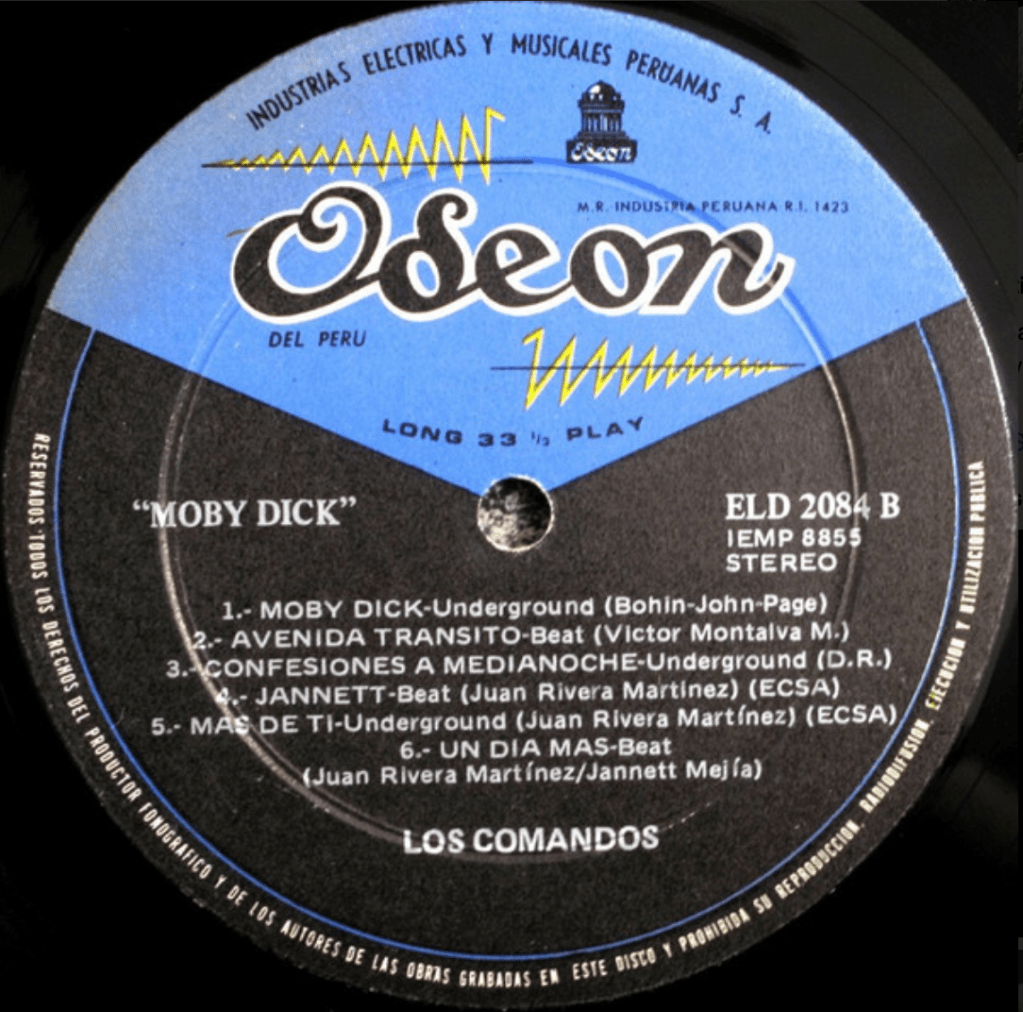
 Brace for the Obscure (60s rock)! / Off the Charts: 60s Rock Revelations😊