Bob Lind — “Eleanor”: Brace for the Obscure (60s rock)! — October 26, 2022

THE GREATEST SONGS OF THE 1960s THAT NO ONE HAS EVER HEARD

619) Bob Lind — “Eleanor”

As we used to say at the University of Michigan, “Oh how I hate Ohio State.” Well, oh how I hate “Elusive Butterfly”. But:

1) I love “Eleanor”! As Joe Viglione says, “when you hear . . . “Eleanor” (not the Turtles hit of the same name), you hear the real Bob Lind, and it is probable people were telling him what to do and who to be, not allowing songs like this to permeate the listening experience.” (https://www.allmusic.com/album/photographs-of-feeling-mw0001191587). “[W]hen you walk through your memories, I’d like to think that you look for me.” Pure class, pure feeling. Bob, all is forgiven!

2) As Bob himself explained:

“Elusive Butterfly” was five verses long. I wanted to do all five verses. Jack [Nitzsche] said no one would listen to a song that long, and I should only do two. Of course, he was right. . . . After we’d finished . . . four [songs], the company was looking for a single. We both favoured “Cheryl’s Goin’ Home”. So we released that and – just to be safe, so we wouldn’t get split airplay – we put what we thought was the weakest song, “Elusive Butterfly”on the other side. But the record went nowhere. There was no interest in it at all. Then a disc jockey in Florida turned it over and started to play “Elusive Butterfly”. It started to catch on, one market, then another. . . .

My managers had a certain view of my career. Their decisions for Sonny & Cher were great. They were pop singers; they didn’t care. The kind of music that I wrote was intimate stuff. It was about feelings that are not general commodities that can be packaged. They were wrong for lip-sync shows with go-go dancers jumping around. It made no sense. This wasn’t the course that I was trying to follow. Right then I started hating the business. I had gotten bent and warped and taken so far away from the direction I was trying to head.

https://acerecords.co.uk/bob-lind#

Listen, Bob, there is no problem that can’t be solved with more go-go dancers! At least in the ‘60’s. As to BL, Mark Deming tells us:

Bob Lind has enjoyed a sizable cult following based on a rather small body of work. He released only four albums between 1966 and 1971 . . . and landed just one single in the Top 40. Despite this, he’s acknowledged as one of the key artists in the ’60s folk-rock boom, and over 200 different artists have recorded his songs. “Elusive Butterfly,” a chart success in 1966, was a breezy number that nodded to psychedelia and sunshine pop, and his material of the era . . . is carefully crafted folk-rock with a pop sensibility.

In high school, Lind formed a band called the Moonlighters, and while attending Western State University in Gunnison, Colorado, he led a rock group, Bob Lind & the Misfits, who specialized in early rock covers. As a new breed of songwriters emerged on the folk music scene in the early ’60s, Lind took up songwriting and started playing occasional shows at local coffee houses. He relocated to San Francisco, where he continued writing songs and playing small venues, and in 1965, he headed south to Los Angeles, where he scored an audition with World Pacific Records . . . . [which] signed Lind to a record contract, and after he landed a publishing deal with Metric Music, he was introduced to producer and arranger Jack Nitzsche, who liked Lind’s songs and agreed to work with him. With Nitzsche providing artful backdrops for Lind’s emotionally literate songs, the two proved to be an inspired pair in the studio . . . .

By Lind’s own admission, he developed a powerful taste for alcohol and drugs once “Elusive Butterfly” made him a celebrity, and he became angry and difficult to work with; he severed ties with Nitzsche and was dropped by World Pacific after a pair of unsuccessful singles.

https://www.allmusic.com/artist/bob-lind-mn0000068097/biograph

I have added a Facebook page for Brace for the Obscure 60s Rock! If you like what you read and hear and feel so inclined, please visit and “like” my Facebook page by clicking here.

Pay to Play! The Off the Charts Spotify Playlist! + Brace for the Obscure 60s Rock Merchandise

Please consider helping to support my website/blog by contributing $6 a month for access to the Off the Charts Spotify Playlist. Using a term familiar to denizens of Capitol Hill, you pay to play! (“relating to or denoting an unethical or illicit arrangement in which payment is made by those who want certain privileges or advantages in such arenas as business, politics, sports, and entertainment” — dictionary.com).

The playlist includes all the “greatest songs of the 1960’s that no one has ever heard” that are available on Spotify. The playlist will expand each time I feature an available song.

All new subscribers will receive a Brace for the Obscure 60s Rock magnet. New subscribers who sign up for a year will also receive a Brace for the Obscure 60s Rock t-shirt or baseball cap. See pictures on the Pay to Play page.

When subscribing, please send me an e-mail (GMFtma1@gmail.com) or a comment on this site letting me know an e-mail address/phone number/Facebook address, etc. to which I can send instructions on accessing the playlist and a physical address to which I can sent a magnet/t-shirt/baseball cap. If choosing a t-shirt, please let me know the gender and size you prefer.

Just click on the first blue block for a month to month subscription or the second blue block for a yearly subscription.
The Mark Leeman Five — “The Boy Who Walks All Alone”: Brace for the Obscure (60s rock)! — October 25, 2022

THE GREATEST SONGS OF THE 1960s THAT NO ONE HAS EVER HEARD

618) The Mark Leeman Five — “The Boy Who Walks All Alone”

The group’s first demo, circa ‘62, is a haunting and unforgettable mod/northern soul number. The Five had conquered the London clubs and were readying an assault on the realm when their leader was killed in a crash following a gig. Not a plane crash, just an everyday car.

Vernon Joynson says that:

A popular mid-sixties act around the London clubs, they played a mixture of R&B and jazz and secured a deal with EMI’s Columbia label. After their debut disc, Portland Town, which had been produced by Manfred Mann, Leeman was tragically killed in a car crash in June 1965. . . . [A] tape of exciting R&B songs recorded back in 1963 . . . show what a major force this band would have become had Leeman survived.

The Tapestry of Delights Revisited

Brian Hogg’s notes note that:

[T]hey were persistently tipped by audiences, writers and rival groups as the act “most likely to succeed”. . . . [Their] first demo tape, probably recorded in 1962 . . . combined “The Boy Who Walks All Alone” with “Chasing Shadows”. . . . The break the Five sought materialised when they supported Manfred Mann on a one night stand . . . . The headliners were so impressed that they suggested Mark contact their manager, Ken Pitt, and confirmed their interest with an enthusiastic telephone call . . . . In January 1964 Pitt duly added the quintet to his growing roster . . . . The[y] supported Manfred Mann throughout their residency at the famed Marquee Club, and they were quickly established as favourites at many other venues. The group became the toast of London’s in-crowd, all of the Beatles were in attendance when they played at the Cromwellian and reverential notices began to appear in the pop press. . . . “Portland Town” c/w “Gotta Get Myself Together” became the Five’s debut release. Issued in January 1965 . . . . although the single did not chart, it did confirm the unit’s special talent.

Liner notes to The Mark Leeman Memorial Album

Anorak Thing adds:

The . . . Five were one of those 60’s jazzy British r&b bands who were always gigging with bigger named acts at all the London haunts like The Marquee, The Flamingo or Klook’s Kleek (they actually held a regular Monday night residency at the Marquee club in 1965 which flip flopped with The Moody Blues and Manfred Mann while The Who were packing them in every Tuesday night).

http://anorakthing.blogspot.com/2011/03/mark-leeman-five.html?m=1

Finally, Len tells us:

The Mark Leeman Five chose to enhance their R’n’B with a smattering of funky jazz via the likes of Booker T, Ray Charles and Nina Simone, mostly courtesy of their trump card, the splendid acoustic/electric pianist and occasional organ player Terry Goldberg. Along with the spiky guitar of Alan Roskams . . . came the aggressive, punky pipes of Mark Leeman. The Five assembled at school in Woolwich in 1961, and their initial influence was clearly Joe Meek judging by their first demo single. The second covered Barrett Strong’s Money “well before the Fabs got hold of it” and indicates their change of direction. Sometime in 1963 they cut an eleven-track demo album which was two years ahead of its time and didn’t find a sponsor. Undaunted, Leeman and the lads built up a formidable live following around the capital . . . .

http://therisingstorm.net/mark-leeman-five-memorial-album/

“The Boy Who Walks All Alone” had been released in ‘62 as the B-side of the last of Jerry Angelo’s five singles. It was written by Lee Lenrow and Paul De Schoeder. (https://www.45cat.com/record/pg9034). SecondHand songs tells us that Jerey was born Wally Shackell in London in 1933. “He became a member of the Five Dallas Boys in 1957. From 1959 through 1962 he recorded as Jerry Angelo. Later he moved to Australia.” (https://secondhandsongs.com/artist/135880)

Here is Jerry Angelo:

I have added a Facebook page for Brace for the Obscure 60s Rock! If you like what you read and hear and feel so inclined, please visit and “like” my Facebook page by clicking here.

Pay to Play! The Off the Charts Spotify Playlist! + Brace for the Obscure 60s Rock Merchandise

Please consider helping to support my website/blog by contributing $6 a month for access to the Off the Charts Spotify Playlist. Using a term familiar to denizens of Capitol Hill, you pay to play! (“relating to or denoting an unethical or illicit arrangement in which payment is made by those who want certain privileges or advantages in such arenas as business, politics, sports, and entertainment” — dictionary.com).

The playlist includes all the “greatest songs of the 1960’s that no one has ever heard” that are available on Spotify. The playlist will expand each time I feature an available song.

All new subscribers will receive a Brace for the Obscure 60s Rock magnet. New subscribers who sign up for a year will also receive a Brace for the Obscure 60s Rock t-shirt or baseball cap. See pictures on the Pay to Play page.

When subscribing, please send me an e-mail (GMFtma1@gmail.com) or a comment on this site letting me know an e-mail address/phone number/Facebook address, etc. to which I can send instructions on accessing the playlist and a physical address to which I can sent a magnet/t-shirt/baseball cap. If choosing a t-shirt, please let me know the gender and size you prefer.

Just click on the first blue block for a month to month subscription or the second blue block for a yearly subscription.
Jake Holmes — “Think I’m Being Had”: Brace for the Obscure (60s rock)! — October 24, 2022

THE GREATEST SONGS OF THE 1960s THAT NO ONE HAS EVER HEARD

617) Jake Holmes — “Think I’m Being Had”

OK, I feel a little dazed and confused after listening to this song, the B-side of Holmes’ first single (’67). It has got to be the greatest “I know you’re cheating on me” song that I have ever heard.

Will Shade asks the eternal question: “How many musicians can claim to have been in a comedy team with Joan Rivers, written a concept album for Frank Sinatra, had one of their songs stolen by Led Zeppelin and hung out with Nelson Mandela?” (https://www.furious.com/perfect/jakeholmes.html)

He then provides the answer:

Only one: Jake Holmes. Holmes is most famous for two ’70’s anthems. However, few people know he wrote either of them. One is the aforementioned song that Jimmy Page & Co. nicked, “Dazed And Confused.” Holmes has never received a songwriting credit or royalties from the band . . . . The other tune is a commmercial that played repeatedly on television, a harangue to join the U.S. Army. C’mon, you remember it . . . “Be all you can be!” Now, that’s a twisted resume! However, Holmes deserves belated recognition for two brilliant albums released on the Tower label in 1967 and 1968. These two records have achieved legendary status . . . . Holmes’ first album for Tower, The Above Ground Sound Of Jake Holmes, is breathtaking in its stark approach. First, Holmes’ group employed absolutely no drummer. . . . Holmes’ sound is so far away from rock n roll, that it is impossible to pigeon-hole. What do you call it? Garage? Well, if you had a crowbar and a some plastique explosive you might pry it into that straitjacket. Folk influences merge with jazz scatting and fuzzed-out acid rock excursions in an bizarre hybrid that has yet to be named. This album is so far in the garage, it’s under the garage. But if you’re expecting something vaguely like The Seeds, forget it. The Above Ground Sound Of Jake Holmes truly defies description. It is as spartan as a slab of concrete. . . . Unfortunately, after the sepia-toned psychedelia of A Letter To Katherine December, Jake Holmes seemed unsure and unaware of where his true abilities lay. Holmes’ eclecticism worked brilliantly on his first two albums. However, that strength now turned into his Achilles heel. His next albums were in keeping with the ’70’s, singer-songwriter influences merging with country-rock sensibilities and not to this reviewer’s taste. Commercially, these albums met with no more success than his earlier hallucinatory efforts. Label changes ensued. Soon, no company would pick him up. With no record contract, Holmes plunged into the world of commercials. Strangely, this is where he finally found success.

https://www.furious.com/perfect/jakeholmes.html

Richie Unterberger gives us some history:

One of many journeyman New York folk-rock singer/songwriters of the late ’60s, Jake Holmes, if he’s remembered at all, is known as the author and original performer of “Dazed and Confused.” It is still not widely recognized that he wrote and recorded the first version of this song on his 1967 solo debut album, prior to it . . . becoming one of the most famous numbers in Led Zeppelin’s repertoire. Holmes earliest success came as a comedy duo with then-wife Kate. . . . perform[ing] under the alias Allen & Grier and releas[ing] a popular collection of folk revival parodies called Better to Be Rich Than Ethnic in the early ’60s. He had also worked in a group with fellow folk-rock singer/songwriter Tim Rose before going solo. . . . Holmes’ 1967 debut LP The Above Ground Sound of Jake Holmes . . . had an odd, edgy folk-rock sound built around a drumless trio, featuring Holmes’ rapid rhythm guitar strums and Ted Irwin’s spidery acid folk-jazz-lead guitar lines. . . . Holmes never profited from the worldwide success of Led Zeppelin’s “Dazed and Confused,” but he did strike gold as a writer of commercials with one of his jingles, the famous U.S. Army ad with the “be all that you can be” refrain.

https://www.allmusic.com/artist/jake-holmes-mn0000133626/biography

And Techwebsound adds:

[Holmes] initially wrote and performed in several vocal groups including Jim, Jake & Joan, which included future famous comedian Joan Rivers. As the late 60s approached, he became interested in and heavily influenced by psychedelic rock and the genre’s pioneering bands like the Blues Project and Byrds. In early 1967, Holmes issued his debut single (“You Can’t Get Love” b/w “Think I’m Being Had”)

https://techwebsound.com/artist/?artist=1057

I have added a Facebook page for Brace for the Obscure 60s Rock! If you like what you read and hear and feel so inclined, please visit and “like” my Facebook page by clicking here.

Pay to Play! The Off the Charts Spotify Playlist! + Brace for the Obscure 60s Rock Merchandise

Please consider helping to support my website/blog by contributing $6 a month for access to the Off the Charts Spotify Playlist. Using a term familiar to denizens of Capitol Hill, you pay to play! (“relating to or denoting an unethical or illicit arrangement in which payment is made by those who want certain privileges or advantages in such arenas as business, politics, sports, and entertainment” — dictionary.com).

The playlist includes all the “greatest songs of the 1960’s that no one has ever heard” that are available on Spotify. The playlist will expand each time I feature an available song.

All new subscribers will receive a Brace for the Obscure 60s Rock magnet. New subscribers who sign up for a year will also receive a Brace for the Obscure 60s Rock t-shirt or baseball cap. See pictures on the Pay to Play page.

When subscribing, please send me an e-mail (GMFtma1@gmail.com) or a comment on this site letting me know an e-mail address/phone number/Facebook address, etc. to which I can send instructions on accessing the playlist and a physical address to which I can sent a magnet/t-shirt/baseball cap. If choosing a t-shirt, please let me know the gender and size you prefer.

Just click on the first blue block for a month to month subscription or the second blue block for a yearly subscription.

The Bonzo Dog Band — “Humanoid Boogie”: Brace for the Obscure (60s rock)! — October 23, 2022

THE GREATEST SONGS OF THE 1960s THAT NO ONE HAS EVER HEARD

616) The Bonzo Dog Band — “”Humanoid Boogie”

The very same year that HAL told David Bowman to take a chill pill and sang “Daisy”, the Bonzos gave us the “Humanoid Boogie”, which “got the humanoid hip-types jumpin’ and-a jivin’”! As Harvey J. Satan tells us:

“Humanoid Boogie” is The Bonzos as Heavy Metal act! Part flower power, and part really loud! A favourite of Neil[ Innes’], he has recorded no less than three alternate versions of this song as a solo act!

http://www.bonzodog.org/bonzos/doughnut.htm

As to the BDB, Richie Unterberger imparts:

Besides, perhaps, the Mothers of Invention (with whom they were sometimes compared), the Bonzo Dog Band were the most successful group to combine rock music and comedy. Starting off as the Bonzo Dog Dada Band, then becoming the Bonzo Dog Doo-Dah Band, and then finally just the Bonzo Dog Band, the group was started by British art college students in the mid-’60s. Initially they were inclined toward trad jazz and vaudevillian routines, but by the time of their 1967 debut album, they were leaning further in pop and rock directions. A brief appearance in the Beatles’ Magical Mystery Tour film bolstered their visibility, and Paul McCartney (under the pseudonym Apollo C. Vermouth) produced their single “I’m the Urban Spaceman,” which reached the British Top Five in 1968. The Bonzos really hit their stride with their second [from which today’s song is drawn] and third albums, which found them adding elements of psychedelia to their already-absurdist mix of pop, cabaret, and Dada. The band could be side-splitting, but their records held up well because they were also capable musicians and songwriters, paced by Neil Innes and Viv Stanshall (both of whom wrote the lion’s share of their best material).

https://www.allmusic.com/artist/the-bonzo-dog-band-mn0000772191

As to the album, The Doughnut in Granny’s Greenhouse, Unterberger says:

[T]he Bonzos’ second album was probably their best. Although they were hardly a rock or pop group in the traditional sense, the Bonzos couldn’t help absorbing some of the vibes of British psychedelia, and the heady ambience of the era is reflected in the recklessly diverse and outrageous material. Almost all of the songs were penned by the two top dogs, Viv Stanshall, and Neil Innes, who deflate British blues, psychedelia, and other pop, jazz, and music hall styles with priceless wit.

https://www.allmusic.com/album/the-doughnut-in-grannys-greenhouse-mw0000485709

And Satan adds:

After the Vaudvillian Stylings of “Gorilla”, one can only guess what fans must have thought of this album. My guess is after hearing “We Are Normal”, two thoughts would come to mind: firstly, “Oops, I’ve accidentally purchased a Frank Zappa record” or secondly, “Hello, where did all these electric instruments come from?” . . . In keeping with their excursions into surrealism, dada, humanity, and now psychedelia, The Bonzos were off and flying in fine form! [S]ome of the heavier rock sounds might have stunned the casual listener . . . . This album . . . seem[s] to set a sort of format for The Bonzos: numerous musical styles, musical experimentation, and various pieces of tomfoolery to stitch it all together. Not so much a straight forward “concept” or “story”, but rather a surreal tale in which the band isn’t always the narrator. . . . Neil Innes [later] collaborated with members of Monty Python, upon whom the Bonzos were a large influence, as well as writing the songs for and performing in the Beatles documentary spoof The Rutles.

http://www.bonzodog.org/bonzos/doughnut.htm

Here, Neil does it in ’84:

I have added a Facebook page for Brace for the Obscure 60s Rock! If you like what you read and hear and feel so inclined, please visit and “like” my Facebook page by clicking here.

Pay to Play! The Off the Charts Spotify Playlist! + Brace for the Obscure 60s Rock Merchandise

Please consider helping to support my website/blog by contributing $6 a month for access to the Off the Charts Spotify Playlist. Using a term familiar to denizens of Capitol Hill, you pay to play! (“relating to or denoting an unethical or illicit arrangement in which payment is made by those who want certain privileges or advantages in such arenas as business, politics, sports, and entertainment” — dictionary.com).

The playlist includes all the “greatest songs of the 1960’s that no one has ever heard” that are available on Spotify. The playlist will expand each time I feature an available song.

All new subscribers will receive a Brace for the Obscure 60s Rock magnet. New subscribers who sign up for a year will also receive a Brace for the Obscure 60s Rock t-shirt or baseball cap. See pictures on the Pay to Play page.

When subscribing, please send me an e-mail (GMFtma1@gmail.com) or a comment on this site letting me know an e-mail address/phone number/Facebook address, etc. to which I can send instructions on accessing the playlist and a physical address to which I can sent a magnet/t-shirt/baseball cap. If choosing a t-shirt, please let me know the gender and size you prefer.

Just click on the first blue block for a month to month subscription or the second blue block for a yearly subscription.

The Outsiders — “Happyville”: Brace for the Obscure (60s rock)! — October 21, 2022

THE GREATEST SONGS OF THE 1960s THAT NO ONE HAS EVER HEARD

615) The Outsiders — “ Happyville”

The Outsiders give us a randy and “masterful acid punker[]” (Jason, http://therisingstorm.net/the-outsiders-cq/) off of CQ, their last album (’68) — as only a band from the Netherlands could. And only a Dutch band could write English lyrics like “I don’t mind your enthusiasm. I don’t mind your wild orgasm. I don’t mind we are not alone. I don’t mind we’re not at home. But I don’t understand why you’re selling tickets to those nasty guys who don’t wear ties.” Who are those nasty guys???

CQ is, as Richard Groothuizen says, the product of “a passionate band at the height of their creative powers.” (liner notes to CD reissue of CQ). Jason writes that:

C.Q. was to be the Outsiders last album (their 3rd LP), an attempt to reach the group’s original core audience amidst a troubling commerical downfall. Not only is this one of the best “international” psych albums but it’s as good as anything by the early Pink Floyd, psychedelic era Pretty Things or Love. Its closest reference point is probably the Pretty Things superb S.F. Sorrow – there are no soft, wimpy moments on either of these records, just pure intensity and garage punk muscle. . . . C.Q.’s strength is in it’s consistency and diversity. No two songs sound alike yet every experiment is well thought out and successful. The group’s hallmark start-stop punk rhythms are firmly in place on many of C.Q.‘s tracks but by 1968 the Outsiders had grown considerably, incorporating more folk-rock and psych sounds into their repertoire. . . . C.Q. is one of the immortal 60s albums.

http://therisingstorm.net/the-outsiders-cq/

As to the Outsiders, Mark Deming tells us:

The Amsterdam-based combo were one of the most popular homegrown bands in the Netherlands from 1965 to 1967, and have since become a favorite among historians of the beat music era; Richie Unterberger wrote that the Outsiders “could issue a serious claim for consideration as the finest rock band of the ’60s to hail from a non-English-speaking nation,” and Richard Mason penned an essay on the group calling them “the most underrated band ever.” The Outsiders were formed in 1964 by Wally Tax (vocals and rhythm guitar), Ronald Splinter (lead guitar), Appie Rammers (bass), and Lendert “Buzz” Busch (drums); the band embraced an eclectic style that made room for R&B, folk-rock, pop, and beat influences, as well as psychedelic accents as the decade wore on. After earning a reputation as a powerful live act (and adding additional guitarist Tom Krabbendam), the Outsiders made their recoding debut in 1965 . . . . [T]he Outsiders were unusual among beat groups of the era in that they never recorded cover tunes. As the band’s reputation as a striking live act grew (their show was frantic enough to get them banned from several major venues), the Outsiders found themselves opening for many leading U.K. beat groups touring the Netherlands, including the Oretty Things and The Rolling Stones.

Named for an amateur radio term meaning “Is anyone listening?,” CQ was an ambitious set that combined the band’s beat music influences with outrĂŠ psychedelia and avant-garde sounds that were far ahead of the curve for the era. However, Polydor failed to promote the album properly — the initial pressing was reportedly a mere 500 copies — and the Outsiders disbanded in 1969.

https://www.allmusic.com/artist/the-outsiders-mn0001620705/biography

Here they are live (at 13:10):

I have added a Facebook page for Brace for the Obscure 60s Rock! If you like what you read and hear and feel so inclined, please visit and “like” my Facebook page by clicking here.

Pay to Play! The Off the Charts Spotify Playlist! + Brace for the Obscure 60s Rock Merchandise

Please consider helping to support my website/blog by contributing $6 a month for access to the Off the Charts Spotify Playlist. Using a term familiar to denizens of Capitol Hill, you pay to play! (“relating to or denoting an unethical or illicit arrangement in which payment is made by those who want certain privileges or advantages in such arenas as business, politics, sports, and entertainment” — dictionary.com).

The playlist includes all the “greatest songs of the 1960’s that no one has ever heard” that are available on Spotify. The playlist will expand each time I feature an available song.

All new subscribers will receive a Brace for the Obscure 60s Rock magnet. New subscribers who sign up for a year will also receive a Brace for the Obscure 60s Rock t-shirt or baseball cap. See pictures on the Pay to Play page.

When subscribing, please send me an e-mail (GMFtma1@gmail.com) or a comment on this site letting me know an e-mail address/phone number/Facebook address, etc. to which I can send instructions on accessing the playlist and a physical address to which I can sent a magnet/t-shirt/baseball cap. If choosing a t-shirt, please let me know the gender and size you prefer.

Just click on the first blue block for a month to month subscription or the second blue block for a yearly subscription.

Fever Tree — “Love Makes the Sun Rise”: Brace for the Obscure (60s rock)! — October 20, 2022

THE GREATEST SONGS OF THE 1960s THAT NO ONE HAS EVER HEARD

614) Fever Tree — “Love Makes the Sun Rise”

This ’69 A-side and album track is, per Richie Unterberger, a luminous “pretty, wistful ballad” by a Houston psych group. Oh, with guitar courtesy of ZZ Top’s Billy Gibbons!

Richie Unterberger tells us:

A minor, if reasonably interesting, late-’60s psychedelic group, Houston’s Fever Tree is most famous for their single “San Francisco Girls,” with its dramatic melody, utopian lyrics, and searing fuzz guitar. Most of their best material, ironically, was written by their over-30 husband-wife production team, Scott and Vivian Holtzman, who had previously written material for Tex Ritter and the Mary Poppins soundtrack. These odd bedfellows produced some fairly distinctive material with more classical/Baroque influences and orchestral string arrangements than were usually found in psychedelic groups. Their pretty, wistful ballads . . . endure better than their dirge-like fuzz grinders, which epitomize some of the more generic aspects of heavy psychedelia. Releasing four albums (the third of which, Creation [from which today’s song is drawn], included guest guitar by future ZZ Top axeman Billy Gibbons) . . . the group disbanded in 1970.

https://www.allmusic.com/artist/fever-tree-mn0000144629/biography

I guess we need to trust at least some people over 30!

Kostas adds:

[A]mong late-’60s psychedelic groups . . . Fever Tree boasted attributes that set them aside from many of their peers on several counts. There was their unusual heavy concentration of classical and jazz influences within a rock framework, as well as their use of numerous instruments other than the standard guitars, bass, drums, and keyboards. There was also the use of a husband-wife team that wasn’t part of the group, Scott and Vivian Holtzman, who supplied much of the material as well as handling management and production duties. . . . Originally known as the Bostwick Vines, the group changed their name to Fever Tree after hooking up with the Holtzmans, who had already written some material on records by the New Christy Minstrels and Tex Ritter. It wasn’t the kind of resume one would expect to lead to involvement with an emerging psychedelic rock combo, but Fever Tree proved adept at interpreting and recording the Holtzmans’ material for rock arrangements, also getting involved in the writing as well. . . . [T]hey had some success in Houston with singles on the Mainstream label. By the time they were ready to record their first album, they’d signed to a new label, Uni, and [added a] multi-instrumentalist . . . who handled harp, flute, harpsichord, bass recorder, clavinette, and cello in addition to piano and organ. . . . Fever Tree released their self-titled debut album . . . in 1968, which charted at No. 156 on the Billboard 200 Chart. A second album, Another Time, Another Place, followed in 1969 and peaked at No. 83 with a third album Creation [from which today’s song is drawn], charting at No. 97 on the Billboard 200 Chart in 1970. After “San Francisco Girls”, they never had another hit, although they later also tried writing songs themselves when they had dropped the Holtzmans as producers. The group disbanded in 1970 . . . . Creation is their most accomplished album . . . . [G]rowling Steppenwolfish vocals are mostly gone in favor of classier singing that suits the more baroque elements of Fever Tree, which are their strong suit. . . . When the band foregoes straight bluesy rock for folkier elegance and more adventurous jazz dabblings, the results are usually impressive and occasionally even timeless. An interesting band, Fever Tree, who put it all together and played to their strengths on Creation.

https://urbanaspirines.blogspot.com/2022/08/fever-tree-studio-albums.html?m=1

I have added a Facebook page for Brace for the Obscure 60s Rock! If you like what you read and hear and feel so inclined, please visit and “like” my Facebook page by clicking here.

Pay to Play! The Off the Charts Spotify Playlist! + Brace for the Obscure 60s Rock Merchandise

Please consider helping to support my website/blog by contributing $6 a month for access to the Off the Charts Spotify Playlist. Using a term familiar to denizens of Capitol Hill, you pay to play! (“relating to or denoting an unethical or illicit arrangement in which payment is made by those who want certain privileges or advantages in such arenas as business, politics, sports, and entertainment” — dictionary.com).

The playlist includes all the “greatest songs of the 1960’s that no one has ever heard” that are available on Spotify. The playlist will expand each time I feature an available song.

All new subscribers will receive a Brace for the Obscure 60s Rock magnet. New subscribers who sign up for a year will also receive a Brace for the Obscure 60s Rock t-shirt or baseball cap. See pictures on the Pay to Play page.

When subscribing, please send me an e-mail (GMFtma1@gmail.com) or a comment on this site letting me know an e-mail address/phone number/Facebook address, etc. to which I can send instructions on accessing the playlist and a physical address to which I can sent a magnet/t-shirt/baseball cap. If choosing a t-shirt, please let me know the gender and size you prefer.

Just click on the first blue block for a month to month subscription or the second blue block for a yearly subscription.

Herman’s Hermits — “Dream On”/”I Gotta Dream On”: Brace for the Obscure (60s rock)! — October 19, 2022

THE GREATEST SONGS OF THE 1960s THAT NO ONE HAS EVER HEARD

613) Herman’s Hermits — “Dream On”/”I Gotta Dream On”

Can’t believe Herman’s Hermits never sued Aerosmith over the blatant steal of this song! It is a cool ‘65 album track and B-side that amalgamates a lot of the British Invasion sounds then on the radio.

Ah, Herman’s Hermits (see #300) — they didn’t get any respect, but some of their songs were so wonderful. The Hermits need a Monkees-like reappraisal. As Bruce Eder says:

Herman’s Hermits were one of those odd 1960s groups who accumulated millions of fans, but precious little respect. Indeed, their status is remarkably similar to that of the Monkees, and it’s not a coincidence that both groups’ music was intended to appeal to younger teenagers. The difference is that as early as 1976, the Monkees began to be considered cool by people who really knew music; it took decades longer for Herman’s Hermits to begin receiving higher regard for their work. Of course, that lack of respect had no relevance to their success: 20 singles lofted into the Top 40 in England and America between 1964 and 1970, 16 of them in the Top 20, and most of those Top Ten as well. . . . [C]ommercially, the Hermits were only a couple of rungs below the Beatles and the Rolling Stones.

https://www.allmusic.com/artist/hermans-hermits-mn0000575051/biography

Phil Bausch says of the Hermits that:

In 1965 they sold more records than the Beatles . . . But in three years they’ll were done. . . . [S]ome of England’s best session players worked on their singles, including Jimmy Page and John Paul Jones . . . . Peter Noone was cute, charming, and an accomplished vocalist. He and the band played-up their British accents on songs like “Henry The VIII” and “Mrs. Brown”, because American audiences were loving all things British at that time. . . . Herman’s Hermits’ flame burned brightly, but quickly. . . . In all, the group had 18 Top 40 hits, are credited with selling over 80-million records,

https://ontherecords.net/2018/08/hermans-hermits/

Eder goes deep:

[In 1963], the Heartbeats got a new member in 16-year-old Peter Noone, who filled in one night when their regular vocalist failed to turn up for a gig. Noone . . . had been a child star on television in the late ’50s, on the television series Coronation Street . . . . Their big break came in 1964 when producer Mickie Most . . . . was impressed with their wholesome, clean-cut image, and with Noone’s singing and pleasant, non-threatening stage presence, and he agreed to produce them, arranging a recording contract for the group with the EMI-Columbia label . . . . Herman’s Hermits’ debut single, a Carole King/Gerry Goffin song called “I’m Into Something Good,” released in the summer of 1964, hit number one in England and number 13 in America. . . .

[T]he Hermits didn’t play on most of their own records; Mickie Most, as was typical of producers in the era . . , saw no reason to make a less-than-perfect record, or spend expensive studio time working with a band to perfect its sound — as long as Peter Noone’s voice was on the record and the backing wasn’t something that the group absolutely couldn’t reproduce on stage, everyone seemed happy, including the fans. Conversely, the group didn’t have too much control over the choice of material . . . . [but] was grateful for the hit records that they chalked up, the revenue that those generated, and the gigs that resulted. . . . Mickie Most recognized that [the Beatles, Stones, etc.] were leaving behind a huge number of listeners who would still buy songs resembling simple, relatively innocent sounds of 1964 . . . . Just how far back he and the group could reach was revealed . . . [when] an American disc jockey heard the[ir] song “Mrs. Brown You’ve Got a Lovely Daughter” . . . and convinced the label to issue it as a single. The song had been done almost as a joke . . . its guitar/banjo sound and Noone’s vocal performance — Mancunian accented and laced with a vulnerable, wide-eyed innocence — deliberately reminiscent of George Formby, the immensely popular ukelele-strumming British music hall entertainer of the 1930s and 1940s. In England, that record would never have been considered for release by an image-conscious rock & roll group . . . it would also have destroyed their credibility. In America, however, it was considered just another piece of British Invasion pop/rock . . . and it shot to number one on the charts . . . . After that, a formula was established . . . . [including] including the actual Edwardian-era music hall number “I’m Henry the Eighth, I Am,” specifically for release as singles in America. The latter record reportedly made the group members cringe over what it would do to their image in England, but in America it hit number one . . . .

https://www.allmusic.com/artist/hermans-hermits-mn0000575051/biography

I have added a Facebook page for Brace for the Obscure 60s Rock! If you like what you read and hear and feel so inclined, please visit and “like” my Facebook page by clicking here.

Live at the BBC:

Pay to Play! The Off the Charts Spotify Playlist! + Brace for the Obscure 60s Rock Merchandise

Please consider helping to support my website/blog by contributing $6 a month for access to the Off the Charts Spotify Playlist. Using a term familiar to denizens of Capitol Hill, you pay to play! (“relating to or denoting an unethical or illicit arrangement in which payment is made by those who want certain privileges or advantages in such arenas as business, politics, sports, and entertainment” — dictionary.com).

The playlist includes all the “greatest songs of the 1960’s that no one has ever heard” that are available on Spotify. The playlist will expand each time I feature an available song.

All new subscribers will receive a Brace for the Obscure 60s Rock magnet. New subscribers who sign up for a year will also receive a Brace for the Obscure 60s Rock t-shirt or baseball cap. See pictures on the Pay to Play page.

When subscribing, please send me an e-mail (GMFtma1@gmail.com) or a comment on this site letting me know an e-mail address/phone number/Facebook address, etc. to which I can send instructions on accessing the playlist and a physical address to which I can sent a magnet/t-shirt/baseball cap. If choosing a t-shirt, please let me know the gender and size you prefer.

Just click on the first blue block for a month to month subscription or the second blue block for a yearly subscription.

Norman Conquest — “Upside Down”: Brace for the Obscure (60s rock)! — October 18, 2022

THE GREATEST SONGS OF THE 1960s THAT NO ONE HAS EVER HEARD

612) Norman Conquest — “Upside Down”

This ’68 B-side is one of British musical genius John Pantry’s (see #494) most glorious pop psych confections. Vernon Joynson calls it “dreamy flowery pop.” (The Tapestry of Delights Revisited)

But, was Pantry the lead singer on the single? Joynson thought so, saying that Norman Conquest was “a group that later became Peter and the Wolves and then Factory. Pantry is thought to be the lead vocalist on both sides of the single.” But, as David Wells later revealed:

MGM . . . issued “Two People” . . . backed by the superior “Upside Down[]” . . . . in the name of Norman Conquest. [T]here has always been some doubt over the exact identity of both the musicians concerned and the lead singer . . . . John Pantry felt that the singer was somebody impersonating his vocal style . . . . [T]he real Norman Conquest has turned up — singer Paul Puig . . . and who confirms that both sides featured him on lead vocals.

liner notes to CD comp The Upside Down World of John Pantry

Jason gives us a sense of Pantry’s history:

John Pantry is one of those artists that deserves to be heard by more people, especially those who value melodic British pop. . . . [He was] a talented studio engineer for IBC Studios (working with Eddie Tre-Vett), producing for the likes of Donovan, The Small Faces, The Bee Gees, The Who, Jimi Hendrix, and Cream. He was also a member of Peter & The Wolves, an accomplished mid 60s pop group from Leigh-on-Sea/Southend and had a major hand with many other IBC studio projects of the time: the Factory, Sounds Around, Wolfe, The Bunch and Norman Conquest. . . . Besides being a savvy studio technician, Pantry was a gifted songwriter and vocalist and an accomplished musician (. . . keyboards). . . . [O]ne of Pantry’s first groups, Sounds Around. . . . played straight pop with slight soul and psych influences – they released two singles in 1966-1967. Peter & The Wolves came shortly after Sounds Around’s demise (they were essentially the same group). This is the group with which Pantry is most associated, along with The Factory. . . . [Peter & The Wolves’] most productive period was probably the years of 1967-1969, where they released a string of pop gems . . . . It was around this time that John Pantry was asked to write two tracks for The Factory, a legendary psychedelic group who had previously released the classic “Path Through The Forest” 45 [see #5]. Pantry wrote and sang lead on the two Factory standouts, “Try A Little Sunshine” [see #460] and the more folk-like “Red Chalk Hill.” . . .

https://therisingstorm.net/year/1968/page/5/

I have added a Facebook page for Brace for the Obscure 60s Rock! If you like what you read and hear and feel so inclined, please visit and “like” my Facebook page by clicking here.

Here is Pantry’s demo:

Pay to Play! The Off the Charts Spotify Playlist! + Brace for the Obscure 60s Rock Merchandise

Please consider helping to support my website/blog by contributing $6 a month for access to the Off the Charts Spotify Playlist. Using a term familiar to denizens of Capitol Hill, you pay to play! (“relating to or denoting an unethical or illicit arrangement in which payment is made by those who want certain privileges or advantages in such arenas as business, politics, sports, and entertainment” — dictionary.com).

The playlist includes all the “greatest songs of the 1960’s that no one has ever heard” that are available on Spotify. The playlist will expand each time I feature an available song.

All new subscribers will receive a Brace for the Obscure 60s Rock magnet. New subscribers who sign up for a year will also receive a Brace for the Obscure 60s Rock t-shirt or baseball cap. See pictures on the Pay to Play page.

When subscribing, please send me an e-mail (GMFtma1@gmail.com) or a comment on this site letting me know an e-mail address/phone number/Facebook address, etc. to which I can send instructions on accessing the playlist and a physical address to which I can sent a magnet/t-shirt/baseball cap. If choosing a t-shirt, please let me know the gender and size you prefer.

Just click on the first blue block for a month to month subscription or the second blue block for a yearly subscription.
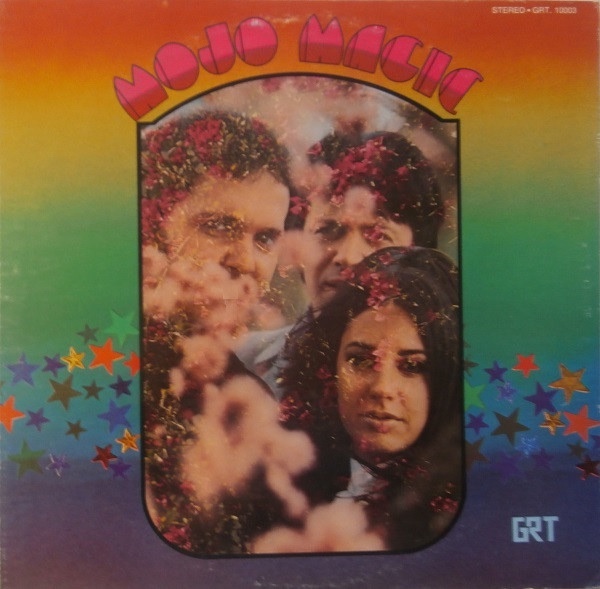
Mercy — “Fire Ball”: Brace for the Obscure (60s rock)! — October 17, 2022

THE GREATEST SONGS OF THE 1960s THAT NO ONE HAS EVER HEARD

611) Mercy — “Fire Ball”

A horrible ‘69 A-side — treacly pop that reached #2 on the charts, paired with a sensational B-side — one of the best garage-y rock instrumentals of the ‘60’s. WTF? As EastCoastDude says, “Seriously, this is the same Mercy who did “Love (Can Make You Happy)”? Holy Cow! That was one of the great pop ballads of the ’60’s, and mellow as can be, and this is the same band? Wow. Amazing!” (https://www.youtube.com/watch?v=87XUhR4BHRc)

Mike B tells us that the “song is actually [by] Mercy guitarist, Ronnie Caudill. (https://www.youtube.com/watch?v=HawzQe4HlVs)

As to Mercy, Wikipedia says:

Mercy is an American pop group from Florida. The group’s 1969 single “Love (Can Make You Happy)” . . . soared to No. 2 on the U.S. Billboard Hot 100 singles chart . . . . [selling] over one million copies by July 15 . . . . The track was originally released on the small Tampa, Florida-based Sundi record label . . . . The B-side of the Sundi single was entitled “Fire Ball”. During the single’s rapid rise in the charts, an album was released by a group calling themselves “The Mercy” (with a cover showing three girls), that included the Sundi recording, as well as several other songs that were not recorded by any of the original Mercy members. Litigation quickly ensued and the Sundi album was banned from distribution. The song was re-recorded on the Warner Brothers label, with the addition of new band members, and included on the Warner Brothers album, Love Can Make You Happy, which peaked at No. 38 on the U.S. Billboard 200 chart. Mercy had one other Billboard Hot 100 hit, the song “Forever” which reached No. 79 in June 1969.

https://en.wikipedia.org/wiki/Mercy_%28band%29

Mercy, mercy me!

I have added a Facebook page for Brace for the Obscure 60s Rock! If you like what you read and hear and feel so inclined, please visit and “like” my Facebook page by clicking here.

OK, here is the original hit version of Love (Can Make You Happy):

Pay to Play! The Off the Charts Spotify Playlist! + Brace for the Obscure 60s Rock Merchandise

Please consider helping to support my website/blog by contributing $6 a month for access to the Off the Charts Spotify Playlist. Using a term familiar to denizens of Capitol Hill, you pay to play! (“relating to or denoting an unethical or illicit arrangement in which payment is made by those who want certain privileges or advantages in such arenas as business, politics, sports, and entertainment” — dictionary.com).

The playlist includes all the “greatest songs of the 1960’s that no one has ever heard” that are available on Spotify. The playlist will expand each time I feature an available song.

All new subscribers will receive a Brace for the Obscure 60s Rock magnet. New subscribers who sign up for a year will also receive a Brace for the Obscure 60s Rock t-shirt or baseball cap. See pictures on the Pay to Play page.

When subscribing, please send me an e-mail (GMFtma1@gmail.com) or a comment on this site letting me know an e-mail address/phone number/Facebook address, etc. to which I can send instructions on accessing the playlist and a physical address to which I can sent a magnet/t-shirt/baseball cap. If choosing a t-shirt, please let me know the gender and size you prefer.

Just click on the first blue block for a month to month subscription or the second blue block for a yearly subscription.

Tim Buckley — “Once Upon a Time”: Brace for the Obscure (60s rock)! — October 16, 2022

THE GREATEST SONGS OF THE 1960s THAT NO ONE HAS EVER HEARD

610) Tim Buckley — “Once Upon a Time”

A coulda been ’67 hit single by the troubadour if only the boneheaded record label had deigned to release it. For Buckley, it “is uncharacteristically rocking”. (Joseph Neff, https://www.thevinyldistrict.com/storefront/2016/11/graded-on-a-curve-tim-buckley-lady-give-me-your-key-and-wings-the-complete-singles-1966-1974/)

Andrew Sandoval tells us that:

In 1964 [17 year old] Buckley began collaborating with lyricist Larry Beckett, and the two formed a pop/fok aggregation known as the Bohemians. . . . Buckley linked with manager Herb Cohen, who brought Buckley to the Elektra label as a solo artist. Buckley’s self-titled debut LP was a disappointment to those familiar with his more experimental moments. He harbored a deep desire “to make it” commercially and resultantly teamed with Beckett to compose the ill-fated “Once Upon A Time,” which the duo felt might have potential as a single. Ultimately Elektra rejected the master and encouraged the songbird to find a new direction of his own.

liner notes to Where the Action Is!: Los Angeles Nuggets 1965-1968

While Tim Buckley needs no introduction, let me quote Mark Deming:

One of the great rock vocalists of the 1960s, Tim Buckley drew from folk, psychedelic rock, and progressive jazz to create a considerable body of adventurous work in his brief lifetime. His multi-octave range was capable of not just astonishing power but great emotional expressiveness, swooping from sorrowful tenderness to anguished wailing. His restless quest for new territory was creatively satisfying but worked against him commercially; by the time his fans had hooked into his latest album, he was onto something else entirely, both live and in the studio. . . . While in high school, he made friends with poet and musician Larry Beckett, who would become one of his songwriting partners . . . . In 1965, Buckley enrolled at Fullerton College, but he dropped out after two weeks to devote himself to writing songs and playing folk clubs in Los Angeles. He gigged often enough to earn a following and some positive press, and in early 1966 he played a show where he was spotted by Jimmy Carl Black of the Mothers of Invention. Impressed, Black told Herb Cohen, the Mothers’ manager, about Buckley, and Cohen took Buckley on as a client, getting him his first dates in New York City. Buckley recorded a six-song demo that made its way to . . . Elektra Records, wh[ich] wasted no time signing him to a record deal.

https://www.allmusic.com/artist/tim-buckley-mn0000595101/biography

I have added a Facebook page for Brace for the Obscure 60s Rock! If you like what you read and hear and feel so inclined, please visit and “like” my Facebook page by clicking here.

Here is an acoustic version:

Pay to Play! The Off the Charts Spotify Playlist! + Brace for the Obscure 60s Rock Merchandise

Please consider helping to support my website/blog by contributing $6 a month for access to the Off the Charts Spotify Playlist. Using a term familiar to denizens of Capitol Hill, you pay to play! (“relating to or denoting an unethical or illicit arrangement in which payment is made by those who want certain privileges or advantages in such arenas as business, politics, sports, and entertainment” — dictionary.com).

The playlist includes all the “greatest songs of the 1960’s that no one has ever heard” that are available on Spotify. The playlist will expand each time I feature an available song.

All new subscribers will receive a Brace for the Obscure 60s Rock magnet. New subscribers who sign up for a year will also receive a Brace for the Obscure 60s Rock t-shirt or baseball cap. See pictures on the Pay to Play page.

When subscribing, please send me an e-mail (GMFtma1@gmail.com) or a comment on this site letting me know an e-mail address/phone number/Facebook address, etc. to which I can send instructions on accessing the playlist and a physical address to which I can sent a magnet/t-shirt/baseball cap. If choosing a t-shirt, please let me know the gender and size you prefer.

Just click on the first blue block for a month to month subscription or the second blue block for a yearly subscription.
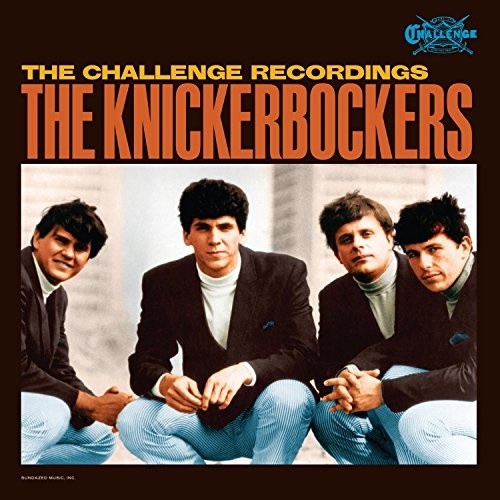
Joe Tex — “We Can’t Sit Down Now”: Brace for the Obscure (60s rock)! — October 14, 2022

THE GREATEST SONGS OF THE 1960s THAT NO ONE HAS EVER HEARD

609) Joe Tex — “We Can’t Sit Down Now”

I’ve featured my two favorite Joe Tex songs (see #42, 455). Here’s another classic, also off Tex’s magnificent ‘69 album Buying a Book. RDTEN1 says that “[e]ven before he converted to Islam and changed his name, Tex was one of soul’s most activist practioneers. With Tex adopting his best gospel preacher stance, ‘We Can’t Sit Down . . .’ was a perfect example of his willingness to stand up and make a statement – this one seemed to focus on black empowerment.” (https://www.funkmysoul.gr/joe-tex-1969-buying-a-book/) The one and only Dave Marsh calls the whole album “[f]unny, funky, and as deep as it wants to be.” (https://www.allmusic.com/album/buying-a-book-atlantic–mw0001958358)

As to the album and Joe circa ‘69, World of Joe Tex tells us that:

Back in Memphis he recorded enough new material at American Sound for his . . . [’69] album [Buying a Book]. . . . The [title] song took Joe back into the R&B Top 10 and he appeared on several national TV shows in the wake of its success. In an interview to promote his appearance on the Johnny Cash Show, Joe expounded his views on soul and not surprisingly got in another dig at his arch enemy. He declared “You don’t have to be a singer or a musician to have soul. Soul…is performing with pride in your performance. A housewife who keeps a neat home and cooks a delectable meal has soul… Why, even some politicians have soul. Ray Charles has soul. James Brown – and you can quote me on this – doesn’t. James Brown is called the King of Soul but he is all visual. Another thing – soul isn’t confined to one race, color or creed.” . . . The Buying a book album was no less strong than the single. . . . Still the hits were harder to come by. . . . [T]he civil rights anthem We can’t sit down now failed to chart.

https://soultex.webs.com/1969wecantsitdown.htm

As to why Joe Tex is not in the Rock & Hall of Fame, Roy laments:

Of all of the 60’s soul kingdom in rock Tex is the one name who was as consistent, popular and innovative as virtually any, yet who’s been left behind in recognition ever since. His track record more than holds up against most from that era who are already in, with more than two dozen hits to his name over 15 years, including 6 that went to either #1 or #2 on the R&B Charts, spanning southern soul to pure funk. A prolific writer and extremely influential performer with the oft-imitated microphone trick as his lasting legacy. . . . he remains one of the Hall’s most inexplicable omissions. . . . His influence is vast, as he invented the famed microphone trick on stage that many have imitated, was one of the originators of the country-soul style that was among the 60’s most enduring sounds, and as shown with his nickname, The Dapper Rapper, his vocal style was one of the prototypes for rap with his semi-spoken delivery in many songs. In addition, he wrote all of his own material, which was renown for its smart, humorous, down-home advice and storytelling ability. His candidacy would seem to be bolstered by the fact that many of his contemporaries with appreciably less success than Tex have already gotten in. . . . His early death in 1982 meant that he was not around long enough to become a well-respected elder statesman, and his lack of one massive universally known song to keep his name in the casual listener’s mind relegated him to a second tier act historically when in fact he was on par with almost any of his competitors and made the transition from soul to funk that defined black rock ‘n’ roll in the 60’s and 70’s better than most.

https://futurerocklegends.com/Artist/Joe_Tex/

Amen!

I have added a Facebook page for Brace for the Obscure 60s Rock! If you like what you read and hear and feel so inclined, please visit and “like” my Facebook page by clicking here.

Pay to Play! The Off the Charts Spotify Playlist! + Brace for the Obscure 60s Rock Merchandise

Please consider helping to support my website/blog by contributing $6 a month for access to the Off the Charts Spotify Playlist. Using a term familiar to denizens of Capitol Hill, you pay to play! (“relating to or denoting an unethical or illicit arrangement in which payment is made by those who want certain privileges or advantages in such arenas as business, politics, sports, and entertainment” — dictionary.com).

The playlist includes all the “greatest songs of the 1960’s that no one has ever heard” that are available on Spotify. The playlist will expand each time I feature an available song.

All new subscribers will receive a Brace for the Obscure 60s Rock magnet. New subscribers who sign up for a year will also receive a Brace for the Obscure 60s Rock t-shirt or baseball cap. See pictures on the Pay to Play page.

When subscribing, please send me an e-mail (GMFtma1@gmail.com) or a comment on this site letting me know an e-mail address/phone number/Facebook address, etc. to which I can send instructions on accessing the playlist and a physical address to which I can sent a magnet/t-shirt/baseball cap. If choosing a t-shirt, please let me know the gender and size you prefer.

Just click on the first blue block for a month to month subscription or the second blue block for a yearly subscription.
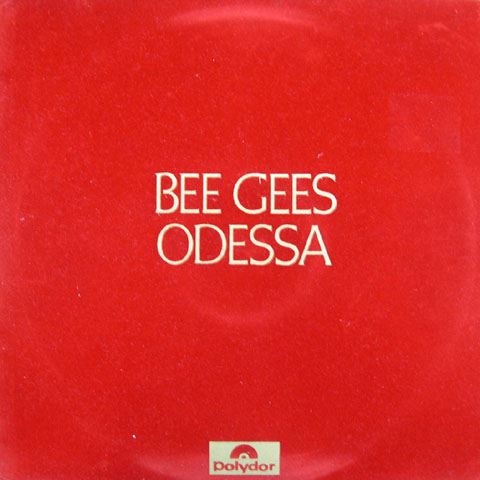
The Common Cold — “Come Down”: Brace for the Obscure (60s rock)! — October 13, 2022

THE GREATEST SONGS OF THE 1960s THAT NO ONE HAS EVER HEARD

608) The Common Cold — “Come Down”

There is Beatlesque, and then there is Invasion of the Beatles Snatchers-level Beatlesque. Of course, there is “Lies” by the Knickerbockers. That was early-Beatles snarching. Well, here is a Beatles psychedelic phase snatch that is simply glorious. Lucy in the Sky with Diamonds has come down with the common cold in this magical ‘67 A-side that would be almost entirely unknown if not for the fine people at Rhino Records.

Alec Palao tells the tale:

By late 1967, guitarist Bill Rinehart had been in his share of groups. Founding The Leaves in 1965 and moving on to work with ex-Byrd Gene Clark’s The Group, Rinehart spend much of 1966 and early 1967 in Emitt Rhodes’ The Merry-Go-Round. A fight with Merry-Go-Round manager Eddie Shaw landed Rinehart back on the market. Soon after, Sonny Bono took an interest in Bill’s writing and secured him a deal with Ahmet Ertegun and the Atco label. Released under the name The Common Cold, “Come Down” is essentially a Rinehart solo project. “It was very Beatle inspired,” says Rinehart. . . . Sadly, this gem is so obscure that Bill was convinced it was never released.

Where the Action is! Los Angeles Nuggets 1965-1968

The Clarkophile adds:

Bill Rinehart, a pivotal, if largely unheralded figure in L.A.’s Sunset Strip scene during the 1960s . . . . played a key role in the founding of the Leaves . . . . During his tenure with The Leaves, Rinehart struck up a friendship with Gene Clark, who shared his love of sports cars, music and girls. After his departure from that band, Rinehart jumped at the chance to join Gene’s first post-Byrds effort, the Gene Clark Group (also featuring Chip Douglas and Joel Larson). Rinehart contributed guitar and co-wrote two songs (‘Keep on Pushin’ and ‘Elevator Operator’) on Gene’s solo debut album, Gene Clark with the Gosdin Brothers, released in February 1967. Rinehart’s next project saw him joining forces with his former bandmate from the GC Group, Joel Larson, along with Gary Kato, in the Emitt Rhodes-led Merry-Go-Round. Rinehart was eventually fired from the group after punching the band’s notorious manager, Eddie Shaw. Sonny Bono, with whom Rinehart had struck up a friendship during this time, thought enough of his talent to have him produce/arrange Sonny & Cher’s reflective chamber-pop waltz,  ‘A Beautiful Story,’ (which, oddly enough, bears an uncanny resemblance to Gene’s ’67 demo of ‘Down On the Pier’, from Gene Clark Sings for You). In 1968 Bill recorded a 45 under the moniker The Common Cold, Come Down/Dream World . . . . Further production work followed (Fields self-titled album; The Aquarians Jungle Grass, both from 1969), plus an unreleased solo album from 1973. Bill’s songwriting was strong enough to earn him composing credits in films, including 1972’s The Hot Rock (starring Robert Redford) and 1984’s Falling in Love, with Meryl Streep and Robert De Niro.

http://clarkophile.blogspot.com/2018/11/in-memoriam-bill-rinehart-leavesthe.html

I have added a Facebook page for Brace for the Obscure 60s Rock! If you like what you read and hear and feel so inclined, please visit and “like” my Facebook page by clicking here.

Pay to Play! The Off the Charts Spotify Playlist! + Brace for the Obscure 60s Rock Merchandise

Please consider helping to support my website/blog by contributing $6 a month for access to the Off the Charts Spotify Playlist. Using a term familiar to denizens of Capitol Hill, you pay to play! (“relating to or denoting an unethical or illicit arrangement in which payment is made by those who want certain privileges or advantages in such arenas as business, politics, sports, and entertainment” — dictionary.com).

The playlist includes all the “greatest songs of the 1960’s that no one has ever heard” that are available on Spotify. The playlist will expand each time I feature an available song.

All new subscribers will receive a Brace for the Obscure 60s Rock magnet. New subscribers who sign up for a year will also receive a Brace for the Obscure 60s Rock t-shirt or baseball cap. See pictures on the Pay to Play page.

When subscribing, please send me an e-mail (GMFtma1@gmail.com) or a comment on this site letting me know an e-mail address/phone number/Facebook address, etc. to which I can send instructions on accessing the playlist and a physical address to which I can sent a magnet/t-shirt/baseball cap. If choosing a t-shirt, please let me know the gender and size you prefer.

Just click on the first blue block for a month to month subscription or the second blue block for a yearly subscription.
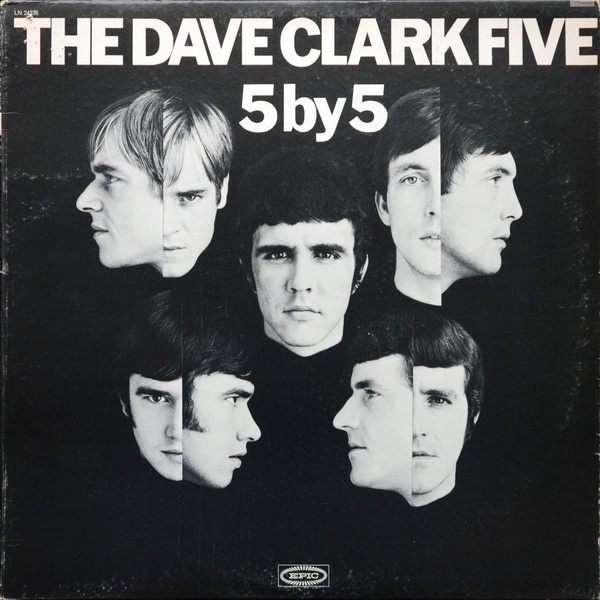
Ten Years After — “Working on the Road”: Brace for the Obscure (60s rock)! — October 12, 2022

THE GREATEST SONGS OF THE 1960s THAT NO ONE HAS EVER HEARD

607) Ten Years After — “Working on the Road”

This ‘70 A-side and album track is one of TYA’s greatest songs. Dave Swanson calls it their 8th best:

A killer rock and roller . . , [it is ] another take on the standard travelers tale, filled with a vibrant urgency that is irresistible. Highlighted by chorus that is both so simple and so perfect, “Working on the Road” is topped by a blazing solo as Ten Years After cook along with such force that they risk derailing before finally regaining composure by song’s end.

https://ultimateclassicrock.com/ten-years-after-songs/

Guitars Exchange — or is it Guitar Sexchange? — calls it “a chugging bluesy rock number that features not only brilliant work by the lead guitar and organ, but Ric Lee’s drum work propels the song to climactic heights.” (https://guitarsexchange.com/en/unplugged/382/ten-years-after-cricklewood-green-1970/)

“Working” comes from the album Cricklewood Green, which Jim Newsom says is the “best example of Ten Years After’s recorded sound. . . . [T]he band and engineer Andy Johns mix studio tricks and sound effects, blues-based song structures, a driving rhythm section, and Alvin Lee’s signature lightning-fast guitar licks into a unified album that flows nicely from start to finish.” (https://www.allmusic.com/album/cricklewood-green-mw0000650879)

TYA needs no introduction, but let me quote Mark Deming:

A storming blues and boogie band from the U.K., Ten Years After rocketed from modest success to worldwide fame in the wake of their performance at the Woodstock Rock Festival in 1969, where their nine-minute rendition of “I’m Going Home” showed off the lightning-fast guitar work and howling vocals of Alvin Lee, the unrelenting stomp of bassist Leo Lyons and drummer Ric Lee, and the soulful support of keyboard man Chick Churchill. While the group was also capable of moody pop and acoustic-based material (as heard on 1971’s A Space in Time, whose single “I’d Like to Change the World” was their greatest American hit), it was the group’s raw blues-based music that remained their trademark . . . .

[The band’s name] refer[s] to the fact they launched . . . in 1966, ten years after Elvis Presley’s career breakthrough opened the doors for rock & roll.

[They] gigg[ed] steadily, including holding down a residency at London’s Marquee Club, and in 1967, after an appearance at the Windsor Jazz Festival earned praise in the music press, the quartet signed a record deal with Deram . . . . It would cement their reputation for decades to come when their rendition of “I’m Going Home” appeared in the 1970 documentary about the [Woodstock] festival . . . .

https://www.allmusic.com/artist/ten-years-after-mn0000020050/biography

You owe it to yourself to read Hugh Fielder’s hilarious and heartbreaking article on, and series of interviews with the members of, TYA. Here are some excerpts:

Ten Years After had been in the vanguard of the second (heavier) invasion of the US by British groups, touring relentlessly and rapidly reaching top-of-the-bill status. “We had this thing – and looking back I’m a bit ashamed of it now – that we had to sting any band that went on after us,” Alvin recalls. “We used to go out of our way to blow them off and make them look bad. It wasn’t so much playing well as going down well; we’d learnt that from our years on the club circuit. And there were a lot of bands in America who wouldn’t go on after us. At Woodstock, Country Joe whipped his equipment on before us because he’d played after us at the Fillmore East and died a death.” . . .

Leo[] . . . reveals the secret of TYA’s vigorous live shows: “Ric and I egged each other on when we flagged. I’d yell: ‘Hit ’em, you bastard!’ And he’d shout back: ‘F*ck off.’” Leo would also spur Ric on by spitting at him – anticipating the punk movement by a decade – but the drummer never minded “because he always missed”. Riding the crest of this high-energy wave, Alvin would sneer and pout outrageously as he tore through solo after solo. Even on the slower songs his bursts of notes seemed faster than mere human fingers could manage. . . .

But behind the bravado . . . was another, more insecure Alvin who couldn’t handle the superstar status that the Woodstock movie had bestowed on the group: “We’d been playing for the heads, the growing underground audience,” he recounts. “But then it got bigger, and people had to come to ice hockey arenas and stadiums to see the band. And we lost any contact with the audience. . . . I often wonder what the rest of our career would have been like if the Woodstock movie had used another song.” . . .

In June 1968 Ten Years After started a seven-week US tour at the Fillmore West: “That first tour was great,” Alvin recalls. “We had such a good time out there. We lost around $35,000, but we got asked back so we knew we were on the way. The strange thing was that we had gone to what I considered to be the home of the blues but they’d never heard of most of them. I couldn’t believe it – ‘Big Bill who?’ We were recycling American music and they were calling it the English sound. . . .

Led Zeppelin also turned up to check out the competition. In Richard Cole’s notorious Stairway To Heaven . . . the former Zeppelin tour manager relates how Jimmy Page was awestruck by Alvin’s playing. Much to the annoyance of an inebriated John Bonham who suddenly lurched forward and threw a glass of orange juice over Alvin’s guitar, slowing up his fingerwork as the strings and fretboard got stickier.

https://www.loudersound.com/features/the-story-of-ten-years-after-from-woodstock-to-the-world

I have added a Facebook page for Brace for the Obscure 60s Rock! If you like what you read and hear and feel so inclined, please visit and “like” my Facebook page by clicking here.

Live ’70:

Pay to Play! The Off the Charts Spotify Playlist! + Brace for the Obscure 60s Rock Merchandise

Please consider helping to support my website/blog by contributing $6 a month for access to the Off the Charts Spotify Playlist. Using a term familiar to denizens of Capitol Hill, you pay to play! (“relating to or denoting an unethical or illicit arrangement in which payment is made by those who want certain privileges or advantages in such arenas as business, politics, sports, and entertainment” — dictionary.com).

The playlist includes all the “greatest songs of the 1960’s that no one has ever heard” that are available on Spotify. The playlist will expand each time I feature an available song.

All new subscribers will receive a Brace for the Obscure 60s Rock magnet. New subscribers who sign up for a year will also receive a Brace for the Obscure 60s Rock t-shirt or baseball cap. See pictures on the Pay to Play page.

When subscribing, please send me an e-mail (GMFtma1@gmail.com) or a comment on this site letting me know an e-mail address/phone number/Facebook address, etc. to which I can send instructions on accessing the playlist and a physical address to which I can sent a magnet/t-shirt/baseball cap. If choosing a t-shirt, please let me know the gender and size you prefer.

Just click on the first blue block for a month to month subscription or the second blue block for a yearly subscription.
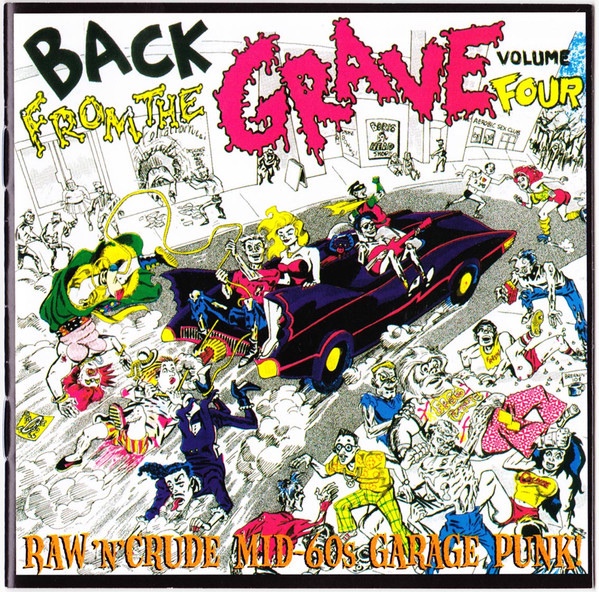
Kinks Kopykats (Bet You Didn’t Know This Was Written By Ray Davies) Special Edition #1 — “This Strange Effect”: Brace for the Obscure (60s rock)! — October 11, 2022

THE GREATEST SONGS OF THE 1960s THAT NO ONE HAS EVER HEARD

606) The Kinks — “This Strange Effect”

Ray Davies pops up wherever you look. This magical David Lynch-y song has had a strange affect/strange effect (I never know which is right!) on pop culture over the years. As Kurt Wolff tells us, “[f]or a song that was written by Ray Davies over 50 years ago, but never officially recorded by the Kinks, ‘This Strange Effect’ has had a wild ride.” (https://coloradosound.org/this-strange-effect-nine-perfect-strangers-theme-song-story-kinks/) Dave Berry (see #554) had a #37 hit with it in the UK. Richie Unterberger notes that it “was [also] a huge European hit”. (https://www.allmusic.com/artist/dave-berry-mn0000959279/biography) and that “[h]aunting ballads . . . [such as ‘Effect’] were [Berry’s] greatest strength” (https://www.allmusic.com/album/this-strange-effect-the-decca-sessions-1963-1966-mw0001362859)

Kurt takes us along for the ride:

If you’ve watched the Hulu series Nine Perfect Strangers, starring Nicole Kidman and Melissa McCarthy, you’ve probably been entranced by the theme song that begins each episode. And maybe you’ve even thought, ‘I’ve heard this before.’ There’s a good reason the song may sound familiar, because it’s been around for decades. The version of “This Strange Effect” in Nine Perfect Strangers is by L.A. band Unloved, with guest vocals by Raven Violet. Dreamy, haunting, and gently psychedelic, it was previously used in an episode the series Killing Eve (Unloved provided numerous songs for that series), but its placement as the opening theme song for A-list star vehicle Nine Perfect Strangers gives it much higher visibility. The song itself was written in 1965 by Ray Davies of the Kinks, though the Kinks never officially released it. . . . “This Strange Effect” was instead first recorded and released by Dave Berry . . . . The song was a modest hit in the U.K. and Europe in 1965, but it didn’t break into the American charts. It’s interesting that the Unloved version of the song isn’t drastically different from the original – especially the Kinks version, which has a little more meat on its bones. Even though the Kinks never officially released it, the song didn’t fade into obscurity. In 1998, Belgian electronic/trip-hop group Hooverphonic introduced the song to a whole new generation, bathing it with an ultra-lush production. And love for the song didn’t stop there. Artists who recorded also the song over the years include Squeeze, Thievery Corporation, the Undertones, and Steve Wynn. Even Bill Wyman of The Rolling Stones included the song on his 1992 solo album Stuff. And then there’s the Shacks, who recorded a version of “This Strange Effect” that was used an Apple iPhone commercial. . . .

https://coloradosound.org/this-strange-effect-nine-perfect-strangers-theme-song-story-kinks/

I have added a Facebook page for Brace for the Obscure 60s Rock! If you like what you read and hear and feel so inclined, please visit and “like” my Facebook page by clicking here.

Here are the Kinks on BBC’s Top of the Pops:

Here’s Dave Berry:

Unloved:

Hooverphonics:

The Shacks:

Pay to Play! The Off the Charts Spotify Playlist! + Brace for the Obscure 60s Rock Merchandise

Please consider helping to support my website/blog by contributing $6 a month for access to the Off the Charts Spotify Playlist. Using a term familiar to denizens of Capitol Hill, you pay to play! (“relating to or denoting an unethical or illicit arrangement in which payment is made by those who want certain privileges or advantages in such arenas as business, politics, sports, and entertainment” — dictionary.com).

The playlist includes all the “greatest songs of the 1960’s that no one has ever heard” that are available on Spotify. The playlist will expand each time I feature an available song.

All new subscribers will receive a Brace for the Obscure 60s Rock magnet. New subscribers who sign up for a year will also receive a Brace for the Obscure 60s Rock t-shirt or baseball cap. See pictures on the Pay to Play page.

When subscribing, please send me an e-mail (GMFtma1@gmail.com) or a comment on this site letting me know an e-mail address/phone number/Facebook address, etc. to which I can send instructions on accessing the playlist and a physical address to which I can sent a magnet/t-shirt/baseball cap. If choosing a t-shirt, please let me know the gender and size you prefer.

Just click on the first blue block for a month to month subscription or the second blue block for a yearly subscription.

The Honeybus — “He Was Columbus”: Brace for the Obscure (60s rock)! — October 10, 2022

THE GREATEST SONGS OF THE 1960s THAT NO ONE HAS EVER HEARD

605) The Honeybus — “He Was Columbus”

I couldn’t find a song I wanted to feature that featured the term “indigenous peoples”, so here is the Honeybus’ “He Was Columbus”. So sue me.

Another glorious track from the glorious Honeybus (see #6, 52, 207, 434, 562). “Columbus” was from the ’70 album Story, which Angelfire says “was eventually released without promotion . . . by which time Honeybus was no more . . . [but] remains a classic of the era, [with] twelve shining gems . . . . [that] went nowhere”. (https://www.angelfire.com/pop2/honeybus/story.htm) Bruce Eder calls it “a beautiful album, with the kind of ornate production and rich melodies that had become increasingly rare with the passing of the psychedelic era” (https://www.allmusic.com/artist/honeybus-mn0000259186/biography).

As to the Honeybus, Jittery White Guy puts it perfectly:

Honeybus had the pop touchstones of the Beatles and the Hollies, while balancing the more sunshiny, twee aspects of the early Bee Gees with some mild touches of post-Sgt. Pepper psychedelia. . . . Their songs were unusually tuneful, some lovely little hooks paired with sweet harmonies, and it’s almost shocking to hear these songs today and realize the band had pretty much zero commercial success (at least here in the US). . . . It’s definitely one of the long lost classics of the late 60s.

(https://www.jitterywhiteguymusic.com/2021/02/honeybus-story-1970.html?m=1)

I have added a Facebook page for Brace for the Obscure 60s Rock! If you like what you read and hear and feel so inclined, please visit and “like” my Facebook page by clicking here.

Pay to Play! The Off the Charts Spotify Playlist! + Brace for the Obscure 60s Rock Merchandise

Please consider helping to support my website/blog by contributing $6 a month for access to the Off the Charts Spotify Playlist. Using a term familiar to denizens of Capitol Hill, you pay to play! (“relating to or denoting an unethical or illicit arrangement in which payment is made by those who want certain privileges or advantages in such arenas as business, politics, sports, and entertainment” — dictionary.com).

The playlist includes all the “greatest songs of the 1960’s that no one has ever heard” that are available on Spotify. The playlist will expand each time I feature an available song.

All new subscribers will receive a Brace for the Obscure 60s Rock magnet. New subscribers who sign up for a year will also receive a Brace for the Obscure 60s Rock t-shirt or baseball cap. See pictures on the Pay to Play page.

When subscribing, please send me an e-mail (GMFtma1@gmail.com) or a comment on this site letting me know an e-mail address/phone number/Facebook address, etc. to which I can send instructions on accessing the playlist and a physical address to which I can sent a magnet/t-shirt/baseball cap. If choosing a t-shirt, please let me know the gender and size you prefer.

Just click on the first blue block for a month to month subscription or the second blue block for a yearly subscription.
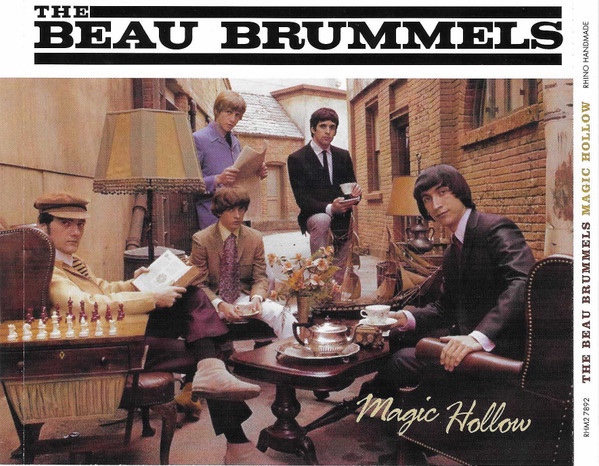
The Holy Ghost Reception Committee #9 — “What Do You Ask of Me”: Brace for the Obscure (60s rock)! — October 9, 2022

THE GREATEST SONGS OF THE 1960s THAT NO ONE HAS EVER HEARD

604) The Holy Ghost Reception Committee #9 — “What Do You Ask of Me”

‘69 Christian psych by kids from NYC’s Regis High School, written to be performed during Mass — and it ROCKS. It’s a miracle!

Jason Ankeny gives some history:

Christian psychedelic quintet the Holy Ghost Receptive Committee #9 was the brainchild of Anthony Myers, a teacher at New York City’s Regis High School — assigned circa 1967 to work with students to write and perform contemporary minded songs that could be played at Mass. He assembled guitarists Dennis Blair, Rich Esposito, Bob Kearney and Mark Puleo, along with bassist Larry Johnson. The project proved so successful that Myers landed the group a recording contract with ecumenical publisher Paulist Press, and in 1968 the Holy Ghost Receptive Committee #9 (so named by a fellow student) issued its first LP, Songs for Liturgical Worship. After a 1969 follow-up, The Torchbearers [from which today’s song is taken], the group dissolved; Blair later enjoyed a career as a stand-up comic, opening for . . . George Carlin for over a decade.

https://www.allmusic.com/artist/holy-ghost-receptive-committee-9-mn0001366185

And Psychedelic RocknRoll says:

Their intentions was to find a way to alleviate the monotony of weekly mass by writing and singing their own songs.
They started writing and playing their own music at daily Catholic masses.
Somehow convincing Jesuit Anthony Myers and school administrators to support their Rock Star visions, they ended up with a recording contract with the Catholic “Paulist Press”.

https://psychedelic-rocknroll.blogspot.com/2009/03/holy-ghost-reception-committee-9.html?m=1

The official story is slightly different. UnderappreciatedRock tells us:

The music came about when one student at the Catholic Regis High School . . . wrote a song that he wanted to sing at their weekly Mass meetings in place of the boring traditional hymns. Others soon followed and (as the CD liner notes proclaim): “The result was a revival, a whole new spirit with music, a kind of song prayer. The words were loud and clear. The beat made sense.” . . . The students were encouraged in this work by one of the teachers, Anthony Meyers (who is a Jesuit). He assembled a group of musicians from the school to be the Holy Ghost Reception Committee #9 . . . . The liner notes describe their sound as “unique, Christian yet with a Beatle-esque psychedelic sound.” . . . The Holy Ghost Reception Committee #9 did so well that they were signed by the Paulista Press to produce an album in 1968. primarily a publisher of religious books and was clueless as to what to do with this music; they gave the album a description rather than a name,Songs for Liturgical Worship. The album is primarily songs of praise, with some retelling Bible stories. The music though is straight psych. . . . Two years later, a second, tougher album, The Torchbearers, followed . . . .

https://underappreciatedrock.org/holy-ghost-reception-committee-9

And the man Tony Meyer himself tells us:

Two years ago, I decided that we wouldn’t have songs at Mass unless the kids wrote them themselves. I forced a few out of them by assignments, then it got to be the thing — so-and-so’s song for Mass this week. A few good writers emerged, and I relied more heavily on these. I hunted up a few good guitar players and got something going there. By the end of last year, we had forty songs. We put on a concert at Regis chapel to lick the best ten. I taped these. We got a name for the group — a student made it up – -“The . Paulist Press heard the songs we taped and decided to go into the record business. Elmer Jared Gordon got the kids ready for the studio and was in charge of production. He was great. Many of the good things on the record are due ot him. By relentlessly demanding perfections, he got peak performances from the kids.

Original liner notes to The Torchbearers.

I have added a Facebook page for Brace for the Obscure 60s Rock! If you like what you read and hear and feel so inclined, please visit and “like” my Facebook page by clicking here.

Pay to Play! The Off the Charts Spotify Playlist! + Brace for the Obscure 60s Rock Merchandise

Please consider helping to support my website/blog by contributing $6 a month for access to the Off the Charts Spotify Playlist. Using a term familiar to denizens of Capitol Hill, you pay to play! (“relating to or denoting an unethical or illicit arrangement in which payment is made by those who want certain privileges or advantages in such arenas as business, politics, sports, and entertainment” — dictionary.com).

The playlist includes all the “greatest songs of the 1960’s that no one has ever heard” that are available on Spotify. The playlist will expand each time I feature an available song.

All new subscribers will receive a Brace for the Obscure 60s Rock magnet. New subscribers who sign up for a year will also receive a Brace for the Obscure 60s Rock t-shirt or baseball cap. See pictures on the Pay to Play page.

When subscribing, please send me an e-mail (GMFtma1@gmail.com) or a comment on this site letting me know an e-mail address/phone number/Facebook address, etc. to which I can send instructions on accessing the playlist and a physical address to which I can sent a magnet/t-shirt/baseball cap. If choosing a t-shirt, please let me know the gender and size you prefer.

Just click on the first blue block for a month to month subscription or the second blue block for a yearly subscription.
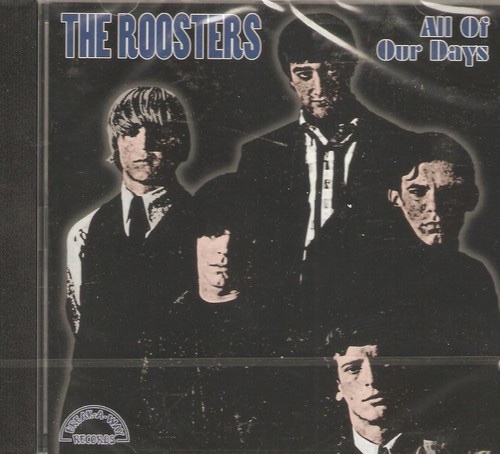
Thee Midniters — “Jump, Jive and Harmonize”: Brace for the Obscure (60s rock)! — October 8, 2022

THE GREATEST SONGS OF THE 1960s THAT NO ONE HAS EVER HEARD

603) Thee Midniters — “Jump, Jive and Harmonize”

This ‘67 B-side of “raucous bluesy garage rock” (Richie Unterberger, https://www.allmusic.com/album/greatest-mw0000592872) proves that white men can’t jump, jive and harmonize. It also drives some reviewers into paroxysms of ecstasy. Which is fine by me. We need more of that these days!

Beverly Paterson is rapturous:

[T]he sensational sounds of “Jump, Jive and Harmonize” . . . without a shadow of a doubt . . . reels in as one of the best songs ever put to plastic. Duplicating the kind of ecstasy and excitement proposed in church revival numbers, the smoking track screams and creams to an explosive cocktail of stabbing fuzz guitars, ear-piercing harmonica trills, and hip-shaking rhythms. Hungry and soulful vocals, complemented by a shouting chorus provide the song with an added groove factor. . . is hot enough to melt the vinyl it was pressed on. . . . A bona fide party raver[, . . it] flawlessly summarizes the band’s affection and flair for writing and performing gritty blues-based garage rock.

https://somethingelsereviews.com/2015/05/18/thee-midniters-jump-jive-and-harmonize/?amp=1

Jonathan Toubin is stoked:

Stone cold East L.A. classic! The[ir] finest recorded moment . . . . What the heck, let’s just say this is one of the most exciting musical performances committed to tape in any genre… anywhere… ever! A heart-stopping guitar riff intro, relentless drumming, blasting harmonicas, heart-stopping dynamics, and the kind of tension and release teetering on the edge of collapse that makes all the best art live way past its time! Like most of the best stuff, now and then, they only sold a few copies! . . . Could it be that records like this are too out of this world and there aren’t enough cool people to buy ’em?

https://larecord.com/archive/2015/05/23/jonathan-toubin-soul-clap-los-angeles-45s-the-regent

Who were these guys. Richie Unterberger:

Indisputably the greatest Latino rock band of the ’60s, Thee Midniters took their inspiration from both the British Invasion sound of the Rolling Stones and the more traditional R&B that they were weaned on in their native Los Angeles. Hugely popular in East Los Angeles, the group, featuring both guitars and horns, had a local hit (and a small national one) with their storming version of “Land of a Thousand Dances” in 1965. Much of their repertoire featured driving, slightly punkish rock/R&B, yet lead singer Willie Garcia also had a heartbreaking delivery on slow and steamy ballads. . . . . they were equally talented at whipping up a storm with up-tempo numbers and offering smoldering romantic soul tunes.

https://www.allmusic.com/artist/thee-midniters-mn0000490304

Beverly Paterson adds:

[T]hese cool cats came from East Los Angeles and reigned righteously as one of the region’s finest bands during the 1960s. Astonishingly diversified, Thee Midniters played every stitch of music conceivable, leading them to appeal to both adults and kids. Be it crooner ballads or steamy rock and roll, the band executed its material with style and substance. . . .

And Jeff Tamarkin says:

Thee Midniters are generally acknowledged to be the most fearsomely rockin’ Chicano band to come out of the fabled East L.A. scene of the mid-’60s. Although their chart success was limited to their version of “Land of a Thousand Dances” (an extended live take of which is among the tracks included here) and they were beaten to the punch on that one by fellow scenesters Cannibal & the Headhunters — the latter’s version charted a month earlier and rose higher — the rest of Thee Midniters’ output leaves no doubt that they were the more ferocious band.

https://www.allmusic.com/album/in-thee-midnite-hour%21%21%21%21-mw0000558370

Midniter bassist Jimmy Espinoza says “[t]he band is like a melting pot” and then elaborates:

(Vocalist) Willie Garcia came in with the soul ballad, the pop kind of appeal. (Trumpeter) Romeo Prado and (saxophonist) Larry Rendon loved the Jazz Crusaders, along with myself. They liked Frank Sinatra, they liked Johnny Mathis, so we had the legit stuff covered. (Rhythm guitarist) Ray Marquez and myself shared a passion for the Beatles and the Rolling Stones, hence the British Invasion influence. Romeo Prado and myself liked Henry Mancini, Stan Kenton, Maynard Ferguson, hence the lush, classier approach when we approached things like ‘That’s All’ or ‘Strangers in The Night.’ George Dominguez, the lead guitar player, was a self-taught blues guy. He liked Bobby Blue Band and B.B. King. He also came from a traditional background, with the Mexican boleros and the Spanish influence.”

http://albumlinernotes.com/Thee_Midniters_Greatest.html

I have added a Facebook page for Brace for the Obscure 60s Rock! If you like what you read and hear and feel so inclined, please visit and “like” my Facebook page by clicking here.

Pay to Play! The Off the Charts Spotify Playlist! + Brace for the Obscure 60s Rock Merchandise

Please consider helping to support my website/blog by contributing $6 a month for access to the Off the Charts Spotify Playlist. Using a term familiar to denizens of Capitol Hill, you pay to play! (“relating to or denoting an unethical or illicit arrangement in which payment is made by those who want certain privileges or advantages in such arenas as business, politics, sports, and entertainment” — dictionary.com).

The playlist includes all the “greatest songs of the 1960’s that no one has ever heard” that are available on Spotify. The playlist will expand each time I feature an available song.

All new subscribers will receive a Brace for the Obscure 60s Rock magnet. New subscribers who sign up for a year will also receive a Brace for the Obscure 60s Rock t-shirt or baseball cap. See pictures on the Pay to Play page.

When subscribing, please send me an e-mail (GMFtma1@gmail.com) or a comment on this site letting me know an e-mail address/phone number/Facebook address, etc. to which I can send instructions on accessing the playlist and a physical address to which I can sent a magnet/t-shirt/baseball cap. If choosing a t-shirt, please let me know the gender and size you prefer.

Just click on the first blue block for a month to month subscription or the second blue block for a yearly subscription.
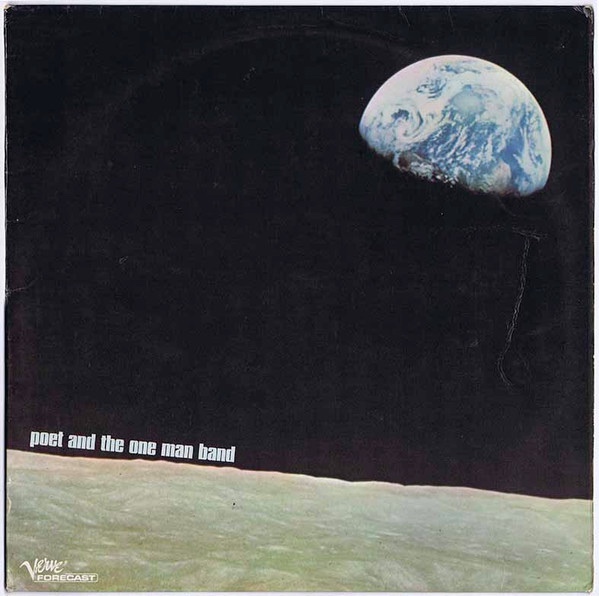
The Status Cymbal — “Lovin’ Day”: Brace for the Obscure (60s rock)! — October 7, 2022

THE GREATEST SONGS OF THE 1960s THAT NO ONE HAS EVER HEARD

602) The Status Cymbal — “Lovin’ Day”

Sunshiney ‘67 A-side and album track puts a smile on my face. I bet it’ll put one on yours.

Simon Omnes tells us the story:

A southern folk music group consisting of Florence [Warner], her brother Byron Warner, and Tom Porter. Originally called Warner, Porter and Warner [the name under which the single was released], the trio had to change their name to Status Cymbal due to . . . their record label, RCA Victor. . . . [A]s Byron Warner explains . . . the company wanted the group to present itself as a Bubble Gum band, a type of upbeat music production that would appeal to young listeners. So the songs in this album are designed to bring a smile to everyone. And for that Tom Porter — who composed the majority of the tunes while Donna McBride wrote Lovin’ Day — did a great job. . . . working under the direction of Felton Jarvis, who was Elvis Presley’s producer. . . . [T]he group offers stunning singing; a trio of harmonies, guitar, flute, and piano melodies that conquers your soul. . . . Great tunes to put [on] a smile . . . .

https://omnesoasis.wordpress.com/2019/08/26/in-the-morning-the-status-cymbal/

Byron Warner comments on YouTube that “This was our first single. Always really liked the way the harmonies worked. Still fun to listen to.” (https://www.youtube.com/watch?v=sM2TklKeeq4)

As does Donna Overall: “I wrote the lyrics to this song back in the 60’s when I shared an apartment with Florence Warner and had a major crush on Tom Porter. I am the “McBride” listed in the credits for the album.” (https://www.youtube.com/watch?v=sM2TklKeeq4)

As does Momma and Pappa Dupree: “Tom Porter[‘s]. . . . son Jody has been very successful as the guitarist for Fountains of Wayne. (https://www.youtube.com/watch?v=sM2TklKeeq4)

I have added a Facebook page for Brace for the Obscure 60s Rock! If you like what you read and hear and feel so inclined, please visit and “like” my Facebook page by clicking here.

Pay to Play! The Off the Charts Spotify Playlist! + Brace for the Obscure 60s Rock Merchandise

Please consider helping to support my website/blog by contributing $6 a month for access to the Off the Charts Spotify Playlist. Using a term familiar to denizens of Capitol Hill, you pay to play! (“relating to or denoting an unethical or illicit arrangement in which payment is made by those who want certain privileges or advantages in such arenas as business, politics, sports, and entertainment” — dictionary.com).

The playlist includes all the “greatest songs of the 1960’s that no one has ever heard” that are available on Spotify. The playlist will expand each time I feature an available song.

All new subscribers will receive a Brace for the Obscure 60s Rock magnet. New subscribers who sign up for a year will also receive a Brace for the Obscure 60s Rock t-shirt or baseball cap. See pictures on the Pay to Play page.

When subscribing, please send me an e-mail (GMFtma1@gmail.com) or a comment on this site letting me know an e-mail address/phone number/Facebook address, etc. to which I can send instructions on accessing the playlist and a physical address to which I can sent a magnet/t-shirt/baseball cap. If choosing a t-shirt, please let me know the gender and size you prefer.

Just click on the first blue block for a month to month subscription or the second blue block for a yearly subscription.

Gary Walker & the Rain — “Magazine Woman”: Brace for the Obscure (60s rock)! — October 6, 2022

THE GREATEST SONGS OF THE 1960s THAT NO ONE HAS EVER HEARD

601) Gary Walker & the Rain — “Magazine Woman”

Joe Bonomo calls “Magazine Woman” “kaleidoscopic” with “an insanely catchy hook”, “nothing short of a lost classic” (http://www.nosuchthingaswas.com/2021/03/maybe-its-conspiracy.html), while Stephen Cook says it “conjures up . . . the Beatles’ paisley pop” (https://www.allmusic.com/album/love-peace-poetry-british-psychedelic-music-mw0000017209), Len loves its “choppy rhythm, stun-gun lead guitar, delightful rough-edged harmonies and Taxman rip-off bassline” (http://therisingstorm.net/gary-walker-the-rain-album-no-1/) and Anorak Thing sees “a lysergic presence in it’s repetitive ‘Taxman’ bass loop and some electronically distorted guitars that are mind bending.” (https://anorakthing.blogspot.com/2009/12/big-in-japangary-walker-rain.html)

Joe Bonomo goes deep, as only an English professor would:

Written and sung by guitarist Paul Crane, this brilliant slice of moody, mid-paced psych pop is somehow both dreamy and propulsive, with a hypnotic bass line . . . an insanely catchy hook in the chorus, and an overall vibe that’s introspective yet busting with the colors of a lived life. What strikes me is how of-the-era the song is, not in a dated way . . . but in the way it reflects the immediacy of its times while also offering something eternal in its melody and arrangement. . . . [I]ts obsessions with interior states and fashion advertising feel fresh and relevant. It’s a shame that the song didn’t fall into the hands of the Mad Men showrunners, who could’ve played it behind a Betty Draper photo shoot, exposing this magical song to millions. The singer’s problems are familiar enough: he’s attracted to a girl in a magazine, but his desire’s so heady and all-consuming that fantasy and reality blur. His dilemma’s scored by droning, effects-driven guitar lines that swirl about the singer’s delicious complaints and threaten to pop the bubble of the daydream. . . . It’s nice when someone needs you, he sings, but when that person is only an image, and a created one at that, when you realize that the only thing she needs of you is your money to purchase her, things get strange—the trippy melody knows and expresses that—but, oddly, no less pleasurable. The song’s a graphic illustration of the disconnect between wanting and having, the unobtainable so real she feels as if she’s yours . . . .  Something remarkable happens in the final minute, as Walker’s drums fade from the mix, and even Lawson’s bass line can’t prevent the song from ascending into the sky, drifting toward a vanishing point of desire and loss.

http://www.nosuchthingaswas.com/2021/03/maybe-its-conspiracy.html

Man, did I have it wrong. I just thought it was a psychedelic “Pictures of Lily”! Master of my domain and all that . . . .

Ah, Gary Walker & the Rain. As Len notes:

Gary Leeds was only ever a third wheel to the Walker Brothers, a non-singing drummer thumping the tubs on live dates and TV appearances . . . . However, such was the impact of the Walkers in Europe and Japan that, when the trio folded, Gary was easily convinced by conniving manager Maurice King to put together a new band in England . . . . The band’s recording career kicked off with a passable cover of Spooky that . . . sold well [only] in Japan, where the Walkers had belatedly achieved godlike status. On the basis of this UK Polydor permitted them to record an album, but then inexplicably refused to release it. Only in Japan, where the band’s local label, Philips, was crying out for further product, did it hit the shelves . . . .

http://therisingstorm.net/gary-walker-the-rain-album-no-1/

For more on the band, see #483.

I have added a Facebook page for Brace for the Obscure 60s Rock! If you like what you read and hear and feel so inclined, please visit and “like” my Facebook page by clicking here.

Pay to Play! The Off the Charts Spotify Playlist! + Brace for the Obscure 60s Rock Merchandise

Please consider helping to support my website/blog by contributing $6 a month for access to the Off the Charts Spotify Playlist. Using a term familiar to denizens of Capitol Hill, you pay to play! (“relating to or denoting an unethical or illicit arrangement in which payment is made by those who want certain privileges or advantages in such arenas as business, politics, sports, and entertainment” — dictionary.com).

The playlist includes all the “greatest songs of the 1960’s that no one has ever heard” that are available on Spotify. The playlist will expand each time I feature an available song.

All new subscribers will receive a Brace for the Obscure 60s Rock magnet. New subscribers who sign up for a year will also receive a Brace for the Obscure 60s Rock t-shirt or baseball cap. See pictures on the Pay to Play page.

When subscribing, please send me an e-mail (GMFtma1@gmail.com) or a comment on this site letting me know an e-mail address/phone number/Facebook address, etc. to which I can send instructions on accessing the playlist and a physical address to which I can sent a magnet/t-shirt/baseball cap. If choosing a t-shirt, please let me know the gender and size you prefer.

Just click on the first blue block for a month to month subscription or the second blue block for a yearly subscription.

Jacques Da Sylva — “Fou”/”Crazy”: Brace for the Obscure (60s rock)! — October 5, 2022

THE GREATEST SONGS OF THE 1960s THAT NO ONE HAS EVER HEARD

600) Jacques Da Sylva — “Fou”/”Crazy”

What should we call “Fou” — freakbeat, mod, pop psych, who knows? But I do know that this crazy-good ‘67 EP track from France is très chic. Now can someone tell me something about Jacques Da Sylva?!

Mark Deming tells us that:

Conventional wisdom has it that the French are not all that great at rock & roll — pop music, yes indeed, but not rock & roll . . . . But apparently there was a glorious window of time in the mid-’60s when France had a pretty lively rock scene . . . . [including] less readily classifiable craziness like . . . “Fou” . . . . [T]here [may have been] a lot more going on in France during the garage era than most American fans ever knew.

https://www.allmusic.com/album/psychegaelic-french-freakbeat-mw0002603305

I have added a Facebook page for Brace for the Obscure 60s Rock! If you like what you read and hear and feel so inclined, please visit and “like” my Facebook page by clicking here.

Pay to Play! The Off the Charts Spotify Playlist! + Brace for the Obscure 60s Rock Merchandise

Please consider helping to support my website/blog by contributing $6 a month for access to the Off the Charts Spotify Playlist. Using a term familiar to denizens of Capitol Hill, you pay to play! (“relating to or denoting an unethical or illicit arrangement in which payment is made by those who want certain privileges or advantages in such arenas as business, politics, sports, and entertainment” — dictionary.com).

The playlist includes all the “greatest songs of the 1960’s that no one has ever heard” that are available on Spotify. The playlist will expand each time I feature an available song.

All new subscribers will receive a Brace for the Obscure 60s Rock magnet. New subscribers who sign up for a year will also receive a Brace for the Obscure 60s Rock t-shirt or baseball cap. See pictures on the Pay to Play page.

When subscribing, please send me an e-mail (GMFtma1@gmail.com) or a comment on this site letting me know an e-mail address/phone number/Facebook address, etc. to which I can send instructions on accessing the playlist and a physical address to which I can sent a magnet/t-shirt/baseball cap. If choosing a t-shirt, please let me know the gender and size you prefer.

Just click on the first blue block for a month to month subscription or the second blue block for a yearly subscription.