THE GREATEST SONGS OF THE 1960s THAT NO ONE HAS EVER HEARD
938)Lynne Hughes — “It Didn’t Even Bring Me Down”
A barnstorming, horn-infused take on this cool Sir Douglas Quintet Mendocino (see #383) number, from Lynne Hughes’ 70 solo album Freeway Gypsy.
Richie Unterberger tells us:
Tongue and Groove were something of an offshoot of the legendary but little-recorded, early San Francisco hippie group the Charlatans.
Lynne Hughes was the lead singer of . . . Tongue and Groove, mining the field between folk, blues, and rock, in somewhat the same manner as fellow Bay Area female singers Tracy Nelson and Janis Joplin . . . . Hughes had a more old-timey ragtime tilt to her vocals than any of those other singers did, and was the most prominent presence on Tongue and Groove’s fair, self-titled late-’60s album. Prior to that, she had been something of an auxiliary member of the Charlatans, doing some singing and even recording with them without being an official group member. Hughes had entered music as a folk musician in Seattle in the early ’60s before going to the Bay Area. . . . She would play guitar and sing lead on a few songs with the[ Charlatans] . . . . [and] played and sang on some demos they did for Kama Sutra in early 1966 . . . .
After growing up in the Pacific Northwest and being part of Seattle’s folk scene in the early 1960s, Hughes relocated to the Bay Area and became friends with Chandler Laughlin and the characters who would eventually establish the legendary Red Dog Saloon in Virginia City, Nevada. This, in turn, led to her becoming an occasional member of the Charlatans with whom she often performed . . . . She acknowledged that the time spent with them broadened her knowledge of blues artists like Robert Johnson, which considerably expanded her repertory. Formed toward the end of the 1960s, Tongue and Groove was an interesting blues-rock outfit that was in some respects an offshoot of the Charlatans in that it included Hughes and that band’s original piano player (and one the first Haight-Ashbury scenesters) Mike Ferguson, who also did the album’s cover artwork. . . . [T]he tracks [on their LP] with Hughes at the helm are absolutely superb . . . . Hughes went on to do an album under her own name, Freeway Gypsy, as well as becoming a vocalist for Stoneground . . . .
Pay to Play! The Off the Charts Spotify Playlist! + Brace for the Obscure 60s Rock Merchandise
Please consider helping to support my website/blog by contributing $6 a month for access to the Off the Charts Spotify Playlist. Using a term familiar to denizens of Capitol Hill, you pay to play! (“relating to or denoting an unethical or illicit arrangement in which payment is made by those who want certain privileges or advantages in such arenas as business, politics, sports, and entertainment” — dictionary.com).
The playlist includes all the “greatest songs of the 1960’s that no one has ever heard” that are available on Spotify. The playlist will expand each time I feature an available song.
All new subscribers will receive a Brace for the Obscure 60s Rock magnet. New subscribers who sign up for a year will also receive a Brace for the Obscure 60s Rock t-shirt or baseball cap. See pictures on the Pay to Play page.
When subscribing, please send me an e-mail (GMFtma1@gmail.com) or a comment on this site letting me know an e-mail address/phone number/Facebook address, etc. to which I can send instructions on accessing the playlist and a physical address to which I can sent a magnet/t-shirt/baseball cap. If choosing a t-shirt, please let me know the gender and size you prefer.
Just click on the first blue block for a month to month subscription or the second blue block for a yearly subscription.
THE GREATEST SONGS OF THE 1960s THAT NO ONE HAS EVER HEARD
937)July — “The Way”
Sitar-drenched psych — ’68 B-side and track from “one of the most sought-after British psychedelic sixties albums” (Vernon Joynson, The Tapestry of Delights Revisited). “I stumbled upon this kinda by accident, and HOLY SH*T. Mind. Blown”. (amandabartelmey3458, https://www.youtube.com/watch?v=86dDqwgJDmk) “The Way” totally reminds me of Manfred Mann Chapter 3 — which didn’t happen ’til a year later! The Jittery White Guy does call the song “over-the-top faux psyche kitsch”! (https://www.jitterywhiteguymusic.com/2019/10/july-july-1968.html) Is that a bad thing?
Steven McDonald calls July’s album “[v]ery good psychedelia, for the most part, but a bit dated in places and heavily influenced by much of the music coming from the direction of San Francisco at that time” (https://www.allmusic.com/album/july-mw0000370474) Tom Newman, the band’s singer (and writer of “The Way”) hated it! He told David Wells that:
“We were spotted by a DJ named Pat Campbell, who pointed us out to the head of Major Minor, Phil Solomon. We secured an album deal, and the whole session was done in one weekend. We used two four-track machines and bounced tracks from one to another, the same way Sgt Pepper was made. I was already making up tape loops by then, fifty foot long, going right round the room, so I got very interested in multi-track facilities. . . . I sang like a complete prick — a quivery, frightened little jerk. It’s totally obvious to me why our LP didn’t impress anyone. Compared to what we were capable of, it’s f*cking terrible.
Record Collector: 100 Greatest Psychedelic Records: High Times and Strange Tales from Rock’s Most Mind-Blowing Era
As to July, Bruce Eder tells us:
July started out in the early ’60s as an Ealing-based skiffle act working under the name of the Playboys, and then metamorphosed into an R&B outfit known as the Thoughts and then the Tomcats . . . . [who] found some success in Spain when they went to play a series of gigs in Madrid in 1966. They returned to England in 1968, the group’s lineup consisting of Tony Duhig on guitar, John Field on flute and keyboards, Tom Newman on vocals, Alan James playing bass, and Chris Jackson on drums, and changed their name to July. The band lasted barely a year, leaving behind one of the most sought-after LPs of the British psychedelic boom . . . . Their sound was a mix of trippy, lugubrious psychedelic meanderings, eerie, trippy vignettes . . . and strange, bright electric-acoustic textured tracks . . . with some dazzling guitar workouts . . . [and] all spiced with some elements of world music, courtesy of Tony Duhig . . . . Their first single, “My Clown” b/w “Dandelion Seeds,” has come to be considered a classic piece of psychedelia . . . . The band separated in 1969, with Duhig moving on to Jade Warrior, [and] Newman becoming a well-respected engineer, with Mike Oldfield’s Tubular Bells to his credit . . . .
Pay to Play! The Off the Charts Spotify Playlist! + Brace for the Obscure 60s Rock Merchandise
Please consider helping to support my website/blog by contributing $6 a month for access to the Off the Charts Spotify Playlist. Using a term familiar to denizens of Capitol Hill, you pay to play! (“relating to or denoting an unethical or illicit arrangement in which payment is made by those who want certain privileges or advantages in such arenas as business, politics, sports, and entertainment” — dictionary.com).
The playlist includes all the “greatest songs of the 1960’s that no one has ever heard” that are available on Spotify. The playlist will expand each time I feature an available song.
All new subscribers will receive a Brace for the Obscure 60s Rock magnet. New subscribers who sign up for a year will also receive a Brace for the Obscure 60s Rock t-shirt or baseball cap. See pictures on the Pay to Play page.
When subscribing, please send me an e-mail (GMFtma1@gmail.com) or a comment on this site letting me know an e-mail address/phone number/Facebook address, etc. to which I can send instructions on accessing the playlist and a physical address to which I can sent a magnet/t-shirt/baseball cap. If choosing a t-shirt, please let me know the gender and size you prefer.
Just click on the first blue block for a month to month subscription or the second blue block for a yearly subscription.
THE GREATEST SONGS OF THE 1960s THAT NO ONE HAS EVER HEARD
936)TheInvaders — “Cryin All Night Long”
If you want to know what is so damn endearing about 60’s garage rock bands, you could do worse than learn about Omaha, Nebraska’s Invaders. They released only one single, financed by the lead singer’s dad — a wonderful “moody ballad[] with a healthy dose of pop . . . . The melody is gorgeous. The lyrics may be simple, but they fit perfectly and go straight to the heart.” (Captain Salty, https://headdiprecords.wixsite.com/talkingteenbeat/invaders)
Leander Gasse interviews Tyler Smith (songwriter, vocalist, guitarist):
Tyler: “We were all riding the wave of the Beatles and the British bands of the 60’s. My home town of Omaha was filled with garage bands, some of which became successful later.” The Invaders played songs by the Byrds, the Doors or the Animals. Also “some pop 40 tunes that we did not always care for but were popular” . . . . Likewise, main influences were Bob Dylan, the Byrds, the Doors, the Animals, the Rolling Stones and the Beatles. Rehearsing was done “alternating between each others house basements. We all still lived with our folks back then. . . . I originally tried to write a song similar to ‘Don’t Let the Sun Catch You Cryin’. I also sent a copy of ‘I Was A Fool’ [the other side of the single] to Jerry and the Pacemakers… They told me that ‘this is very good for a start – Keep on writing – You might be good someday!’ I did.” Tyler’s parents decided since their son couldn’t sell the song to a band, they’d finance The Invaders to do it themselves. Tyler’s dad came along to the recording session for support. . . . According to Tyler, the instrumentals were done all at once, first take. The vocals were doubled and done on different tracks. The band had 500 copies pressed and had a local music store, Musicland, taking it on consignment. . . . “We distributed it personally. It was very difficult for local musicians to get well-known distributors behind independent records. We promoted it wherever we played.” The band usually played gigs at private parties, proms, school dances, and Sandy’s Escape, a local teenage nightclub. . . . “Our record was premature and we regretted it. Two years later when we got much tighter I was also writing better songs. To this day I wish we had waited longer to go into the studio.” The band did write and perform more original material, but it was never recorded. . . . “All together we lasted 4 years. We broke up in late 1969. By then we were playing a much wider scope of music and got a lot of influence by the Byrds and Hendrix.”
“The time with the Invaders was the most carefree and fun period of my life. When we were all young it was so wonderful to have dreams. Nothing was complicated. We played our guitars, shared and swapped LP’s, learned new songs, dreamed of being like the Beatles and didn’t really know any different. America was a good place to live back then. ‘Gloria’ only had three chords and everybody got a shot at it. The experience was golden and life-changing in many ways. I will never forget the Invaders.”
OMG, I almost cried when I read that last quote. And then, for the kicker, read this note that Tyler’s wife — Sandy Smith — added to the the flip-side’s YouTube video:
“Oh, my gosh, this is the strangest thing–this is my husband–Tyler Smith, in Omaha, Nebraska…didn’t even know this was up here…wow!”
Pay to Play! The Off the Charts Spotify Playlist! + Brace for the Obscure 60s Rock Merchandise
Please consider helping to support my website/blog by contributing $6 a month for access to the Off the Charts Spotify Playlist. Using a term familiar to denizens of Capitol Hill, you pay to play! (“relating to or denoting an unethical or illicit arrangement in which payment is made by those who want certain privileges or advantages in such arenas as business, politics, sports, and entertainment” — dictionary.com).
The playlist includes all the “greatest songs of the 1960’s that no one has ever heard” that are available on Spotify. The playlist will expand each time I feature an available song.
All new subscribers will receive a Brace for the Obscure 60s Rock magnet. New subscribers who sign up for a year will also receive a Brace for the Obscure 60s Rock t-shirt or baseball cap. See pictures on the Pay to Play page.
When subscribing, please send me an e-mail (GMFtma1@gmail.com) or a comment on this site letting me know an e-mail address/phone number/Facebook address, etc. to which I can send instructions on accessing the playlist and a physical address to which I can sent a magnet/t-shirt/baseball cap. If choosing a t-shirt, please let me know the gender and size you prefer.
Just click on the first blue block for a month to month subscription or the second blue block for a yearly subscription.
THE GREATEST SONGS OF THE 1960s THAT NO ONE HAS EVER HEARD
935) T. Rex — “Beltane* Walk”
The last song (on the first side) of T. Rex’s last album before Electric Warrior, released in the last month of the 60’s (December 1970), is appropriately this “charming little ditty” (Tim Cooper, https://www.eatsdrinksandleaves.com/t-rex-beltane-walk/) — Marc Bolan’s glam-tastic updating of a Jimmy McCracklin R&B stroll from ’58!
Tim Cooper writes that:
Marc [Bolan], showcasing his recently adopted electric guitar playing alongside percussionist Mickey Finn, sings a charming little ditty about three strangers he encounters on his wanderings; by the roadside, the whirlpool and the Westwind. One is “a man with a starhide” (nope, me neither), another is a girl who is “God’s tool” and the last a boy who is already his friend, who Marc offers to sing with. Of course, Marc being Marc, he invites them to join him for “a little love” and, if they had any sense, I’m sure they did because he was about to become the biggest pop star in the country when Hot Love was released soon afterwards. And of course, Marc being Marc, he “borrowed” the riff from an earlier tune, in this case Jimmy McCracklin’s 1958 tune The Walk:
Even though Bolan achieved mega-stardom in the 70’s, he was a child of the 60’s. He loved Tolkien (Lord of the Rings and The Hobbit for those of you who have missed the last three decades) and C.S. Lewis’ tales of Narnia. Love of those two fantasy lands inspired Bolan to create his own magickal land which he called “Beltane” and references to Beltane in his own music (like the song Beltane Walk) could be about our high holy holiday, or a land cloaked in perpetual sunshine and peppered with maypoles. An entire album dedicated to Marc’s fantasy world was even in the works for a while, but was shelved in favor of more traditional pop pursuits.
Of course, Marc Bolan needs no introduction, but let’s listen to Mark Deming:
Tyrannosaurus Rex’s transformation from oracles of U.K. hippie culture to boogie-friendly rock stars began with the album A Beard of Stars, released in early 1970 when the band picked up electric instruments, and by the time the year was out, Marc Bolan had pared their name down to the more user-friendly T. Rex and dropped their first album with the new moniker. [T]he songs on T. Rex bear a much stronger melodic and lyrical resemblance to what would make the band famous on Electric Warrior in 1971 . . . . Mickey Finn still wasn’t using a full drum kit, so the tunes don’t quite have the kick of a full-on rock band. But Bolan himself sounds like he’s ready for his close-up, as his vocals — mannered yet quietly passionate and full of belief — suggest the glam hero he would soon become, and numbers like “Beltane Walk[” is] just a few paces away from the swaggering sound that would make him the U.K.’s biggest star. . . . [Bolan] sounds like he was letting out the rock star that had always lurked within him . . . . T. Rex is the quiet before the storm . . . and it retains a loopy energy and easy charm that makes it one of Bolan’s watershed works.
As to Jimmy McCracklin and “The Walk”, Bill Dahl tells us that:
After a stint in the Navy during World War II, he bid St. Louis adieu and moved to the West Coast, making his recorded debut for the Globe logo with “Miss Mattie Left Me” in 1945. . . . McCracklin recorded for a daunting array of tiny labels in Los Angeles and Oakland prior to touching down with Modern in 1949-1950, Swing Time the next year, and Peacock in 1952-1954. . . . By 1954, the pianist was back with the Bihari Brothers’ Modern logo and really coming into his own with a sax-driven sound. “Couldn’t Be a Dream” was hilariously surreal . . . . A series of sessions for [the] Irma label in 1956 . . . preceded McCracklin’s long-awaited first major hit. Seldom had he written a simpler song than “The Walk,” a rudimentary dance number with a good groove that Checker Records put on the market in 1958. It went Top Ten on both the R&B and pop charts, and McCracklin was suddenly rubbing elbows with Dick Clark on network TV. The nomadic pianist left Chess after a few more 45s, pausing at Mercury . . . before returning to the hit parade with the tough R&B workout “Just Got to Know” in 1961 for Art-Tone Records. A similar follow-up, “Shame, Shame, Shame,” also did well for him the next year. Those sides eventually resurfaced on Imperial, where he hit twice in 1965 with “Every Night, Every Day” . . . and the uncompromising “Think” and “My Answer” in 1966. McCracklin’s songwriting skills shouldn’t be overlooked as an integral factor in his enduring success. He penned the funky “Tramp” for guitarist Lowell Fulson and watched his old pal take it to the rarefied end of the R&B lists in 1967, only to be eclipsed by a sassy duet cover by Stax stalwarts Otis Redding and Carla Thomas . . . .
Bealtaine . . . is the Gaelic May Day festival. It is traditionally held on 1 May, or about midway between the spring equinox and summer solstice . . . . The festival name is synonymous with the month marking the start of summer in Gaelic Ireland. Historically, it was widely observed throughout Ireland, Scotland, and the Isle of Man. In Irish the name for the festival day is Lá Bealtaine . . . while the month of May is Mí na Bealtaine, in Scottish Gaelic Latha Bealltainn . . , and in Manx Gaelic Laa Boaltinn/Boaldyn. Beltane is one of the four main Gaelic seasonal festivals—along with Samhain, Imbolc, and Lugnasadh—and is similar to the Welsh Calan Mai.
Pay to Play! The Off the Charts Spotify Playlist! + Brace for the Obscure 60s Rock Merchandise
Please consider helping to support my website/blog by contributing $6 a month for access to the Off the Charts Spotify Playlist. Using a term familiar to denizens of Capitol Hill, you pay to play! (“relating to or denoting an unethical or illicit arrangement in which payment is made by those who want certain privileges or advantages in such arenas as business, politics, sports, and entertainment” — dictionary.com).
The playlist includes all the “greatest songs of the 1960’s that no one has ever heard” that are available on Spotify. The playlist will expand each time I feature an available song.
All new subscribers will receive a Brace for the Obscure 60s Rock magnet. New subscribers who sign up for a year will also receive a Brace for the Obscure 60s Rock t-shirt or baseball cap. See pictures on the Pay to Play page.
When subscribing, please send me an e-mail (GMFtma1@gmail.com) or a comment on this site letting me know an e-mail address/phone number/Facebook address, etc. to which I can send instructions on accessing the playlist and a physical address to which I can sent a magnet/t-shirt/baseball cap. If choosing a t-shirt, please let me know the gender and size you prefer.
Just click on the first blue block for a month to month subscription or the second blue block for a yearly subscription.
THE GREATEST SONGS OF THE 1960s THAT NO ONE HAS EVER HEARD
934) The Holy Ghost Reception Committee #9 — “Rise Up”
Wonderful “jangling Byrds styled Folk-Rock” (Psychedelic Rock ‘n’ roll, https://psychedelic-rocknroll.blogspot.com/?m=1) by kids at NYC’s Regis (Catholic) High School (see #604). Scott Blackerby says of The Torchbearers — the album from which it is drawn — that:
Musically, the collection’s surprisingly impressive. Although all four members were still in their teens they play with considerable confidence . . . . On several tracks the band’s affection for Byrds-styled folkrock is apparent. . . . The results aren’t perfect . . . but [the] sense of innocence and raw sound is quite appealing.
The Acid Archives (2nd Ed.)
Ron Moore chimes in that “[t]his album remains a good yardsick for sizing up similar (usually inferior) late ’60s christian folkrockers.” (The Acid Archives (2nd Ed.))
The album’s original liner notes proclaim:
The group offers to everyone, young and old, a fresh and candid “profile of our age.” Their statement is one crying out for a concerned Christianity. This their second album leaps the generation gap to stand as a stark reminder of our task as “men for others”.
Jason Ankeny gives some Committee history:
Christian psychedelic quintet the Holy Ghost Receptive Committee #9 was the brainchild of Anthony Myers, a teacher at New York City’s Regis High School — assigned circa 1967 to work with students to write and perform contemporary minded songs that could be played at Mass. He assembled guitarists Dennis Blair, Rich Esposito, Bob Kearney and Mark Puleo, along with bassist Larry Johnson. The project proved so successful that Myers landed the group a recording contract with ecumenical publisher Paulist Press, and in 1968 the Holy Ghost Receptive Committee #9 (so named by a fellow student) issued its first LP, Songs for Liturgical Worship. After a 1969 follow-up, The Torchbearers, the group dissolved; Blair later enjoyed a career as a stand-up comic, opening for . . . George Carlin for over a decade.
Their intention was to find a way to alleviate the monotony of weekly mass by writing and singing their own songs. They started writing and playing their own music at daily Catholic masses. Somehow convincing Jesuit Anthony Myers and school administrators to support their Rock Star visions, they ended up with a recording contract with the Catholic “Paulist Press”.
The music came about when one student at the Catholic Regis High School . . . wrote a song that he wanted to sing at their weekly Mass meetings in place of the boring traditional hymns. Others soon followed and (as the CD liner notes proclaim): “The result was a revival, a whole new spirit with music, a kind of song prayer. The words were loud and clear. The beat made sense.” . . . The students were encouraged in this work by one of the teachers, Anthony Meyers (who is a Jesuit). He assembled a group of musicians from the school to be the Holy Ghost Reception Committee #9 . . . . The liner notes describe their sound as “unique, Christian yet with a Beatle-esque psychedelic sound.” . . . The Holy Ghost Reception Committee #9 did so well that they were signed by the Paulist Press to produce an album in 1968. Paulist Press is primarily a publisher of religious books and was clueless as to what to do with this music; they gave the album a description rather than a name, Songs for Liturgical Worship. The album is primarily songs of praise, with some retelling Bible stories. The music though is straight psych. . . . Two years later, a second, tougher album, The Torchbearers, followed . . . .
Two years ago, I decided that we wouldn’t have songs at Mass unless the kids wrote them themselves. I forced a few out of them by assignments, then it got to be the thing — so-and-so’s song for Mass this week. A few good writers emerged, and I relied more heavily on these. I hunted up a few good guitar players and got something going there. By the end of last year, we had forty songs. We put on a concert at Regis chapel to lick the best ten. I taped these. We got a name for the group — a student made it up* . . . . Paulist Press heard the songs we taped and decided to go into the record business. Elmer Jared Gordon got the kids ready for the studio and was in charge of production. He was great. Many of the good things on the record are due to him. By relentlessly demanding perfections, he got peak performances from the kids.
Original liner notes to The Torchbearers.
* “[Their name] hits the perky, vivid sense of fun and absurdity that makes teenagers so honest, brash and reverent all at the same time.”
Pay to Play! The Off the Charts Spotify Playlist! + Brace for the Obscure 60s Rock Merchandise
Please consider helping to support my website/blog by contributing $6 a month for access to the Off the Charts Spotify Playlist. Using a term familiar to denizens of Capitol Hill, you pay to play! (“relating to or denoting an unethical or illicit arrangement in which payment is made by those who want certain privileges or advantages in such arenas as business, politics, sports, and entertainment” — dictionary.com).
The playlist includes all the “greatest songs of the 1960’s that no one has ever heard” that are available on Spotify. The playlist will expand each time I feature an available song.
All new subscribers will receive a Brace for the Obscure 60s Rock magnet. New subscribers who sign up for a year will also receive a Brace for the Obscure 60s Rock t-shirt or baseball cap. See pictures on the Pay to Play page.
When subscribing, please send me an e-mail (GMFtma1@gmail.com) or a comment on this site letting me know an e-mail address/phone number/Facebook address, etc. to which I can send instructions on accessing the playlist and a physical address to which I can sent a magnet/t-shirt/baseball cap. If choosing a t-shirt, please let me know the gender and size you prefer.
Just click on the first blue block for a month to month subscription or the second blue block for a yearly subscription.
THE GREATEST SONGS OF THE 1960s THAT NO ONE HAS EVER HEARD
933) Angel Pavement — “When Will I See June Again”
To my ears, this was a surefire power pop hit. In the unforgiving and frequently unfair real world, it was a little noticed ’70 B-side by the UK’s Angel Pavement, whose “elegant mix of pop/rock . . . and late psychedelic whimsy, highlighted by exquisite harmonies . . . and refined yet powerful playing, is difficult to resist”. (Bruce Eder, https://www.allmusic.com/album/maybe-tomorrow-mw0001431873)
Bruce Eder tells us that:
Anyone unfamiliar with Angel Pavement shouldn’t feel too bad. . . . [I]ts peak of exposure consisted of a pair of failed singles at the very tail-end of the 1960s in England. But they were a seriously wonderful sunshine pop outfit from late 1960s, hailing from York, with a sound that was equal parts psychedelia and pop/rock in the best Hollies/Zombies/Beatles manner. The band . . . was assembled by guitarist/songwriter Alfie Shepherd out of the remnants of a soul-based outfit, Wesley Hardin’s Shotgun Package . . . . They quickly developed an effective pop-oriented psychedelic sound . . . with lush harmonies, glittering instrumental textures, horns and brass in the right places on the pop numbers. They managed to build a large following in their native York . . . . [and their] attempt to crack the London club scene coincided with their starting work on a debut album at Morgan Studios, but those efforts were interrupted by an offer to play a series of gigs for a few days in Mexico City in early 1969. Instead, they stayed for five months, and returned to London to pick up work on the album . . . . A pair of singles . . . issued through Fontana Records, failed to elicit any serious chart action in late 1969 and early 1970; a third single and their announcement of a forthcoming LP all ended up missing in action because of disputes between Shepherd and the studio’s publishing arm. Their producer apparently put the final nail in the coffin, and they broke up at the end of 1970.
[Their sound] was probably a little late, coming at the end of the decade, but divorced from those commercial concerns . . . [they] make a compelling variant on sunshine pop with British psychedelia. And the truly astonishing thing about the music represented here, apart from its quality and the fact that it was never heard until now, is that most of it is original material — how these guys missed at least a serious grab at success by getting this stuff released is anyone’s guess . . . well-nigh essential listening for anyone who loved those late-’60s British pop/rock sounds.
[P]revious chroniclers . . . suggested[ed] that Angel Pavement weren’t a band at all, merely as studio aggregation that masked the identity of the mercurial producer/arranger/writer/musician Danny Beckerman (see #904), an archetypically precocious studio whizzkid who was one of Morgan owner Monty Babson’s favoured lieutenants. Angel Pavement, however . . . . [were a] five-piece outfit hailing from York . . . christened by their leader, chief songwriter and lead guitarist Clive “Alfie” Shepherd . . . . [It] had a firm following in and around York . . . . They arrived in London in October 1968, almost immediately playing a couple of gigs at Sibylla’s, the trendy Regent Street nightclub part-owned by George Harrision. . . . After two relative flops . . . despite appearances on radio programmes like Radio One Club . . . Fontana elected to pass on further releases. With . . . Morgan, having bitten the dust by this point, Angel Pavement were placed with the clearly uninterested Bell label in time for an intended third single . . . but this failed to gain a release despite advance publicity . . . . Even more peculiarly, a further single . . . and a debut album . . . were trumpeted for an August 1970 release but also didn’t make it to the shops . . . . There were other problems as well, with main composer Alfie Shepherd falling out with . . . Morgan’s publishing arm over their treatment of his songs.
liner notes to the CD comp Angel Pavement: Maybe Tomorrow
Pay to Play! The Off the Charts Spotify Playlist! + Brace for the Obscure 60s Rock Merchandise
Please consider helping to support my website/blog by contributing $6 a month for access to the Off the Charts Spotify Playlist. Using a term familiar to denizens of Capitol Hill, you pay to play! (“relating to or denoting an unethical or illicit arrangement in which payment is made by those who want certain privileges or advantages in such arenas as business, politics, sports, and entertainment” — dictionary.com).
The playlist includes all the “greatest songs of the 1960’s that no one has ever heard” that are available on Spotify. The playlist will expand each time I feature an available song.
All new subscribers will receive a Brace for the Obscure 60s Rock magnet. New subscribers who sign up for a year will also receive a Brace for the Obscure 60s Rock t-shirt or baseball cap. See pictures on the Pay to Play page.
When subscribing, please send me an e-mail (GMFtma1@gmail.com) or a comment on this site letting me know an e-mail address/phone number/Facebook address, etc. to which I can send instructions on accessing the playlist and a physical address to which I can sent a magnet/t-shirt/baseball cap. If choosing a t-shirt, please let me know the gender and size you prefer.
Just click on the first blue block for a month to month subscription or the second blue block for a yearly subscription.
THE GREATEST SONGS OF THE 1960s THAT NO ONE HAS EVER HEARD
932)Jon Blanchfield — “Town of Tuxley Toymaker Part 1”
Here is some lovely “fairytale psych” (PsychedelicGuy, https://www.youtube.com/watch?v=BuA1gHcy5vs) written by Barry, Maurice and Robin Gibb, and performed by Australia’s Jon Blanchfield (’67), the UK’s Billy J. Kramer (’67), New Zealand’s Shane (’68), and Belgium’s Vipers (’69).
Stephen Thomas Erlewine tells us that:
The Bee Gees released their first single in 1963, but they didn’t have a hit in their homeland of Australia until 1965. It took another two years for them to crack the Top 20 in the U.K. and U.S., after which the hits came steadily until the band temporarily split in late 1969. . . . [T]hey were seen as songwriters as much as performers [during this period and] walked the line separating ornate pop and baroque psychedelia . . . . [T]he Bee Gees’ catalog could sound equally comfortable in the hands of showbiz pros, trippy upstarts, bubblegum stars, and soul crooners. . . . [with] swinging British pop, fuzz-drenched candied psychedelia, spooky sunshine pop — even reggae . . .
[The Brisbane] singer and TV personality [had seven charting singles in his home city from 1967 to 1971] . . . .
[He] was a star of national TV pop show Uptight. In mid-1976 he founded the Rainbird label, which released records by Lobby Loyde . . , Saltbush, Normie Rowe and others, but folded soon after it started. As John Blanchfield he has had a long career in artist management. His agency Beatroot Services has Normie Rowe as a client.
See also the A-side Upstairs Downstairs (#32 Brisbane) [to “Tuxley”]. [“Tuxley” was r]ecorded in 1966 in Sydney, produced by Nat Kipner, with backing vocals by The Bee Gees, composers of both sides.
British-born NZ singer and songwriter Shane (b. Trevor Hales, known as Shane Hales) had been in bands including The Pleazers and Shane Group. He took over as host of TV’s C’mon . . . . His version of Terry Knight’s Saint Paul was a top-selling single, followed by a cover of Elton John’s Lady Samantha (1969, #3 NZ). Shane released a number of albums and singles through to the 80s, including a 1970 single with Zonk!, a studio band assembled for the purpose of recording one single, Heya, also released in the US. Shane had a stint in the UK in the 70s, including time with his heavy rock/punk bands Midnite Wolf and Killa-Hz.
Billy J. Kramer’s (see #302) version was “produced by Robert Stigwood. . . . As [with Blanchfield], The Bee Gees are heard on backing vocals. This was their first time in a recording studio in the UK.” (https://poparchives.com.au/shane/the-town-of-tuxley-toymaker-part-1/)
Pay to Play! The Off the Charts Spotify Playlist! + Brace for the Obscure 60s Rock Merchandise
Please consider helping to support my website/blog by contributing $6 a month for access to the Off the Charts Spotify Playlist. Using a term familiar to denizens of Capitol Hill, you pay to play! (“relating to or denoting an unethical or illicit arrangement in which payment is made by those who want certain privileges or advantages in such arenas as business, politics, sports, and entertainment” — dictionary.com).
The playlist includes all the “greatest songs of the 1960’s that no one has ever heard” that are available on Spotify. The playlist will expand each time I feature an available song.
All new subscribers will receive a Brace for the Obscure 60s Rock magnet. New subscribers who sign up for a year will also receive a Brace for the Obscure 60s Rock t-shirt or baseball cap. See pictures on the Pay to Play page.
When subscribing, please send me an e-mail (GMFtma1@gmail.com) or a comment on this site letting me know an e-mail address/phone number/Facebook address, etc. to which I can send instructions on accessing the playlist and a physical address to which I can sent a magnet/t-shirt/baseball cap. If choosing a t-shirt, please let me know the gender and size you prefer.
Just click on the first blue block for a month to month subscription or the second blue block for a yearly subscription.
THE GREATEST SONGS OF THE 1960s THAT NO ONE HAS EVER HEARD
931)King Floyd — “Together We Can Do Anything”
This is no “Groove Me”, but a sweet love song from “The Soulful Highness[‘s]”* first album.
As Jason Ankeny tells us:
New Orleans soul singer King Floyd . . . . began singing on street corners while in his early teens, befriending local musicians . . . . With the aid of New Orleans blues legend Mr. Google Eyes, Floyd landed his first paying gig at the Bourbon Street club Sho-Bar in 1961, although his fledgling career was soon put on hold by military duty. Following his army discharge in late 1963, Floyd migrated to New York City, signing with booking agents Shaw Artists and regularly performing throughout Manhattan. He also began writing songs . . . . After about a year he resettled in Los Angeles . . . . [T]he Original Sound label . . . in 1965 issued his debut single, “Walkin’ and Talkin’.” Floyd’s debut LP . . . followed . . . in 1967; the album went nowhere, and as he was barely making ends meet as a songwriter, he finally returned to New Orleans in 1969. Now a family man, Floyd accepted a post office job upon returning home, but within a month he ran into producer Wardell Quezerque, then a staffer at Malaco Records. . . . [T]hey . . . cut “Groove Me,” recorded in just one take . . . . Floyd wrote “Groove Me” while working in an East L.A. box factory in honor of a young college girl on staff. . . . With Quezerque’s assistance, he transformed the song into a deeply funky, percolating jam . . . . “Groove Me” went on to top the Billboard R&B charts and hit number six on the pop charts, going gold on Christmas Day of 1970. Needless to say, Floyd quit his civil service gig and went on a national tour, returning to the R&B Top Ten early in 1971 with the follow-up “Got to Have Your Love[.]” Creative differences quickly undermined Floyd’s relationship with Quezerque, however, and subsequent efforts . . . attracted little attention.
Pay to Play! The Off the Charts Spotify Playlist! + Brace for the Obscure 60s Rock Merchandise
Please consider helping to support my website/blog by contributing $6 a month for access to the Off the Charts Spotify Playlist. Using a term familiar to denizens of Capitol Hill, you pay to play! (“relating to or denoting an unethical or illicit arrangement in which payment is made by those who want certain privileges or advantages in such arenas as business, politics, sports, and entertainment” — dictionary.com).
The playlist includes all the “greatest songs of the 1960’s that no one has ever heard” that are available on Spotify. The playlist will expand each time I feature an available song.
All new subscribers will receive a Brace for the Obscure 60s Rock magnet. New subscribers who sign up for a year will also receive a Brace for the Obscure 60s Rock t-shirt or baseball cap. See pictures on the Pay to Play page.
When subscribing, please send me an e-mail (GMFtma1@gmail.com) or a comment on this site letting me know an e-mail address/phone number/Facebook address, etc. to which I can send instructions on accessing the playlist and a physical address to which I can sent a magnet/t-shirt/baseball cap. If choosing a t-shirt, please let me know the gender and size you prefer.
Just click on the first blue block for a month to month subscription or the second blue block for a yearly subscription.
THE GREATEST SONGS OF THE 1960s THAT NO ONE HAS EVER HEARD
930)The Jackpots — “Jack in the Box”
I think Freddie Mercury and Jeff Lynne must have been big fans of Gothenburg, Sweden’s Jackpots (see #83), cause this “tripped out classic pop psike gem” (https://www.last.fm/music/The+Jackpots/+wiki) sounds “like a mashup of ELO and Queen” (cvlebrah, https://www.youtube.com/watch?v=xjsPXMGWBPk). Oh man, does it ever. Just call this “Jack Meets Evil Bohemian Woman”!
Svenskpophistoria tells us (courtesy of Google Translate) that:
The Jackpots came from Gothenburg and w[ere] formed . . . in 1964. . . . The[y] became one of Sweden’s most celebrated pop bands. Their superb falsetto and vocal vocals were in a class of their own, and they were deservedly praised by the pop critics of the time. . . . The[y] became very popular in [Norway] in 1964-65. The Jackpots were also discovered in Denmark and there they were stationed for months on end for several tours. In Denmark they also met the English record producer Jimmy Campbell who came to produce the first record for Danish Sonet . . . . [which] led to contact with Svenska Sonet and the[y were] discovered by the rest of Sweden. Once in Sweden, The Jackpot’s records were produced by Claes Clabbe Geijerstam from Ola and the Janglers. . . . The Jackpots were . . . a hard touring pop band during the mid and late sixties with gigs both in Sweden and abroad. Tours in Denmark, Norway, Holland, Belgium and England were replaced by long folk park tours at home. . . . The Jackpots gained an increasingly growing fan base and . . . seemed to be on their way to the big breakthrough. But the successes on the popular and important Top Ten list of the time did not happen. . . . When the Swedish pop wave ebbed in the late sixties, The Jackpots continued their career as a successful dance band.
Pay to Play! The Off the Charts Spotify Playlist! + Brace for the Obscure 60s Rock Merchandise
Please consider helping to support my website/blog by contributing $6 a month for access to the Off the Charts Spotify Playlist. Using a term familiar to denizens of Capitol Hill, you pay to play! (“relating to or denoting an unethical or illicit arrangement in which payment is made by those who want certain privileges or advantages in such arenas as business, politics, sports, and entertainment” — dictionary.com).
The playlist includes all the “greatest songs of the 1960’s that no one has ever heard” that are available on Spotify. The playlist will expand each time I feature an available song.
All new subscribers will receive a Brace for the Obscure 60s Rock magnet. New subscribers who sign up for a year will also receive a Brace for the Obscure 60s Rock t-shirt or baseball cap. See pictures on the Pay to Play page.
When subscribing, please send me an e-mail (GMFtma1@gmail.com) or a comment on this site letting me know an e-mail address/phone number/Facebook address, etc. to which I can send instructions on accessing the playlist and a physical address to which I can sent a magnet/t-shirt/baseball cap. If choosing a t-shirt, please let me know the gender and size you prefer.
Just click on the first blue block for a month to month subscription or the second blue block for a yearly subscription.
THE GREATEST SONGS OF THE 1960s THAT NO ONE HAS EVER HEARD
929)The Hep Stars — “Spinning, Spinning, Spinning”
How many degrees of separation are there between ABBA and sunshine pop wunderkind Curt Boettcher (see #397, 506, 586, 662, 810)? How about one! Before ABBA, Benny Andersson was already a star, a Hep Star! The Hep Stars were Sweden’s hottest band, and they recorded a ’68 album filled with songs by the Ballroom, Boettcher’s pre-Millennium band. Today’s enchanting song (written by Curt and Ruth Friedman (see #542)) was the A-side of the Ballroom’s only 45. We will hear versions by the Hep Stars, New Zealand’s Simple Image, Michelle O’Malley (of the Ballroom), and, of course, the Ballroom. Each is special in its own way.
Bruce Eder:
[T]he Hep Stars. . . . were the hottest rock band of the mid- to late ’60s in Sweden, considered by some to be that country’s answer to the Beatles. . . . [Benny Andersson] was playing in a band in 1964 when he chanced to be heard by Svenne Hedlund, a member of the Hep Stars, who had been formed in 1963 and already recorded one single, but had also just lost their organist . . . . Andersson joined . . . in October of 1964 . . . . Soon after . . . the Hep Stars recorded . . . Geoff Goddard’s “Tribute to Buddy Holly,” [and] the Premiers’ then-current hit “Farmer John” and “Cadillac” . . , that helped transform their careers. By the middle of 1965, after getting a break on Swedish television . . . each [had] topped the Swedish radio charts. “Cadillac,” “Farmer John,” and a cover of Shel Talmy’s “Bald Headed Woman” also reached number one on the sales charts, while “Tribute to Buddy Holly” got to number five . . . . Andersson began writing songs that year — up to that point, the band had done nothing but covers . . . . “No Response,” Andersson’s debut as a songwriter, made it to number two on the charts. A year later, his “Sunny Girl” got to number one, and his “Wedding[]” . . . also topped the charts. The group scored 20 hits in the Swedish Top Ten through the summer of 1969, among them nine songs that topped the charts. . . . [I]n May of 1966, the Hep Stars were invited to a party by another popular Swedish group, the Hootenanny Singers. It was there that Andersson first met Bjorn Ulvaeus . . . a member of the [Singers]. They began writing songs together later that year, with “It Isn’t Easy to Say” — that song, along with the Ulvaeus composition “No Time,” showed up on the Hep Stars’ self-titled third album . . . . [T]heir popularity was such that the album’s sales broke all records, making it the first album by a Swedish band to reach the Top 20 album and singles charts. . . . [I]n 1967 . . . the band . . . decided to make a [self-financed] movie . . . . [T]he Hep Stars were stricken financially by the project, which was never completed. . . . The group kept working, oblivious to the hole they’d put themselves in until they were hit with a bill for back taxes that drove them into bankruptcy. They soldiered on . . . . [and t]he hits kept coming, although from 1968 onward the Hep Stars were no longer recording much rock music, preferring a softer MOR- and folk-based style. It was this change that led to the group’s split. Andersson [and others] wanted to keep moving in an MOR direction, while the rest of the band preferred going back into the rock & roll music with which they’d started out. [He] exited the line-up following the band’s 1969 summer tour. . . . Andersson met Anni-Frid Lyngstad during the Hep Stars’ final weeks of performing . . . .
As to the Ballroom, Richie Unterberger tells us that:
The Ballroom only issued one single during their brief existence, and even that 1967 45 might have never made it into the shops. They’ve attained a reasonable level of recognition, however, due to the cult following that arose several decades later around the group’s leader, songwriter/performer/arranger/producer Curt Boettcher. . . . Boettcher had already made his mark on the Los Angeles pop/rock prior to the formation of the Ballroom in late 1966, primarily for his production work with the Association . . . . Boettcher . . . hook[ed] up with Michele O’Malley, Sandy Salisbury, and Jim Bell for the Ballroom[, who] recorded an album’s worth of [sunshine pop] for Warner Brothers, produced by Boettcher, who wrote many of the songs as well. . . . [But t]he [band] never got a shot to be evaluated by the marketplace and the public . . . as just one single, “Spinning, Spinning, Spinning”/”Baby, Please Don’t Go,” was made; it is rare enough that it may have only gone out to radio stations. . . . The Ballroom . . . broke up about half a year after they formed . . . .
OK, OK, but how did the Ballroom spin into the Hep Stars? Curt Boettcher formed a partnership with executive Steve Clark, who later “produced an album for popular Swedish band The Hep Stars . . . including . . . Ballroom tunes, “Spinning, Spinning, Spinning,” “Another Time,” Musty Dusty,” “Would You Like to Go,” and “5 A.M.” [see #810] (David Bash, liner notes to the CD comp The Millennium Magic Time: The Millennium/Ballroom Recordings) Further, the Ballroom’s “Spinning” was “slated for release . . . in May of 1967. It’s likely that there were never stock copies made of that single, but it was shipped to radio stations, and apparently . . . was heard by several people, among them a band from New Zealand called The Simple Image, whose recording of it. . . soared to #1 on the local charts in mid-1968. Unfortunately, the Ballroom version did not experience a similar fate anywhere in the , and any plans Warner Brothers might have had for releasing a Ballroom album were scrapped.” (David Bash, liner notes to the CD comp The Millennium Magic Time: The Millennium/Ballroom Recordings)
Here are the Ballroom:
Here is Michele O’Malley:
Here is the Simple Image. “Their second single [‘Spinning’] . . . really established Simple Image outside their hometown. . . . Producer Howard Gable used a phasing technique in the mix and it gave the song a very distinctive sound. [It] climbed to number one on the charts and spent two weeks in that position in July 1968. ‘Spinning’ was entered into the 1968 Loxene Gold Disc Awards and narrowly missed winning the top spot.” (https://www.sergent.com.au/music/simpleimage.html)
Pay to Play! The Off the Charts Spotify Playlist! + Brace for the Obscure 60s Rock Merchandise
Please consider helping to support my website/blog by contributing $6 a month for access to the Off the Charts Spotify Playlist. Using a term familiar to denizens of Capitol Hill, you pay to play! (“relating to or denoting an unethical or illicit arrangement in which payment is made by those who want certain privileges or advantages in such arenas as business, politics, sports, and entertainment” — dictionary.com).
The playlist includes all the “greatest songs of the 1960’s that no one has ever heard” that are available on Spotify. The playlist will expand each time I feature an available song.
All new subscribers will receive a Brace for the Obscure 60s Rock magnet. New subscribers who sign up for a year will also receive a Brace for the Obscure 60s Rock t-shirt or baseball cap. See pictures on the Pay to Play page.
When subscribing, please send me an e-mail (GMFtma1@gmail.com) or a comment on this site letting me know an e-mail address/phone number/Facebook address, etc. to which I can send instructions on accessing the playlist and a physical address to which I can sent a magnet/t-shirt/baseball cap. If choosing a t-shirt, please let me know the gender and size you prefer.
Just click on the first blue block for a month to month subscription or the second blue block for a yearly subscription.
THE GREATEST SONGS OF THE 1960s THAT NO ONE HAS EVER HEARD
928)Dogfeet — “Sad Story/Reprise”
This is an “attractive atmospheric ballad” (John Dug, https://www.dailymotion.com/video/x10qa23) alright. It is also haunting and disquieting — in a good way! The Shrewsbury prog/heavy psych band (see #593) deserved much better than it got.
Last.fm tells us that:
Dogfeet were formed in the late sixties as a heavy blues band, but after bagging a record deal, changed to a sound considered more commercial. Their 1970’s LP is a highly unusual beast, with subdued duel guitaring, echoing vocals and atmospheric percussion and bass, sometimes reminiscent of early Fleetwood Mac.
Bassist Dave Nichols, singer Alan Pearse, drummer Derek Perry and guitarist Trevor Povey first came together as Chicago Max, followed by brief stints as Sopwith Camel (not . . . the San Francisco-based outfit), Malibou and Armageddon. Working in a blues-rock vein . . . they were signed by the small Reflection Records, though the label immediately demanded a new name – hence the change to the deplorable Dogfeet. “Dogfeet” is surprisingly good. With Povey writing all of the material, the album’s varied and pleasingly understated. Pearse exhibited an attractive voice, while Povey’s slashing guitar was quite effective . . . . [Their extended songs] set them apart from most of their contemporaries. Not that it mattered. The album vanished without a trace, followed in short order by the band.
While there is some rough similarity [with early Fleetwood Mac] in Dogfeet’s use of moody songs that are bluesy without sticking to stock blues-rock progressions, there’s a long distance between this and the Peter Green-era Fleetwood Mac. . . . It’s not poor, but it’s not too good either, with songs that are lyrically blunt and unimpressive.
Pay to Play! The Off the Charts Spotify Playlist! + Brace for the Obscure 60s Rock Merchandise
Please consider helping to support my website/blog by contributing $6 a month for access to the Off the Charts Spotify Playlist. Using a term familiar to denizens of Capitol Hill, you pay to play! (“relating to or denoting an unethical or illicit arrangement in which payment is made by those who want certain privileges or advantages in such arenas as business, politics, sports, and entertainment” — dictionary.com).
The playlist includes all the “greatest songs of the 1960’s that no one has ever heard” that are available on Spotify. The playlist will expand each time I feature an available song.
All new subscribers will receive a Brace for the Obscure 60s Rock magnet. New subscribers who sign up for a year will also receive a Brace for the Obscure 60s Rock t-shirt or baseball cap. See pictures on the Pay to Play page.
When subscribing, please send me an e-mail (GMFtma1@gmail.com) or a comment on this site letting me know an e-mail address/phone number/Facebook address, etc. to which I can send instructions on accessing the playlist and a physical address to which I can sent a magnet/t-shirt/baseball cap. If choosing a t-shirt, please let me know the gender and size you prefer.
Just click on the first blue block for a month to month subscription or the second blue block for a yearly subscription.
From the opening bass groove and hand claps, you know this is going to be special. “[F]ive-minutes-and-ten-seconds of psychedelic blues-jazz-funk. This is the sound Janis Joplin would refine for her Kozmic Blues experience”. (Joe Viglione, https://www.allmusic.com/album/construction-1-mw0000858365) The song has “a memorable bass line . . . [and] horns [that] punctuate the groove, echoing Ravan’s vocals throughout the chorus. At the three-quarter mark, the band goes off into an absurd breakdown which makes you think at least eight of the ten wheels have fallen off, before [they are brought] back in line. Then Ravan starts wailing again.” (Justin Cober-Lake, https://www.popmatters.com/cutoutbin-2-tenwheeldrive-2496016497.html)
Of Genya Ravan, Cober-Lake says:
Genya Ravan’s never received her due. Even if you haven’t heard her music, you should recognize her place in music history. She led Goldie and the Gingerbreads, the first all-woman rock band to record for a major label . . . . After her own singing career faded, she became the first established female rock producer, working with the Dead Boys (including “Sonic Reducer”), Ronnie Spector on her comeback, and countless other New York City punk groups in the early ’80s.
[Genyusha “Goldie” Zelkovicz] was born in Lotz, Poland, in 1940. Her older sister and parents were transported to a Nazi work camp . . . where their job was to manufacture bullets. Genyusha was not with them. Her mother, hiding in a cellar, had given her away shortly after birth to another family for safekeeping. Two of her brothers, her grandparents and numerous aunts and uncles died in concentration camps. . . . After the war, [she] was reunited with her parents and they were relocated to a Russian displacement camp.
In the summer of 1962, she asked to sing with the Escorts, who were performing at the Lollipop Lounge in Brooklyn, New York. . . . After she left the Escorts, Zelkowitz formed Goldie & the Gingerbreads, an all-female band . . . . The[y] released singles . . . in the U.K., with “Can’t You Hear My Heart Beat[]” . . . hitting on the British charts. . . . Atlantic Records founder Ahmet Ertegun signed [them] . . . and released their singles in the U.S. [Later,] Zelkowitz formed the electric and brass rock group Ten Wheel Drive and took the name Genya Ravan. . . . Ten Wheel Drive was a highly influential rock/jazz group . . . . [Ravan says]: “I went to see Billy Fields, he was going to manage me. He had a friend in New Jersey that befriended two guys that were writers and they were looking for someone to sing their songs. . . . I met with Mike Zager and Aram Schefrin . . . . They . . . got me interested even though I thought they sounded more like show tunes, I was also an actress, so I liked it. . . . I knew some good jazz players, so (we) got the musicians and started to audition and rehearse.” When asked how the idea took shape, Ravan replied: “When I heard Blood, Sweat & Tears — (the) first record with Al Kooper (Child Is Father to the Man) [see #765], my fave, I said, oh I want a horn band. . . . [The bandd’s first album, Construction #1 — including “Tightrope” — was an] exemplary recording . . . highly experimental . . . . Imagine Ronnie Spector leaving the Ronettes to join Blood, Sweat & Tears and realize the sweet Goldie . . . did just that . . . . Ten Wheel Drive were getting such a buzz they turned Woodstock down. . . . [Construction #1] is such an adventurous and remarkable record by such a talented crew . . . . [They] could, like Etta James, play to those who crave this wonderful fusion of jazz and blues with a rock edge. . . . And then she left the group she founded: “Things started to get complicated. The music was not the main thing anymore, it was too expensive to have that many people involved. We had accountants, lawyers, roadies, and of course the group, we could not tour Europe because it was to expensive to get there and stay there. I just felt like there would be no future for me with the band anymore, also some personal stuff went down, that made it awkward. It just felt like it had hit the end for me.”
Pay to Play! The Off the Charts Spotify Playlist! + Brace for the Obscure 60s Rock Merchandise
Please consider helping to support my website/blog by contributing $6 a month for access to the Off the Charts Spotify Playlist. Using a term familiar to denizens of Capitol Hill, you pay to play! (“relating to or denoting an unethical or illicit arrangement in which payment is made by those who want certain privileges or advantages in such arenas as business, politics, sports, and entertainment” — dictionary.com).
The playlist includes all the “greatest songs of the 1960’s that no one has ever heard” that are available on Spotify. The playlist will expand each time I feature an available song.
All new subscribers will receive a Brace for the Obscure 60s Rock magnet. New subscribers who sign up for a year will also receive a Brace for the Obscure 60s Rock t-shirt or baseball cap. See pictures on the Pay to Play page.
When subscribing, please send me an e-mail (GMFtma1@gmail.com) or a comment on this site letting me know an e-mail address/phone number/Facebook address, etc. to which I can send instructions on accessing the playlist and a physical address to which I can sent a magnet/t-shirt/baseball cap. If choosing a t-shirt, please let me know the gender and size you prefer.
Just click on the first blue block for a month to month subscription or the second blue block for a yearly subscription.
Vernon Joynson says the Attack “played a form of guitar-driven mod-rock [and] were one of the finest examples of what is now termed freakbeat.” (The Tapestry of Delights Revisited —though he didn’t like this song!). Jon “JoJo” Mills says their “unique brand of guitar-heavy, mod-rock qualifies them as one of the finest examples of . . . freakbeat”. (https://www.allmusic.com/artist/the-attack-mn0000759243)
Mike Stax in Ugly Things Magazine:
[S]omewhere between the Creation and the Small Faces, the Attack languished in comparative obscurity back in their day, only to be recognized decades later as one of the most exciting bands of the era. That none of the band’s four singles for Decca cracked the charts was more down to bad luck and record company incompetence than any shortcomings on the band’s part. Their first effort, in January 1967, was a sharp version of the Ohio Express/Standells nugget “Try It[]” . . . . [that] failed to click with the record buying public[. T]he band felt they were onto a sure thing with their next release, “Hi Ho Silver Lining,” but they were beaten to the bunch by Jeff Beck who romped into the charts . . . after the Attack’s record was delayed at the pressing plant. . . . Totally disillusioned by the failure of “Hi Ho Silver Lining,” this lineup folded shortly afterwards, with [lead guitarist ] O’List going on to the Nice. However, Shirman rallied the group with new members and a third single appeared a few months later, again pairing a commercial A-side by an outside writer with a harder-edged band-created flip. “Created By Clive” was a clever piece of social satire aimed at Swinging London’s fashion world, but any hope of a hit was doomed by the simultaneous release of a competing version by the Syn—ironically on Deram, a subsidiary of the very same record company. . . . The Attack’s fourth single, “Neville Thumbcatch,” was also their strangest, the sad tale of a solitary man dedicated to the simple joys of gardening . . . . On the other side, “Lady Orange Peel[]” . . . . According to some reports, the wonderful “Magic in the Air,” written by new guitarist John Cann, (aka John DuCann), was originally pegged to be the single’s A-side, but that track would remain unissued . . . . By the beginning of 1968 . . . . DuCann [was] their songwriter-in-chief. . . . [and the band recorded] half a dozen largely excellent tracks, said to be for a planned album tentatively titled Roman God of War. . . . The band would break up later that year with some members regrouping as Andromeda (DuCann would later form Atomic Rooster).
F]ounders Richard Shirman . . . and Gerry Henderson were originally in . . . the Soul System . . . . [I]n early 1966, the remnants of the crumbling group [bolstered their ranks and] soon came to the attention of entrepreneur (gangster?) Don Arden, who then signed them to Decca and changed their name to the Attack. Their debut single released in January 1967 was an extremely anglicized cover of “Try It[]”. . . . Shortly after the single was released, Davy O’List was handpicked by Andrew Loog Oldham to join the Nice . . . . Shirman . . . had been keeping a watchful eye on a young guitarist he had seen jamming with Jimmy Page. Shortly thereafter John DuCann . . . was introduced into the group. . . . Decca refused [to] release [“Magic in the Air”] on the grounds of it being too heavy . . . . A final single, released in early 1968, was “Neville Thumbcatch,” a fruity mod-pop tune with spoken narration . . . . Decca’s deal with the Attack expired after that single, with a projected fifth 45 . . . remaining unreleased. . . . Decca . . . parted with the group over the continued heavy nature of their newer material . . . .
Oh, and Mike Stax elicited this telling recollection from Richard Shirman:
MS: The A-sides were always by outside writers.
RS: Yes, in those days, record companies said, “Oh, this is commercial.” In those days I always thought commercial meant it would sell, but obviously it doesn’t. (laughs) But they’d say, “This is commercial,” so we’d say, “OK.” You didn’t argue—I was 17, for heavens sake! At 17, 18 you don’t argue with these people who know all about it.
Pay to Play! The Off the Charts Spotify Playlist! + Brace for the Obscure 60s Rock Merchandise
Please consider helping to support my website/blog by contributing $6 a month for access to the Off the Charts Spotify Playlist. Using a term familiar to denizens of Capitol Hill, you pay to play! (“relating to or denoting an unethical or illicit arrangement in which payment is made by those who want certain privileges or advantages in such arenas as business, politics, sports, and entertainment” — dictionary.com).
The playlist includes all the “greatest songs of the 1960’s that no one has ever heard” that are available on Spotify. The playlist will expand each time I feature an available song.
All new subscribers will receive a Brace for the Obscure 60s Rock magnet. New subscribers who sign up for a year will also receive a Brace for the Obscure 60s Rock t-shirt or baseball cap. See pictures on the Pay to Play page.
When subscribing, please send me an e-mail (GMFtma1@gmail.com) or a comment on this site letting me know an e-mail address/phone number/Facebook address, etc. to which I can send instructions on accessing the playlist and a physical address to which I can sent a magnet/t-shirt/baseball cap. If choosing a t-shirt, please let me know the gender and size you prefer.
Just click on the first blue block for a month to month subscription or the second blue block for a yearly subscription.
The song starts at the 13:24 mark on Mindrocker, Vol. 12.
THE GREATEST SONGS OF THE 1960s THAT NO ONE HAS EVER HEARD
925)Rock’n’Roll Gypsies – “(It’s a) Love-In”
After listening to this gentle paean to love-ins for the first time, I had a sneaking suspicion it is a hilarious, but also a bit disturbing, send-up of flower power. “Flower children who would pass, a day of barefoot in the grass. . . . Outside or in the real world, killing birds and chasing girls.” I do admit I love flower power put-downs (see #783, 793). Anyway, I then saw that “Love-In” was written by Dennis Hardesty, Doug Cox and Steve Waltner, and I at once knew that it is a hilarious, but also a bit disturbing, send-up of flower power. How do I know? Because the deliriously deranged Kim Fowley had “claimed to have staged the first ‘love-in’ in Los Angeles” (Jason Ankeny, https://www.allmusic.com/artist/kim-fowley-mn0000099345/biography) and Dennis Hardesty co-wrote Fowley’s “The Trip” — “[d]oubtlessly the first psychedelic exploitation record” (Mark Deming, https://www.allmusic.com/song/the-trip-mt0008907079) (see #89) — with Fowley and P. Geodes (real name, Paul Geddeff, see https://www.discogs.com/artist/987756-Paul-Geddeff). Fowley left an indelible mark on L.A. rock history, created the Runaways, and literally dropped acid onto the pressings of that ‘65 A-side.
Listen to Fowley duping a square reporter with an explanation of the difference between the up and coming “canyon people” and yesterday’s flower people:
Where did Kim Fowley come from? As Jason Ankeny explains:
One of the most colorful characters in the annals of rock & roll, Kim Fowley was, over the course of his decades-long career, a true jack-of-all-trades: singer, songwriter, producer, manager, disc jockey, promoter, and published poet. He was also the catalyst behind much of the pop music to emerge from the Los Angeles area during the 1960s and ’70s, guiding several of his associates and protégés to fame and fortune, while remaining himself a shadowy cult figure . . . . Fowley found his first taste of success by producing the Top 20 hit “Cherry Pie” for schoolmates Gary S. Paxton and Skip Battin, who performed under the name Skip & Flip. With Battin, Fowley next created the group the Hollywood Argyles, who topped the charts in 1960 with the novelty smash “Alley Oop.” The duo subsequently masterminded Paul Revere & the Raiders’ first hit, “Like Long Hair,” and in 1962 helped launch the Rivingtons, scoring with the classic “Papa-Oom-Mow-Mow.” Another novelty hit, B. Bumble & the Stingers’ “Nut Rocker,” reached number one in the U.K. . . . [I]n 1964[, he] . . . produced the girl group smash “Popsicles and Icicles” by the Murmaids.
In the mid-’60s, Fowley became immersed in the Los Angeles counterculture, befriending Frank Zappa . . . and later appearing on . . . the[] Freak Out! LP. [He was a] prolific songwriter . . . . [and f]inally, in 1967 . . . issued his own solo debut, Love Is Alive and Well, a record that found him closely aligned with the flower power movement. . . . A series of solo records followed, including 1968’s suitably titled Outrageous . . . but none garnered the commercial success of so many of his other projects. . . . [In] 1975 . . . [he] returned to his Svengali role by assembling the notorious Runaways . . . .
About as lurid as a niece’s invite to Brother Lou’s Love Colony . . . with a maniac on entirely improvisational vocalese on board, “The Trip” is right up there/down there with “Surfin’ Bird,” “Gloria,” “Louie, Louie,” “Hang On Sloopy,” “Wooly Bully” and “96 Tears” in terms of inspired naivety, simplicity, bedrock punk and with owning space to let all the innuendoes in, all the grooviness out and wish all the bad sh*t out into the cornfield FOREVER. . . . Fowley[‘s] narrative . . . walked a line as thin as Kim hisself between drug- and vacation-taking, pure psychosis and a Rorschach test of WHO YOU ARE while remaining also throwaway, off-the-cuff novelty trash AND pure genius, too. Therein lies the rub, the hubbub and the rhubarbed wire of wit and desire because that’s another thin line that Fowley himself has walked (and talked) FOR YEARS. In the garden of your mind, baby, OH YEAH-UH!! . . . . “Summertime’s here, kiddies…” begins Kim’s adlib vocal installment, issued forth at a lazy pace against equally camel-paced measures. His narrative winds through a back catalogue of deadpan, brainpan imagery . . . . Thanks to the burning need in his mind, Fowley delivers a missive supreme in all his improvisational glory of hoarseness, taunts, coaxes, hoaxes . . . . [T]his is flaming dogsh*t on the doorstep of your mind.
Kim Fowley is a man who has been willing to jump onto any passing pop culture bandwagon ever since he first discovered that rock & roll was a great way to make money and get girls (not necessarily in that order) back in the late ’50s. But he was just a bit ahead of the curve in 1966 when he scored a local hit in L.A. with “The Trip,” shortly before psychedelia would become the order of the musical day. While the music suggests L.A. pop leaning towards garage punk more than anything the Jefferson Airplane or the Grateful Dead were serving up . . . Fowley’s wild spoken word rant constitutes a ringing endorsement of some sort of behavior your parents would doubtlessly not approve of . . . . “Summertime’s here, kiddies, and it’s time to take a trip! To take trips!” Fowley begins, in a tone that’s more than slightly lascivious as he endorses hallucinations as a way to escape this fallen world, with the visions ranging from the standard issue (purple clouds, walls of glass) to things only Fowley might think of (silver cats, emerald rats, flying dogs — and why is it you’d want to see this stuff, anyway?). The recitation just keeps getting stranger and more intense as it goes along, closing with a suggestion of drug-abetted seduction . . . .
I can find nothing more out about the Rock’n’Roll Gypsies or “Love-In”. If anyone owns volume 12 of the Mindrocker garage rock comp series, could you tell me what it says about said subjects?
Pay to Play! The Off the Charts Spotify Playlist! + Brace for the Obscure 60s Rock Merchandise
Please consider helping to support my website/blog by contributing $6 a month for access to the Off the Charts Spotify Playlist. Using a term familiar to denizens of Capitol Hill, you pay to play! (“relating to or denoting an unethical or illicit arrangement in which payment is made by those who want certain privileges or advantages in such arenas as business, politics, sports, and entertainment” — dictionary.com).
The playlist includes all the “greatest songs of the 1960’s that no one has ever heard” that are available on Spotify. The playlist will expand each time I feature an available song.
All new subscribers will receive a Brace for the Obscure 60s Rock magnet. New subscribers who sign up for a year will also receive a Brace for the Obscure 60s Rock t-shirt or baseball cap. See pictures on the Pay to Play page.
When subscribing, please send me an e-mail (GMFtma1@gmail.com) or a comment on this site letting me know an e-mail address/phone number/Facebook address, etc. to which I can send instructions on accessing the playlist and a physical address to which I can sent a magnet/t-shirt/baseball cap. If choosing a t-shirt, please let me know the gender and size you prefer.
Just click on the first blue block for a month to month subscription or the second blue block for a yearly subscription.
THE GREATEST SONGS OF THE 1960s THAT NO ONE HAS EVER HEARD
924)David McNeil — “Space Plane”
This is not your daddy’s “Leaving on a Jet Plane”! ‘68 UK B-side by Marc Chagall’s son is “a wholly surreal and twisted mantra and one of the more original and eccentric releases of the psychedelic era.” (Piccadilly Sunshine: Vols. 1-10: A Compendium of Rare Pop Curios from the British Psychedelic Era). It was made for a David Lynch movie! I need to thank David McDonald for turning me on to this one.
Pay to Play! The Off the Charts Spotify Playlist! + Brace for the Obscure 60s Rock Merchandise
Please consider helping to support my website/blog by contributing $6 a month for access to the Off the Charts Spotify Playlist. Using a term familiar to denizens of Capitol Hill, you pay to play! (“relating to or denoting an unethical or illicit arrangement in which payment is made by those who want certain privileges or advantages in such arenas as business, politics, sports, and entertainment” — dictionary.com).
The playlist includes all the “greatest songs of the 1960’s that no one has ever heard” that are available on Spotify. The playlist will expand each time I feature an available song.
All new subscribers will receive a Brace for the Obscure 60s Rock magnet. New subscribers who sign up for a year will also receive a Brace for the Obscure 60s Rock t-shirt or baseball cap. See pictures on the Pay to Play page.
When subscribing, please send me an e-mail (GMFtma1@gmail.com) or a comment on this site letting me know an e-mail address/phone number/Facebook address, etc. to which I can send instructions on accessing the playlist and a physical address to which I can sent a magnet/t-shirt/baseball cap. If choosing a t-shirt, please let me know the gender and size you prefer.
Just click on the first blue block for a month to month subscription or the second blue block for a yearly subscription.
THE GREATEST SONGS OF THE 1960s THAT NO ONE HAS EVER HEARD
923) The Tokens — “The Bathroom Wall”
This is 1968’s greatest rock and roll tribute to public bathrooms, where “[p]eople from the finest homes come to write their finest poems” (though the Stones would have put up a fight had they been allowed to release their original cover for Beggars Banquet). And it comes courtesy of the Tokens (see #66). Yes, those Tokens!
Desertcart writes that:
Though The Tokens are best remembered for their international smash hit “The Lion Sleeps Tonight” . . . they did much more… [P]roducers, writers, publishers and label owners, they had a long string of hits in all those roles… “Intercourse” is a full on Softpop song cycle, inexplicably turned down by their then-label Warner Brothers, and released in an edition of 200 copies on their own BT Puppy label for contractual reasons… [F]ar from their Doo-Wop roots, The Tokens delivered an album pitched somewhere between Pet Sounds and Sergeant Pepper, with all the production and arrangement tricks that implies… [N]o wonder Warner’s were dumbfounded!… and no wonder collectors have been going nuts and paying silly sums for this album ever since!… The Tokens show not only every cult Softpop group, but many superstars just how it’s done… with the wicked tongue-in-cheek touch which they were justly famous for.
[W]hat we have here is the great lost Tokens album, recorded in 1968 and promptly turned down by Warner Bros. To fill a contractual obligation, a few hundred copies were pressed up — in a slightly altered form — and the album pretty much remained an interesting catalog sighting before its CD-era reissue. What we also have here is a White doo wop group delivering an album that falls somewhere between Pet Sounds and Sgt. Pepper’s. No wonder Warner didn’t know what to make of it; previous attempts by other doo woppers at updating their sound produced some of the most laughable examples that the genre has to offer. But everything on here works in a very organic manner: all of the songs follow a neat continuum and could easily be termed as a humanistic song cycle, each one surrounded by late-’60s Beatlesque production values . . . . Trippy, loopy, and totally of its time, classic doo wop this is not; great, however, it is.
The one-time doo woppers, songwriters and producers for everyone from The Happenings to Tony Orlando produced a magnum opus freely concocted under the influence of The Beatles and The Beach Boys. Recorded in 1968 and rejected prior to its release by The Tokens’ parent label, Warner Bros, it was given an ultra-limited release of merely 200 copies on BT Puppy, before sinking without trace. Whenever the occasional original vinyl surfaced, it commanded crazy money as a serious collector’s item. [T]his mysterious album lands somewhere between the twin landmarks of Sgt Pepper and Pet Sounds, with echoes of The Turtles, Lovin’ Spoonful and even early solo Todd Rundgren. With ambitious scope and production it’s an all-round pop opera.
Pay to Play! The Off the Charts Spotify Playlist! + Brace for the Obscure 60s Rock Merchandise
Please consider helping to support my website/blog by contributing $6 a month for access to the Off the Charts Spotify Playlist. Using a term familiar to denizens of Capitol Hill, you pay to play! (“relating to or denoting an unethical or illicit arrangement in which payment is made by those who want certain privileges or advantages in such arenas as business, politics, sports, and entertainment” — dictionary.com).
The playlist includes all the “greatest songs of the 1960’s that no one has ever heard” that are available on Spotify. The playlist will expand each time I feature an available song.
All new subscribers will receive a Brace for the Obscure 60s Rock magnet. New subscribers who sign up for a year will also receive a Brace for the Obscure 60s Rock t-shirt or baseball cap. See pictures on the Pay to Play page.
When subscribing, please send me an e-mail (GMFtma1@gmail.com) or a comment on this site letting me know an e-mail address/phone number/Facebook address, etc. to which I can send instructions on accessing the playlist and a physical address to which I can sent a magnet/t-shirt/baseball cap. If choosing a t-shirt, please let me know the gender and size you prefer.
Just click on the first blue block for a month to month subscription or the second blue block for a yearly subscription.
THE GREATEST SONGS OF THE 1960s THAT NO ONE HAS EVER HEARD
922) Syd Barrett: “Two of a Kind” (Peel Session)
A few nights ago, I saw the sad, wistful Syd Barrett doc Have You Got It Yet. While it provides terrific insights into Syd, he still remains an enigma to me.* I do love Syd’s solo albums, and I adore the versions he performed on John Peel’s show. Here is the delightful “Two of a Kind”, which Richie Unterberger says is “bouncy, easygoing [and] doesn’t appear on any . . . release [other than a recording of Peel’s BBC Show]; it’s since been claimed that this was actually a composition by Pink Floyd organist Rick Wright.” (https://www.allmusic.com/album/peel-sessions-mw0000200801)
As to the Peel show, Unterberger adds “In February 1970, Syd Barrett performed five songs for John Peel’s show on the BBC, accompanied by Jerry Shirley on drums and Dave Gilmour on guitar. Besides reprising ‘Terrapin’ from his first album, the session featured three of the strongest tunes from his second LP, ‘Gigolo Aunt,’ [see #87] ‘Baby Lemonade,’ [see #315] and (a very brief) ‘Effervescing Elephant.'” (https://www.allmusic.com/album/peel-sessions-mw0000200801)
I’ve heard this, too, but I don’t believe it. ‘Two Of A Kind’, to me, doesn’t sound musically or lyrically like Wright’s style. Especially the ‘I knew it when I saw you’ part – that, to me, sounds totally like Barrett’s writing style. He would throw those weird little bridges in his songs. Kind of reminds me of the ‘isn’t it good to be lost in the wood’ part in ‘Octopus’.
Pay to Play! The Off the Charts Spotify Playlist! + Brace for the Obscure 60s Rock Merchandise
Please consider helping to support my website/blog by contributing $6 a month for access to the Off the Charts Spotify Playlist. Using a term familiar to denizens of Capitol Hill, you pay to play! (“relating to or denoting an unethical or illicit arrangement in which payment is made by those who want certain privileges or advantages in such arenas as business, politics, sports, and entertainment” — dictionary.com).
The playlist includes all the “greatest songs of the 1960’s that no one has ever heard” that are available on Spotify. The playlist will expand each time I feature an available song.
All new subscribers will receive a Brace for the Obscure 60s Rock magnet. New subscribers who sign up for a year will also receive a Brace for the Obscure 60s Rock t-shirt or baseball cap. See pictures on the Pay to Play page.
When subscribing, please send me an e-mail (GMFtma1@gmail.com) or a comment on this site letting me know an e-mail address/phone number/Facebook address, etc. to which I can send instructions on accessing the playlist and a physical address to which I can sent a magnet/t-shirt/baseball cap. If choosing a t-shirt, please let me know the gender and size you prefer.
Just click on the first blue block for a month to month subscription or the second blue block for a yearly subscription.
THE GREATEST SONGS OF THE 1960s THAT NO ONE HAS EVER HEARD
921)Paper Bubble — “You’re Feeling Sleepy”
A hypnotic baroque lullaby. A response to the Beatles’ “I’m Only Sleeping” or S&G’s “Feelin’ Groovy”?
David Wells says that Paper Bubble’s first album Scenery (see #626) was composed of “elegiac, post-psychedelic baroque pop soundscapes . . . tailor made for [the band’s] honeyed vocal harmonies and melodic ambitions.” (liner notes to Paper Bubble Behind the Scenery: The Complete Paper Bubble) On the other hand, Richie Unterberger dismissively calls Scenery “somewhat precious British folk-pop-rock” (https://www.allmusic.com/artist/paper-bubble-mn0000995908/biography) and Vernon Joynson calls it “a pleasant, inoffensive collection of orchestrated, mildly psychedelic pop songs”. (The Tapestry of Delights Revisited). Well, I agree with Wells!
Scenery hit the streets in March 1970, issued . . . in both mono and stereo and inexplicably in two different coloured shades of blue. Who knows? It may just have been a printing error but as time goes by you’d like to imagine it was a marketing wheeze well ahead of its time to get fans to buy two copies. What Decca did resist however was the release of a single from the LP thus making radio play a rather difficult promotional outlet for the release. The LP did not otherwise appear to make a mark on the world.
liner notes to the CD comp Paper Bubble Behind the Scenery: The Complete Paper Bubble
As to PB’s history, listen to Jazz, Rock, Soul:
Paper Bubble began with a musical partnership between two singing guitarists from Shrewsbury, Shropshire, Terry Brake and Brian Crane. They eventually added bassist Neil Mitchell and hit the local folk circuit. In nearby Oswestry, they supported the Strawbs, an up-and-coming act whose co-founders, singing guitarists Dave Cousins and Tony Hooper, offered the trio a publishing deal with Strawberry Music. In 1969, Paper Bubble signed with Deram, the underground division of Decca. Cousins and Hooper produced their album and offered musical backing with three hired hands: bassist John Ford and drummer Richard Hudson (then of Velvet Opera) and keyboardist Rick Wakeman. Paper Bubble released Scenery in March 1970 on Deram. It features 11 Brake/Crane originals . . . . Deram issued no singles from Scenery. Mitchell left mere months after its release. Meanwhile, Hooper and Cousins — wanting the Scenery ambience for their own band — enlisted Wakeman, Hudson and Ford as official Strawbs.
As to PB’s unreleased 2nd album Prisoners, Victims, Strangers, Friends (from which today’s song is drawn) and its aftermath, Lee Connolly writes that:
[The album was recorded at] Olympic Studios in London during October 1970. The tracks were recorded basically as a live performance with the vocals merely as a guide to be recorded again at a later date. Events overtook the sessions with not only presumably sales figures for Scenery coming in to Decca dictating no follow up LP option would be picked up, but also the unifying of Brake and Crane’s backing band. For as Brian relates, Dave Cousins has subsequently freely admitted that what he was hearing was what he wanted for himself. At the time Dave Cousins and Tony Hooper were still performing with just a bass player. In an interview with ZigZag magazine published in 1975 Cousins confirmed that six months later [post Scenery] . . . Wakeman, Hudson and Ford joined Cousins and Hooper officially and recorded two albums as the Strawbs . . . . And so . . . Prisoners, Victims, Strangers, Friends was shelved . . . .
liner notes to Paper Bubble Behind the Scenery: The Complete Paper Bubble
Pay to Play! The Off the Charts Spotify Playlist! + Brace for the Obscure 60s Rock Merchandise
Please consider helping to support my website/blog by contributing $6 a month for access to the Off the Charts Spotify Playlist. Using a term familiar to denizens of Capitol Hill, you pay to play! (“relating to or denoting an unethical or illicit arrangement in which payment is made by those who want certain privileges or advantages in such arenas as business, politics, sports, and entertainment” — dictionary.com).
The playlist includes all the “greatest songs of the 1960’s that no one has ever heard” that are available on Spotify. The playlist will expand each time I feature an available song.
All new subscribers will receive a Brace for the Obscure 60s Rock magnet. New subscribers who sign up for a year will also receive a Brace for the Obscure 60s Rock t-shirt or baseball cap. See pictures on the Pay to Play page.
When subscribing, please send me an e-mail (GMFtma1@gmail.com) or a comment on this site letting me know an e-mail address/phone number/Facebook address, etc. to which I can send instructions on accessing the playlist and a physical address to which I can sent a magnet/t-shirt/baseball cap. If choosing a t-shirt, please let me know the gender and size you prefer.
Just click on the first blue block for a month to month subscription or the second blue block for a yearly subscription.
THE GREATEST SONGS OF THE 1960s THAT NO ONE HAS EVER HEARD
920)Pete Dello and Friends — “There Is Nothing I Can Do For You”
Delightful whimsy from a Honeybus-man’s holiday.
Pete Dello tells us that “[T]his really is a joke song. Lewis Carroll type stuff I enjoyed writing for my girl friend at the time. It means absolutely nothing. She thought it was quite funny.” (liner notes to the CD reissue of Into Your Ears) Vernon Joynson says that “Dello was the creative force behind Honeybus (see #6, 52, 207, 434, 562, 605, 764), which he unexpectedly left just as they were taking off. . . . [H]e made this charming and very rare solo album.” (The Tapestry of Delights Revisited)
“Have you listened to every word that I have said. Then there’s nothing I can do for you.”
Craig Harris writes that:
The founder and leader of late-’60s British rock band Honeybus, Pete Dello (born Peter Blumson) has maintained a low profile since the group’s disbanding in the early ’70s. Although he released a solo album, Into Your Eyes, in 1971 . . . Dello has not recorded since. . . . Forsaking the usually club circuit, Dello and Honeybus primarily focused on studio recordings. They made a few appearances on television or special showcases, using a mellotron to reproduce the overdubbed sounds of their records. Pressured to tour, following the release of Honeybus’s only Top Ten hit, “I Can’t Let Maggie Go,” [see #6] in April 1968, Dello resigned from the band instead. Replaced by Jim Kelly, Dello devoted himself to studying music theory and learning to play the violin.
When “Maggie” took off, it all went badly for me, because I didn’t want to go out on the road again. The other lads in Honeybus were only earning money through touring. They had to go out and play. But I didn’t like the idea of travelling around Europe by chartered aircraft. I got completely fed up with it. I couldn’t say “no” to the gigs because it was a living for the other guys. In the end, however, I just stopped because I didn’t want to be ill again. I needed to rethink my life. I didn’t want to be on the road and risk never getting better. That’s why I left Honeybus.
But I kept writing and I had a few songs which would have been on the next Honeybus single. I was at home quite a lot of the time, so I was able to indulge myself in what they call on the Continent “whimsy”. A lot of the songs were whimsical and came out of the situation I found myself in.
I wanted to release the songs and didn’t want them hanging around. Into Your Ears didn’t do very well at the time, but I was quite relieved in a way. I was doing session work and arranging so I lived quite well. I never wanted to be “a star”.
Pay to Play! The Off the Charts Spotify Playlist! + Brace for the Obscure 60s Rock Merchandise
Please consider helping to support my website/blog by contributing $6 a month for access to the Off the Charts Spotify Playlist. Using a term familiar to denizens of Capitol Hill, you pay to play! (“relating to or denoting an unethical or illicit arrangement in which payment is made by those who want certain privileges or advantages in such arenas as business, politics, sports, and entertainment” — dictionary.com).
The playlist includes all the “greatest songs of the 1960’s that no one has ever heard” that are available on Spotify. The playlist will expand each time I feature an available song.
All new subscribers will receive a Brace for the Obscure 60s Rock magnet. New subscribers who sign up for a year will also receive a Brace for the Obscure 60s Rock t-shirt or baseball cap. See pictures on the Pay to Play page.
When subscribing, please send me an e-mail (GMFtma1@gmail.com) or a comment on this site letting me know an e-mail address/phone number/Facebook address, etc. to which I can send instructions on accessing the playlist and a physical address to which I can sent a magnet/t-shirt/baseball cap. If choosing a t-shirt, please let me know the gender and size you prefer.
Just click on the first blue block for a month to month subscription or the second blue block for a yearly subscription.
“Lillie Mae, I don’t need you no more, since I found Miss Jones. Lillie Mae, I don’t want you no more, since I found Miss Jones.” Harsh!
Dunderbeck1980 goes on to say:
The song that moves me most off this album . . . [is] “Lillie Mae”. [It] is heavy on the rhythm. The drum is playing a fast shuffle with the rhythm guitar chugging away with equal rhythmic energy. On each chorus and refrain, the horn section either burst out or sustain themselves melodically-depending on the chords of the given part of the song. On the refrain the organ comes in, again playing a very strong sustain. On the end of the songs second refrain, the organ transitions into the chorus with a big, up scaling psychedelic explosion of sound. The song concludes with the refrain of the song repeating as it fades out-having the organ play hi hat like percussive accents on the very last moments of it. My very first reaction to hearing this song was that it sounded very similar to Elvis’s song “A Little Less Conversation”. That isn’t at all surprising as that was also recorded with Chip Moman’s production. And came out the same year as this. . . . The guitar very much picks up on JB’s [James Brown?] use of the instrument at the time as a fully involved rhythmic element to the drums in the song. It also includes the instrumental sustains used on Memphis/Stax soul records at the time. So right at the very time the funk was getting ready to burst out into a genre all it’s own, Bobby Womack was playing his part in the entire funk process.
Yesterday, I focused on Bobby Womack’s formative years and his tenure in the Valentinos with his four brothers. As to Bobby Womack’s early solo career, Steve Huey writes that:
Able to shine in the spotlight as a singer or behind the scenes as an instrumentalist and songwriter, Womack never got his due from pop audiences, but during the late ’60s and much of the ’70s, he was a consistent hitmaker on the R&B charts . . . . [Sam] Cooke’s tragic death in December 1964 left Womack greatly shaken and the Valentinos’ career in limbo. Just three months later, Womack married Cooke’s widow, Barbara Campbell, which earned him tremendous ill will in the R&B community . . . . Womack found himself unable to get his solo career rolling in the wake of the scandal; singles . . . were avoided like the plague despite their quality. . . . To make ends meet, Womack became a backing guitarist, first landing a job with Ray Charles; he went on to make a valuable connection in producer Chips Moman, and appeared often at Moman’s American Studio in Memphis, as well as nearby Muscle Shoals, Alabama. In the process, Womack appeared on classic recordings by the likes of Joe Tex, King Curtis, and Aretha Franklin . . . among others. He recorded singles . . . without success, but became one of Wilson Pickett’s favorite songwriters, contributing the R&B Top Ten hits “I’m in Love” and “I’m a Midnight Mover” (plus 15 other tunes) to the singer’s repertoire. Womack had been slated to record a solo album . . . but had given Pickett most of his best material, which actually wound up getting his name back in the public eye in a positive light. In 1968, he scored the first charting single of his solo career with “What Is This?” and soon hit with a string of inventively reimagined pop covers — “Fly Me to the Moon,” “California Dreamin’,” and “I Left My Heart in San Francisco[]” . . . . A songwriting partnership with engineer Darryl Carter resulted in the R&B hits “It’s Gonna Rain,” “How I Miss You Baby,” and “More Than I Can Stand” over 1969-1970. . . . . [H]e contributed the ballad “Trust Me” to Janis Joplin[] . . . . He also teamed up with jazz guitarist Gabor Szabo . . . [on] Womack’s composition “Breezin'” (which . . . became a smash for George Benson six years later). . . . Womack played guitar on Sly & the Family Stone’s There’s A Riot Goin’ On, a masterpiece of darkly psychedelic funk . . . .
Pay to Play! The Off the Charts Spotify Playlist! + Brace for the Obscure 60s Rock Merchandise
Please consider helping to support my website/blog by contributing $6 a month for access to the Off the Charts Spotify Playlist. Using a term familiar to denizens of Capitol Hill, you pay to play! (“relating to or denoting an unethical or illicit arrangement in which payment is made by those who want certain privileges or advantages in such arenas as business, politics, sports, and entertainment” — dictionary.com).
The playlist includes all the “greatest songs of the 1960’s that no one has ever heard” that are available on Spotify. The playlist will expand each time I feature an available song.
All new subscribers will receive a Brace for the Obscure 60s Rock magnet. New subscribers who sign up for a year will also receive a Brace for the Obscure 60s Rock t-shirt or baseball cap. See pictures on the Pay to Play page.
When subscribing, please send me an e-mail (GMFtma1@gmail.com) or a comment on this site letting me know an e-mail address/phone number/Facebook address, etc. to which I can send instructions on accessing the playlist and a physical address to which I can sent a magnet/t-shirt/baseball cap. If choosing a t-shirt, please let me know the gender and size you prefer.
Just click on the first blue block for a month to month subscription or the second blue block for a yearly subscription.
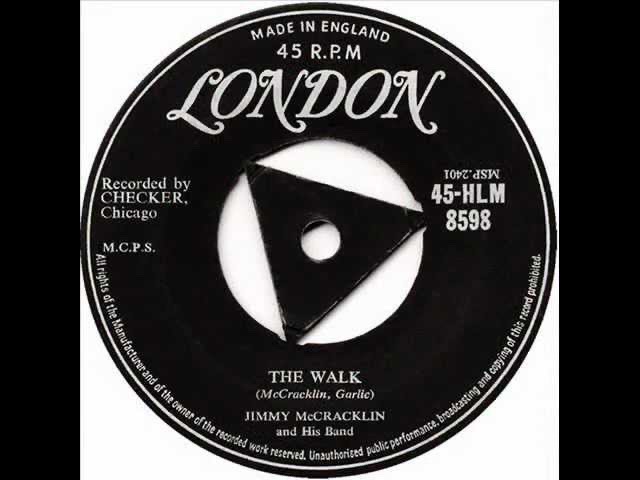
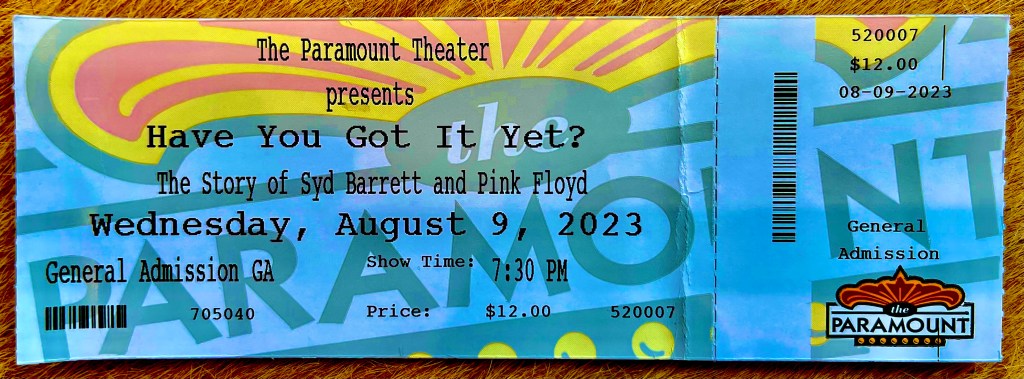
 Brace for the Obscure (60s rock)! / Off the Charts: 60s Rock Revelations😊