THE GREATEST SONGS OF THE 1960s THAT NO ONE HAS EVER HEARD
1,112)Shades of Morley Brown — “Pretty Blue Bird”
From “a nice, very obscure [’68 UK] psych/pop single”, here is the “particularly nice [B-side] with touches of wah-wah, and a good psychy feel.” (Popsike.com, https://www.popsike.com/SHADES-OF-MORLEY-BROWN-Silly-Girl-UNKNOWN-UK-PSYCH/4014924238.html) This song has a timeless slinkiness to it — it may have had more success in the slinky 80’s, maybe by Soft Cell! The single was the only one to come from Chris Morley and Malcolm Brown, “who had worked together in a brick manufacturing plant before leaving their native Hampshire” for London. (liner notes the CD comp Piccadilly Sunshine: Volumes 11-20: A Compendium of Rare Pop Curios form the British Psychedelic Era) ”They found that they could harmoni[ze] loading & unloading bricks. Malcolm attempted to write lyrics and Chris attempted tunes. They were signed as songwriters to KPM after a whirlwind tour of the Music Publishers in April 1968. KPM prefered Morley/Browns demo so Mercury did a one off deal with them.” (chrismorley9230, https://www.youtube.com/watch?v=vLUwCmZhsWs) Supposedly, they went on to write “Thick as a Brick” and “Brick House”.
Oh, and the song was arranged by Keith Mansfield (see #599). We have all have heard Mansfield’s music — used by Quentin Tarantino, Danger Mouse, Gnarls Barkley, the NFL, and on and on — but few know his name. He wrote some of the “funkiest, grooviest and memorable orchestral themes” of the ’60’s (Gareth Bramley, https://www.robertfarnonsociety.org.uk/index.php/jim/jim-new-articles/2014/the-world-of-keith-mansfield)
Pay to Play! The Off the Charts Spotify Playlist! + Brace for the Obscure 60s Rock Merchandise
Please consider helping to support my website/blog by contributing $6 a month for access to the Off the Charts Spotify Playlist. Using a term familiar to denizens of Capitol Hill, you pay to play! (“relating to or denoting an unethical or illicit arrangement in which payment is made by those who want certain privileges or advantages in such arenas as business, politics, sports, and entertainment” — dictionary.com).
The playlist includes all the “greatest songs of the 1960’s that no one has ever heard” that are available on Spotify. The playlist will expand each time I feature an available song.
All new subscribers will receive a Brace for the Obscure 60s Rock magnet. New subscribers who sign up for a year will also receive a Brace for the Obscure 60s Rock t-shirt or baseball cap. See pictures on the Pay to Play page.
When subscribing, please send me an e-mail (GMFtma1@gmail.com) or a comment on this site letting me know an e-mail address/phone number/Facebook address, etc. to which I can send instructions on accessing the playlist and a physical address to which I can sent a magnet/t-shirt/baseball cap. If choosing a t-shirt, please let me know the gender and size you prefer.
Just click on the first blue block for a month to month subscription or the second blue block for a yearly subscription.
THE GREATEST SONGS OF THE 1960s THAT NO ONE HAS EVER HEARD
1,111)Strawberry Alarm Clock — “Birdman of Alkatrash”
Would you believe me if I told you that the Strawberry Alarm Clock’s (see #127, 272, 901) groovy and era-defining #1 “Incense and Peppermints” was originally the B-side and the loony, “sneering[, ] punkish” (Bruce Eder, https://www.allmusic.com/artist/strawberry-alarm-clock-mn0000633079/biography) and garagey “Birdman” was originally the A-side?
“Birdman” has a very Seeds-y “Pushin Too Hard” (see #116) vibe. It gets a lot of abuse, such as “My dog hates this one… he thinks there’s a duck at the door!!” (Hugo Masekela, https://www.youtube.com/watch?v=rWNBFX7KPp8). But it’s a great track. Quack!
Jeremy writes that:
The song, offering a humorous pun on the ‘birdman of Alcatraz’ inmate Robert Stroud, is self-consciously silly, bobbing merrily along on the strength of its playful music. . . . [and] much softer than the band’s previous raveups, scattered around various singles under their original name Thee Sixpence. . . . The more rounded edges and goony nature of the song are largely due to the keyboard and the warped lead guitar riffs. “The Birdman Of Alkatrash” was not chosen for inclusion on Strawberry Alarm Clock’s first album, Incense And Peppermints. . . . despite the finished album being a mere 30 minutes in length. It would perhaps have sounded too out of place. In a sense, the song stands as a final goodbye to the Clock’s formative months.
What was going on with “Birdman” and “Incense” and where did the SAC come from? Eyehate Werk explains that manager Bill Holmes made “Birdman” the A-side “to appease the band. None of them liked ‘Incense…’”. (https://www.45cat.com/record/373aa). Bruce Eder writes that:
[“Incense and Peppermints”] was “just” a B-side . . . that would be forgotten as soon as “The Birdman of Alkatrash” started to get airplay, if it ever did. . . . The All-American single . . . began getting airplay, but it was the B-side . . . that DJs were choosing and airing. Enter Uni Records, a newly established imprint of American Decca and its parent company, MCA, who picked it up for national distribution. . . . The song swept across the airwaves gradually, fueling a sales wave that built into a number one chart placement over the next three months, in November of 1967.
BetaMaster64 says that the single was initially released under the SAC’s prior name — Thee Sixpence:
I contacted George Bunnell, a member of SAC, about the original release of I&P, and he said that the single was released originally as Thee Sixpence with Birdman as side A. The single was only in stores for a short time before they were all withdrawn and probably thrown away. Who knows how many Sixpence singles made it…probably not many besides the ones the band members have.
Strawberry Alarm Clock occupies a peculiar niche in the history of ’60s rock. Their name is as well known to anyone who lived through the late-’60s psychedelic era as that of almost any group one would care to mention, mostly out of its sheer, silly trippiness as a name and their one major hit, “Incense and Peppermints,” which today is virtually the tonal equivalent of a Summer of Love flashback. But there was a real group there, with members who had played for a long time on the Southern California band scene, who were proficient on their instruments and who sang well and generated four whole LPs . . . . The band’s origins go back to Glendale, CA, in the mid-’60s, and a group then known as the Sixpence. It was 1965 and all things British were still a selling point, so the name made as much sense as anything else. . . . They mostly did covers of then-popular hits and developed a considerable following in Glendale and also in Santa Barbara, playing there so often that a lot of histories have them coming out of Santa Barbara.
Pay to Play! The Off the Charts Spotify Playlist! + Brace for the Obscure 60s Rock Merchandise
Please consider helping to support my website/blog by contributing $6 a month for access to the Off the Charts Spotify Playlist. Using a term familiar to denizens of Capitol Hill, you pay to play! (“relating to or denoting an unethical or illicit arrangement in which payment is made by those who want certain privileges or advantages in such arenas as business, politics, sports, and entertainment” — dictionary.com).
The playlist includes all the “greatest songs of the 1960’s that no one has ever heard” that are available on Spotify. The playlist will expand each time I feature an available song.
All new subscribers will receive a Brace for the Obscure 60s Rock magnet. New subscribers who sign up for a year will also receive a Brace for the Obscure 60s Rock t-shirt or baseball cap. See pictures on the Pay to Play page.
When subscribing, please send me an e-mail (GMFtma1@gmail.com) or a comment on this site letting me know an e-mail address/phone number/Facebook address, etc. to which I can send instructions on accessing the playlist and a physical address to which I can sent a magnet/t-shirt/baseball cap. If choosing a t-shirt, please let me know the gender and size you prefer.
Just click on the first blue block for a month to month subscription or the second blue block for a yearly subscription.
THE GREATEST SONGS OF THE 1960s THAT NO ONE HAS EVER HEARD
1,110)The Piece Kor – “Words Of The ‘Raven’”
This ’68 “legendary 45” (Chris Bishop, http://therockasteria.blogspot.com/2022/05/the-hangmen-bitter-sweet-1966-us-fine.html?m=1) from Bel-Air, Maryland’s Piece Kor is “one of the 1960s deadliest platters . . . . a Byrds-like psych-garage lament driven by Mick Ball’s desperate crooning and eerie group harmonies. [Lead guitarist Jack] Bandoni[, Jr.] delivers a cosmic raga that mirrors the song’s ambitious aims”. (Mike Apichella, https://www.splicetoday.com/music/a-deadly-platter) The song “pay[s] homage to the local legend Edgar Allan Poe . . . provid[ing] commentary on contemporary American politics . . . and the sense of foreboding is underscored by tremolo guitar and references to Poe’s most famous work.” (Matt Ryan, http://strangecurrenciesmusic.com/an-introduction-to-mid-atlantic-garage-rock/) It was arranged by “punk hepcat Tom Guernsey of [Washington DC’s] Hangmen [see #560, 621]”. (liner notes to the CD comp Back from the Grave: Volume Eight: Over 30 Cuts of Utter Snarling Mid-60’s Garage Punkrock)
Mike Apichella goes deep into the cask of the Piece Kor:
Ray Scott . . . was close with Lou Larosso, [manager of regional broadcast celebrity] Kerby [Scott] . . . . Through their friendship The Piece Kor were booked on WBAL’s The Kerby Scott Show twice . . . . They made many appearances at live events promoted by Kerby . . . . Scott also booked them on bills with hit makers Gary Puckett & The Union Gap and The Human Beinz. . . . The Kor were becoming one of the biggest teen rock combos in northern Maryland, a fact that soon caught the attention of Larry Sealfon . . . . Sealfon worked as manager for DC 1960s punk legends The Hangmen. Scott had been hyping up The Piece Kor for years and invited his fellow impresario to one of the group’s rehearsals. Their electric attack hit hard—Sealfon decided to start up a new record label purely for the purpose of releasing the band’s music. Ray Scott dug the idea and offered to financially back the enterprise in a partnership. . . . [T]he pair christened their new endeavor as LaRay Records—a moniker that combined their first names. Sessions for The Piece Kor debut got under way in winter 1968. Sealfon tapped The Hangmen’s Tom Guernsey to produce the record . . . . [Drummer] Charley Clark: “. . . . I ate cheap hamburgers so I was sick as a dog… I had about a 103 degree temperature. I was drinking terpin hydrate and codeine, taking medicine… I was dying but we had the studio time.” What emerged was . . . LaRay Records’ only 7” release “Words Of The Raven” b/w “All I Want Is My Baby Back” . . . . Both cuts were co-written by Jack Bandoni and Charley Clark. [“Raven]” was an anti-Vietnam War anthem originally titled “The Great Draft Disaster.” [M]ost of the members were Bel Air High School kids . . . . [and o]nce Bandoni’s father discovered their plan to cut a radical protest tune he threatened to yank his son (the group’s main songwriter) if “The Great Draft Disaster” was released. A compromise from Charley Clark saved the day. Charley Clark: “Jack’s father just absolutely lost it. He said it was an un-American song… so I sat down and took another song that we’d done called ‘In The Words Of The Raven’ and basically left the content of the [original] song there, but changed some of the lyrics a little bit and that’s the song that ended up getting released.” . . . Even with Poe-inspired elements and less overt nods to Vietnam, the message remains righteous: . . . [“]Til they stop all the fighting we’ll say ‘Nevermore!’ ” . . .
The Piece Kor attracted attention from the bigwigs at United Artists Records. . . . after Larry Sealfon sent the major label a copy of [their single]. At the time U.A.’s competitors were putting out releases by noisemongers The Velvet Underground, The Stooges, and Alice Cooper, all artists who shared The Kor’s penchant for avant-garde innovation, bizarre showmanship, and fuzzed-out blasting. . . . Unfortunately the chance to get big label support came at the wrong time. . . . Charley Clark: “I had a financial responsibility because I had a [young] son and some of the other guys were doing other stuff and it just got to the point where we had to go on the road and promote this group which I don’t think anybody at that point and time was ready to do.” . . . The Piece Kor slowly disbanded . . . .
Pay to Play! The Off the Charts Spotify Playlist! + Brace for the Obscure 60s Rock Merchandise
Please consider helping to support my website/blog by contributing $6 a month for access to the Off the Charts Spotify Playlist. Using a term familiar to denizens of Capitol Hill, you pay to play! (“relating to or denoting an unethical or illicit arrangement in which payment is made by those who want certain privileges or advantages in such arenas as business, politics, sports, and entertainment” — dictionary.com).
The playlist includes all the “greatest songs of the 1960’s that no one has ever heard” that are available on Spotify. The playlist will expand each time I feature an available song.
All new subscribers will receive a Brace for the Obscure 60s Rock magnet. New subscribers who sign up for a year will also receive a Brace for the Obscure 60s Rock t-shirt or baseball cap. See pictures on the Pay to Play page.
When subscribing, please send me an e-mail (GMFtma1@gmail.com) or a comment on this site letting me know an e-mail address/phone number/Facebook address, etc. to which I can send instructions on accessing the playlist and a physical address to which I can sent a magnet/t-shirt/baseball cap. If choosing a t-shirt, please let me know the gender and size you prefer.
Just click on the first blue block for a month to month subscription or the second blue block for a yearly subscription.
THE GREATEST SONGS OF THE 1960s THAT NO ONE HAS EVER HEARD
1,109) The Lewis and Clarke Expedition — “Freedom Bird”
Here is the promo video for the Expedition’s second single from their only album. I first thought it must have been a classic 60’s Clairol commercial turned into an earnest yet infectious pop rock single (see #66), what with all the hair bouncing in slow-mo. But it turns out that it was just an earnest yet infectious pop rock single (that no one bought).
As to the Expedition, John Bush give some background:
The [LCE] evolved out of several folk bands operating around Los Angeles during the mid-’60s. [The band was f]ormed by Dallas songwriter Michael Martin Murphey (under the guise of Travis Lewis) with Owen Castleman (performing as Boomer Clarke), [who, along with] bassist John London were all old friends of country-minded Monkee Michael Nesmith . . . . Well before Nesmith was hired to the Monkees . . . London performed with him in San Antonio as a folk duo, and after moving to California, all four native Texans appeared in a large folk group called the Survivors. Nesmith dropped out because of a commitment to the Air Force, and the remaining trio added guitarist Ken Bloom and drummer John Raines, coming together in 1966 as the Lewis & Clarke Expedition. . . . The band was hyped not only to young girls as another version of the Monkees, but also to older rock fans as a cutting-edge country-rock band that played up their association with Native American[s].
Two singles were released from the album, “I Feel Good (I Feel Bad)” b/w “Blue Revelations” [see #437] and “Freedom Bird” b/w “Destination Unknown.” Neither single hit and shortly following the release of the album, the band members went their separate ways. Murphey . . . went on to a very successful solo career, first as an outlaw cosmic cowboy and then as a mainstream pop and country artist.
Marston adds that “[n]ot unlike Paul Revere and the Raiders, they were a bit of a costume band, with all the members donning buckskin and fringe.” (https://www.popgeekheaven.com/music-discovery/lost-treasures-lewis-clark-expedition) The band’s name? As the original LP’s liner notes explain: “Travis Lewis and Boomer Clarke are explorers in the field of songwriting and, like the original Lewis and Clarke, they guide the expedition. . . . Their songs are a way of sharing a few moments with you in the midst of the joyful and bewildering experience of being young and very much alive.”
Thus, in the October ’67 issue of 16 magazine appeared Monkees Pick for Stardom — Lewis & Clarke Expedition, announcing that:
Not so long ago Boomer Clarke, Travis Lewis and Monkee buddy John London got together and decided to form a group . . . and soon they were belting out such a groovy sound that the Monkees themselves became the number one fans of the group . . . . [W]e hope you dug their first release I Feel Good, I Feel Bad backed by Blue Revelation. Hang loose now, luvvies—Davy, Mike, Micky and Peter introduce you to America’s fastest-rising new group!
Lead singer and second lead guitar player for the group is adorable Boomer Clarke. He has just turned 20, is an inch under six feet tall and has ash blond hair and blue eyes. Boomer spent his childhood in Texas, and he now lives in a bachelor apartment in Hollywood. He’s very single—as are all the guys in the group—and likes tall girls who are natural, friendly and who have a streak of the “pioneer woman” in them. On a date, Boomer likes to visit jazz clubs, go to concerts and have dinner at his favorite restaurant—Player’s Choice on the Sunset Strip (where Southern-fried chicken and down-home cookin’ are the specialty).
Pay to Play! The Off the Charts Spotify Playlist! + Brace for the Obscure 60s Rock Merchandise
Please consider helping to support my website/blog by contributing $6 a month for access to the Off the Charts Spotify Playlist. Using a term familiar to denizens of Capitol Hill, you pay to play! (“relating to or denoting an unethical or illicit arrangement in which payment is made by those who want certain privileges or advantages in such arenas as business, politics, sports, and entertainment” — dictionary.com).
The playlist includes all the “greatest songs of the 1960’s that no one has ever heard” that are available on Spotify. The playlist will expand each time I feature an available song.
All new subscribers will receive a Brace for the Obscure 60s Rock magnet. New subscribers who sign up for a year will also receive a Brace for the Obscure 60s Rock t-shirt or baseball cap. See pictures on the Pay to Play page.
When subscribing, please send me an e-mail (GMFtma1@gmail.com) or a comment on this site letting me know an e-mail address/phone number/Facebook address, etc. to which I can send instructions on accessing the playlist and a physical address to which I can sent a magnet/t-shirt/baseball cap. If choosing a t-shirt, please let me know the gender and size you prefer.
Just click on the first blue block for a month to month subscription or the second blue block for a yearly subscription.
Its subject matter also aligns with the overall theme of [TKATVGPS]. Nature and nostalgia. Ray Davies tells the listener about a bird that provides him the comfort and enthusiasm to wake up and start a new day with its singing. The mellotron plays the role of the bird here, answering Davies’ “Sing Mr. Songbird” plea with a little trill.
Yet, as Andy Miller notes, while “a little melody will keep the devil at bay . . . don’t doubt for a minute the devil is there. The song’s concluding phrase [“You help to keep the devil away”] is Davies’ ”one hard line” technique in full effect”. (The Kinks Are the Village Green Preservation Society)
The Reconstructor tells us that:
Scheduled for release on September 27th [1968], th[e] 12 song “Village Green” album was soon canceled under Ray’s wishes. He had asked Pye, their label, to have some additional time to track new songs, and perhaps even expand it into a 20-track double LP. The label reluctantly agreed, and so in September, they recorded an additional two songs for the record, them being “Big Sky” and “Last of the Steam Powered Trains”, and started to mix the new double LP. However, Pye weren’t that confident in the band back then. The failure of their latest single, “Wonderboy”, which barely made the top 30 in England, had left a bad taste in their mouths, and a double LP by them would be a big bet. They decided to nix the idea, much to Davies’ anger and insisted on it being a single album. As a compromise, however, they decided to allow the album to feature fifteen tracks, instead of the original twelve. That meant two tracks would be removed, them being “Days” and “Mr. Songbird”, and the two newly recorded songs and three outtakes would be added.
Because the original 12-track edition had already been sent to several European countries, [“Mr. Songbird”‘s] first release was in Sweden and Norway in October 1968. . . . Though the Kinks began recording most of [the album in] March 1968, Davies recalled the band recording “Mr. Songbird” “a long time before” the rest of the album. Kinks researcher Doug Hinman places the song around November 1967 . . . .
Pay to Play! The Off the Charts Spotify Playlist! + Brace for the Obscure 60s Rock Merchandise
Please consider helping to support my website/blog by contributing $6 a month for access to the Off the Charts Spotify Playlist. Using a term familiar to denizens of Capitol Hill, you pay to play! (“relating to or denoting an unethical or illicit arrangement in which payment is made by those who want certain privileges or advantages in such arenas as business, politics, sports, and entertainment” — dictionary.com).
The playlist includes all the “greatest songs of the 1960’s that no one has ever heard” that are available on Spotify. The playlist will expand each time I feature an available song.
All new subscribers will receive a Brace for the Obscure 60s Rock magnet. New subscribers who sign up for a year will also receive a Brace for the Obscure 60s Rock t-shirt or baseball cap. See pictures on the Pay to Play page.
When subscribing, please send me an e-mail (GMFtma1@gmail.com) or a comment on this site letting me know an e-mail address/phone number/Facebook address, etc. to which I can send instructions on accessing the playlist and a physical address to which I can sent a magnet/t-shirt/baseball cap. If choosing a t-shirt, please let me know the gender and size you prefer.
Just click on the first blue block for a month to month subscription or the second blue block for a yearly subscription.
As to Ora, the group and the album, Steve Pilkington says:
[A] pre-Byzantium band featuring the writing, playing and singing talents of Jamie Rubinstein, who would walk out of the door after the album’s release just as his future Byzantium colleagues were walking in, though he would be back for good before the first Byzantium record proper came out. . . . The Ora album, originally on the small Tangerine label, is certainly formative, and clearly date-stamped ‘late ’60s’ in its often whimsical psych-pop approach, yet hints of greater things crop up throughout, such as . . . The Seagull And The Sailor.
Ora was an English folk-pop band that released a self-titled album on small-press Tangerine Records in 1969. Mastermind Jamie Rubinstein later founded Byzantium, which issued two albums on A&M in 1972/73. Mark Barakan [aka Shane Fontayne] (guitar), Julian Diggle (drums), Jamie Rubinstein (vocals, guitar), Robin Sylvester (bass, keyboards, guitar), Chloe Walters (guitar), Jon Weiss (guitar). Ora coalesced at UCS Hampstead when members of two student bands formed a trio. Guitarist and singer/songwriter Jamie Rubentstein first played in The Faction with drummer Julian Diggle. Months later, they joined the band Sophie with Robin Sylvester, who played bass, guitar, and keyboards. The three formed Ora as a vehicle for Rubentstein’s material. Soon enough, Ora caught the attention of Tangerine Records boss Don White, who invited them to KPM Studios cut two demos, “Deborah” and “Fly.” As sessions commenced for an album, Ora swelled to a four-piece with guitarist Jon Weiss, a friend of Sylvester’s. Rubentstein took a holiday to contemplate the finishing touches, only to return and find (to his chagrin) that the album had already gone to press.
Byzantium emerged from the ashes of the band Ora, formed by students Robin Sylvester, Julian Diggle, and Jamie Rubinstein at University College School in Hampstead. After releasing one album with which Rubinstein was dissatisfied – as it had been assembled from unfinished demos and recordings without his consent – Ora disbanded. But its members felt a gravitational pull towards one another, and after some comings and goings, Byzantium was born with Rubinstein (primary songwriter), fellow USC Hampstead student Nico Ramsden (lead vocals/guitar/percussion/keyboards), Chaz Jankel (lead vocals/guitar/keyboards), and Stephen Corduner (drums/percussion). Robin Sylvester remained part of the band, too, but in the behind-the-scenes capacities of producer, arranger, and conductor. Rod Stewart’s manager Billy Gaff caught wind of the band and got them a deal with the U.K. arm of A&M Records. (In the U.S., their first album appeared on the Warner Bros. label.) Soon, Byzantium was on the road with Faces, Family, and Rory Gallagher, and appearing on a bill with Hawkwind, Man, and Brinsley Schwarz. . . .
Pay to Play! The Off the Charts Spotify Playlist! + Brace for the Obscure 60s Rock Merchandise
Please consider helping to support my website/blog by contributing $6 a month for access to the Off the Charts Spotify Playlist. Using a term familiar to denizens of Capitol Hill, you pay to play! (“relating to or denoting an unethical or illicit arrangement in which payment is made by those who want certain privileges or advantages in such arenas as business, politics, sports, and entertainment” — dictionary.com).
The playlist includes all the “greatest songs of the 1960’s that no one has ever heard” that are available on Spotify. The playlist will expand each time I feature an available song.
All new subscribers will receive a Brace for the Obscure 60s Rock magnet. New subscribers who sign up for a year will also receive a Brace for the Obscure 60s Rock t-shirt or baseball cap. See pictures on the Pay to Play page.
When subscribing, please send me an e-mail (GMFtma1@gmail.com) or a comment on this site letting me know an e-mail address/phone number/Facebook address, etc. to which I can send instructions on accessing the playlist and a physical address to which I can sent a magnet/t-shirt/baseball cap. If choosing a t-shirt, please let me know the gender and size you prefer.
Just click on the first blue block for a month to month subscription or the second blue block for a yearly subscription.
THE GREATEST SONGS OF THE 1960s THAT NO ONE HAS EVER HEARD
1,106) Dantalian’s Chariot — “High Flying Bird”
“Four thousand people with flowers in their hair Walking around, just feeling the air . . . . San Francisco is losing its hate And all the love flows out through the Golden Gate”
San Francisco’s beautiful people, flush the toilets, the police are coming! Well, at least Andy Somers (to become the Police’s Andy Summers), co-wrote (with Zoot Money (see #726)) Dantalion’s Chariot’s (see #727) “ode to the beautiful people of San Francisco”, a “high point[]” of DC’s unreleased catalogue. (Vernon Joynson, The Tapestry of Delights Revisited) The song, a “calculated attempt to woo the American market . . . remains intriguing not only for its beatific lyrical imagery but for an unusual jazz-tinged instrumental sound, emphasized by . . . Somers’ dexterous guitar runs.” (David Wells, liner notes to the CD comp Dantalian’s Chariot: Chariot Rising) Pete Sargeant writes that:
High Flying Bird is not the US folk-rock gem but rather a set of observations on the hip culture with an excellent and clear vocal from Money, a sandpapered tinge to his voice. [It is m]y favourite cut on this intriguing [DC comp] as they sound totally themselves and Somers indulges his Airplane side with a jazzy guitar break that floats over the song. The rhythm section proves themselves masters of mood on this one.
Like other established acts . . . these experienced Beat-era musicians drastically changed tack to embrace the new counterculture, yet no others did it so publicly, nor with such apparent commitment, nor did they fail so spectacularly in spite of critical acclaim and huge hype. Keyboardist/vocalist George Zoot Money had helmed his Big Roll Band since 1961, playing fiery R’n’B to enthusiastic Soho Mod club dancers whilst selling precious few records. Seeing the psychedelic scene suddenly burgeon around them, Money, guitarist Andy Somers and drummer Colin Allen threw themselves bodily on to the bandwagon, announcing abruptly in July 1967 that the Big Roll Band no longer existed and that henceforth they would be Dantalian’s Chariot “ Dantalian being a Duke of Hell, referred to in The Key of Solomon.* To emphasise the point they kitted themselves out completely in white “ kaftans, guitars, amps, even a white Hammond “ and put together a light show so sophisticated that the Pink Floyd hired it on occasions. From their first self-penned recording sessions EMI released a single, Madman Running Through The Fields. Despite critical approval it stiffed chartwise, and a subsequent attempt to release an album, appropriately titled Transition, on CBS subsidiary Direction also stalled when the label insisted that its psychedelic elements be diluted with more familiar Money fare and the release credited to the Big Roll Band. This too sank without trace, and a miffed Money finally junked the Chariot in April 1968.
As David Wells explains:
Zoot and Andy [Summers] were becoming increasingly immersed in the psychedelic experience, regularly attending . . . various subterranean love-ins and happenings . . . . Increasingly weary of being promoted by EMI as the white James Brown, Zoot announced in late July 1967 that the Big Roll Band were not more. “We had been working very hard for a long time and felt we were getting stale”, Zoot told reporters.
liner notes to Dantalian’s Chariot: Chariot Rising
Zoot recalls “We just wanted to do something new. It was a chance to be more creative, to move on to writing our own material and try out new things.” (Record Collector: 100 Greatest Psychedelic Records: High Times and Strange Tales from Rock’s Most Mind-Blowing Era)
Richie Unterberger adds:
Such was the impact of psychedelic music in 1967, however, that by the middle of the year, Money had decided to totally revamp his sound. R&B/jazz/soul had become passe; now it was important to write your own material, and reflect the mind-expanding experience. With [Andy] Summers still in tow, [the band] became Dantalian’s Chariot. The music, written primarily by Money and Summers, changed as radically as the name, with airy melodies, spacy lyrics, and guitar/organ-driven arrangements. The band hit the London underground circuit inhabited by such acts as Pink Floyd and Soft Machine, and made their debut recording as Dantalian’s Chariot . . . in the summer of 1967. The single, innovative as it was, didn’t make any commercial waves. Although they were a respected live act, their new direction wasn’t supported by EMI, which dropped the band. A psychedelic-minded LP was worked on, but not released. Some of the material appeared on an early 1968 record, which the Direction label assembled from various tunes cut over the past year. . . . Dantalian’s Chariot came to an end in the spring of 1968, with Summers joining the Soft Machine (and subsequently Eric Burdon’s Animals); Money would also join Eric Burdon’s Animals around the same time.
But what a trip it was. David Wells notes that DC became “the darlings of the London underground set” and “one of the most fondly remembered British Psychedelic groups”. (liner notes to Dantalian’s Chariot: Chariot Rising) Vernon Joynson adds that:
[They] performed frequently at London’s Middle Earth and UFO clubs. . . . Their live appearances were amazing. They took to the stage in white robes and had what was generally regarded as the best light show in town. The only problem was this ensured they made heavy financial losses with every appearance.
The Tapestry of Delights Revisited
* Wikipedia tells us that: The Key of Solomon . . . also known as The Greater Key of Solomon, is a pseudepigraphical [falsely attributed] grimoire [textbook on magic] attributed to King Solomon. It probably dates back to the 14th or 15th century Italian Renaissance. It presents a typical example of Renaissance magic.” (https://en.wikipedia.org/wiki/Key_of_Solomon)
Pay to Play! The Off the Charts Spotify Playlist! + Brace for the Obscure 60s Rock Merchandise
Please consider helping to support my website/blog by contributing $6 a month for access to the Off the Charts Spotify Playlist. Using a term familiar to denizens of Capitol Hill, you pay to play! (“relating to or denoting an unethical or illicit arrangement in which payment is made by those who want certain privileges or advantages in such arenas as business, politics, sports, and entertainment” — dictionary.com).
The playlist includes all the “greatest songs of the 1960’s that no one has ever heard” that are available on Spotify. The playlist will expand each time I feature an available song.
All new subscribers will receive a Brace for the Obscure 60s Rock magnet. New subscribers who sign up for a year will also receive a Brace for the Obscure 60s Rock t-shirt or baseball cap. See pictures on the Pay to Play page.
When subscribing, please send me an e-mail (GMFtma1@gmail.com) or a comment on this site letting me know an e-mail address/phone number/Facebook address, etc. to which I can send instructions on accessing the playlist and a physical address to which I can sent a magnet/t-shirt/baseball cap. If choosing a t-shirt, please let me know the gender and size you prefer.
Just click on the first blue block for a month to month subscription or the second blue block for a yearly subscription.
Well, there is some debate about which version is best. Rapidkid28 says that Pete Brown’s “version will always be the best because it’s the original plus pete’s voice suits the song more because of his jazzy tone. Richard Barnes’s sounds too operatic”. (https://www.youtube.com/watch?v=fBH-vxCxM00). But MrDjango1953 says “Great song–have to say though that Richard Barnes version is way better than this one”. (https://www.youtube.com/watch?v=fBH-vxCxM00). I say they are both great in their own way. Prog or pop, this song gets under your skin.
As to Barnes, Mark Deming tells us:
Richard Barnes was a vocalist with the U.K. pop group the Quiet Five [see #676] before departing for a solo career in 1969, and over the next four years he cut a handful of supremely glossy pop records before launching a career in the musical theater in the London cast of Jesus Christ Superstar. . . . [I]t seems it was his destiny to be a West End star — while he doesn’t exactly go overboard on [his songs] there’s a strong sense of brio in his vocal style, and Barnes isn’t afraid to play to the last row of the balcony. Gerry Bron produced these sessions, and he clearly didn’t hesitate to pull out all the stops, ordering up elaborate orchestrations and top-shelf studio craft on the . . . the almost-psychedelic “High Flying Electric Bird,” . . . Barnes and were also shrewd judges of material . . . . [and] while Barnes was no rocker he was a gifted and intelligent interpretive singer, and [his singles] represent[] British pop at the peak of its form.
Pete Brown & Piblokto! was a “British progressive rock band formed in 1969 by Pete Brown, (probably best known as the lyricist with Cream) after being thrown out of his previous band Pete Brown & His Battered Ornaments.” (https://www.last.fm/music/Pete+Brown+&+Piblokto!/+wiki)
Pay to Play! The Off the Charts Spotify Playlist! + Brace for the Obscure 60s Rock Merchandise
Please consider helping to support my website/blog by contributing $6 a month for access to the Off the Charts Spotify Playlist. Using a term familiar to denizens of Capitol Hill, you pay to play! (“relating to or denoting an unethical or illicit arrangement in which payment is made by those who want certain privileges or advantages in such arenas as business, politics, sports, and entertainment” — dictionary.com).
The playlist includes all the “greatest songs of the 1960’s that no one has ever heard” that are available on Spotify. The playlist will expand each time I feature an available song.
All new subscribers will receive a Brace for the Obscure 60s Rock magnet. New subscribers who sign up for a year will also receive a Brace for the Obscure 60s Rock t-shirt or baseball cap. See pictures on the Pay to Play page.
When subscribing, please send me an e-mail (GMFtma1@gmail.com) or a comment on this site letting me know an e-mail address/phone number/Facebook address, etc. to which I can send instructions on accessing the playlist and a physical address to which I can sent a magnet/t-shirt/baseball cap. If choosing a t-shirt, please let me know the gender and size you prefer.
Just click on the first blue block for a month to month subscription or the second blue block for a yearly subscription.
The Barbarians are almost exclusively known for their small hit single “Are You a Boy or Are You a Girl” and their even smaller hit “Moulty.” Those 1965 singles were preceded by the 1964 45 “Hey Little Bird,” which, although few heard it, was probably their best recording. Starting with an emphatic drum stroke, the opening section was devoted to a growling primitive fuzz guitar riff. Though the song, penned by non-member Tommy Kaye, was obviously an attempt to simulate the British Invasion, American garage influence couldn’t help creeping in via the snarled vocals and overall lumpy execution, the fuzz riffs counterpointed by higher bluesy, somewhat sub-Rolling Stones lines. Yet there were Beatlesque attributes to the tune as well, particularly in the harmonized vocal lines ending the verses, and the overtly British Invasion-like soaring melody of the bridge, though that ended with a particularly ominous, sour blast of fuzz. The result was an odd but appealing collision of influences, British Invasion cheer getting twisted into a rather surly and brooding melody.
With their appearances on the Nuggets compilation and The T.A.M.I. Show, the Barbarians are one of the best-remembered garage bands of the ’60s. Not that it’s easy to forget the sight of a one-handed drummer, complete with hook, driving his band through a garage punk number in the company of the day’s biggest British Invasion, soul, and surf stars. Moulty was hardly self-conscious about his handicap; on the tiny hit single immortalized on Nuggets (titled, logically enough, “Moulty”), he tells the story of the triumph over his loss in no uncertain melodramatic terms. The band also managed a somewhat bigger hit single, the British Invasion-inspired novelty “Are You a Boy or Are You a Girl.”
Formed in Cape Cod, Massachusetts in 1964, this band was originally composed of band members Victor “Moulty” Moulton (drums), Bruce Benson (rhythm guitar), Ronnie Enos (lead guitar), and Jerry Causi (bass). . . . The group decided to make their stage outfits resembles those of pirates/beach bums, as their drummer “Moulty” Moulton had a hook for a hand. The band worse baggy, long-sleeve blouses, had longer than usual hair, and wore leather sandals. In 1965, guitarist Geoffrey Morris replaced Ronnie Enos on lead guitar and brought the song “Are You a Boy or Are You a Girl?” with him. After [“Moulty”] began to take off, the band wanted to tour around in Boulder, Colorado. Moulty refused. Morris, Benson, and Causi went anyway with . . . replacements. After their stint in Boulder, the new members took their act to San Francisco and renamed themselves Black Pearl.
One of the most heralded rock events ever captured on film, the 1964 concert known as The T.A.M.I. Show [Teenage Awards Music International], filmed in . . . Southern California by director Steve Binder, presented a lineup like no other: the Rolling Stones, James Brown, the Beach Boys, Marvin Gaye, the Miracles, the Supremes, Chuck Berry, Lesley Gore and others. The artists rehearsed and filmed over two days and nights on October 29 and 30 at the Santa Monica Civic Auditorium.
A superlative dance between cinema and music, “The T.A.M.I. Show” brought together rock ‘n’ roll and rhythm and blues, black and white performers, audio and visual excitement, and the US and UK musical countercultures. Shot only four months after the end of the fifty-four day filibuster that allowed the enactment of the Civil Rights Act on 2 July 1964, Binder’s orchestration of music, dance, and cinema transcended the social reality of its time. And as it became the model for mid-sixties’ rock ‘n’ roll television shows mixing black and white teenagers, especially ABC’s “Shindig!” and NBC’s “Hullabaloo” (also directed by Binder and choreographed by Winters), its utopian social and aesthetic innovations quickly entered both mass culture and the wider political field.
Pay to Play! The Off the Charts Spotify Playlist! + Brace for the Obscure 60s Rock Merchandise
Please consider helping to support my website/blog by contributing $6 a month for access to the Off the Charts Spotify Playlist. Using a term familiar to denizens of Capitol Hill, you pay to play! (“relating to or denoting an unethical or illicit arrangement in which payment is made by those who want certain privileges or advantages in such arenas as business, politics, sports, and entertainment” — dictionary.com).
The playlist includes all the “greatest songs of the 1960’s that no one has ever heard” that are available on Spotify. The playlist will expand each time I feature an available song.
All new subscribers will receive a Brace for the Obscure 60s Rock magnet. New subscribers who sign up for a year will also receive a Brace for the Obscure 60s Rock t-shirt or baseball cap. See pictures on the Pay to Play page.
When subscribing, please send me an e-mail (GMFtma1@gmail.com) or a comment on this site letting me know an e-mail address/phone number/Facebook address, etc. to which I can send instructions on accessing the playlist and a physical address to which I can sent a magnet/t-shirt/baseball cap. If choosing a t-shirt, please let me know the gender and size you prefer.
Just click on the first blue block for a month to month subscription or the second blue block for a yearly subscription.
THE GREATEST SONGS OF THE 1960s THAT NO ONE HAS EVER HEARD
1,103) The Exceptions — “The Eagle Flies on Friday”
Primo UK freakbeat, a unique, stunning and “powerful drums and vibes driven track”. (robertplant, https://www.45cat.com/record/202632). The members then tried their luck with British folk, Fairport Convention style. WTF? The title . . . refers to payday in US worplaces (the eagle being pictured on the dollar).” (liner notes to the CD comp Chocolate Soup for Diabetics: Volumes 1-5). Oh, and Robert Plant played tambourine! More tambourine!
As to the Exceptions, Vernon Joynson tells us:
This Birmingham band was formed after [Roger] Hill had left The Uglys in August 1967. [Dave] Pegg joined from Way of Life but he too had been with The Uglys earlier. . . . Hill went on to join Mongrel then Fairport Convention . . . Pegg joined Fairport Convention . . . . [Alan Bugsy] Eastwood also joined Fairport Conventiom and he and Pegg were both later in Fotheringay.
The Tapestry of Delights Revisited
Robertplant adds:
One of Dave Pegg’s friends was future Led Zeppelin star Robert Plant who at the time was contracted to CBS Records. Robert recommended The Hooties to well-known music publisher Eddie Kassner which gained the band a recording contract with CBS. Re-naming themselves ‘The Exceptions’ their first single release was recorded at Regent Sound studios in London. Robert Plant actually played tambourine on the A-side titled ‘The Eagle Flies On Friday’ . . . . This, along with the B-side ‘Girl Trouble’ were both original compositions by Alan Eastwood.
Pay to Play! The Off the Charts Spotify Playlist! + Brace for the Obscure 60s Rock Merchandise
Please consider helping to support my website/blog by contributing $6 a month for access to the Off the Charts Spotify Playlist. Using a term familiar to denizens of Capitol Hill, you pay to play! (“relating to or denoting an unethical or illicit arrangement in which payment is made by those who want certain privileges or advantages in such arenas as business, politics, sports, and entertainment” — dictionary.com).
The playlist includes all the “greatest songs of the 1960’s that no one has ever heard” that are available on Spotify. The playlist will expand each time I feature an available song.
All new subscribers will receive a Brace for the Obscure 60s Rock magnet. New subscribers who sign up for a year will also receive a Brace for the Obscure 60s Rock t-shirt or baseball cap. See pictures on the Pay to Play page.
When subscribing, please send me an e-mail (GMFtma1@gmail.com) or a comment on this site letting me know an e-mail address/phone number/Facebook address, etc. to which I can send instructions on accessing the playlist and a physical address to which I can sent a magnet/t-shirt/baseball cap. If choosing a t-shirt, please let me know the gender and size you prefer.
Just click on the first blue block for a month to month subscription or the second blue block for a yearly subscription.
Surprisingly the album does not suffer much from [Iain] Matthews’ minimal writing contributions . . . . What makes this album so timeless and enjoyable is the way it explores country music without deliberately trying to be country a highly commendable feat that many American bands were not able to achieve. Free from any phony southern twang, Ian’s fragile, emotionally-charged vocals enrich every song with a genuineness that is perfectly complemented by the warm, rural landscape that’s successfully captured by the band. Not only is this one of the first British country-rock records, but it is also an unrecognized benchmark for the entire then-burgeoning genre.
This UK band was formed by former Fairport Convention singer/guitarist Iain Matthews . . . and was named after his 1969 debut for MCA Records. Comprising Matthews, Mark Griffiths (guitar), Carl Barnwell (guitar), Gordon Huntley (pedal steel guitar), Andy Leigh (bass) and Ray Duffy (drums), the newly formed band signed to EMI Records. The unit’s country-tinged sound proved to be an excellent forum for Matthews’ songwriting talents. In the summer of 1970, their second album, Second Spring reached the UK Top 40 and was followed by a winter chart-topper, ‘Woodstock’. Joni Mitchell wrote the single as a tribute to the famous festival that she had been unable to attend. Already issued as a single in a hard rocking vein by Crosby, Stills, Nash And Young, it was a surprise UK number 1 for Matthews Southern Comfort. Unfortunately, success was followed by friction within the band and, two months later, Matthews announced his intention to pursue a solo career. One more album followed after which the band truncated their name to Southern Comfort. After two further albums, they disbanded in the summer of 1972.
[Iain Matthews] joined Fairport Convention . . . but in early 1969, he left by mutual consent. . . . A successful management team of the period was Ken Howard & Alan Blaikely, who had worked with both Dave Dee, Dozy, Beaky, etc., and The Herd, and saw Ian as their next hit-making client. . . . His debut LP, while released as Matthews’ Southern Comfort’, was actually a solo album by Matthews, and was titled after “Southern Comfort'” a song by Sylvia Tyson (nee Sylvia Fricker) which would appear on his next LP . . . . ”It wasn’t necessarily my intention to have a band called Matthews’ Southern Comfort. The album was going to be solo, and we were going to see what happened” he recalled in the mid-1970s. . . . The production of the LP is credited to Steve Barlby & Ian Matthews, and several of the songs [including “Fly, Pigeon, Fly”] are also written by Barlby, in fact a pseudonym for Howard & Blaikley. Matthews explained: “There wasn’t much of any direction to the album — Howard and Blaikley were new managers to me, and I was kind of feeling my way. They took me on the understanding that I was going to do some of their songs, and we kind of sold ourselves to the record company on that basis, but then I started to change my mind, because I didn’t particularly like their songs”.
liner notes to the CD reissue of Matthews’ Southern Comfort
Pay to Play! The Off the Charts Spotify Playlist! + Brace for the Obscure 60s Rock Merchandise
Please consider helping to support my website/blog by contributing $6 a month for access to the Off the Charts Spotify Playlist. Using a term familiar to denizens of Capitol Hill, you pay to play! (“relating to or denoting an unethical or illicit arrangement in which payment is made by those who want certain privileges or advantages in such arenas as business, politics, sports, and entertainment” — dictionary.com).
The playlist includes all the “greatest songs of the 1960’s that no one has ever heard” that are available on Spotify. The playlist will expand each time I feature an available song.
All new subscribers will receive a Brace for the Obscure 60s Rock magnet. New subscribers who sign up for a year will also receive a Brace for the Obscure 60s Rock t-shirt or baseball cap. See pictures on the Pay to Play page.
When subscribing, please send me an e-mail (GMFtma1@gmail.com) or a comment on this site letting me know an e-mail address/phone number/Facebook address, etc. to which I can send instructions on accessing the playlist and a physical address to which I can sent a magnet/t-shirt/baseball cap. If choosing a t-shirt, please let me know the gender and size you prefer.
Just click on the first blue block for a month to month subscription or the second blue block for a yearly subscription.
It comes from the Australia-only LP Spicks and Specks, which was made possible by the song “Spicks and Specks.” BeeGees.com says:
Spicks and Specks . . . [is] laden with rich harmonies and bittersweet lyrics, backed by delicate, predominantly acoustic instrumentation. Originally presented as ‘Monday’s Rain,’ the album’s title was ultimately changed to capitalize on the success of single “Spicks and Specks.” . . . the[ir] first hit . . . in Australia . . . . Yet by that point, The Bee Gees had already decided to uproot and move their career to the U.K.
“Whilst at sea in January, 1967, they heard that “Spicks and Specks”, a song they had recorded in 1966, had gone to #1 in Australia.” (https://www.last.fm/music/Bee+Gees/+wiki)
And as Joe Marchese elaborates:
The catchy track made it to No. 3 in Sydney, staying in the Top 40 for 19 weeks, and in other areas of Australia reached pole position. . . . . [It] made such an impression that its release led to the group’s signing with Polydor in the U.K.; it became the group’s first single there. The Bee Gees’ new album, naturally, was titled after the hit song. Spicks and Specks used most of the tracks intended for an aborted LP entitled Monday’s Rain. This album was never issued outside Australia . . . . On January 3, 1967, the Bee Gees began their journey back to England. It’s hardly an exaggeration to state that “the rest is history” once they arrived.
Pay to Play! The Off the Charts Spotify Playlist! + Brace for the Obscure 60s Rock Merchandise
Please consider helping to support my website/blog by contributing $6 a month for access to the Off the Charts Spotify Playlist. Using a term familiar to denizens of Capitol Hill, you pay to play! (“relating to or denoting an unethical or illicit arrangement in which payment is made by those who want certain privileges or advantages in such arenas as business, politics, sports, and entertainment” — dictionary.com).
The playlist includes all the “greatest songs of the 1960’s that no one has ever heard” that are available on Spotify. The playlist will expand each time I feature an available song.
All new subscribers will receive a Brace for the Obscure 60s Rock magnet. New subscribers who sign up for a year will also receive a Brace for the Obscure 60s Rock t-shirt or baseball cap. See pictures on the Pay to Play page.
When subscribing, please send me an e-mail (GMFtma1@gmail.com) or a comment on this site letting me know an e-mail address/phone number/Facebook address, etc. to which I can send instructions on accessing the playlist and a physical address to which I can sent a magnet/t-shirt/baseball cap. If choosing a t-shirt, please let me know the gender and size you prefer.
Just click on the first blue block for a month to month subscription or the second blue block for a yearly subscription.
The outstanding track is [the] enigmatic “Ceilings No. 1”, a country-ish jaunt which . . . has all the hallmarks of a huge hit. Equally memorable were “Ceilings No. 2″ (a similar number, but taken at a different tempo)”.
Roger Dopson, liner notes to the CD comp Honeybus at Their Best
45rpy adds:
Each side [of the LP] closes with a different rendering of the same tune—“Ceilings No. 1,” a melancholy but still finger-snapping jaunt, and both versions compound the personal and the political, imploring world leaders to “Stop wasting your god-given lives on useless pursuits that will end with the grave.” But only the introspective “Ceilings No. 2” features the more vulnerable appeal “Oh help me in what I must do / And show me the things that are true / Don’t give me the mask that disguises your face…”
Honeybus is one of my favorite bands (see #6, 52, 207, 434, 562, 605, 764), with the honey being especially bittersweet with what should have been, what could have been. LN writes:
When I once lent a friend a copy of my beloved Story he quipped that it sounded almost like a Beatles album from the 1960s that had somehow escaped release. I had for some time lacked just the right phrase to describe the album, and here it was; my friend had completely summed up my feelings about one of rock music’s true lost treasures in one neat soundbite.
Honeybus had the pop touchstones of the Beatles and the Hollies, while balancing the more sunshiny, twee aspects of the early Bee Gees with some mild touches of post-Sgt. Pepper psychedelia. . . . Their songs were unusually tuneful, some lovely little hooks paired with sweet harmonies, and it’s almost shocking to hear these songs today and realize the band had pretty much zero commercial success (at least here in the US).
Bruce Eder beautifully ponders what made the band so special and what could have been:
Considering that most have never heard of them, it’s amazing to ponder that they came very close, in the eyes of the critics, to being Decca Records’ answer to the Rubber Soul-era Beatles. The harmonies were there, along with some catchy, hook-laden songs . . . . The pop sensibilities of Honeybus’ main resident composers, Peter Dello and Ray Cane were astonishingly close in quality and content to those of Paul McCartney and the softer sides of John Lennon of that same era. What’s more, the critics loved their records. Yet, somehow, Honeybus never got it right; they never had the right single out at the proper time, and only once in their history did they connect with the public for a major hit, in early 1968. . . .
Dello and Cane . . . were the prime movers behind Honeybus. In 1966, they formed the Yum Yum Band . . . . A collapsed lung put Dello out of action in early 1966, and it was during his recuperation that he began rethinking what the band and his music were about. He developed the notion of a new band that would become a canvas for him to work on as a songwriter — they would avoid the clubs, working almost exclusively in the studio, recreating the sounds that he was hearing in his head. . . . It was a novel strategy, paralleling the approach to music-making by the Beatles in their post-concert period, and all the more daring for the fact that they were a new group . . . . The group was one of the best studio bands of the period, reveling in the perfection that could be achieved . . . .
They were duly signed to England’s Decca Records and assigned to the company’s newly organized Deram label . . . . The critics were quick to praise the band . . . [but their first two singles were commercially] unsuccessful. Then . . . their third release, “I Can’t Let Maggie Go,” [see #6] . . . . . . peaked at number eight. . . . [It] should have made the group, but instead it shattered them. Peter Dello resigned during the single’s chart run. He had been willing to play live on radio appearances and the occasional television or special concert showcase . . . but he couldn’t accept the physical or emotional stresses of performing live on a regular basis, or the idea of touring America . . . . Dello left . . . . [and] Jim Kelly came in on guitar and vocals, while Ray Cane . . . took over most of the songwriting, and Honeybus proceeded to play regular concerts. The group never recovered the momentum they’d lost over “Maggie,” however, despite a string of fine singles . . . . [that] never charted . . . . [T]he group had pretty well decided to call it quits once they finished the[ir] LP . . . . The Honeybus Story . . . was released in late 1969, but without an active group to promote it, the record sank without a trace. . . . [I]t was a beautiful album, with the kind of ornate production and rich melodies that had become increasingly rare with the passing of the psychedelic era . . . .
Pay to Play! The Off the Charts Spotify Playlist! + Brace for the Obscure 60s Rock Merchandise
Please consider helping to support my website/blog by contributing $6 a month for access to the Off the Charts Spotify Playlist. Using a term familiar to denizens of Capitol Hill, you pay to play! (“relating to or denoting an unethical or illicit arrangement in which payment is made by those who want certain privileges or advantages in such arenas as business, politics, sports, and entertainment” — dictionary.com).
The playlist includes all the “greatest songs of the 1960’s that no one has ever heard” that are available on Spotify. The playlist will expand each time I feature an available song.
All new subscribers will receive a Brace for the Obscure 60s Rock magnet. New subscribers who sign up for a year will also receive a Brace for the Obscure 60s Rock t-shirt or baseball cap. See pictures on the Pay to Play page.
When subscribing, please send me an e-mail (GMFtma1@gmail.com) or a comment on this site letting me know an e-mail address/phone number/Facebook address, etc. to which I can send instructions on accessing the playlist and a physical address to which I can sent a magnet/t-shirt/baseball cap. If choosing a t-shirt, please let me know the gender and size you prefer.
Just click on the first blue block for a month to month subscription or the second blue block for a yearly subscription.
One great R&B song that has travelled the globe — written by Leiber and Stoller, first released by Alvin Robinson out of New Orleans, then by the Rolling Stones, and then by Chile’s Stones, Los Jockers. Each version gives me such satisfaction!
THE GREATEST SONGS OF THE 1960s THAT NO ONE HAS EVER HEARD
1,097) Alvin Robinson — “Down Home Girl”
Alvin Robinson released the Leiber and Stoller-written “Down Home Girl” as a ’64 B-side on their new Red Bird label. It is “an inspired amalgamation of New York pop and Crescent City R&B. . . . one of the finest [singles] to appear on this impressive label” (https://www.allmusic.com/artist/alvin-robinson-mn0000011667#biography), and “Alvin’s best record . . . . just about as good as it gets… every time you move like that, I have to go to Sunday Mass.” (Red Kelly, http://redkelly.blogspot.com/2008/05/al-robinson-wake-up-imperial-5762.html?m=1) Dan Phillips says of Robinson’s “brilliant rendition” that:
[“Girl” was] written as a funky and humorous New Orleans grinder and arranged to suit by Joe Jones . . . . Its lack of sales was and is a really puzzling result for such a cool record. Of course, the Rolling Stones famously covered the tune a year later, and effectively buried Shine’s version.
[It is] a rather jovial piece of New Orleans soul, with the brass and lazy, humid feel associated with much of that city’s music. The pretty exaggerated evocations of the down home girl’s down-home Southern-ness — perfume that smells like turnip greens (ugh!), a kiss that tastes like pork and beans (double ugh!), and so forth — gave the song a comic air, and also indicated that it might have been a caricature of Southern Black life to some extent, done by songwriters who were not either Black or Southern.
Robinson was a New Orleans-based session guitarist, and secured a minor hit in 1964 with a recording of a Chris Kenner song, ‘Something You Got’. The single was released on Tiger Records, a short-lived outlet owned by Jerry Leiber and Mike Stoller, who then took Robinson to their next venture, Red Bird. His first release there, ‘Down Home Girl’ . . . . but the artist was unable to find another success. Robinson moved to the west coast in 1969 and was one of several expatriate musicians who played on Dr. John’s New Orleans ‘tribute’ album, Gumbo.
Although [it] sounds rather like a rocked-up arrangement of a down-home blues tune, in fact the original version of this song was written by a couple of Brill Building songwriters. It first came out on a single by New Orleans singer Alvin Robinson, shortly before the Rolling Stones covered it on their third album, The Rolling Stones Now!. . . . The Rolling Stones’ cover really brought out the salaciousness in the composition, particularly in Mick Jagger’s drawling vocal — about the most blatantly Southern-styled one he did in the mid-1960s — and the funky, stinging guitar. The guitar was especially effective in the stuttering notes immediately following many of the vocal lines. They also took the song at an irregularly paced shuffle, really dragging out the beat and lyrics so that it sounded like a moodier and meaner look at a girl who both oozes sex and reeks of Southern roots. Few other of the band’s tracks make the Stones’ general infatuation with American Southern culture so obvious, and at once admiring and wary. The fade teases out the slightly ominous feel further, as the guitar lines go up an octave for emphasis and some blues harmonica comes in. . . . [I]t was too soaked with blues (and sexual imagery) to qualify as one of the group’s more commercial early numbers . . . . The song . . . was played in July 1969 at their concert in London’s Hyde Park, Mick Taylor’s first gig with the band.
Possibly the best version of all is by Chile’s Rolling Stones — Los Jockers.
Forced Exposure tells us that:
Los Jockers were one of the pioneer bands of Chilean rock, ahead of their time, and the first to differentiate themselves from the more romantic “new wave” style, by being ahead of the curve in adopting the psychedelic clothes and long hair that were the image of rock in the world at that time. [The band was] formed in 1964, and started playing live in 1965, and were one of the first rock groups to have great success locally. They used flashy clothes, influenced by the British mods at first, and by psychedelia, and had a very aggressive and raw live show. Their music was called “pop contracultural” (counterculture pop). Their version of the Rolling Stones’ classic “Satisfaction” hit the radios before the original Stones version was known locally, and it was such a smash hit that during their show at the “Viña del Mar Festival” they had to play the song five times.
The Biblioteca Nacional de Chile explains (courtesy of Google Translate):
[V]arious groups and soloists gradually emerged that tried to emulate the music from the United States. All of them constituted a movement of great popularity, which was a reference for the 1960s in Chile, and which became known as the New Wave.. . . Towards the end of the 1960s, Chilean rock began to take on rebellious and rebellious characteristics. Many young people began to wear bizarre clothes, grow their hair long, and sing aggressively and with loud sounds on stage. The sweet rock of the New Wave gave way to the rebellious psychedelia, to the countercultural and aggressive pop proposal, represented in groups such as Los Jockers.
For more on Los Jockers, here is Ana María Hurtado (courtesy of Google Translate):
Together with Los Mac’s [see #123, 203] and Los Vidrios Quebrados [see #763, 1,029], Los Jockers make up the group of Chilean beat formations, a movement that is brief in time but also one that identifies the first experience of rock made in Chile beyond the pop figures of the New Wave. Their main mold was always the Rolling Stones, and their work greatly advanced the local rock culture through a visual production never before seen in the country. The quintet began calling themselves Los Tigers, first inspired by what they saw in magazines and records imported from England, full of photos of the Shadows, the Yardbirds and the Rolling Stones. The Jockers were between 17 and 19 years old, composed in English and built their own electric instruments in a very rudimentary way. From their first performance (at the end of 1965, to benefit the Barros Luco Hospital) they surprised people with their long hair and colorful clothes, something unusual for the time. The group’s short career was eventful. Their version of “Satisfaction” . . . sold more than 80,000 copies in its single format in 1966. They went to the Viña Festival in 1967 and had to play it five times. . . . That same year, President Eduardo Frei Montalva invited them to the Palacio de la Moneda to meet them. The group failed to stabilize its career beyond three years.
Finally, lead singer Sergio Del Rio recalls how the group channeled their inner Andrew Loog Oldham and became stars (courtesy of Google Translate):
In 1963, once the World Cup was over, a friend invited me to his house one day to listen to music and he showed me The Beatles, The Stones, The Hubabaloo, who wore wigs, and a group that caught my attention, which was the group The Yardbirds, with a fantastic guitarist called Eric Clapton. At that time, the musicians were influenced by The Shadows, but I liked Clapton. That’s when the bug started to bite me to put together a band and I bought a guitar. I started from school to see the shows of the time on Radio Corporación . . . . [B]efore I was even a salvageable musician, I started teaching a cousin of mine to play the bass and we put together the group . . . . [W]e were the precursors of Chilean rock, in the middle of the golden age of the New Wave. Well, we already differentiated ourselves with the type of music we made, but we were missing the theme of image. There we took The Rolling Stones as a reference, we let our hair grow and we ordered ourselves to make different clothes. . . . At the end of ’65, Los Jocker’s performed for the first time with our new songs and our new sound, instruments and equipment, in a hospital that I believe was Barros Luco, at a typical New Year’s Eve party with the nurses and all of that. When we appeared there was screaming, the nurses went crazy and when we got off the stage we signed autographs like crazy. Already in the dressing room I told the boys: “this is the path we have to follow.” It was incredible what had happened to us for the simple fact of changing the look. Even the same record companies that hadn’t caught us before were now acting suspiciously nice to us. But this change of image also caused us problems. Many people thought that wearing long hair and colored clothes was something for degenerates, for drug addicts, and they spat at us in the street. This did not happen with the other New Wave groups. The Jocker’s caused a stir in the streets and that forced us to always go out accompanied by friends to protect us. We started making news in the newspapers . . . .
Pay to Play! The Off the Charts Spotify Playlist! + Brace for the Obscure 60s Rock Merchandise
Please consider helping to support my website/blog by contributing $6 a month for access to the Off the Charts Spotify Playlist. Using a term familiar to denizens of Capitol Hill, you pay to play! (“relating to or denoting an unethical or illicit arrangement in which payment is made by those who want certain privileges or advantages in such arenas as business, politics, sports, and entertainment” — dictionary.com).
The playlist includes all the “greatest songs of the 1960’s that no one has ever heard” that are available on Spotify. The playlist will expand each time I feature an available song.
All new subscribers will receive a Brace for the Obscure 60s Rock magnet. New subscribers who sign up for a year will also receive a Brace for the Obscure 60s Rock t-shirt or baseball cap. See pictures on the Pay to Play page.
When subscribing, please send me an e-mail (GMFtma1@gmail.com) or a comment on this site letting me know an e-mail address/phone number/Facebook address, etc. to which I can send instructions on accessing the playlist and a physical address to which I can sent a magnet/t-shirt/baseball cap. If choosing a t-shirt, please let me know the gender and size you prefer.
Just click on the first blue block for a month to month subscription or the second blue block for a yearly subscription.
THE GREATEST SONGS OF THE 1960s THAT NO ONE HAS EVER HEARD
1,096)Jimmy Campbell — “Lyanna”
This blog o’ mine gives me great joy, as when I played as my 22nd song “Michel Angelo”, by Jimmy Campbell (see #22, 648, 736-38, 996) and the 23rd Turnoff. I called the song “[o]ne of the most gorgeous songs I have ever heard.” It is certainly the greatest ever pop psych ballad I have ever heard. But the blog also can give me great sadness, as when today, I focus again on Jimmy and how his talents were left to wither by cruel fate and an indifferent public. As dpnewbold comments, “This guy is so under-rated it hurts.” (https://www.youtube.com/watch?v=yI-KHv7u4qE) Yes, it does.
[M]ost of the songs here are good, particularly . . . “Lyanna[.]”
Campbell’s 1969 LP . . . . was a marked change in direction for Campbell, in his style if not his songwriting. For Son of Anastasia is largely a folky, acoustic album, occasionally venturing into orchestrated folk-pop, even if Campbell is more a pop/rock songwriter than a folk one. Campbell’s slightly moody yet catchy melodies, as well as his drolly understated lyrics, mark him as perhaps the best ’60s Liverpool rock songwriter never to have a chart record . . . . It’s an attractively introspective record laced with some bittersweet irony, but the combination of bare-bones and lightly orchestrated arrangements doesn’t always ideally suit the material. . . . occasionally riffs are taken by what sound like either kazoos or someone (Campbell?) trying to imitate a trumpet with mouth noises, which not only adds an unappetizingly vaudevillian flavor, but leaves the impression that there wasn’t enough budget allotted for proper instrumentation.
As to Jimmy, Matty Loughlin-Day aptly states that:
[Jimmy Campbell is a] songwriter who, for this writer’s money, could go toe-to-toe with any of the more celebrated prodigies from the region, yet who’s name is frequently met with blank faces or a shrug of the shoulders. A writer who, in a sane universe, would be esteemed alongside . . . yes, John Lennon and Paul McCartney. Jimmy Campbell is arguably the archetypal lost son of Liverpool. A talent that was never quite reciprocated by the buying public and the victim of some cruel twists of fate, his is a name that is for one reason or another, never quite mentioned when discussing the plethora of musical talent that the city has produced. . . . [H]is songs entice immediately and gradually work their way into the sub-conscious.
Campbell should rightfully be considered closer to a Merseyside Bob Dylan than the sullen working class Nick Drake he is often painted as. He could have been the Poet Laureate of England! How is it that one day of the greatest sonic creations in his fascinating and flawless back catalogue should be gathering dust for the past thirty-three years?
liner notes to the CD reissue of Rocking Horse’s Yes It Is
And Richie Unterberger poignantly sums things up:
[Jimmy was] perhaps the most unheralded talent to come out of the Liverpool ’60s rock scene, as he was a songwriter capable of both spinning out engaging Merseybeat and — unlike almost every other artist from the city, with the notable exception of the Beatles — making the transition to quality, dreamy psychedelia. . . . It seems as if Campbell needed just a bit more encouragement, and his groups just a little more studio time, to develop into a notable British psychedelic group that could combine solid pop melodies, sophisticated lyrics and arrangements, and touches of English whimsy. Unfortunately they didn’t get that chance . . . .
Campbell’s slightly moody yet catchy melodies, as well as his drolly understated lyrics, mark him as perhaps the best ’60s Liverpool rock songwriter never to have a chart record . . . .
To give a touch of Jimmy Campbell’s early and later history, Matty Loughlin-Day writes that:
Campbell’s first band, The Panthers, were formed in 1962 and were at the heart of all things Merseybeat. Legend has it that at one gig, John Lennon stood in front of the band, keen to suss out local competition; one must assume he was impressed, as before long, the band were able to add ‘supported The Beatles’ to their CV. Convinced by Cavern-legend Bob Wooler to change their name to The Kirkbys (in homage to their home suburb) and looked after by Brian Epstein’s secretary Beryl Adams, Campbell et al toured across Western Europe and recorded a handful of songs, including the Rolling Stones-esque stomper It’s a Crime . . . [see #648]. . . . [I]nitial singles found success in, of all places, Finland. . . . [but a]t home, the singles fared less impressively, and a second name change soon followed. The Kirbys became the 23rd Turnoff, again based in local geography, named after the M6 junction required for Kirkby. . . .
With a short European tour in 1972 backing Chuck Berry . . . and fortunes truly fading, Campbell decided he’d had enough. . . . [A]pparently rejuvenated and able to muster the strength to record a fourth solo album during the 80’s, Campbell, on completing it, went to the pub to celebrate, only to return home to find his house ransacked and the only master tapes of the album gone, along with a range of equipment. The guy, it seemed, could just not catch a break. . . .
By all accounts, a life of hard-living took its toll and he sadly passed away in 2007 after battling emphysema.
Oh, and Billy Fury did a wonderful version that only surfaced years after his death. Yr Heartout explains:
[Here are a] trio of recordings as good as anyone has ever done, and yet these were never heard until Billy was long gone. What a world! Both ‘In My Room’ and ‘Lyanna’ are so incredibly sad and moving, and Billy’s performance seems to add layers of strangeness, despair and pain. I don’t know. I could be biased because I heard Billy’s versions first, and for me they fit Billy, with his reclusive tendencies, his innate shyness, his modesty, his gentleness, his persistent ill-health, his latter-day bad luck. . . . Jimmy Campbell [was] an incredibly talented singer and songwriter who nevertheless initially made me think of George Formby at times. Jimmy, for me, was an acquired taste, but so often acquired tastes prove to have more durability than instant passions.
Pay to Play! The Off the Charts Spotify Playlist! + Brace for the Obscure 60s Rock Merchandise
Please consider helping to support my website/blog by contributing $6 a month for access to the Off the Charts Spotify Playlist. Using a term familiar to denizens of Capitol Hill, you pay to play! (“relating to or denoting an unethical or illicit arrangement in which payment is made by those who want certain privileges or advantages in such arenas as business, politics, sports, and entertainment” — dictionary.com).
The playlist includes all the “greatest songs of the 1960’s that no one has ever heard” that are available on Spotify. The playlist will expand each time I feature an available song.
All new subscribers will receive a Brace for the Obscure 60s Rock magnet. New subscribers who sign up for a year will also receive a Brace for the Obscure 60s Rock t-shirt or baseball cap. See pictures on the Pay to Play page.
When subscribing, please send me an e-mail (GMFtma1@gmail.com) or a comment on this site letting me know an e-mail address/phone number/Facebook address, etc. to which I can send instructions on accessing the playlist and a physical address to which I can sent a magnet/t-shirt/baseball cap. If choosing a t-shirt, please let me know the gender and size you prefer.
Just click on the first blue block for a month to month subscription or the second blue block for a yearly subscription.
THE GREATEST SONGS OF THE 1960s THAT NO ONE HAS EVER HEARD
1,095) Scorpion — “We Are Through”
Beautiful, delicate, wistful folk rock from Sweden. As to Scorpion’s (see #1,009) album — I Am the Scorpion — SwedishProggBlog tells us that:
One of the most legendary albums to come out of the Swedish progg scene, and also one of the earliest. It’s almost mythical to collectors, being extremely hard to find and fetching ridiculous prices any rare time it’s offered for sale. It was ninth album release on MNW, one of the most important labels of the Swedish 70’s, putting out many stellar albums of the era. Scorpion was in fact MNW head honcho Bo Anders Larsson’s own one-off project. Larsson had previously been in Tintacs who had two singles out in the late 60’s. Tintacs soon became Ron Faust . . . . Both incarnations of the band also featured Lorne de Wolfe who later made a mark in history as a member of Contact, Vargen, and . . . Hansson de Wolfe United. The entire Contact back Larsson on ”I Am the Scorpion”, and being produced by Kim Fowley, it’s like the evil cousin to Contact’s – much more subdued – debut album ”Nobody Wants to Be Sixteen”. . . . “I Am the Scorpion” is a partly wild affair, sometimes reminiscent of the Stooges or any other late 60’s/early 70’s Detroit band of your choice. Side A of the album is hard-boiled psych rock with frantic fuzz guitars. . . . With the first side of the album having the guitars going on the red and the drums pounding on your eardrums, side B [where you can find “We Are Through”] might come as an unpleasant surprise. Much mellower, and in parts downright terrible. It begins with one of the lousiest tracks ever recorded in Sweden, ”Michoican” . . . . Why this jolly-jolly-ho-ho-ho-thumbs-up-yeehah crap was chosen as a single – A side at that! – is a complete mystery. . . . The rest of the second side is much better, but a far cry from the stunning first one. . . . Side A . . . is as heavy and rough as music got in 1970, up there with the best and rawest US garage rock of the era.
Pay to Play! The Off the Charts Spotify Playlist! + Brace for the Obscure 60s Rock Merchandise
Please consider helping to support my website/blog by contributing $6 a month for access to the Off the Charts Spotify Playlist. Using a term familiar to denizens of Capitol Hill, you pay to play! (“relating to or denoting an unethical or illicit arrangement in which payment is made by those who want certain privileges or advantages in such arenas as business, politics, sports, and entertainment” — dictionary.com).
The playlist includes all the “greatest songs of the 1960’s that no one has ever heard” that are available on Spotify. The playlist will expand each time I feature an available song.
All new subscribers will receive a Brace for the Obscure 60s Rock magnet. New subscribers who sign up for a year will also receive a Brace for the Obscure 60s Rock t-shirt or baseball cap. See pictures on the Pay to Play page.
When subscribing, please send me an e-mail (GMFtma1@gmail.com) or a comment on this site letting me know an e-mail address/phone number/Facebook address, etc. to which I can send instructions on accessing the playlist and a physical address to which I can sent a magnet/t-shirt/baseball cap. If choosing a t-shirt, please let me know the gender and size you prefer.
Just click on the first blue block for a month to month subscription or the second blue block for a yearly subscription.
THE GREATEST SONGS OF THE 1960s THAT NO ONE HAS EVER HEARD
1,094) Focal Point — “‘Cept Me”
Co-band founder Paul Tennant recalls that this “rough demo” — two guys “in front of a microphone with two guitars” — was “a favorite of John Lennon’s and I can’t say how much that meant to us[, h]e was our hero”. (liner notes to the CD comp Focal Point: First Bite of the Apple: The Complete Recordings 1967-68) The song is a “plaintive” “gem” (David Kidman, https://www.fatea-records.co.uk/magazine/reviews/Pysche1967/) from one of the greatest coulda/shoulda-beens in the annals of British pop psych (see #4, 43, 198, 538, 747, 991).
The band only released one single, but it all started out like a fairy tale when two guys cornered Paul McCartney walking his dog Martha in Hyde Park . . . . AsTennant recalls:
It was . . . the summer of 1967 . . . . We knew which house Paul lived in due to the large amount of girls hanging about outside. . . . Then all of a sudden the gates opened and a mini shoots out and away. Without a second thought we were on his tail, and there in the back of the car was a large sheepdog . . . . I never let it out of my sight . . . [W]e were at Hyde Park, the mini stopped and out stepped Paul, let the dog out and waved to the driver – Jane Asher and he was away walking the dog. . . . [W]e shouted to [Paul] and he turned around. We then told him . . . we were writing songs and didn’t know what to do with them, could he help? . . . [H]e said to us “I could get you a recording contract just like that” and flicked his fingers. “But why should I?” It was then that he proved to be human by planting a finger up his nostril. Dave [Rhodes] laughed and he laughed. Dave then said . . . “Because we are good, our songs are good.” It was just like that, Paul then wrote down . . . a phone number . . . . “Phone this guy and tell him I sent you[]” and he was then gone . . . . [W]hen we got back to Liverpool, Dave and I phoned . . . . Terry [Doran] listened and told us Paul had told him we were going to ring and when could we go down to London. . . . Out came the guitars and we sang four of our best songs . . . . He said he liked our songs and would like to get acetate done of them. . . . “John loves your songs, he is absolutely going mad over them” said Terry. We were . . . gob smacked. He wants me to play them to Brian”. . . . “Brian agrees with John, your songs are fantastic.” . . . Brian . . . suggested that we should form a band [and] call [it] Focal Point.
Stefan Granados notes that “Doran recorded several demos with Tennant and Rhodes . . . who became the first two songwriters signed to Apple after both John Lennon and Brian Epstein responded enthusiastically to the demo recording [including “‘Cept Me”]. (liner notes to Focal Point: First Bite of the Apple: The Complete Recordings 1967-68)
Pay to Play! The Off the Charts Spotify Playlist! + Brace for the Obscure 60s Rock Merchandise
Please consider helping to support my website/blog by contributing $6 a month for access to the Off the Charts Spotify Playlist. Using a term familiar to denizens of Capitol Hill, you pay to play! (“relating to or denoting an unethical or illicit arrangement in which payment is made by those who want certain privileges or advantages in such arenas as business, politics, sports, and entertainment” — dictionary.com).
The playlist includes all the “greatest songs of the 1960’s that no one has ever heard” that are available on Spotify. The playlist will expand each time I feature an available song.
All new subscribers will receive a Brace for the Obscure 60s Rock magnet. New subscribers who sign up for a year will also receive a Brace for the Obscure 60s Rock t-shirt or baseball cap. See pictures on the Pay to Play page.
When subscribing, please send me an e-mail (GMFtma1@gmail.com) or a comment on this site letting me know an e-mail address/phone number/Facebook address, etc. to which I can send instructions on accessing the playlist and a physical address to which I can sent a magnet/t-shirt/baseball cap. If choosing a t-shirt, please let me know the gender and size you prefer.
Just click on the first blue block for a month to month subscription or the second blue block for a yearly subscription.
THE GREATEST SONGS OF THE 1960s THAT NO ONE HAS EVER HEARD
1,093) Brazilian Octopus — “Gamboa”
Come to a fashion show in Rio accompanied by some absolutely fabulous lounge jazz from some of Brazil’s greatest musicians. “The opening melody shifts from a dreamlike intro to a swinging mid-tempo that recalls everything from Jacques Tati’s masterpiece Playtime to the background dances on some ‘60s variety show. In three and a half minutes, the group, following the tight lead of drummer Douglas de Oliveira, passes through rhythmic pop-art bliss.” (Pat Padua, https://spectrumculture.com/2017/04/02/brazilian-octopus-brazilian-octopus/)
Padua gets his tentacles into the Octopus:
Sao Paolo businessman Livio Rangan introduced synthetic fabrics into a Brazilian market that was proud of the natural fabric that poured out of its thriving textile industry. His fashion house Rhodia designed clothes that took traditional Brazilian patterns and threw them into the Swinging Sixties with bold saturated colors and geometric cuts. . . . It’s thanks to Rangan that we have Brazilian Octopus. . . . [T]he group’s sole album . . . is 30 minutes of sheer pleasure . . . . [I]n the early ‘60s [Rangan] had hired well-known musicians like Sérgio Mendes to accompany his early fashion shows. Brazilian Octopus was essentially willed into existence to provide music for runway models. Hired by Rangan, pianist-organist Cido Bianchi assembled the band, recruited from musicians he had already played with . . . . These included future Brazilian musical luminaries like composer Hermeto Pascoal on flute and Alexander “Lanny” Gordin on guitar. . . . Brazilian Octopus transformed traditional dance styles into a mod sound. After successful runway shows, Rangan proposed the group record an album of originals and covers, all of which emit an infectious light swing that has the effortless sound of musicians who had a familiar rapport. Instantly accessible, the music has the smoothness of easy listening and library music and the inventiveness (but not the kitsch factor) of space-age bachelor pad music, with melodic and rhythmic shifts make it more enduring. Tracks float like swinging fugues, multiple flutes mirroring an organ melody before each flies off on its own birdlike path. . . . Rangan knew what he was doing commissioning this band; listening to this music makes it easy to close your eyes and picture the bright colors and floral designs of a Rhodia line. . . . [T]he whole album . . . sounds exactly like what you’d imagine a Brazilian fashion show would circa 1968. The vividly named octet deserved more, and was asked to record a second album, but the musicians declined for the simple fact that they never got paid for the first one.
An incredible little record with a sound that’s unlike anything else we’ve ever heard before — a set that mixes jazzy inflections on vibes, organ, guitar, percussion, and flute — the last of which is played here by a young Hermeto Pascoal! The set was done after Pascoal’s work in Quarteto Novo but before some of his more complicated jazz albums of the 70s — and it’s got a style that mixes his own love of playful rhythms and complicated shadings with a lighter, freer approach to the music . . . . The drums get quite funky at times . . . an[d there is an] influence that’s . . . bossa-driven . . . . At times, there’s a lightly dancing beauty . . . .
[T]he mythological ensemble Brazilian Octopus emerged as a result of a demand . . . for “professional musicians” to create modern, jazz-inclined soundtracks for the already sophisticated and trendy fashion shows of the time. Formed by the great Aparecido Bianchi (piano and organ), Alexander Gordin (guitar), Carlos Alberto de Alcantara Pereira (flute and saxophone), Douglas de Oliveira (drums), João Carlos Pegoraro (vibraphone), Nilson Carlos Ruiz Matta (bass) and Olmir Stocker (guitar and guitar) and the already outstanding Hermeto Pascoal (flute), the glorious Brazilian octopus recorded just one long play . . . [whose] twelve tracks stroll through the Brazilian songbook of those times with elegance, in sophisticated arrangements that flirt with jazz, samba, bossa nova and North American black music. Gamboa, the first of them, is a true anthem . . . .
Picture a band that features musicians from schools so different as the multi-instrumentalist Hermeto Pascoal, the post-tropicalist guitar hero Lanny Gordin, bossa nova pianist Cido Bianchi (former Milton Banana Trio), acoustic guitarist Olmir ‘Alemão’ Stocker and jazz bassist Nilson da Matta. The surprising meeting happened in 1968 and helped write a little known chapter in the history of instrumental music in Brazil called Brazilian Octopus, whose only release is hunted by record collectors. “This is undoubtedly the strangest Brazilian group ever”, writes Marcelo Dolabela in his dictionary ABZ do Rock . . . . At that time, we didn’t care about the money, we just wanted to play. It was a wonderful experience”, recalls Celso Bianchi, also a maestro and arranger.
Pay to Play! The Off the Charts Spotify Playlist! + Brace for the Obscure 60s Rock Merchandise
Please consider helping to support my website/blog by contributing $6 a month for access to the Off the Charts Spotify Playlist. Using a term familiar to denizens of Capitol Hill, you pay to play! (“relating to or denoting an unethical or illicit arrangement in which payment is made by those who want certain privileges or advantages in such arenas as business, politics, sports, and entertainment” — dictionary.com).
The playlist includes all the “greatest songs of the 1960’s that no one has ever heard” that are available on Spotify. The playlist will expand each time I feature an available song.
All new subscribers will receive a Brace for the Obscure 60s Rock magnet. New subscribers who sign up for a year will also receive a Brace for the Obscure 60s Rock t-shirt or baseball cap. See pictures on the Pay to Play page.
When subscribing, please send me an e-mail (GMFtma1@gmail.com) or a comment on this site letting me know an e-mail address/phone number/Facebook address, etc. to which I can send instructions on accessing the playlist and a physical address to which I can sent a magnet/t-shirt/baseball cap. If choosing a t-shirt, please let me know the gender and size you prefer.
Just click on the first blue block for a month to month subscription or the second blue block for a yearly subscription.
THE GREATEST SONGS OF THE 1960s THAT NO ONE HAS EVER HEARD
1,092) Spirit — “Gramophone Man”
Here is a Spirit song not nicked by Zeppelin, but which probably shoulda been! It’s “a tongue-and-cheek stab at radio-inclined music executives [with] a groove in the verses.” (Sinusoid, https://www.progarchives.com/album.asp?id=13042) Boppin’s Blog says:
The start is very early Floyd like. I can almost hear Syd Barrett. Then the song morphs into a little jazz ditty. Then it morphs back again. Very cool indeed.
One of the few group-written songs from Spirit . . . a colorful portrait of what idealistic musicians have to deal with when trying to “relate” to the record company executives. It’s doubtful that the song was written [about] Lou Adler, who was the founder of Ode Records, Spirit’s label and the band’s producer. At this stage (1968), the group apparently had excellent relations with him. But whomever it was about, the strangeness of the corporate atmosphere that was foreign to many rock bands is communicated. A bluesy, rock base carries the melody, but like many of the band’s songs, it shifts radically, in this case to a delicious jazz fusion break that once again shows off the group’s awesome instrumental abilities, especially Randy California’s Wes Montgomery-inspired jazz octaves.
[T]he song has a sudden, surprise change in the middle—a common enough feature of psychedelic songs, but in this case it breaks into something jazzier than usual. Ed Cassidy, the bald, older gent in the band, played drums with some big jazz names in his youth . . . and Spirit was unique in its use of jazz ideas in rock. . . . Gramophone Man . . . who at first has “magic presents” in his head and his hands, but later the presents prove “empty.” I suspect that Spirit is commenting on the empty promises of record companies and the like, the whole big bozo bucks sweepstakes . . . . Gramophone Man bids them sing, and, being cool CA music-dudes, they comply, only to feel ill-used and abused later. Mr. Gramophone Man will no doubt laugh all the way to the bank.
Spirit created a product of its time: an inventive psychedelic rock hovering between Syd Barrett-Floyd, early The Who, but also developed some highly original sounds of their own. Spirit was not just another garage rock band: they had two jazz players John Locke . . . and drummer Ed Cassidy . . . . [who] was the step father of teenage [ax] wonder Randy California . . . .
Rising out of the ashes of a prior band called The Rising Sons centered around The Ash Grove venue in mid-1960s Los Angeles, a new band emerged . . . . includ[ing] percussionist Ed Cassidy, lead vocalist Jay Ferguson, bassist Mark Andes and guitarist Randy [Wolfe to later become Randy] California. The like minded musical misfits started a folk rock band called Red Roosters where they managed to score the odd high school dances and small venues around L.A. but after taking a hiatus and a cross-country trip to New York City Randy California had the chance to briefly play with Jimi Hendrix . . . but ultimately was denied moving with the band to London by his parents due to his tender young age of 15. Slightly dismayed he had to head back to California to reform his prior band and with the addition of keyboardist John Locke, he and the other Red Roosters team opted to change their name to Spirits Rebellious and that’s when the true magic started to gel. Joining in on the “Summer Of Love” hippie scene after a trip to Griffith Park, the members of the band rented an entire house in Topanga Canyon and lived together with significant others, children, pets and pretty much everything else. This is the time where the inspiration for SPIRIT’s eponymously titled debut album came from. After truncating their name to simply SPIRIT, the band started to make waves by having an utterly unique sound that took the disparate styles of 60s folk and psychedelic rock and married them with the more progressive jazz-fusion styles that were emerging.
Founded in Los Angeles in 1967 by musicians who had a mixture of rock, pop, folk, blues, classical, and jazz backgrounds, and who ranged in age from 16 to 44, the group had an eclectic musical style in keeping with the early days of progressive rock . . . . The diverse tastes of the original quintet produced a hybrid style that delighted a core audience of fans but proved too wide-ranging to attract a mass following, and at the same time the musicians’ acknowledged talents brought them other opportunities that led to the breakup of the original lineup after four years and four albums . . . . In early 1965, the Rising Sons, a folk-blues group featuring Taj Mahal and Ry Cooder, played the Ash Grove; the band’s drummer was Ed Cassidy . . . who met and married [Randy] California’s recently divorced mother, becoming his stepfather. Cassidy had been drumming professionally since his teens in almost every conceivable style, though lately largely in jazz groups before he joined the Rising Sons. . . . In September 1965 . . . [Randy and Cassidy] formed a band called the Red Roosters [with Jay Ferguson and Mark Andes] that . . . . broke up when Cassidy moved his family to New York . . . in the spring of 1966. There [Randy] had a fateful encounter . . . at a music store in Manhattan; he met the then-unknown Jimi Hendrix . . . who invited him to join his band . . . . Since there was already a musician named Randy in the band . . . Hendrix distinguished the two by their home states, calling . . . Randy Wolfe “Randy California.” California played with Hendrix that summer . . . . [who] asked [him] to go to England with him, but at 15 he was too young. Instead, California moved back to [California where he and] Cassidy formed a band called Spirits Rebellious, after a book by the religious mystic Kahlil Gibran, also featuring pianist John Locke [and the returning Ferguson and Andes]. . . . By June [1967], they were playing gigs and . . . . auditioned for record executive and producer Lou Adler. . . . [who] signed Spirit . . . in August 1967, Adler produced the self-titled debut album . . . . [which] entered the Billboard chart in April and . . . peak[ed] in the Top 40 in September. . . . In October 1968, they issued a single, “I Got a Line on You,” a driving rocker written by California. Peaking at number 25 in the Hot 100 in March 1969, it was the group’s only Top 40 single.
Pay to Play! The Off the Charts Spotify Playlist! + Brace for the Obscure 60s Rock Merchandise
Please consider helping to support my website/blog by contributing $6 a month for access to the Off the Charts Spotify Playlist. Using a term familiar to denizens of Capitol Hill, you pay to play! (“relating to or denoting an unethical or illicit arrangement in which payment is made by those who want certain privileges or advantages in such arenas as business, politics, sports, and entertainment” — dictionary.com).
The playlist includes all the “greatest songs of the 1960’s that no one has ever heard” that are available on Spotify. The playlist will expand each time I feature an available song.
All new subscribers will receive a Brace for the Obscure 60s Rock magnet. New subscribers who sign up for a year will also receive a Brace for the Obscure 60s Rock t-shirt or baseball cap. See pictures on the Pay to Play page.
When subscribing, please send me an e-mail (GMFtma1@gmail.com) or a comment on this site letting me know an e-mail address/phone number/Facebook address, etc. to which I can send instructions on accessing the playlist and a physical address to which I can sent a magnet/t-shirt/baseball cap. If choosing a t-shirt, please let me know the gender and size you prefer.
Just click on the first blue block for a month to month subscription or the second blue block for a yearly subscription.
THE GREATEST SONGS OF THE 1960s THAT NO ONE HAS EVER HEARD
1,091) Montage — “The Grand Pianist”
After walking away from the Left Banke, Michael Brown ,”who had been the group’s chief artistic force as principal songwriter, arranger, and keyboardist — worked with Montage [see #252] to continue in [a] splendid Baroque pop/rock vein” (Richie Unterberger, https://www.allmusic.com/artist/montage-mn0001206263), “mastermind[ing] an entire LP of material that was both similar to, and nearly on par with the Left Banke’s unsurpassed fusion of pop-rock and classical music. . . . [T]he graceful baroque-tinged melodies could have been no one else’s.” (Richie Unterberger, liner notes to the CD reissue of Montage)
“The Grand Pianist” shows that “Michael Brown is not only a grand pianist but also a genius composer.” (5215kerstin, https://www.youtube.com/watch?v=LcpztS6xyuk) Brown wrote it with his sometimes collaborator (and Woodstock performer) Bert Sommer.
Jack Rabid tells us more:
Montage sounds far more like the real follow-up to the Left Banke’s first LP, Walk Away Renee/Pretty Ballerina, than the actual one, The Left Banke, Too. This is because after the first LP the band’s three singers had sadly parted ways with keyboardist and prime songwriter Michel Brown, who instead became Montage’s mentor/mastermind. (It’s a long story: Brown’s dad was managing the band to the distrust of the other members and Brown, like Brian Wilson, similarly disdained touring in favor of staying home to write and record.) And though Brown was not technically a Montage member, he not only wrote all the music and produced this LP, but he also played all the trademark piano and organ and charted the vocal arrangements. Yet the four New Jersey no-names he found clearly translated his vision of extraordinarily lush, unspeakably beautiful orchestral chart pop. . . .
Pay to Play! The Off the Charts Spotify Playlist! + Brace for the Obscure 60s Rock Merchandise
Please consider helping to support my website/blog by contributing $6 a month for access to the Off the Charts Spotify Playlist. Using a term familiar to denizens of Capitol Hill, you pay to play! (“relating to or denoting an unethical or illicit arrangement in which payment is made by those who want certain privileges or advantages in such arenas as business, politics, sports, and entertainment” — dictionary.com).
The playlist includes all the “greatest songs of the 1960’s that no one has ever heard” that are available on Spotify. The playlist will expand each time I feature an available song.
All new subscribers will receive a Brace for the Obscure 60s Rock magnet. New subscribers who sign up for a year will also receive a Brace for the Obscure 60s Rock t-shirt or baseball cap. See pictures on the Pay to Play page.
When subscribing, please send me an e-mail (GMFtma1@gmail.com) or a comment on this site letting me know an e-mail address/phone number/Facebook address, etc. to which I can send instructions on accessing the playlist and a physical address to which I can sent a magnet/t-shirt/baseball cap. If choosing a t-shirt, please let me know the gender and size you prefer.
Just click on the first blue block for a month to month subscription or the second blue block for a yearly subscription.
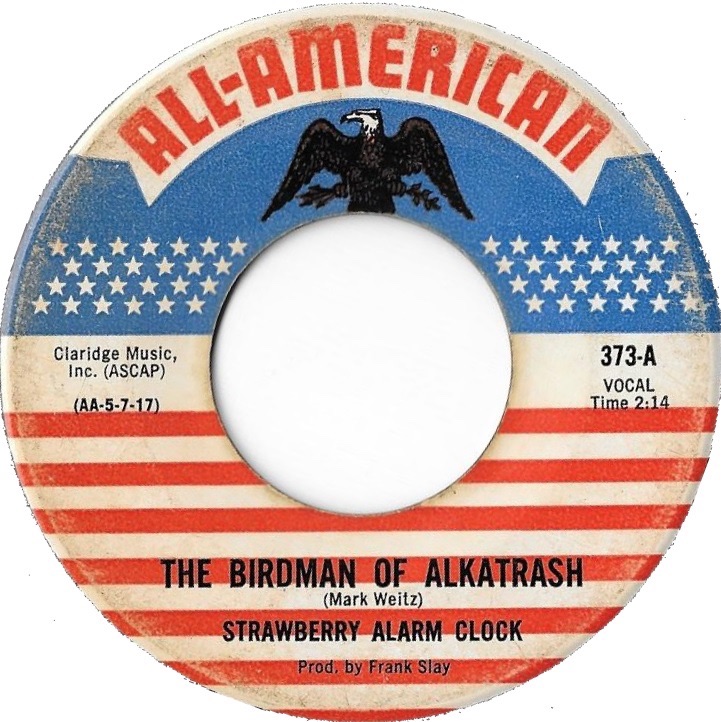
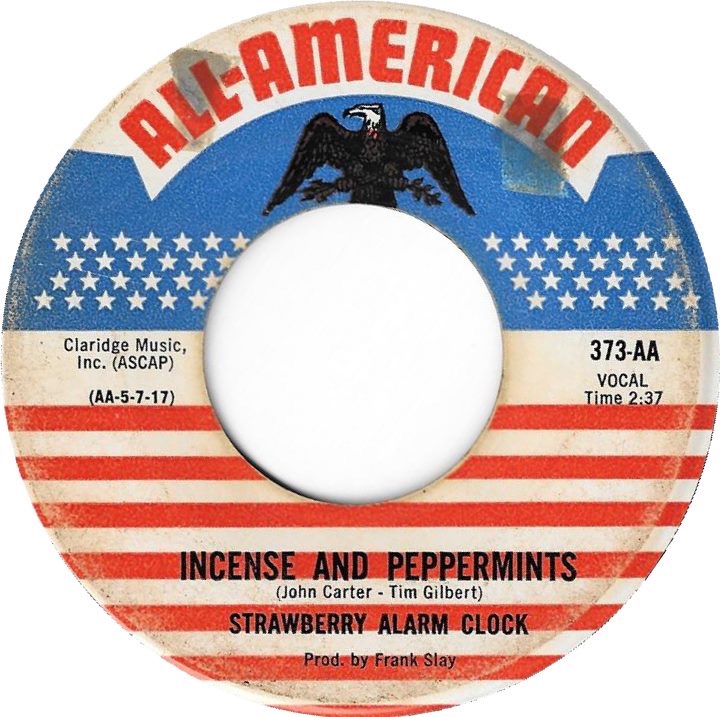
 Brace for the Obscure (60s rock)! / Off the Charts: 60s Rock Revelations😊

