THE GREATEST SONGS OF THE 1960s THAT NO ONE HAS EVER HEARD
1,427) The Spencer Davis Group — “Time Seller”
This was the band’s first A-side post-Steve Winwood, and reached #30 in the UK and #100 in the U.S. It is a “stunningly beautiful song” (783nata, https://www.youtube.com/watch?v=V_zgi91D5Ow) and “was quite innovative and progressive sounding for the time with a heavy cello backing and seemed to indicate a new and promising musical direction for the group.” (John Woodhouse, http://www.brumbeat.net/sdgroup.htm) More double bass!
The CD comp Acid Drops, Spacedust & Flying Saucers: Psychedelic Confectionery tells us that:
When Spencer Davis rebuilt The Spencer Davis Group after the loss of the Winwood brothers early in 1967, he chose organist Eddie Hardin [see #1,187] . . . and guitarist Phil Sawyer [see #32, 122]. “Time Seller”, their first single, was pieced together over various sessions, with the likes of Graham Nash dropping in to . . . add some high vocals. In fact, many have noted the influence of “Time Seller” on The Hollies’ “King Midas in Reverse”. . . . Ray Fenwick replaced Sawyer in December 1967 and when the LP With Their New Face On appeared . . . new vocals by Davis and Hardin had been overdubbed onto the track [replacing Sawyer’s vocals on the 45].
liner notes to the CD comp Acid Drops, Spacedust & Flying Saucers: Psychedelic Confectionery from the UK Underground 1965-69
[The song was] inspired, according to Davis, by the fact that “people always say ‘I wish I could buy time’ . . . the line ‘they live in a land where the clocks grow on trees’ was inspired by Salvador Dali. Total surrealism! Graham Nash came to the session, he said it was a remarkable song.” Recorded . . . with Hollies producer Ron Richards, the track was elevated by a rococo string arrangement from Johnny Scott that featured four double basses and four violas, bowed and played pizzicato. . . .
liner notes to the CD comp Come Join My Orchestra: The British Baroque Pop Sound 1967-73
Pay to Play! The Off the Charts Spotify Playlist! + Brace for the Obscure 60s Rock Merchandise
Please consider helping to support my website/blog by contributing $6 a month for access to the Off the Charts Spotify Playlist. Using a term familiar to denizens of Capitol Hill, you pay to play! (“relating to or denoting an unethical or illicit arrangement in which payment is made by those who want certain privileges or advantages in such arenas as business, politics, sports, and entertainment” — dictionary.com).
The playlist includes all the “greatest songs of the 1960’s that no one has ever heard” that are available on Spotify — now over 900 songs. The playlist will expand each time I feature an available song.
All new subscribers will receive a Brace for the Obscure 60s Rock magnet. New subscribers who sign up for a year will also receive a Brace for the Obscure 60s Rock t-shirt or baseball cap. See pictures on the Pay to Play page.
When subscribing, please send me an e-mail (GMFtma1@gmail.com) or a comment on this site letting me know an e-mail address/phone number/Facebook address, etc. to which I can send instructions on accessing the playlist and a physical address to which I can sent a magnet/t-shirt/baseball cap. If choosing a t-shirt, please let me know the gender and size you prefer.
Just click on the first blue block for a month to month subscription or the second blue block for a yearly subscription.
THE GREATEST SONGS OF THE 1960s THAT NO ONE HAS EVER HEARD
1,426)Os Vips — “A Volta”/”The Return”
WARNING: If you are from Brazil, read no further! This song was “the second most-requested song for two weeks in the national hit parade, ahead of the Rolling Stones’ ‘Satisfaction’ and the Beatles’ ‘Day Tripper’ . . . [and] reach[ed] the first place soon afterwards, receiving the Chico Viola award in 1966)”. (Alvaro Neder (courtesy of Google Translate), https://www.allmusic.com/artist/os-vips-mn0001394257#biography) Written by Roberto and Erasmo Carlos for Os Vips, it possesses one of those utterly perfect melodies.
Alvaro Neder tells us of Os Vips (the VIPs) (courtesy of Google Translate):
The brothers Ronald Luís Antonucci and Márcio Antônio Antonucci were solo singers when they decided to form a vocal duo in 1964. In the same year, they recorded their composition “Tonight” for the collection Reino da Juventude. The single “Emoção” confirmed their popularity, selling 35,000 copies. One of the most successful vocal groups of the Jovem Guarda [Young Guard]*, they had several hits with the songs that Roberto Carlos and Erasmo Carlos wrote especially for them, like “É Preciso Saber Viver,” “Faça Alguma Coisa Pelo Nosso Amor,” “Emoção,” “Largo Tudo e Venho Te Buscar,” and “A Volta” . . . . In that period they participated regularly in the main TV shows of the movement (Jovem Guarda, Novos Nove Show, Excelsior A Go Go) and even were given their own TV show, Linha de Frente. They also participated in the film Abraça-me Forte (Mozael Silva), with Wanderley Cardoso and Rosemary. In the ’70s they became Márcio e Ronaldo, dissolving the duo in 1976, when Márcio became a phonographic producer, doing several successful collections with Os Motokas (in fact, Roupa Nova under pseudonym). With the Jovem Guarda revival in the decade of 1990 they teamed up again, recording in the next year the live album “A Volta” (which sold 300,000 copies) and also performing shows.
In the 1960s, Brazilian music was celebrating Bossa Nova. Elaborate lyrics, sophisticated harmony and a new beat that mixed jazz with samba. It was the youth of the South Zone of Rio de Janeiro who were renewing the Brazilian music scene. However, in the suburbs of the same city, there were young people who were more in tune with the rock of Elvis Presley, the Beatles and the Rolling Stones. Jovem Guarda was seen by a part of the intelligentsia as frivolous due to the theme of its songs and its poor melodies.
Pay to Play! The Off the Charts Spotify Playlist! + Brace for the Obscure 60s Rock Merchandise
Please consider helping to support my website/blog by contributing $6 a month for access to the Off the Charts Spotify Playlist. Using a term familiar to denizens of Capitol Hill, you pay to play! (“relating to or denoting an unethical or illicit arrangement in which payment is made by those who want certain privileges or advantages in such arenas as business, politics, sports, and entertainment” — dictionary.com).
The playlist includes all the “greatest songs of the 1960’s that no one has ever heard” that are available on Spotify — now over 900 songs. The playlist will expand each time I feature an available song.
All new subscribers will receive a Brace for the Obscure 60s Rock magnet. New subscribers who sign up for a year will also receive a Brace for the Obscure 60s Rock t-shirt or baseball cap. See pictures on the Pay to Play page.
When subscribing, please send me an e-mail (GMFtma1@gmail.com) or a comment on this site letting me know an e-mail address/phone number/Facebook address, etc. to which I can send instructions on accessing the playlist and a physical address to which I can sent a magnet/t-shirt/baseball cap. If choosing a t-shirt, please let me know the gender and size you prefer.
Just click on the first blue block for a month to month subscription or the second blue block for a yearly subscription.
THE GREATEST SONGS OF THE 1960s THAT NO ONE HAS EVER HEARD
1,425)One in a Million* — “Double Sight”
I’ve featured the A-side, “Fredereek Hernando”(see #1,171), here is the Scottish band’s ’67 Christmastime B-side, “simply one of the greatest Who-circa-1966-1967 soundalike songs ever . . . killer” (Richie Unterberger, https://www.allmusic.com/album/double-sight-mw0001743746), with the 45 being “one of the very greatest obscure British psychedelic singles” (Unterberger again), “one of the jewels of British psychedelia — a superb double-sided disc with psychedelic guitar work out of the top drawer” (Vernon Joynson, The Tapestry of Delights Revisited), “what just might be the most cataclysmic single to escape from the primordial mushroom soup of the British psychedelic underground” with both sides being “astonishing, skull-busting examples of the crash-and-burn end of the British psychedelic spectrum, marrying acid-ravaged lyrics and a psychotropic lead vocal to a blitzkrieg sonic assault led by Jimmy McColloch, astonishingly just 14 years old at the time”. (David Wells, Record Collector 100 Greatest Psychedelic Records: High Times and Strange Tales from Rock’s Most Mind-Blowing Era)
As to OM, David Wells notes that they were “[i]nitially known as The Jaygars, Alan Young (rhythm guitar, lead vocals), William Scenters (bass) and brothers Jimmy and Jack McColloch (lead guitar and drums respectively) [and] regrouped as One in a Million when they moved down from Scotland to London in 1966.” (Record Collector 100 Greatest Psychedelic Records: High Times and Strange Tales from Rock’s Most Mind-Blowing Era) Richie Unterberger adds:
Featuring young teenage prodigy Jimmy McCulloch (later of Thunderclap Newman, Stone the Crows, and Wings) on guitar . . . . While it’s something of a cliché for pet collector bands like these to be unable to match their one capture of lightning in a bottle in the rest of their repertoire, that is, alas, true of One in a Million. Though taken altogether th[eir] material could have comprised an actual LP back in the late ’60s, it just doesn’t sound like the band was ready for that honor. The remainder of the group’s output was pretty average mod rock with occasional psychedelic spice, and sometimes quite derivative of the Who . . . .
Well, as Alan Young freely admits, “We were always very influenced by the Who, really — we used to cover a lot of their songs . . . That was the sound we were aiming for.” (Record Collector 100 Greatest Psychedelic Records: High Times and Strange Tales from Rock’s Most Mind-Blowing Era)
* Alan Young recalls:
[The band’s name] was inspired by Jimmy, who was still only 13 and was considered by us to be one in a million. . . [W]e had to have private tutor during the day to make sure that he didn’t miss out on his education. I guess he probably shouldn’t have been playing in the clubs either, but everyone turned a blind eye.”
Record Collector 100 Greatest Psychedelic Records: High Times and Strange Tales from Rock’s Most Mind-Blowing Era
Pay to Play! The Off the Charts Spotify Playlist! + Brace for the Obscure 60s Rock Merchandise
Please consider helping to support my website/blog by contributing $6 a month for access to the Off the Charts Spotify Playlist. Using a term familiar to denizens of Capitol Hill, you pay to play! (“relating to or denoting an unethical or illicit arrangement in which payment is made by those who want certain privileges or advantages in such arenas as business, politics, sports, and entertainment” — dictionary.com).
The playlist includes all the “greatest songs of the 1960’s that no one has ever heard” that are available on Spotify — now over 900 songs. The playlist will expand each time I feature an available song.
All new subscribers will receive a Brace for the Obscure 60s Rock magnet. New subscribers who sign up for a year will also receive a Brace for the Obscure 60s Rock t-shirt or baseball cap. See pictures on the Pay to Play page.
When subscribing, please send me an e-mail (GMFtma1@gmail.com) or a comment on this site letting me know an e-mail address/phone number/Facebook address, etc. to which I can send instructions on accessing the playlist and a physical address to which I can sent a magnet/t-shirt/baseball cap. If choosing a t-shirt, please let me know the gender and size you prefer.
Just click on the first blue block for a month to month subscription or the second blue block for a yearly subscription.
THE GREATEST SONGS OF THE 1960s THAT NO ONE HAS EVER HEARD
1,424)Barry Goldberg Reunion — “Hole in My Pocket”
This ’68 A-side and track on the BGR’s only LP reached #103 on Billboard’ Hot 100 chart (for the week ending October 12, 1968 (Joel Whitburn, Joel Whitburn Presents the Billboard Hot 100 Charts: The Sixties)). Its “[a]n entertaining take on psych tainted fuzzed up Blues. . . . [with g]reat wah-wah fuzz guitar work”. (recorddigger, https://rateyourmusic.com/release/album/the-barry-goldberg-reunion/theres-no-hole-in-my-soul/), written by Danny Whitten of the Rockets (to become Crazy Horse). The Rockets had released their own version a month earlier, in July ’68 — produced by BG.
As to the two versions, Larry writes:
The Rockets released one album on White Whale in 1968, after which a large portion of the band (Danny Whitten, Ralph Molina and Billy Talbot) would form the heart of Crazy Horse, working with Neil Young for decades, with the exception of Whitten who died of an OD in 1972. Today’s selection has a slightly shambolic, Basement Tapes-y air to it, with a country fiddle weaving in and out of a (very) crunchy rock band. The rusty saw-ing of fiddler Bobby Notkoff butts right up against the border of ‘annoying’ but manages to fit in with the overall vibe of the band. The production (by Barry Goldberg) is an amiable mess. Interestingly enough, Goldberg (who seems to have dragged Notkoff with him from the Electric Flag) would go on to cover the song later in 1968 with his own band, the Barry Goldberg Reunion.
After leaving The Electric Flag, pianist and organist Barry Goldberg formed his own briefly lived group and continued to play the blues, albeit spicing it up with unusual psychedelic rock songs and a fabulous cover of the Beatles’ “Fool on the Hill” . . . . There’s No Hole In My Soul is the record output for the group, a dense piece of varying styles that has something for everyone.
Barry Goldberg was a regular fixture in the white blues firmament of the mid-’60s that seemed to stretch from Chicago to New York. A keyboardist (organ seemed to be his specialty), Barry was an in-demand session man — he appears with Michael Bloomfield on a Mitch Ryder album, for instance — along with Al Kooper and his blues-playing contemporary from the original Butterfield band, Mark Naftalin. Goldberg was a member of Charlie Musselwhite’s first band, contributing great piano and organ lines to the Stand Back! album (his work on “Cristo Redentor” is moody and introspective, with a strong jazz-inflected feel, while still retaining strong blues roots) and a handful of others throughout the decade.
Pay to Play! The Off the Charts Spotify Playlist! + Brace for the Obscure 60s Rock Merchandise
Please consider helping to support my website/blog by contributing $6 a month for access to the Off the Charts Spotify Playlist. Using a term familiar to denizens of Capitol Hill, you pay to play! (“relating to or denoting an unethical or illicit arrangement in which payment is made by those who want certain privileges or advantages in such arenas as business, politics, sports, and entertainment” — dictionary.com).
The playlist includes all the “greatest songs of the 1960’s that no one has ever heard” that are available on Spotify — now over 900 songs. The playlist will expand each time I feature an available song.
All new subscribers will receive a Brace for the Obscure 60s Rock magnet. New subscribers who sign up for a year will also receive a Brace for the Obscure 60s Rock t-shirt or baseball cap. See pictures on the Pay to Play page.
When subscribing, please send me an e-mail (GMFtma1@gmail.com) or a comment on this site letting me know an e-mail address/phone number/Facebook address, etc. to which I can send instructions on accessing the playlist and a physical address to which I can sent a magnet/t-shirt/baseball cap. If choosing a t-shirt, please let me know the gender and size you prefer.
Just click on the first blue block for a month to month subscription or the second blue block for a yearly subscription.
[The song] keeps alive the 60’s spirit, somehow late Psyche meets early Prog, the vocals in the style of the British invasion combine perfectly with a strong and well elaborate melody. It’s important to notice how Jan [Akkerman] with his guitar and Thijs with a subtle piano manage to take the lead one after the other, two strong personalities and different styles blending their efforts in favor of the music.
Best remembered for their bizarre chart smash “Hocus Pocus,” Dutch progressive rock band Focus was formed in Amsterdam in 1969 by vocalist/keyboardist/flutist Thijs van Leer, bassist Martin Dresden, and drummer Hans Cleuver. With the subsequent addition of guitarist Jan Akkerman, the group issued its debut LP, In and Out of Focus, in 1970, earning a European cult following thanks to the single “House of the King[]” [of which “Black Beauty” was the B-side]. Dresden and Cleuver were replaced by bassist Cyril Havermanns and drummer Pierre Van der Linden for the English-language follow-up, Moving Waves; the record generated the hit “Hocus Pocus,” a hallucinatory epic distinguished by Akkerman’s guitar pyrotechnics and van Leer’s demented yodeling. Easily one of the flat-out strangest songs ever to crack the American pop charts, the single peaked at number nine in the spring of 1973, by which time Focus had already exchanged Havermanns for bassist Bert Ruiter and issued their third album, Focus III, which yielded the minor hit “Sylvia.” In the wake of 1974’s Hamburger Concert, the band streamlined the classical aspirations of earlier efforts to pursue a more pop-oriented approach on records like Ship of Memories and Mother Focus; though roster changes regularly plagued Focus throughout the period, none was more pivotal than the 1976 exit of Akkerman, who was replaced by guitarist Philip Catherine for 1978’s Focus con Proby, cut with British pop singer P.J. Proby.
Pay to Play! The Off the Charts Spotify Playlist! + Brace for the Obscure 60s Rock Merchandise
Please consider helping to support my website/blog by contributing $6 a month for access to the Off the Charts Spotify Playlist. Using a term familiar to denizens of Capitol Hill, you pay to play! (“relating to or denoting an unethical or illicit arrangement in which payment is made by those who want certain privileges or advantages in such arenas as business, politics, sports, and entertainment” — dictionary.com).
The playlist includes all the “greatest songs of the 1960’s that no one has ever heard” that are available on Spotify — now over 900 songs. The playlist will expand each time I feature an available song.
All new subscribers will receive a Brace for the Obscure 60s Rock magnet. New subscribers who sign up for a year will also receive a Brace for the Obscure 60s Rock t-shirt or baseball cap. See pictures on the Pay to Play page.
When subscribing, please send me an e-mail (GMFtma1@gmail.com) or a comment on this site letting me know an e-mail address/phone number/Facebook address, etc. to which I can send instructions on accessing the playlist and a physical address to which I can sent a magnet/t-shirt/baseball cap. If choosing a t-shirt, please let me know the gender and size you prefer.
Just click on the first blue block for a month to month subscription or the second blue block for a yearly subscription.
THE GREATEST SONGS OF THE 1960s THAT NO ONE HAS EVER HEARD
1,422)Los Shain’s– “Ella No Está Allí”/“She’s Not There”
Straight outta Lima and as cool as the Peruvian Andes, here is a hypnotic surfy instrumental version of the Zombies’ (see #1,138) big hit “She’s Not There” (which had reached #2 in the U.S. and #12 in the UK).
“Los Shain’s were one of the most popular garage rock bands [in Peru], possibly because they mainly produced Spanish translations of some of the best American rock ‘n’ roll and rhythm and blues songs from that era. . . . [and] became Peru’s [band] most representative of hippie counterculture.” (Adriaan Alsema, https://www.perureports.com/perus-hottest-rock-n-roll-bands-50-years-ago-today/3934/) “[They] were, along with pioneers Los Saicos [see #746, 868] and Los Yorks, the most crude bands in Peruvian garage. . . . [Their] debut album . . . [has] a genuine adolescent spirit and surfer guitars that remains one of the most addictive artifacts of 1960s Latin American rocknroll.” (Villeadomat, https://villeadomat.wordpress.com/2022/01/10/best-covers-the-shains-los-chicos-no-lloran/)
Andrés Tapia tells us about Los Shain’s (courtesy of Google Translate):
In mid-1964, some teenagers got together to make music, without thinking that they would be beginning the story of one of the most important rock bands in Peru: Los Shain’s. With less than 15 years of age, Enrique “Pico” Ego Aguirre, Juan Luis Pereira and Raúl Pereira, try out some drummers until Carlos Manuel Barreda, a 12-year-old boy, joins the group. Shortly after, Miguel Arista joined the band on vocals. During 1965, the Pereira brothers left the band and “Pico” switched from . . . bass to . . . guitar. Hernán Chocano, a neighborhood friend of “Pico”, joins the band . . . on the rhythm guitar. Alexei Kostrisky – cousin of the Pereira brothers – enters the band with a . . . bass . . . . At the end of 1965, Miguel Arista left the band, leaving it as an instrumental[ group], then Carlos Manuel Barreda joined with his brother and they formed the group Los Vip’s. Pico calls his cousin Pedro Pajuelo to take the position with his drummer Roxy. Until that moment they had already recorded three 45rpm albums. Dante Bernuy momentarily enters, with a . . . keyboard. Dante was a . . . neighbor of Gerardo Manuel Rojas, and invited him to do a test with the group. Gerardo, a young man with a good vocal range, stage presence and musical knowledge, joins the group. Shortly after, Dante would leave the band. With Gerardo on vocals, they recorded their fourth 45rpm album. At the beginning of March 1966, Pedro Pajuelo left the group, leaving some songs recorded for what would be the first album. Pico tells Julio Chávez Cabello – a friend of the Pereira brothers – that he brings a . . . drum kit; He in turn comes with his school friend Lynn Stricklin, who plays a Farfisa . . . . This new formation would culminate the first album called: El rhythm de Los Shain’s, being . . . one of the first [rock albums] recorded in the country.
liner notes to the CD reissue of El rhythm de Los Shain’s
Here are excerpts from a 2001 interview with Pico Ego Aguirre and Gerardo Manuel in Sótano Beat #2 conducted by Arturo Vigil, Diego Garcia and Ricardo Garcia (courtesy of Google Translate):
In the 60s, in Lima, Peru, a group of teenagers founded one of the most energetic and fun bands under the influence of Surf music, The Yardbirds, Los Saicos and what we now call Garage Punk.
How did the Shain’s come together?
Pico Ego Aguirre: We started from scratch, if the group had a month we also had a month playing our instruments. . . .
Where did the name come from?
Pico Ego Aguirre: Sharp came out of a list, but it was a commercial brand, also Shape, but in the end we were convinced by Shain’s for its musicality and we added the apostrophe because it was fashionable at that time.
What was the first line-up?
Pico Ego Aguirre: Wejoined in mid-64, we were formed by the Pereyra brothers, first and second guitar; me on bass because the previous bassist, Alexei Kostrinsky, was kicked out of school and his father didn’t let him continue playing, but he returned after finishing school; Quique Rossel on drums; and Nito Muente Saco-Vertiz was the first singer. He was the oldest at 18 years old, the rest of us were between 15 and 17. Then he left and was replaced by Miguel Arista. Things took shape and Juan Carlos Barreda came on drums, at about 15 years old, and he was very good.
Were there any foreigners in the first formations of the group?
Gerardo Manuel Rojas: Yes, the keyboard player Lynn Stricklin was American, the bass player Alexei Kostrinsky was Peruvian of Russian descent.
What were you listening to around the time of the first album?
Gerardo Manuel Rojas: The Trashmen, Dave Clark Five, The Zombies, basically the Ventures, the Shadows…
Pico Ego Aguirre: Instrumental groups from Astronauts, an English instrumental group that was not the Shadows . . . to a French instrumental group. But basically the Ventures. Surf or go-go as they called it here.…
How did Gerardo Rojas join the Shain’s?
Pico Ego Aguirre: On the artistic side, Arista’s vocal range was very limited, so through Bernuy we met Gerardo, who had performed at the Escalera del Triunfo . . . . We auditioned him and we liked him a lot. He was also a fan of the Ventures, something that connected us immediately. He knew a lot about music and there was good chemistry between us all. So we talked to Arista and he accepted.
Gerardo Manuel Rojas: I joined them at the end of 64. I was still singing with the Dolton’s, and Cesar Ichikawa was the manager and also a friend of Tito Andia, who by the way was going to play guitar in our instrumental group . . . .Well, then problems arose at Tito’s university, and his father, who had subsidized our instruments, decided to withdraw them. During that time I appeared as a guest on the television program La Escalera del Triunfo. There I was seen by Don Enrique Ego Aguirre, Pico’s father, and manager of the Shain’s, and the keyboard player at that time Dante Bernuy . . . he was my neighbor when I lived on Iquitos Avenue, at my aunt’s house, in La Victoria. He invited me, I auditioned, I sang a couple of songs and they loved it, I liked the atmosphere, plus there was money and at that time I had to pay for my studies, so I decided to join the band.
Pay to Play! The Off the Charts Spotify Playlist! + Brace for the Obscure 60s Rock Merchandise
Please consider helping to support my website/blog by contributing $6 a month for access to the Off the Charts Spotify Playlist. Using a term familiar to denizens of Capitol Hill, you pay to play! (“relating to or denoting an unethical or illicit arrangement in which payment is made by those who want certain privileges or advantages in such arenas as business, politics, sports, and entertainment” — dictionary.com).
The playlist includes all the “greatest songs of the 1960’s that no one has ever heard” that are available on Spotify — now over 900 songs. The playlist will expand each time I feature an available song.
All new subscribers will receive a Brace for the Obscure 60s Rock magnet. New subscribers who sign up for a year will also receive a Brace for the Obscure 60s Rock t-shirt or baseball cap. See pictures on the Pay to Play page.
When subscribing, please send me an e-mail (GMFtma1@gmail.com) or a comment on this site letting me know an e-mail address/phone number/Facebook address, etc. to which I can send instructions on accessing the playlist and a physical address to which I can sent a magnet/t-shirt/baseball cap. If choosing a t-shirt, please let me know the gender and size you prefer.
Just click on the first blue block for a month to month subscription or the second blue block for a yearly subscription.
THE GREATEST SONGS OF THE 1960s THAT NO ONE HAS EVER HEARD
1,421)Damon — “Oh What a Good Boy Am I”
“Good Boy” is “great”, a “45-only [B-side] from the time of” (Patrick Lundborg, The Acid Archives, 2nd ed.), and really a part of, Damon’s (see #1,166) legendary privately-pressed LP Song of a Gypsy.
A Lounge Lizard becomes Lizard King and gives us a mystical and almost mythical LP that “just oozes lysergia” (tymeshifter, https://m.youtube.com/playlist?list=PL5DDDE08017204B40), consisting of “tranced out gypsy Arabian acid fuzz crooner psych with deep mysterious vocals, a captivating soundscape . . . and excellent, succinct songwriting”, a “great and special experience in my ears”. (Patrick Lundborg, The Acid Archives, 2nd ed.) Thanks, Patrick, that is the single greatest dead-on (and deadpan) description of an album that I have ever come across.
Ashratom says of the album that:
[Song of a Gypsy] combines the loner, real people, authentic lost-soul archetype with screaming fuzz psychedelics. It’s almost too good to be true. But it is absolutely real, and thus . . . is most certainly in the top 10 of sought after psychedelic LPs, if not #1 for those who love the obscure.
It seemed that this homespun, funky psychedelic monument borrowed from nothing and sprung from nowhere. . . . Damon’s album leapt from the tortured mind of its curious creator at the perfect time. Damon’s unique, introspective songwriting and nuanced voice, the interplay between he and lead guitarist Charlie Carey and an atmosphere that so perfectly captured the last bloom of the flower power era as it decayed into the dark haze of the ’70s underground could only have arisen from a spark of auspicious genius.
Singer/songwriter Damon [David Carlton Del Conte] . . . put out an extremely obscure, folk-tinged psychedelic album in 1969, Song of a Gypsy . . . . Such is its rarity that mint copies have gone for as much as $1000 or more. There’s a droning, slightly raga-modalish flavor to the melodies and guitar lines, with a gypsy touch in the percussion and questing, spiritual lyrics. The gypsy element . . . is not just an extrapolation from the title, but a deliberate action on Damon’s part, who came to think of himself as a gypsy while wandering around California in the late ’60s. After one 45 . . . the LP was recorded by Damon and other musicians in Los Angeles, its existence barely even suspected by most psychedelic collectors for years.
[The LP] is a true monster of U.S. psychedelic music. . . . contains very laid-back, stoned vocals with nice fuzz guitar and even a sitar and it’s truly among the pillars of rare psych albums. . . . the last bloom of the flower power movement before it decayed into the haze of the 70s underground. It traces a pop hopeful descending into chaos, and becoming the tortured soul who would create an LP to file alongside works by other lost greats of the late ‘60s . . . .
The songs were about my life as it was at the time. . . . My concept was to write what I was living. Song after song just came into my head. . . . Drugs, life, love, pain, pleasure passion – all had a role in my music. . . . The black [version of the LP] was expensive, but I felt the music was worth it. I pressed 500 Black Gatefold albums and 500 White ones because of the cost.
When Damon was eight, his parents . . . . moved to Alhambra, California. It was the beginning of what he now regards as his “predestined life as a gypsy,” as his parents moved constantly within Los Angeles city limits . . . . Theirs was a tight knit Italian American family . . . . In 1960 his high school sweetheart Katy told him she was pregnant. She was sixteen, he was nineteen. They married, and their union bore him his three girls. Beginning in the seventh grade . . . he had dreamt of becoming a musician. . . . He was an avid surfer so, in late 1960, newlywed . . . he wrote and recorded “The Lonely Surfer” (groovy, if standard surf rock) and cut to wax his first stab at “Don’t Cry” (blue-eyed doo-wop). . . . He then moved on to the even more obscure Harmony Records for the “Twisf’-inspired “Bowling Alley Jane” and his second version of “Don’t Cry,” this time called “Don’t Cry Davy.” After a detour with Associated Artists – “Little Things Mean a Lot /The Glory of Love” feature only his backing vocals, but were inexplicably released under his name – he founded his own Del Con label and issued promotional and commercial versions of “A Face In A Crowd” and “I Lie,” the latter establishing his preference for garage-rocking soul.
I began singing in a rock band. I soon moved in to top 40. Eventually I became a jazz singer. I then moved on to become a lounge singer. I actually enjoyed that. I could do show tunes, songs in other languages, ballads, and light rock. It was fun. Pretty soon I realized that I had to be more ME, and then became a folk singer. . . . I sang mostly in Southern California until around 1967 when I began traveling as a gypsy folk singer. . . . I enjoyed being a lounge singer . . . . But I saw no future in it. Singing other people songs left me a bit empty. I needed to do my own music. . . . [I]n time I realized that I was becoming a “Lounge Lizard” and I didn’t want to end up that way in my “later years”. . . . That’s what brought me to “Gypsy Rock” music. It was mine. . . . . [S]omewhere in the 1960s I had become a junkie. Strung out on Heroin, used LSD often, and was bailed out of jail a lot. In 1979 I gave my life to Jesus.
Pay to Play! The Off the Charts Spotify Playlist! + Brace for the Obscure 60s Rock Merchandise
Please consider helping to support my website/blog by contributing $6 a month for access to the Off the Charts Spotify Playlist. Using a term familiar to denizens of Capitol Hill, you pay to play! (“relating to or denoting an unethical or illicit arrangement in which payment is made by those who want certain privileges or advantages in such arenas as business, politics, sports, and entertainment” — dictionary.com).
The playlist includes all the “greatest songs of the 1960’s that no one has ever heard” that are available on Spotify — now over 900 songs. The playlist will expand each time I feature an available song.
All new subscribers will receive a Brace for the Obscure 60s Rock magnet. New subscribers who sign up for a year will also receive a Brace for the Obscure 60s Rock t-shirt or baseball cap. See pictures on the Pay to Play page.
When subscribing, please send me an e-mail (GMFtma1@gmail.com) or a comment on this site letting me know an e-mail address/phone number/Facebook address, etc. to which I can send instructions on accessing the playlist and a physical address to which I can sent a magnet/t-shirt/baseball cap. If choosing a t-shirt, please let me know the gender and size you prefer.
Just click on the first blue block for a month to month subscription or the second blue block for a yearly subscription.
THE GREATEST SONGS OF THE 1960s THAT NO ONE HAS EVER HEARD
1,420) The Montage — “I Shall Call Her Mary”
This “wistful” baroque pop wonder is a “highlight” (Richie Unterberger, liner notes to the CD reissue of Montage) of a “damn fine album, the real Left Banke follow up album”. (BrooklynAvenue, https://www.youtube.com/watch?v=uzY73l1I7MY) Like Walk Away Renee/Pretty Ballerina, and much like the Zombies’ Odessey & Oracle, Montage [see #252, 1,091] seizes you from the moment the opening cascade of voices showers you on the fantastic ‘I Shall Call Her Mary.'” (Jack Rabid, https://www.allmusic.com/album/montage-mw0000017255) “Wonderful and perfect baroque pop like only Michael [Brown] and Curt Boettcher/Gary Usher knew how to make. . . . This might be . . . Brown’s best composition after ‘Walk Away Renee’ and ‘Pretty Ballerina'”. (SuperBenblake, https://www.youtube.com/watch?v=1Ga2VGsHNcE)
“Call Her Mary” was apparently written as an homage to Mary Weiss of the Shangri-Las (see #1,203). (Richie Unterberger, liner notes to the CD reissue of Montage) “Written for his next crush – Mary Weiss of the Shangri La’s. The lad had good taste in women – and terrible expectations!” (jondoe888i, https://www.youtube.com/watch?v=1Ga2VGsHNcE) “Renee dated everyone in the Banke, but Michael so his tastes were kind of off kilter.” (harvey1954, https://www.youtube.com/watch?v=1Ga2VGsHNcE) Harsh, harsh!!!
After walking away from the Left Banke, Michael Brown, “who had been the group’s chief artistic force as principal songwriter, arranger, and keyboardist — worked with Montage to continue in [a] splendid Baroque pop/rock vein” (Richie Unterberger, https://www.allmusic.com/artist/montage-mn0001206263), “mastermind[ing] an entire LP of material that was both similar to, and nearly on par with the Left Banke’s unsurpassed fusion of pop-rock and classical music. . . . [T]he graceful baroque-tinged melodies could have been no one else’s.” (Richie Unterberger, liner notes to Montage)
Jack Rabid tells us more:
Montage sounds far more like the real follow-up to the Left Banke’s first LP, Walk Away Renee/Pretty Ballerina, than the actual one, The Left Banke, Too. This is because after the first LP the band’s three singers had sadly parted ways with keyboardist and prime songwriter Michel Brown, who instead became Montage’s mentor/mastermind. (It’s a long story: Brown’s dad was managing the band to the distrust of the other members and Brown, like Brian Wilson, similarly disdained touring in favor of staying home to write and record.) And though Brown was not technically a Montage member, he not only wrote all the music and produced this LP, but he also played all the trademark piano and organ and charted the vocal arrangements. Yet the four New Jersey no-names he found clearly translated his vision of extraordinarily lush, unspeakably beautiful orchestral chart pop. . . .
Pay to Play! The Off the Charts Spotify Playlist! + Brace for the Obscure 60s Rock Merchandise
Please consider helping to support my website/blog by contributing $6 a month for access to the Off the Charts Spotify Playlist. Using a term familiar to denizens of Capitol Hill, you pay to play! (“relating to or denoting an unethical or illicit arrangement in which payment is made by those who want certain privileges or advantages in such arenas as business, politics, sports, and entertainment” — dictionary.com).
The playlist includes all the “greatest songs of the 1960’s that no one has ever heard” that are available on Spotify — now over 900 songs. The playlist will expand each time I feature an available song.
All new subscribers will receive a Brace for the Obscure 60s Rock magnet. New subscribers who sign up for a year will also receive a Brace for the Obscure 60s Rock t-shirt or baseball cap. See pictures on the Pay to Play page.
When subscribing, please send me an e-mail (GMFtma1@gmail.com) or a comment on this site letting me know an e-mail address/phone number/Facebook address, etc. to which I can send instructions on accessing the playlist and a physical address to which I can sent a magnet/t-shirt/baseball cap. If choosing a t-shirt, please let me know the gender and size you prefer.
Just click on the first blue block for a month to month subscription or the second blue block for a yearly subscription.
Brunswick rarely did right by Barbara Acklin. With her remarkable “Am I the Same Girl” poised for chart triumph, the label stripped away her potent vocals, added a piano, and released the track as the Young-Holt Unlimited [see #1,132] instrumental “Soulful Strut,” which proved a massive hit in its own right. The original . . . is the centerpiece of Acklin’s sophomore LP, Seven Days of Night, and while it remains a high-water mark of Chicago soul, much of the album maintains a similar level of excellence. The over-production and reliance on ill-suited and clichéd cover material that hampers her later work Brunswick efforts is absent here. Most of the songs instead originate from the pen of the Chi-Lites’ Eugene Record, whose nuanced melodies and sublime arrangements . . . fit Acklin’s soulful vocals like a glove.
A pop-soul vocalist in the vein of Dionne Warwick or Brenda Holloway [see #1,313], Barbara Acklin is best known for her R&B/pop hit “Love Makes a Woman” from the summer of 1968. . . . [I]n 1948, [her] family moved to Chicago, IL. Like many great soul singers, Acklin honed her vocal skills in the church choir (in her case, at Big Zion Baptist Church) at an early age. As a teenager, she began singing in nightclubs while attending Dunbar Vocational High School. Upon graduation, she was hired as a secretary for local label St. Lawrence Records by her cousin, producer/saxophonist Monk Higggins . . . . Higgins recorded an Acklin single . . . [and] used Acklin as a background singer on his Chess Records sessions. In 1966, Acklin began working as a receptionist for producer Carl Davis (Chi-Lites, Gene Chandler) at the Chicago branch office of Brunswick Records. Acklin hadn’t forgotten her dream of becoming a recording star and persistently asked Davis to record her. Davis said that he would, but in the meantime he encouraged her to keep writing songs. Cornering Brunswick Records star Jackie Wilson, Acklin had him listen to a tune that she co-wrote with David Scott . . . . Wilson liked it and passed it on to Davis. . . . “Whispers (Gettin Louder)” went to number six R&B and number 11 pop in the fall of 1966. . . . setting the stage for Wilson’s mid-’60s comeback . . . . To return the favor, Wilson helped Acklin secure a recording contract with Brunswick. Acklin’s first chart success came from “Show Me the Way to Go,” a duet with Chandler, reaching number 30 R&B in the spring of 1968. In July 1968, Acklin earned her signature song with the extremely catchy “Love Makes a Woman,” which went to number three R&B and number 15 pop in August 1968. . . . Acklin was writing songs with fellow Brunswick signee Eugene Record of the Chi-Lites. The collaboration was fruitful. The sparse melancholy ballad “Have You Seen Her” settled at number one R&B and number three pop, earning the Chi-Lites their first gold record. . . . In 1974, Acklin departed Brunswick for Capitol Records. Her first single, “Raindrops,” was a R&B hit in June of that year. . . . Despite a promising start and critical acclaim, Capitol dropped Acklin from their artist roster. She continued to tour as both a solo artist and as a background singer with the Chi-Lites and other acts.
Pay to Play! The Off the Charts Spotify Playlist! + Brace for the Obscure 60s Rock Merchandise
Please consider helping to support my website/blog by contributing $6 a month for access to the Off the Charts Spotify Playlist. Using a term familiar to denizens of Capitol Hill, you pay to play! (“relating to or denoting an unethical or illicit arrangement in which payment is made by those who want certain privileges or advantages in such arenas as business, politics, sports, and entertainment” — dictionary.com).
The playlist includes all the “greatest songs of the 1960’s that no one has ever heard” that are available on Spotify — now over 900 songs. The playlist will expand each time I feature an available song.
All new subscribers will receive a Brace for the Obscure 60s Rock magnet. New subscribers who sign up for a year will also receive a Brace for the Obscure 60s Rock t-shirt or baseball cap. See pictures on the Pay to Play page.
When subscribing, please send me an e-mail (GMFtma1@gmail.com) or a comment on this site letting me know an e-mail address/phone number/Facebook address, etc. to which I can send instructions on accessing the playlist and a physical address to which I can sent a magnet/t-shirt/baseball cap. If choosing a t-shirt, please let me know the gender and size you prefer.
Just click on the first blue block for a month to month subscription or the second blue block for a yearly subscription.
THE GREATEST SONGS OF THE 1960s THAT NO ONE HAS EVER HEARD
1,418)Clifford T. Ward — “Path Through the Forest”
The fifth song I ever featured in this thing I do was the Factory’s[see #5, 460, 761] “pulverising cover version”, for which “Path Through the Forest” is now “revered in psych circles”. (Marco Rossi, https://recordcollectormag.com/reviews/album/path-through-the-forestthe-secret-world-ofclifford-t-ward-1964-71) Here is the original version by the song’s writer — Clifford T. Ward [see #1,417] — which “is White Noise grade disquieting, overlaid with closemiked giggles and muttering”. (Rossi again) Ward’s version is a totally different experience, sort of like a madman running through the forest. I love it.
Ward recorded the song in March 1967 — “[p]ossibly inspired by the [1871] Renoir painting of the same name”. (dreamerinalowprofile, https://www.youtube.com/watch?v=_xOMktGfQjQ)
David Wells writes:
The Factory’s stunning October 1968 single . . . has long been acknowledged by collectors as a UK psych classic, but it’s only more recently that the song has been unmasked as an early Clifford T. Ward composition. . . . In its original slow-motion incarnation, [it] has the same somnambulistic, disembodied, nothing-is-real feel as the recently-issued “Strawberry Fields Forever”, but with Lennon’s hallucinogenic inspiration replaced by a more literary allusion — namely the Keats poem “Ode To a Nightingale” (“Was it a vision or a waking dream? Fled is that music — do I wake or sleep?”), although the Renoir painting The Path Through the Forest was surely also on Ward’s mind.
liner notes to the CD comp Let’s Go Down and Blow Our Minds: The British Psychedelic Sounds of 1967
The best songs of Clifford T Ward . . . synthesised pop melody and an English poetic sensibility. His most creative years were the mid-1970s, when such songs as “Home Thoughts From Abroad” and “Gaye” brought commercial success and critical accolades. . . . [B]orn in . . . Worcestershire . . . . [b]y 1962, he had become the singer with Cliff Ward and the Cruisers, a proficient local beat group that won the 1963 Midland Band of the Year contest in Birmingham. As Martin Raynor and the Secrets, the group made a recording for EMI in 1965, and several more for CBS as the Secrets, though none was successful. In 1967, Ward enrolled at Worcester teacher training college to study English and divinity, after which he taught at . . . [a] high school . . . . [H]e continued to make private recordings of his songs, and, in 1972, his tapes were passed to . . . John Walters . . . producer of John Peel’s BBC Radio 1 show. However, his first album, Singer Songwriter, issued by Peel and Clive Selwood’s Dandelion Records, sold few copies. Soon afterwards, Dandelion closed but Selwood, by now Ward’s manager, placed him with the Charisma label. “Gaye”, one of the tracks from the Home Thoughts album released in April 1973, made the British Top 10 . . . . The album . . . was well reviewed for Ward’s tenor voice and lyrics. The title song, contrasting Robert Browning’s lofty verse with the quirky use of domestic details, was the stuff that animated many of Ward’s best songs.
Pay to Play! The Off the Charts Spotify Playlist! + Brace for the Obscure 60s Rock Merchandise
Please consider helping to support my website/blog by contributing $6 a month for access to the Off the Charts Spotify Playlist. Using a term familiar to denizens of Capitol Hill, you pay to play! (“relating to or denoting an unethical or illicit arrangement in which payment is made by those who want certain privileges or advantages in such arenas as business, politics, sports, and entertainment” — dictionary.com).
The playlist includes all the “greatest songs of the 1960’s that no one has ever heard” that are available on Spotify — now over 900 songs. The playlist will expand each time I feature an available song.
All new subscribers will receive a Brace for the Obscure 60s Rock magnet. New subscribers who sign up for a year will also receive a Brace for the Obscure 60s Rock t-shirt or baseball cap. See pictures on the Pay to Play page.
When subscribing, please send me an e-mail (GMFtma1@gmail.com) or a comment on this site letting me know an e-mail address/phone number/Facebook address, etc. to which I can send instructions on accessing the playlist and a physical address to which I can sent a magnet/t-shirt/baseball cap. If choosing a t-shirt, please let me know the gender and size you prefer.
Just click on the first blue block for a month to month subscription or the second blue block for a yearly subscription.
THE GREATEST SONGS OF THE 1960s THAT NO ONE HAS EVER HEARD
1,417)The Secrets — “She’s Dangerous”
Cliff Ward, 70s singer-songwriter extraordinaire and writer of the defining UK pop-psych masterwork “Path Through the Forest” (see #5), wrote this ‘67 B-side for the Ward-led Secrets. It’s a dangerously good song, “Tamla influenced pop” with an “appealing use of sirens and gunshot sound effects”. (Jon Harrington, liner notes to the CD comp Halcyon Days: 60s Mod, R&B, Brit Soul & Freakbeat Nuggets) Is this song about Mae West? “Well, when I’m good, I’ve very good, but when I’m bad, I’m better.”
As to the Secrets, Dustin E tells us that:
A Worcestershire act fronted by Cliff Ward, who would go on to achieve global success in the early Seventies as a solo artist. . . . Their recorded legacy is testament to Clifford Ward’s songwriting talents which at the time of the Secrets was only given limited albeit generous exposure to the public courtesy of a handful of singles with CBS. Eddie Tre-Vett was the mindful eye whose own faith would keep things going for Ward and the Secrets . . . . By 1969, after constant and heavy touring on the continent, the band split . . . .
liner notes to the CD comp Piccadilly Sunshine: Volumes 11-20: A Compendium of Rare Pop Curios from the British Psychedelic Era
As to Cliff Ward, All Music Guide informs us
Clifford Thomas Ward . . . . typified the early 70s bedsitter singer-songwriter with a series of albums that were at best delightful and at worst mawkish. . . . [B]y 1962 [he] was fronting local beat group Cliff Ward and the Cruisers. The group changed their name to Martin Raynor and the Secrets and made their recording debut for EMI Records in 1965, before recording several more tracks as the Secrets for CBS Records. In 1967 Ward enrolled at Worcester teacher training college to study English and divinity, after which he taught at . . . high school. His debut album appeared on disc jockey John Peel’s brave-but-doomed Dandelion Records label in 1972. His second album and his first release for Charisma Records, Home Thoughts, proved to be his finest work and gave him wider recognition. Ward constructed each song as a complete story sometimes with great success. The beautiful “Gaye” became a UK Top 10 hit but surprisingly the stronger “Home Thoughts From Abroad” and the infectious and lyrically excellent “Wherewithal” failed to chart. Mantle Pieces and Escalator contained a similar recipe of more harmless tales like the minor hit “Scullery” with affecting lyrics . . . . Ward’s refusal to tour and promote his songs did not help endear the singer to his record company, however . . . .
Pay to Play! The Off the Charts Spotify Playlist! + Brace for the Obscure 60s Rock Merchandise
Please consider helping to support my website/blog by contributing $6 a month for access to the Off the Charts Spotify Playlist. Using a term familiar to denizens of Capitol Hill, you pay to play! (“relating to or denoting an unethical or illicit arrangement in which payment is made by those who want certain privileges or advantages in such arenas as business, politics, sports, and entertainment” — dictionary.com).
The playlist includes all the “greatest songs of the 1960’s that no one has ever heard” that are available on Spotify — now over 900 songs. The playlist will expand each time I feature an available song.
All new subscribers will receive a Brace for the Obscure 60s Rock magnet. New subscribers who sign up for a year will also receive a Brace for the Obscure 60s Rock t-shirt or baseball cap. See pictures on the Pay to Play page.
When subscribing, please send me an e-mail (GMFtma1@gmail.com) or a comment on this site letting me know an e-mail address/phone number/Facebook address, etc. to which I can send instructions on accessing the playlist and a physical address to which I can sent a magnet/t-shirt/baseball cap. If choosing a t-shirt, please let me know the gender and size you prefer.
Just click on the first blue block for a month to month subscription or the second blue block for a yearly subscription.
Nudge your Serge Gainsbourg record over a smidge to make room for another fabulous, eccentric Frenchman in your collection: Michel Polnareff. . . . the many sounds of the wonderful world of Polnareff: baroque/pop/jazz/funk/psychedelic, executed with impeccable orchestration, arrangement, and production. Whether it’s schizophrenic cycling of contrasting personalities within the same song, or silly lyrics about ice cream, Polnareff has a gift for bringing humor to his music without making it over-the-top kitschy or ridiculous. . . . Polnareff was daring and inventive, both in terms of music and his public image. He was boldly androgynous and glamorous, sporting wild platinum Bolan-esque hair and permanently donning futuristic white sunglasses, which, despite being the purposes of a degenerative eye condition, were still completely fashion-forward. And he teased the boundaries of sex in the mainstream, writing what were then considered pornographic lyrics, and flaunting his bare butt cheeks on a promotional poster at the cost of lawsuits.
In the 1960s and early 1970s, Polnareff, the son of a Russian songwriter, was one of the most successful musicians in France. He became a Gallic version of the Bee Gees or Simon and Garfunkel, singing poetic lyrics in an angelic voice. In the early 1970s, he posed with his bottom bare and refused to comment on rumours that he was homosexual. He was attacked on stage by a homophobe . . . . After being swindled by his financial advisers, he discovered in 1973 that he owed a fortune in unpaid taxes and left France for California. . . . In an interview with the newspaper Le Parisien, Polnareff said that he “hated” France when he left the country 34 years ago. “I was swindled and then I was accused of non-payment of taxes. I had to prove that I was innocent when it was me that had been cheated. It took 18 years for the tax authorities to decide that I was not to blame.” Asked what he thought of France after such a long exile, Polnareff said . . . . “I now realise how magnificent France is. The French don’t realise it because they live here all the time.”
Pay to Play! The Off the Charts Spotify Playlist! + Brace for the Obscure 60s Rock Merchandise
Please consider helping to support my website/blog by contributing $6 a month for access to the Off the Charts Spotify Playlist. Using a term familiar to denizens of Capitol Hill, you pay to play! (“relating to or denoting an unethical or illicit arrangement in which payment is made by those who want certain privileges or advantages in such arenas as business, politics, sports, and entertainment” — dictionary.com).
The playlist includes all the “greatest songs of the 1960’s that no one has ever heard” that are available on Spotify — now over 900 songs. The playlist will expand each time I feature an available song.
All new subscribers will receive a Brace for the Obscure 60s Rock magnet. New subscribers who sign up for a year will also receive a Brace for the Obscure 60s Rock t-shirt or baseball cap. See pictures on the Pay to Play page.
When subscribing, please send me an e-mail (GMFtma1@gmail.com) or a comment on this site letting me know an e-mail address/phone number/Facebook address, etc. to which I can send instructions on accessing the playlist and a physical address to which I can sent a magnet/t-shirt/baseball cap. If choosing a t-shirt, please let me know the gender and size you prefer.
Just click on the first blue block for a month to month subscription or the second blue block for a yearly subscription.
[V]ocalist Stevie Wright and guitarist George Young teamed up in penning the lyrics . . . . The song is featured on The Easybeats’ four-song EP Easyfever (1966). . . . the band’s fourth EP, whose release coincided with The Easybeats’ departure to London. [The song] is quite unique, having it feature guitarist George Young on the lead vocals.
The Easybeats were very special men indeed. The definitive MILESAGO: Australasian Music & Popular Culture 1964-1975 states:
To describe The Easybeats as “Australia’s Beatles” is not to damn them with faint praise. They were without question the best and most important Australian rock band of the 1960s, and their string of classic hit singles set the benchmarks for Australian popular music. They established a unique musical identity, and they became our first homegrown rock superstars, and for quality, inventiveness and originality their work is arguably unmatched by any other Australian band of the period. The Easybeats scored fifteen Top 40 Singles in Australia between 1965 and 1970, including three No.1 hits. Chief among their many achievements, the Easybeats hold the unique honour of being our first bona-fide rock group to have an major overseas hit record – the legendary “Friday On My Mind”. They were also one of the few major Australian bands of their day to perform and record original material almost exclusively.
The Easybeats . . . met in Sydney . . . [but] lead singer Stevie Wright originally came from England . . . and bassist Dick Diamonde hailed from the Netherlands, as did guitarist Harry Vanda, while the others, guitarists George Young and drummer Gordon “Snowy” Fleet, were recent arrivals from Scotland and England . . . . [They were] a piece of authentic Brit-beat right in the heart of Sydney. . . . After honing their sound and building a name locally . . . in late 1964, the group was signed to [Ted] Albert Productions who, in turn, licensed their releases to Australian EMI’s Parlophone label. . . . Working from originals primarily written by Stevie Wright, by himself or in collaboration with George Young, the group’s early records . . . were highly derivative of the Liverpool sound . . . . [but] they were highly animated in the studio and on stage, they looked cool and rebellious, and they sang and played superbly. . . . [T]heir debut single [was] issued in March of 1965 . . . . “She’s So Fine,” their second . . . two months later, shot to number one in Australia and was one of the great records of its era . . . . Their debut album Easy, issued the following September . . . . [Their] attack on their instruments . . . coupled with Wright’s searing, powerful lead vocals, made them one of the best British rock & roll acts of the period and Easy one of the best of all British Invasion albums . . . . In Australia, they were the reigning kings of rock & roll . . . assembling a string of eight Top Ten chart hits in a year and a half . . . . Their second album, It’s 2 Easy, was a match for their first . . . whose only fault . . . was that it seemed a year out-of-date in style when it was released in 1966. . . . [They] could do no wrong by keeping their sound the same . . . . [but] George Young . . . had ideas for more complex and daring music. By mid-1966, the Wright/ Young songwriting team had become history, but in its place Vanda and Young began writing songs together. . . . In the fall of 1966, the Easybeats were ready to make the jump that no Australian rock & roll act had yet done successfully, and headed for England. In November of 1966 . . . the group scored its first U.K. hit with “Friday on My Mind[“, which] embodied all of the fierce kinetic energy of their Australian hits but . . . at a new level of sophistication . . . . It rose to the Top Ten . . . across Europe and much of the rest of the world, and reached the Top 20 in the United States . . . . The group spent seven months in England, writing new, more ambitious songs[, ] performing before new audiences, most notably in Germany . . . . [and] mov[ing] their base of operations to London . . . . Some of the songs were superb, but the[ir] . . . charmed existence . . . seemed to desert them in 1967-1968 — their single “Heaven and Hell” was banned from the radio in England for one suggestive line, and a six-month lag for a follow-up cost them momentum . . . . [But] the songs . . . were as good as anything being written in rock at the time. . . . By mid-1969, the band had receded to a mere shadow of itself, and their music had regressed to a form of good-time singalong music . . . . The band decided to call it quits following a return to Australia for one final tour . . . .
Hosted by Billy Thorpe, this “Easybeats TV Spectacular” was a farewell to the Easybeats who were leaving Australia for London where they would be recording at Abbey Road Studios. Excellent footage, tons of screaming teenagers, go-go girls, mod dancing and interviews with the lads and their manager! This show is still regarded as one of the prime artifacts of Sixties Australian pop TV.
If you every needed to show somebody the effect Easyfever had on mid 1960’s Australia, then you would only need to show them their Australian “farewell” television special. Although completely mimed, the bands energy is absolutely electrifying as the storm through their set list in front of a studio audience of screaming teenagers complete with go-go dancers and pop idol Billy Thorpe to compère. . . . Coca-Cola sponsored the program and the product placement is so blatant, that you would think it was satire. Thorpe holds a coke bottle facing camera while introducing the band. The Easybeats perform two “Coke Jingles” (the second with some awkwardly scripted opening banter from Stevie). It really shows the a unique period in rock history; there were no cries from fans of “selling out” it’s just what artists did.
Pay to Play! The Off the Charts Spotify Playlist! + Brace for the Obscure 60s Rock Merchandise
Please consider helping to support my website/blog by contributing $6 a month for access to the Off the Charts Spotify Playlist. Using a term familiar to denizens of Capitol Hill, you pay to play! (“relating to or denoting an unethical or illicit arrangement in which payment is made by those who want certain privileges or advantages in such arenas as business, politics, sports, and entertainment” — dictionary.com).
The playlist includes all the “greatest songs of the 1960’s that no one has ever heard” that are available on Spotify — now over 900 songs. The playlist will expand each time I feature an available song.
All new subscribers will receive a Brace for the Obscure 60s Rock magnet. New subscribers who sign up for a year will also receive a Brace for the Obscure 60s Rock t-shirt or baseball cap. See pictures on the Pay to Play page.
When subscribing, please send me an e-mail (GMFtma1@gmail.com) or a comment on this site letting me know an e-mail address/phone number/Facebook address, etc. to which I can send instructions on accessing the playlist and a physical address to which I can sent a magnet/t-shirt/baseball cap. If choosing a t-shirt, please let me know the gender and size you prefer.
Just click on the first blue block for a month to month subscription or the second blue block for a yearly subscription.
THE GREATEST SONGS OF THE 1960s THAT NO ONE HAS EVER HEARD
1,414) The Alan Bown! — “Technicolour Dream”
For those who don’t have time for a 14 hour technicolor dream, this ‘67 B-side by the Alan Bown! (see #1,213) gives you “superior psych pop” (Jon Harrington, liner notes to the CD comp Halcyon Days: 60s Mod, R&B, Brit Soul & Freakbeat Nuggets) that clocks in at under 3 minutes!
David Wells notes that:
Club band The Alan Bown Set were one of many acts to find that the emergence of psychedelia had rendered the fingerpoppoin’, footstompin’, handclappin’ soul revue mentality uncool almost overnight. Undaunted, they soaked up the new sounds, invested in kaftans and wrote a batch of songs inspired by the arrival of the Aquarian Age — or, at the very least, the arrival of The Bee Gees.
liner notes to the CD comp Let’s Go Down and Blow Our Minds: The British Psychedelic Sounds of 1967
The album Outward Bown (including “Dream”) is “a charming artefact of Brit-psych . . . . Although there’s none of the unsettling darkness of a Syd Barrett, or the hard Freak-beat edge of Creation, the twelve tracks present stronger songs than many of their high-charting contemporaries.” (http://andrewdarlington.blogspot.com/2016/07/from-mod-to-brit-psych-alan-bown.html?m=1). Dave Thompson writes that:
Everybody who’s followed the convoluted career of Jess Roden, Britain’s best-kept blue-eyed soul-shaped secret for more than 30 years, should close their ears right now. The man who turned “I Can’t Get Next to You” into one of the most dramatically passionate rock workouts of the ’70s is completely up a bubblegum tree [on Outward Bown], running through an album of light-psych whimsy that has as much to do with his future as…name your poison: Peter Frampton and the Herd, Status Quo and “Matchstick Men,” Traffic and its debut album. It’s great pop, of course — as great as any of those and many more. . . . as delightful as only second-division British psych can be, a collection of semi-detached suburban Ray Davies observations full of vaguely Edwardian lifestyle concerns, peopled by pretty girls who wash the dishes, toys that talk, and love that flies from the rooftops with the clouds. Signs of the band’s (and band members’) brilliance are all over the place. . . . And it’s all so impossibly sweet, so implausibly twee, and so utterly a child of its times that you can’t help but wonder just how humanity survived the ’60s. Let alone Roden himself!
Pay to Play! The Off the Charts Spotify Playlist! + Brace for the Obscure 60s Rock Merchandise
Please consider helping to support my website/blog by contributing $6 a month for access to the Off the Charts Spotify Playlist. Using a term familiar to denizens of Capitol Hill, you pay to play! (“relating to or denoting an unethical or illicit arrangement in which payment is made by those who want certain privileges or advantages in such arenas as business, politics, sports, and entertainment” — dictionary.com).
The playlist includes all the “greatest songs of the 1960’s that no one has ever heard” that are available on Spotify — now over 900 songs. The playlist will expand each time I feature an available song.
All new subscribers will receive a Brace for the Obscure 60s Rock magnet. New subscribers who sign up for a year will also receive a Brace for the Obscure 60s Rock t-shirt or baseball cap. See pictures on the Pay to Play page.
When subscribing, please send me an e-mail (GMFtma1@gmail.com) or a comment on this site letting me know an e-mail address/phone number/Facebook address, etc. to which I can send instructions on accessing the playlist and a physical address to which I can sent a magnet/t-shirt/baseball cap. If choosing a t-shirt, please let me know the gender and size you prefer.
Just click on the first blue block for a month to month subscription or the second blue block for a yearly subscription.
Thus, “it might be somewhat of a surprise to learn that the victim here is none other than Roy Acuff, Jr. That’s right, the son of country legend/traditionalist Roy Acuff.” (liner notes to the CD comp Garage Beat ’66: Vol. 6: Speak of the Devil . . .)
Dale Duncan notes:
[T]he author of this song is Don Turnbow whose birth name was Jarrett Don Turnbow. Turnbow was a self-producing singer/songwriter who became a staff writer at Acuff-Rose Music. He also penned the Newbeats hit song “Bread And Butter” and the screamin’ 60s punk rocker “Hipsville 29 B.C. (I Need Help)” which was ferociously covered by The Sparkles in 1967.
The son of Roy Acuff, at times during his childhood, Roy Jnr. saw little of his father owing to his touring commitments. Initially showing little interest in music, he began to work in the offices at Acuff-Rose Music but in 1963, unbeknown to his father, he learned to sing and play the guitar. In 1965, he was given the opportunity to record for Columbia Records by Wesley Rose and a month later his father introduced him on the Grand Ole Opry. He played various venues in the USA and even toured US military bases in Germany. Occasionally he appeared with his father and in the early 70s, he sang backing vocals on some of his recordings. However, audiences made him nervous and he never enjoyed performing. He was much happier working behind the scenes and by the mid-70s, he had retired as a performer to become an executive of Acuff-Rose. During his brief recording career, he wrote and recorded several of his own songs including ‘Back Down To Atlanta’ and ‘Street Singer’.
Pay to Play! The Off the Charts Spotify Playlist! + Brace for the Obscure 60s Rock Merchandise
Please consider helping to support my website/blog by contributing $6 a month for access to the Off the Charts Spotify Playlist. Using a term familiar to denizens of Capitol Hill, you pay to play! (“relating to or denoting an unethical or illicit arrangement in which payment is made by those who want certain privileges or advantages in such arenas as business, politics, sports, and entertainment” — dictionary.com).
The playlist includes all the “greatest songs of the 1960’s that no one has ever heard” that are available on Spotify — now over 900 songs. The playlist will expand each time I feature an available song.
All new subscribers will receive a Brace for the Obscure 60s Rock magnet. New subscribers who sign up for a year will also receive a Brace for the Obscure 60s Rock t-shirt or baseball cap. See pictures on the Pay to Play page.
When subscribing, please send me an e-mail (GMFtma1@gmail.com) or a comment on this site letting me know an e-mail address/phone number/Facebook address, etc. to which I can send instructions on accessing the playlist and a physical address to which I can sent a magnet/t-shirt/baseball cap. If choosing a t-shirt, please let me know the gender and size you prefer.
Just click on the first blue block for a month to month subscription or the second blue block for a yearly subscription.
THE GREATEST SONGS OF THE 1960s THAT NO ONE HAS EVER HEARD
1,412)The Road Runners — “Goodbye”
Garage rock perfection out of Fresno, California, this is no shriveled California raisin, but a ’66 A-side that is “Absolutely Fierce garage rock” (ThomasSmith-hq7in, https://www.youtube.com/watch?v=tv2xZKxFuDs), “a traditional pounding approach strengthened even further by exquisite harmonies, prominent Farfisa and fuzzy guitar licks. . . . [and] even . . . some old-school sax, bleating up a storm in just the right spots.” (liner notes to the CD comp Garage Beat ’66: Speak of the Devil . . .)
On the Flip-Side writes that:
The Road Runners were a top notch garage band . . . in the raisin capital of the world. The quintet of farm boys released four singles in their brief life. . . . The band was fronted by Randy Hall who sang lead and played bass. Dale Samuelian was on organ, Bob Trippell on saxophone, Steve Heitkotter on drums and Denver Cross was the excellent guitarist of the band. Randy Hall penned both [the A- and B-sides]. The songwriting and musicianship is across the board excellent. “Goodbye”, the hard charging A-Side shows off Hall’s vocal prowess and Cross’ strong guitar work that shows, as with most artists in this genre of the day, he was listening to a ton of Jeff Beck. Hall seems particularly angry at his muse. Even a little heavy handed. . . . A real double sided gem.
[They] opened Fresno shows for most of the touring royalty of the day, culminating in a riotous Rolling Stones concert . . . . They even basked in the attention of a number one record on local KYNO. But . . . . [i]n one of the oldest tricks in the garage band playbook, the Road Runners [had] bought up enough local supply . . . to confuse the station into thinking they had another Beatles on their hands.
liner notes to Garage Beat ’66: Speak of the Devil . . .
Pay to Play! The Off the Charts Spotify Playlist! + Brace for the Obscure 60s Rock Merchandise
Please consider helping to support my website/blog by contributing $6 a month for access to the Off the Charts Spotify Playlist. Using a term familiar to denizens of Capitol Hill, you pay to play! (“relating to or denoting an unethical or illicit arrangement in which payment is made by those who want certain privileges or advantages in such arenas as business, politics, sports, and entertainment” — dictionary.com).
The playlist includes all the “greatest songs of the 1960’s that no one has ever heard” that are available on Spotify — now over 900 songs. The playlist will expand each time I feature an available song.
All new subscribers will receive a Brace for the Obscure 60s Rock magnet. New subscribers who sign up for a year will also receive a Brace for the Obscure 60s Rock t-shirt or baseball cap. See pictures on the Pay to Play page.
When subscribing, please send me an e-mail (GMFtma1@gmail.com) or a comment on this site letting me know an e-mail address/phone number/Facebook address, etc. to which I can send instructions on accessing the playlist and a physical address to which I can sent a magnet/t-shirt/baseball cap. If choosing a t-shirt, please let me know the gender and size you prefer.
Just click on the first blue block for a month to month subscription or the second blue block for a yearly subscription.
THE GREATEST SONGS OF THE 1960s THAT NO ONE HAS EVER HEARD
1,411) The Blues Project — “Fly Away”
This lovely Al Kooper (see #642, 705, 765, 804)-penned “radio friendly [folk-rock song, which] . . . could easily be mistaken as a tune from The Beatles’s middle years (RubberSoul-Revolver). . . . [is] spectacular [and] should have brought them more fame than it did.” (Charlie Diehl, https://60sundergroundmusic.wordpress.com/2012/12/15/the-blues-project-projections/)
Al Kooper tells us about the song:
It’s a song I wrote about my first marriage. And I had a good arrangement for it, which my first marriage could have used. So it was easy for us to do because I just showed everybody what to play. It’s one of those ones where the arrangement was equal if not better than the song. It was a really good arrangement. And so there’s no holes in it. I think it really helped to make it work and we were all really playing together. Everybody’s playing exactly what they should play. There’s no bad parts in it. What was I influenced by? Probably more Dylan in the verses. I would say Dylan in the verses and the chorus was pretty original. I didn’t take that from anybody. Except in the arrangement there’s maybe a little “Down in the Boondocks.”
As to the LP — Projections — Tim Hibbs writes that:
The music of Projections eludes easy classification, fusing elements of jazz, electric blues, folk-rock and psychedelia into a vibrant new mixture. The improvisational interplay honed on the road immediately bore fruit in the studio . . . .
Tim Hibbs, liner notes to the CD reissue of Projections
Charlie Diehl adds:
For the blues rock or psychedelic rock fan this album is an absolute must. It’s an incredible adventure into the very heart of 60s underground music and well worth going out of your way to find it.
As to the Blues Project, Richie Unterberger tells us that:
One of the first album-oriented “underground” groups in the United States, the Blues Project offered an electric brew of rock, blues, folk, pop, and even some jazz, classical, and psychedelia during their brief heyday in the mid-’60s. It’s not quite accurate to categorize them as a blues-rock group, although they did plenty of that kind of material; they were more like a Jewish-American equivalent of British bands like the Yardbirds, who used a blues and R&B base to explore any music that interested them. Erratic songwriting talent and a lack of a truly outstanding vocalist prevented them from rising to the front line of ’60s bands . . . . The Blues Project was formed in Greenwich Village in the mid-’60s by guitarist Danny Jake, Steve Katz, flutist/bassist Andy Kulberg, drummer Roy Blumenfeld, and singer Tommy Flanders. Al Kooper, in his early twenties but already a seasoned vet of rock sessions, joined after sitting in on the band’s Columbia Records audition, although they ended up signing to Verve. . . . Flanders would leave after their first LP, Live at the Cafe Au-Go-Go (1966). The eclectic résumés of the musicians, who came from folk, jazz, blues, and rock backgrounds, were reflected in their choice of material. Blues by Muddy Waters and Chuck Berry tunes ran alongside covers of contemporary folk-rock songs . . . as well as the group’s own originals. These were usually penned by Kooper, who had already built songwriting credentials as the co-writer of Gary Lewis’ huge smash “This Diamond Ring,” and established a reputation as a major folk-rock shaker with his contributions to Dylan’s mid-’60s records. . . . [T]he group truly hit their stride on Projections (late 1966) . . . . [T]hey really shone on folk- and jazz-influenced tracks like “Fly Away[.]” . . . A non-LP single . . . the pop-psychedelic “No Time Like the Right Time,” was their greatest achievement and one of the best “great hit singles that never were” of the decade. . . . [I]n 1967 Kooper left in a dispute over musical direction (he has recalled that Kalb opposed his wishes to add a horn section). Then Kalb mysteriously disappeared for months after a bad acid trip, which effectively ended the original incarnation of the band. . . . Kooper got to fulfill his ambitions for soulful horn rock as the leader of the original Blood, Sweat & Tears [see #765] . . . . BS&T also included Katz (who stayed onboard for a long time). Blumenfeld and Kulberg kept the Blues Project going for a fourth album before forming Seatrain . . . .
Pay to Play! The Off the Charts Spotify Playlist! + Brace for the Obscure 60s Rock Merchandise
Please consider helping to support my website/blog by contributing $6 a month for access to the Off the Charts Spotify Playlist. Using a term familiar to denizens of Capitol Hill, you pay to play! (“relating to or denoting an unethical or illicit arrangement in which payment is made by those who want certain privileges or advantages in such arenas as business, politics, sports, and entertainment” — dictionary.com).
The playlist includes all the “greatest songs of the 1960’s that no one has ever heard” that are available on Spotify — now over 900 songs. The playlist will expand each time I feature an available song.
All new subscribers will receive a Brace for the Obscure 60s Rock magnet. New subscribers who sign up for a year will also receive a Brace for the Obscure 60s Rock t-shirt or baseball cap. See pictures on the Pay to Play page.
When subscribing, please send me an e-mail (GMFtma1@gmail.com) or a comment on this site letting me know an e-mail address/phone number/Facebook address, etc. to which I can send instructions on accessing the playlist and a physical address to which I can sent a magnet/t-shirt/baseball cap. If choosing a t-shirt, please let me know the gender and size you prefer.
Just click on the first blue block for a month to month subscription or the second blue block for a yearly subscription.
English jazz-rock group Affinity released only one album and one single during their brief existence, and though their work is obscure, it remains an important document of the type of crossover between psychedelic rock and progressive styles they and many other bands of their ilk were exploring in the early ’70s. The band remains a favorite for fans of deeply buried psychedelic artifacts . . . . Affinity formed gradually throughout the late ’60s, growing out of a jazz trio comprised of University of Sussex science students Lynton Naiff on keyboards, Nick Nicholas on upright bass and Grant Serpell on drums. Nicholas was replaced by Mo Foster early on. The band reached their highest form with the addition of guitarist Mike Jupp and vocalist Linda Hoyle, whose blues-tinged vocals added character to the band’s blend of jazz virtuosity and psychedelic exploration. Affinity signed on with Vertigo for the release of their self-titled 1970 album. The album included adventurous reinterpretations of songs by Bob Dylan and the Everly Brothers . . . . [and] was well-received by critics and the band played often, but they broke up shortly after the albums’ release and went on to different musical pursuits. . . .
The self-titled album . . . displays a lot of potential, which if not wholly successful has an individuality separating them from their more jazzy and progressive peers. If Linda Hoyle’s talent for fusing the vocal traits of Bessie Smith, Grace Slick, and Sandy Denny together semi-successfully is the defining point, then Lynton Naiff’s pounding Hammond workouts fall somewhere between the exceptional and the overdone. [The album has] a very soulful feel reminiscent of the latter work of Brian Auger, Julie Driscoll & the Trinity [see #1,031-33, 1,312].
“It was that magic word ‘jazz rock.’ Bands like Colosseum and Blood, Sweat & Tears were happening. It was all about being able to play to rock audiences with jazz leanings. We also had a fascination with the Hammond organ and Brian Auger was our hero. . . . In a way they provided the template for our band. We ended up buying his Hammond organ.”
Their debut gig was at the Revolution Club in Bruton Place, London on October 5, 1968. . . .
[“]I read in Melody Maker about Ronnie Scott’s Club re-opening and wanting to manage younger bands. So I travelled up to London and took my tape to Ronnie’s partner Pete King. He listened and invited us to play in their Upstairs room. That was how Ronnie Scott and Pete King became our managers.”
[M]ost reviewers loved it. Distinguished critic Derek Jewell of the Sunday Times . . . [wrote] . . . . ”Affinity’s organist, Lynton Naiff, is already a virtuoso, soul-style, and the whole group is probaby the best new thing heard in the jazz-pop area this year.”
Explains Mo: “Affinity really ended because Lynton and Linda were an item and they fell out badly and you can’t have a band like that.”
Pay to Play! The Off the Charts Spotify Playlist! + Brace for the Obscure 60s Rock Merchandise
Please consider helping to support my website/blog by contributing $6 a month for access to the Off the Charts Spotify Playlist. Using a term familiar to denizens of Capitol Hill, you pay to play! (“relating to or denoting an unethical or illicit arrangement in which payment is made by those who want certain privileges or advantages in such arenas as business, politics, sports, and entertainment” — dictionary.com).
The playlist includes all the “greatest songs of the 1960’s that no one has ever heard” that are available on Spotify — now over 900 songs. The playlist will expand each time I feature an available song.
All new subscribers will receive a Brace for the Obscure 60s Rock magnet. New subscribers who sign up for a year will also receive a Brace for the Obscure 60s Rock t-shirt or baseball cap. See pictures on the Pay to Play page.
When subscribing, please send me an e-mail (GMFtma1@gmail.com) or a comment on this site letting me know an e-mail address/phone number/Facebook address, etc. to which I can send instructions on accessing the playlist and a physical address to which I can sent a magnet/t-shirt/baseball cap. If choosing a t-shirt, please let me know the gender and size you prefer.
Just click on the first blue block for a month to month subscription or the second blue block for a yearly subscription.
America’s greatest TV band of the 60’s? Don’t think simian, think peppermint. The Peppermint Trolley (see #54, 136, 318, 426) appeared rehearsing in an episode of the classic detective drama Mannix (see #136) and camped it up on The Beverly Hillbillies, and that’s just for starters. They also recorded the theme song to the generation-defining iconic TV series The BradyBunch (at least for the first season). Talk about Monkee business!
In addition to the Trolley’s contributions to television, it was a wonderful pop psych/ baroque pop band (not bubblegum, despite what its name might suggest). “Long Ago” is taken from their sole LP, which Beverly Paterson aptly describes as:
[T]he self-titled platter was padded to the ceiling with layers of sweet soaring harmonies stacked neatly atop pastoral textures, glistening melodies and exotic interludes. The band’s attention to detail and their ability to deliver the songs in such a natural manner remains flawless. A spiffy paisley pop vibe, akin to that of the Poor, the Left Banke, and the Strawberry Alarm Clock, hugs the tunes. Challenging and ambitious, but highly accessible, [it] is one of the greatest overlooked efforts of the era.
Formed in Redlands, CA, in 1967, Peppermint Trolley Company managed to release one album and five singles. They were one of the initial bands signed to the Acta label, whose biggest success was the American Breed “Bend Me Shape Me.” Only one of Peppermint’s singles managed to make the charts, “Baby You Come Rollin’ Across My Mind.” It peaked at number 59 in the summer of 1968. They managed to keep a relatively high profile by performing the weekly TV theme songs for Love American Style and the first season of The Brady Bunch (the cast members sang the theme from the second season on). The band consisted of Bob Cheevers (vocals and guitar), Jimmie Faragher (bass, guitar, and sax), Danny Faragher (keyboards), Casey Cunningham (guitar and flute), and Greg Tornouist (drums). Their success was short lived and by the early ’70s the band changed their name to Bones and finally the Faragher Brothers before disbanding. Bob Cheevers gained success as a solo artist, releasing several discs in the contemporary folk genre.
Pay to Play! The Off the Charts Spotify Playlist! + Brace for the Obscure 60s Rock Merchandise
Please consider helping to support my website/blog by contributing $6 a month for access to the Off the Charts Spotify Playlist. Using a term familiar to denizens of Capitol Hill, you pay to play! (“relating to or denoting an unethical or illicit arrangement in which payment is made by those who want certain privileges or advantages in such arenas as business, politics, sports, and entertainment” — dictionary.com).
The playlist includes all the “greatest songs of the 1960’s that no one has ever heard” that are available on Spotify — now over 900 songs. The playlist will expand each time I feature an available song.
All new subscribers will receive a Brace for the Obscure 60s Rock magnet. New subscribers who sign up for a year will also receive a Brace for the Obscure 60s Rock t-shirt or baseball cap. See pictures on the Pay to Play page.
When subscribing, please send me an e-mail (GMFtma1@gmail.com) or a comment on this site letting me know an e-mail address/phone number/Facebook address, etc. to which I can send instructions on accessing the playlist and a physical address to which I can sent a magnet/t-shirt/baseball cap. If choosing a t-shirt, please let me know the gender and size you prefer.
Just click on the first blue block for a month to month subscription or the second blue block for a yearly subscription.
THE GREATEST SONGS OF THE 1960s THAT NO ONE HAS EVER HEARD
1,408) Pearls Before Swine — “The Jeweler”
A true psych pop/folk pearl, one of the band’s “finest songs . . . . simply lovely, as is the quiet, orchestral arrangement”. (Stewart Mason, https://www.allmusic.com/song/the-jeweler-mt0002573568) It is an “exquisite tale . . . [that] exemplifies [Tom] Rapp’s remarkable abilities to draw upon disparate metaphors such as shining coins and worshiping God, both involving the The Use of Ashes”. (Lindsay Planer, https://www.allmusic.com/album/the-use-of-ashes-mw0000695770)
Stewart Mason tells us of the song’s origins:
Tom Rapp has explained that the genesis of “The Jeweller,” with its refrain of “He knows the use of ashes,” came to him when he saw his wife cleaning a piece of jewelry in the European style, with a paste made from ashes. That simple, homey image . . . . [becomes] a character study that melds history and religion with uncomplicated, unpretentious ease. The invocation of Catholicism in the chorus (“He worships God with ashes”) is neither superfluous nor judgmental, and the fundamental metaphor of the song — “He knows that he can only shine them, cannot repair the scratches” — is one of the rare poetic images in a pop song that actually invites philosophical debate.
As to the LP The Use of Ashes, Lindsay Planer writes:
For their second Reprise Records outing, Pearls Before Swine worked primarily with Nashville-based musicians, including a small orchestra who provide a stately feel to the highly intimate nature of the material. According to Tom Rapp, the songs were written while he and his wife were living in the Netherlands, which Rapp said contributed significantly to the air of romanticism throughout.
The psychedelic folk band Pearls Before Swine was the brainchild of singer, composer, and cult icon Tom Rapp . . . . [who] formed Pearls Before Swine in 1965, recruiting high-school friends . . . to record a demo which he then sent to the ESP-Disk label; the company quickly signed the group, and they soon traveled to New York to record their superb 1967 debut, One Nation Underground, which went on to sell some 250,000 copies. The explicitly antiwar Balaklava, widely regarded as Pearls Before Swine’s finest work, followed in 1968; the group — by this time essentially comprising Rapp and whoever else was in the studio at the moment — moved to Reprise for 1969’s These Things Too, mounting their first-ever tour in the wake of releasing The Use of Ashes a year later. Two more albums . . . followed in 1971 . . . . [and] Rapp resurfaced as a solo artist [in] 1972[,] but . . . a year later he then retired from music, subsequently becoming a civil rights attorney.
Pay to Play! The Off the Charts Spotify Playlist! + Brace for the Obscure 60s Rock Merchandise
Please consider helping to support my website/blog by contributing $6 a month for access to the Off the Charts Spotify Playlist. Using a term familiar to denizens of Capitol Hill, you pay to play! (“relating to or denoting an unethical or illicit arrangement in which payment is made by those who want certain privileges or advantages in such arenas as business, politics, sports, and entertainment” — dictionary.com).
The playlist includes all the “greatest songs of the 1960’s that no one has ever heard” that are available on Spotify — now over 900 songs. The playlist will expand each time I feature an available song.
All new subscribers will receive a Brace for the Obscure 60s Rock magnet. New subscribers who sign up for a year will also receive a Brace for the Obscure 60s Rock t-shirt or baseball cap. See pictures on the Pay to Play page.
When subscribing, please send me an e-mail (GMFtma1@gmail.com) or a comment on this site letting me know an e-mail address/phone number/Facebook address, etc. to which I can send instructions on accessing the playlist and a physical address to which I can sent a magnet/t-shirt/baseball cap. If choosing a t-shirt, please let me know the gender and size you prefer.
Just click on the first blue block for a month to month subscription or the second blue block for a yearly subscription.
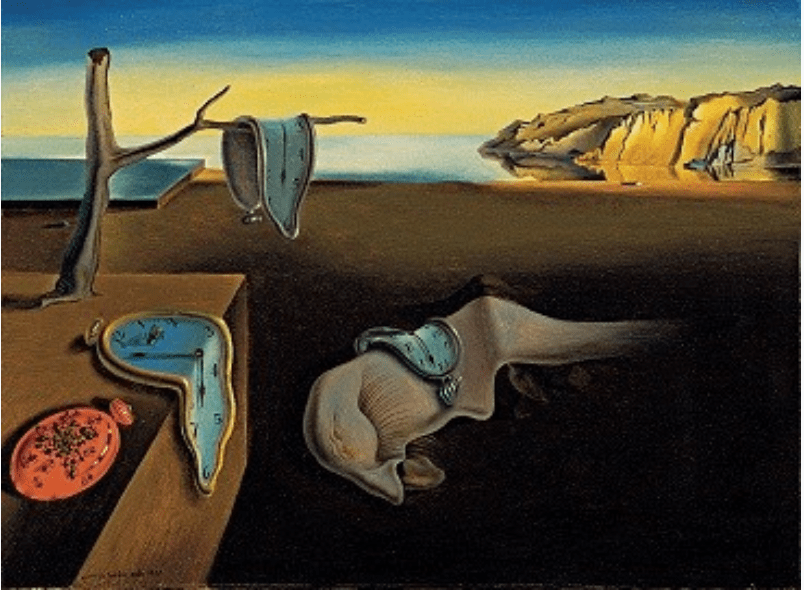
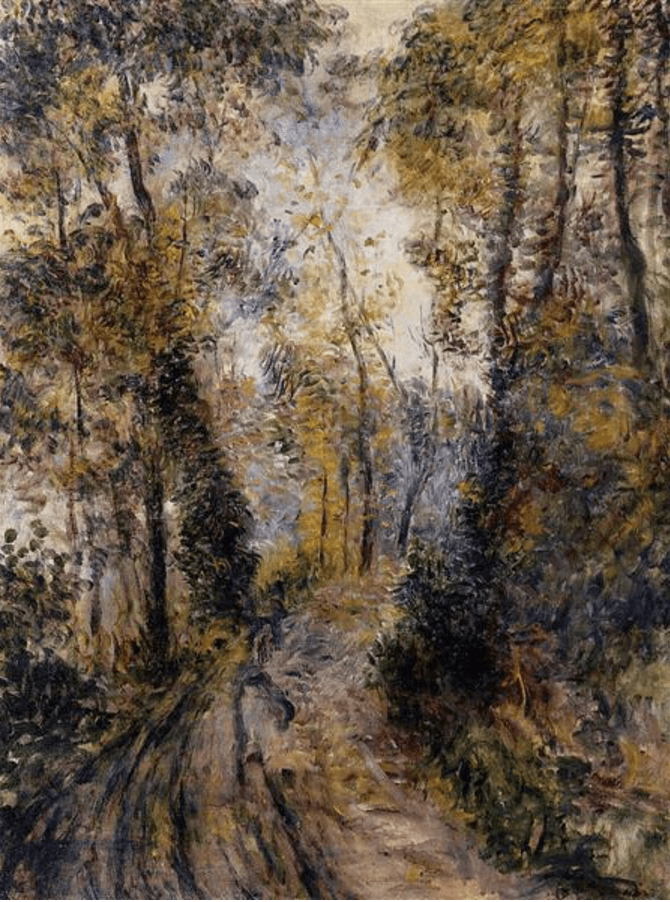
 Brace for the Obscure (60s rock)! / Off the Charts: 60s Rock Revelations😊