While It’s a Long Way Down is their best offering, their first Roulette album, The Fallen Angels . . . is packed with great songs and tight performances. . . . The group could lay down a groove with the best of them but on LP they favor songcraft over noodling. Jack Bryant’s moody vocals and the album’s interesting production tricks catch the ear first but the group’s energetic drive, personal lyrics and catchy melodies will win you over in the end. . . . While not an all-time classic on par with It’s A Long Way Down . . . The Fallen Angels is still a good album by a psychedelic group whose music has held up quite well – they were one of America’s best unknown psych rock groups.
The[] Fallen Angels were a great psychedelic group who were based in the Baltimore, Maryland-Washington D.C. area and recorded two full length albums for Roulette Records. . . . The . . . debut album failed to cause much attention at the record shops and was quickly deleted. Usually this would have meant certain death to a group like The Fallen Angels. However the good folks at Roulette decided to give the group a second shot and they were even afforded the luxury of complete artistic control. This all resulted in the group’s stunning second album It’s A Long Way Down (which sadly suffered the same fate as the group’s debut sales-wise despite it’s obvious quality and inventiveness.) . . . . an exceptional album . . . . that actually lives up to the hype.
Psychedelic Rock N’ Roll tells us of the band’s sad denouement:
Although the [second] album was an artistic triumph, Roulette Records‘s promotional campaign was practically non-existent. With no top ten hits, The Fallen Angels were unceremoniously dropped from the label. Relegated to the status of local legends, [they] continued creating and performing original music in the Washington D.C. area until the fall of 1969 when the group disbanded. . . . [T]he February 1972 issue of Stereo Review, music critic Joel Vance wrote an insightful article entitled The Fragmentation Of Rock, which analyzed the problem of developing new talent in the industry. To illustrate the overwhelming odds against succeeding, he states: “The Fallen Angels, for example, a remarkable band from Washington, D.C., put out two astonishing albums for Roulette Records in 1967/68. But they never made it, even though they were far better than most American groups of the time”.
Pay to Play! The Off the Charts Spotify Playlist! + Brace for the Obscure 60s Rock Merchandise
Please consider helping to support my website/blog by contributing $6 a month for access to the Off the Charts Spotify Playlist. Using a term familiar to denizens of Capitol Hill, you pay to play! (“relating to or denoting an unethical or illicit arrangement in which payment is made by those who want certain privileges or advantages in such arenas as business, politics, sports, and entertainment” — dictionary.com).
The playlist includes all the “greatest songs of the 1960’s that no one has ever heard” that are available on Spotify — now over 1,000 songs. The playlist will expand each time I feature an available song.
All new subscribers will receive a Brace for the Obscure 60s Rock magnet. New subscribers who sign up for a year will also receive a Brace for the Obscure 60s Rock t-shirt or baseball cap. See pictures on the Pay to Play page.
When subscribing, please send me an e-mail (GMFtma1@gmail.com) or a comment on this site letting me know an e-mail address/phone number/Facebook address, etc. to which I can send instructions on accessing the playlist and a physical address to which I can sent a magnet/t-shirt/baseball cap. If choosing a t-shirt, please let me know the gender and size you prefer.
Just click on the first blue block for a month to month subscription or the second blue block for a yearly subscription.
THE GREATEST SONGS OF THE 1960s THAT NO ONE HAS EVER HEARD
1,489) The Ali Baba Revue — “Rats in My Room”
Unlike yesterday, today we have neither a gorgeous nor whimsical song about a room at the top of the stairs. Rather, we have “a rather amazing, incredibly strange tune” (Patrick Lundborg, The Acid Archives, 2nd ed.), “very odd and bizarre quasi-psych-garage with hilarious bad trip lyrics”(SleepObsessed, https://rateyourmusic.com/release/album/ali-baba-revue/let-it-all-hang-out.p/) about a room infested with rats!
As to the Ali Baba Revue and it’s sole LP, Patrick Lundborg writes:
One of the few known LPs on the legendary garage 45 Boss label, this mid-60’s album looks like it could be a lounge title, but except for a few dull ballads . . . it’s more of an east-coast club/r’n’b) album, with an unual, sleazy undertone. I think these may have been the guys who played before the stripper came on! In addition to the seedy sax-organ-guitar r’n’b[, we have “Rats in my Room”!]
Pay to Play! The Off the Charts Spotify Playlist! + Brace for the Obscure 60s Rock Merchandise
Please consider helping to support my website/blog by contributing $6 a month for access to the Off the Charts Spotify Playlist. Using a term familiar to denizens of Capitol Hill, you pay to play! (“relating to or denoting an unethical or illicit arrangement in which payment is made by those who want certain privileges or advantages in such arenas as business, politics, sports, and entertainment” — dictionary.com).
The playlist includes all the “greatest songs of the 1960’s that no one has ever heard” that are available on Spotify — now over 1,000 songs. The playlist will expand each time I feature an available song.
All new subscribers will receive a Brace for the Obscure 60s Rock magnet. New subscribers who sign up for a year will also receive a Brace for the Obscure 60s Rock t-shirt or baseball cap. See pictures on the Pay to Play page.
When subscribing, please send me an e-mail (GMFtma1@gmail.com) or a comment on this site letting me know an e-mail address/phone number/Facebook address, etc. to which I can send instructions on accessing the playlist and a physical address to which I can sent a magnet/t-shirt/baseball cap. If choosing a t-shirt, please let me know the gender and size you prefer.
Just click on the first blue block for a month to month subscription or the second blue block for a yearly subscription.
THE GREATEST SONGS OF THE 1960s THAT NO ONE HAS EVER HEARD
1,488) Timothy Blue— “Room at the Top of the Stairs”
Here is a gorgeous and whimsical song sung (by Timothy) Blue of Glasgow, written by future Alan Parsons Project co-founder and fellow Glaswegian Eric Woolfson.
David Wells tells us that:
It has been reported in the past that Timothy Blue was a pseudonym for . . . Eric Woolfson. Although Woolfson did pen both sides of this single (the b-side co-written with John Carter), Timothy Blue was actually a singer by the name of Tom Briggs. “At the time I was managed by Rod Buckle of Sonet, who arranged for Eric Woolfson to hear me”, says Briggs, “I then came up with the name Timothy Blue and the two tracks were recorded in Denmark Street.” With sterling accompaniment from various six in-house Spark/Southern session men, the 45 is a convincing slice of late 60’s British lysergic pop . . . .
Liner notes to the CD comp Hello Everyone: Popsike Sparks From Denmark Street 1968-70
The Times tells us of Woolfson’s early years in his obituary:
Eric Woolfson was born in Glasgow . . . . After a brief but somewhat unsuccessful foray into accountancy, he found work as a session pianist in London. During this period he worked with musicians such as Jimmy Page and John Paul Jones . . . . He also arranged a meeting with Andrew Loog Oldham, the Rolling Stones’ record producer. Oldham asked him to play a piece that he had written himself and, after just one song, offered Woolfson a publishing deal with . . . Immediate Records. Oldham placed Woolfson’s work with a number of well-known artists of the day, including Marianne Faithfull and Frank Ifield, as well as using him as a session pianist on many of his independent productions. Songs written by Woolfson found their way into various record producers’ hands, including Mick Jagger’s first attempt as a record producer with the singer Chris Farlowe: Woolfson’s song was consigned to the “B” side but the single, Out of Time, reached No 1 in the UK. Woolfson signed other publishing deals as more and more of his songs were taken up by leading recording artists, both in Europe and America. He signed a deal with Southern Music, where he joined the ranks of composers and lyricists such as Andrew Lloyd Webber and Tim Rice. In the late Sixties and early Seventies Woolfson was an independent record producer for several record companies, and worked with artists including Dave Berry, the Equals and the Tremeloes. Despite his success, he found that earning a living as a songwriter was not easy and decided to try artist management. His first two clients were the singer Carl Douglas, who had just had a hit with Kung Fu Fighting, and a record producer, Alan Parsons, whom he had met at Abbey Road Studios.
Pay to Play! The Off the Charts Spotify Playlist! + Brace for the Obscure 60s Rock Merchandise
Please consider helping to support my website/blog by contributing $6 a month for access to the Off the Charts Spotify Playlist. Using a term familiar to denizens of Capitol Hill, you pay to play! (“relating to or denoting an unethical or illicit arrangement in which payment is made by those who want certain privileges or advantages in such arenas as business, politics, sports, and entertainment” — dictionary.com).
The playlist includes all the “greatest songs of the 1960’s that no one has ever heard” that are available on Spotify — now over 1,000 songs. The playlist will expand each time I feature an available song.
All new subscribers will receive a Brace for the Obscure 60s Rock magnet. New subscribers who sign up for a year will also receive a Brace for the Obscure 60s Rock t-shirt or baseball cap. See pictures on the Pay to Play page.
When subscribing, please send me an e-mail (GMFtma1@gmail.com) or a comment on this site letting me know an e-mail address/phone number/Facebook address, etc. to which I can send instructions on accessing the playlist and a physical address to which I can sent a magnet/t-shirt/baseball cap. If choosing a t-shirt, please let me know the gender and size you prefer.
Just click on the first blue block for a month to month subscription or the second blue block for a yearly subscription.
In 1971 Gold was one of the hottest bands in San Francisco without an LP. Bill Graham was booking them to open for 10 years After, Big Brother & the Holding Company, Hot Tuna and more. . . . Country Joe McDonald took a great interest in the Band and worked with them on a number of projects. he even helped them release a 45…the classic “Summertime” b/w “No Parking”. The single went pretty much unnoticed, however they did receive some airplay on top 40 stations in California and Utah. Guitarist Ed Scott founded what was to become Gold in 1967. Known at the time as The Lost Cause, featuring Larry Walton on lead guitar, they went through several names including Golden Gate, and then finally Gold (as in Acapulco Gold). As the years progressed, new members came and went. The band finally broke up in September, 1973 due to frustration over lack of finding a good label and the usual ego tripping issues that cause most bands to fall.
Gold is perhaps the most famous unknown band to come out of San Francisco. If they had a hot LP out while they were playing the San Francisco Bay Area they could have broken out, but it just didn’t happen. . . . I do want to point out that during some peak stages for Gold, Country Joe came in to the picture and became a kind of producer of the group both in the recording studio and in out of the studio. He became like a coach in performing techniques when the band played Winterland. . . . Joe tried his best to bring Gold up as high as they could go. Bill Graham gave them several booking in his big venues and still they fell off the edge and had broken up by 1973. . . . I met [Joe McDonald] while we both served in the US NAVY in Japan during the 1960-61 period. We served as Air Control Tower Operators and lived in the same barracks. . . . Since we were both from California we met up again a few later in San Francisco and then again at the Human Be-in held in Golden Gate Park in January 1967. I didn’t know at that time that Joe had started a band with Barry Melton called Country Joe and The Fish. . . . [I] joined my brother Dennis in managing Gold . . . . The band went on to play all the Bay Area venues including Fillmore, Fillmore-West and Winterland. Opening shows for the likes of Mike Bloomfield, Janis Joplin with Big Brother and the Holding Company and Full Tilt Boogie, Hot Tuna, Malo, Cold Blood, Country Joe, Tower of Power and even British rockers Ten Years After.
Oh, and, “Gold’s biggest gig may have the 1970 Hells Angels party in San Rafael. The bill was Loose Gravel with Mike Wilhelm, Gold, Big Brother and the Holding Company, Full Tilt Boogie and Janis Joplin.”
Gold were a promising if derivative late-’60s San Francisco psychedelic band that only managed to release one single, “No Parking”/”Summertime” (the B-side produced by Country Hoe McDonald) . . . . Drawing from blues, the minor-keyed folk-rock that numerous San Francisco bands blended into their repertoire, and Santana-like rock-Latin fusion, Gold played with likable raw energy, though their material wasn’t as distinctive as that of the major Bay Area psychedelic acts. . . . Gold were neither top-tier when judged against the many similar bands from the time and region, nor possessed of a fully formed musical identity.
Pay to Play! The Off the Charts Spotify Playlist! + Brace for the Obscure 60s Rock Merchandise
Please consider helping to support my website/blog by contributing $6 a month for access to the Off the Charts Spotify Playlist. Using a term familiar to denizens of Capitol Hill, you pay to play! (“relating to or denoting an unethical or illicit arrangement in which payment is made by those who want certain privileges or advantages in such arenas as business, politics, sports, and entertainment” — dictionary.com).
The playlist includes all the “greatest songs of the 1960’s that no one has ever heard” that are available on Spotify — now over 1,000 songs. The playlist will expand each time I feature an available song.
All new subscribers will receive a Brace for the Obscure 60s Rock magnet. New subscribers who sign up for a year will also receive a Brace for the Obscure 60s Rock t-shirt or baseball cap. See pictures on the Pay to Play page.
When subscribing, please send me an e-mail (GMFtma1@gmail.com) or a comment on this site letting me know an e-mail address/phone number/Facebook address, etc. to which I can send instructions on accessing the playlist and a physical address to which I can sent a magnet/t-shirt/baseball cap. If choosing a t-shirt, please let me know the gender and size you prefer.
Just click on the first blue block for a month to month subscription or the second blue block for a yearly subscription.
THE GREATEST SONGS OF THE 1960s THAT NO ONE HAS EVER HEARD
1,486) The Tickle — “Subway (Smokey Pokey World)”
The band’s only A-side is a “minor masterpiece” (liner notes to the CD comp Chocolate Soup for Diabetics: Volumes 1-5: 82 UK Psych Classics), an “urgent, thrillingly hard-edged chunk[] of Beatles-inspired studio psychedelia produced by Tony Visconti”. (David Wells, liner notes to the CD comp Real Life Permanent Dreams: A Cornucopia of British Psychedelia 1965-1970) “From the initial explosion of blistering guitar . . . the song is one of the high points of its genre. The lyrics encompass voles, rubber soles and Tootsie rolls, while the singer yearns for the girl who has escaped the Subway”. (liner notes to the CD comp Acid Drops, Spacedust & Flying Saucers: Psychedelic Confectionery from the UK Underground 1965-1969)
Richie Unterberger gushes (which he rarely does!):
The Tickle were one of numerous British bands to put out just one or two psychedelic singles in that strange period . . . when major UK labels were taking their chances with a lot of psychedelic one-offs. By the standards of this genre — and indeed the standards of psychedelic rock as a whole — [this one] was pretty phenomenal. An arresting melody; exuberant multi-layered harmonies; a dense arrangement with pounding drums, classical-influenced piano, and squiggly guitar; effects which made some of the vocals sound as if they were issuing from an alternate dimension; and a whimsical, cheerful lyric make this one of the best British psychedelic singles, and certainly one of the very best little-known ones in the style. . . . [It] could have been a hit (albeit one that would have been rather adventurous for some listeners and programmers to embrace), but it wasn’t.
As to the Tickle, Chocolate Soup for Diabetics writes:
A short-lived quintet led by Mick Wayne, who’d started out in the Outsiders with Jimmy Page. Thereafter he played with The Hullabaloos and then The Bunch of Fives*, led by unpredictable Pretty Things drummer Viv Prince. Prince departed after the release of their lone 45 in August 1966, upon which Wayne added John Beckerman in his place and renamed them The Tickle (underworld slang for a crime . . . )** Regular performers in London’s psychedelic dungons, they made their sole 45 with Tony Visconti, who’d recently arrived from America and was en route to fame and fortune with T. Rex and David Bowie. [After “Subway”] flopped . . . Wayne drifted into session work (including Bowie’s Space Oddity), as well as playing with Junior’s Eyes and The Pink Fairies.
liner notes to the CD comp Chocolate Soup for Diabetics: Volumes 1-5: 82 UK Psych Classics
* “The idiom ‘a bunch of fives’ is a British slang term dating back to the early 19th century. It refers to a clenched fist, particularly one used for punching. The phrase is used to refer to the five fingers of the hand, emphasizing the closed and forceful nature of the fist.” (https://dictionary.langeek.co/en/word/212043)
** An alternate explanation is that “the group’s name was deemed too confrontational for the prevalent peace’n’love ethos, and they instead adopted the sobriquet THE TICKLE (after all, what could be less aggressive than a tickle?).” (David Wells, liner notes to the CD comp Real Life Permanent Dreams: A Cornucopia of British Psychedelia 1965-1970)
Pay to Play! The Off the Charts Spotify Playlist! + Brace for the Obscure 60s Rock Merchandise
Please consider helping to support my website/blog by contributing $6 a month for access to the Off the Charts Spotify Playlist. Using a term familiar to denizens of Capitol Hill, you pay to play! (“relating to or denoting an unethical or illicit arrangement in which payment is made by those who want certain privileges or advantages in such arenas as business, politics, sports, and entertainment” — dictionary.com).
The playlist includes all the “greatest songs of the 1960’s that no one has ever heard” that are available on Spotify — now over 1,000 songs. The playlist will expand each time I feature an available song.
All new subscribers will receive a Brace for the Obscure 60s Rock magnet. New subscribers who sign up for a year will also receive a Brace for the Obscure 60s Rock t-shirt or baseball cap. See pictures on the Pay to Play page.
When subscribing, please send me an e-mail (GMFtma1@gmail.com) or a comment on this site letting me know an e-mail address/phone number/Facebook address, etc. to which I can send instructions on accessing the playlist and a physical address to which I can sent a magnet/t-shirt/baseball cap. If choosing a t-shirt, please let me know the gender and size you prefer.
Just click on the first blue block for a month to month subscription or the second blue block for a yearly subscription.
South African singer Sharon Tandy had a brief career as a blue-eyed soul singer in Britain in the 1960s, and although her recorded legacy doesn’t contain any big commercial hits, her unique phrasing and passionate vocal style suggest things could easily have been different. . . . Tandy already had a career as a singer and performer in South Africa before relocating to England in 1964 at the suggestion of Frank Fenter, then the U.K. head of Atlantic Records and soon to be her mentor, manager, and husband. Pairing her with the British mod group Fleur de Lys, Fenter used his clout to land her an opening slot on the 1967 Stax-Volt U.K. tour and, also convinced Stax to sign her as an artist, which led to Tandy recording several tracks at the label’s famed McLemore Avenue studio with Booker T. & the MG’s and Isaac Hayes. Tandy’ relationship with Fenter faltered, however, and she returned to South Africa in 1970 where she continued to sing and perform. Her output during the U.K. years, which saw her delivering sides that were mod-tinged and sometimes lightly psychedelic pop-soul, and sounding at times like a hipper, tougher version of Dusty Springfield, remain at the heart of her legacy.
As to Les Fleur de Lys, Richie Unterberger writes:
Although several of their singles are coveted by collectors of ’60s British rock, Les Fleur de Lys remain obscure even by cult standards. That’s partly because they never came close to getting a hit, but also because their furious pace of lineup changes makes their history very difficult to trace, and also precluded any sense of consistent style or identity. The group did release a number of fine singles in the mod-psychedelic style that has become known as “freakbeat,” with more of a soul music influence than most such British acts. Les Fleur de Lys changed lineups about half-a-dozen times during their recording career, which roughly spanned 1965-1969. . . . [S]ome of the musicians passing through went on to commercial success with Journey and Jefferson Starship (keyboardist Pete Sears) and King Crimson (bassist Gordon Haskell). At the outset, they recorded a couple of singles for the Immediate label that were produced by Jimmy Page (there remains some controversy about whether he played guitar on these as well). A cover of the Who’s “Circles” [see #122] featured the fluid, slightly distorted guitar lines that would become Fleur de Lys’ most distinguishing characteristic. The 45s made no commercial impact, however, and Fleur de Lys helped sustain themselves in the late ’60s by backing relocated South African singer Sharon Tandy. Continuing to record intermittently on the side, the band managed a few decent slabs of freakbeat with “Hold On,” “Mud in Your Eye,” [see #32] and their most psychedelic outing, the memorably titled “Gong with the Luminous Nose.
Pay to Play! The Off the Charts Spotify Playlist! + Brace for the Obscure 60s Rock Merchandise
Please consider helping to support my website/blog by contributing $6 a month for access to the Off the Charts Spotify Playlist. Using a term familiar to denizens of Capitol Hill, you pay to play! (“relating to or denoting an unethical or illicit arrangement in which payment is made by those who want certain privileges or advantages in such arenas as business, politics, sports, and entertainment” — dictionary.com).
The playlist includes all the “greatest songs of the 1960’s that no one has ever heard” that are available on Spotify — now over 1,000 songs. The playlist will expand each time I feature an available song.
All new subscribers will receive a Brace for the Obscure 60s Rock magnet. New subscribers who sign up for a year will also receive a Brace for the Obscure 60s Rock t-shirt or baseball cap. See pictures on the Pay to Play page.
When subscribing, please send me an e-mail (GMFtma1@gmail.com) or a comment on this site letting me know an e-mail address/phone number/Facebook address, etc. to which I can send instructions on accessing the playlist and a physical address to which I can sent a magnet/t-shirt/baseball cap. If choosing a t-shirt, please let me know the gender and size you prefer.
Just click on the first blue block for a month to month subscription or the second blue block for a yearly subscription.
As to Steve Aldo, Chocolate Soup for Diabetics tells us:
One of Liverpool’s foremost black singers of ther 1960s, Edward Alban Jean-Pierre Bedford had voice reminiscent of Steve Marriott’s. Having been a ladies’ hairdresser and a sailor, he sang with numerous local bands — Howie Casey & The Seniors, Kingsize Taylor & The Dominos (in Germany), The Challengers, the Nocturnes, The Krew, and The Griff Parry Five — as well as fronting his own outfit, The Challengers. He never found the right recipe for recording success . . . . By 1966 he was singing with a latter-day incarnation of The Fairies, then joined another Merseyside act named The Fix (alongside former Searcher Chris Curtis).
liner notes to the CD comp Chocolate Soup for Diabetics: 82 UK Psych Classics
Pay to Play! The Off the Charts Spotify Playlist! + Brace for the Obscure 60s Rock Merchandise
Please consider helping to support my website/blog by contributing $6 a month for access to the Off the Charts Spotify Playlist. Using a term familiar to denizens of Capitol Hill, you pay to play! (“relating to or denoting an unethical or illicit arrangement in which payment is made by those who want certain privileges or advantages in such arenas as business, politics, sports, and entertainment” — dictionary.com).
The playlist includes all the “greatest songs of the 1960’s that no one has ever heard” that are available on Spotify — now over 1,000 songs. The playlist will expand each time I feature an available song.
All new subscribers will receive a Brace for the Obscure 60s Rock magnet. New subscribers who sign up for a year will also receive a Brace for the Obscure 60s Rock t-shirt or baseball cap. See pictures on the Pay to Play page.
When subscribing, please send me an e-mail (GMFtma1@gmail.com) or a comment on this site letting me know an e-mail address/phone number/Facebook address, etc. to which I can send instructions on accessing the playlist and a physical address to which I can sent a magnet/t-shirt/baseball cap. If choosing a t-shirt, please let me know the gender and size you prefer.
Just click on the first blue block for a month to month subscription or the second blue block for a yearly subscription.
Expressway To Your Skull – a super tripped-out blend of rock, funk, and soul – easily one of Buddy Miles’ most mindblowing albums – and a classic that never lets up at all! Buddy’s leading the whole group on drums – really kicking things large from behind the kit – while the rest of the group jams in a heavy style that’s got plenty of fuzzed-out guitar and jazzy horn riffs – virtually a blueprint for countless other rock funk groups that copped Buddy’s style in years to come. The drums alone are worth the price of admission – but the whole album’s so right, tight, and outta sight that it’s been a favorite in our crates for years!
Although Buddy Miles’ alchemical fusion of psychedelia, blues, and soul did not truly coalesce until his masterpiece Them Changes, his debut LP, Expressway to Your Skull, remains an inspired and original statement of intent, a record that’s both timeless and an unmistakable product of counterculture consciousness. Each of the album’s seven songs is a fascinating montage of sounds and styles — acid-fuzz guitar collides with zig-zagging funk horns, and shrieking keyboards meet juke joint blues riffs head on. Not everything works [and he didn’t like “Funky Mule”]. . . but [what does] is brilliant, its twists and turns navigated by Miles’ deeply soulful vocals and monster drumming.
As to the life of Buddy Miles, Steve Huey tells us:
Best known as the drummer in Jimi Hendrix’s Band of Gypsys, Buddy Miles also had a lengthy solo career that drew from rock, blues, soul, and funk in varying combinations. . . . [H]e started playing the drums at age nine, and joined his father’s jazz band the Bebops at a mere 12 years old. As a teenager, he went on to play with several jazz and R&B outfits, most prominently backing vocal groups like Ruby & the Romantics, the Ink Spots, and the Delphonics. In 1966, he joined Wilson Pickett’s touring revue, where he was spotted by blues-rock guitarist Mike Bloomfield. . . . [who] was putting together a new group, the Electric Flag . . . slated to be an ambitious fusion of rock, soul, blues, psychedelia, and jazz. Bloomfield invited Miles to join, and the band made its debut at the Monterey Pop Festival; unfortunately, the original lineup splintered in 1968. . . . Miles briefly took over leadership of the band on its second studio album, which failed to reignite the public’s interest. With the Electric Flag’s horn section in tow, Miles split to form his own group, the similarly eclectic Buddy Miles Express. . . . [which] issued its debut album, Expressway to Your Skull, in 1968, with . . . Jimmy Hendrix in the producer’s chair. In turn, Miles played on . . . Electric Ladyland . . . . Hendrix also produced the Miles Express’ follow-up, 1969’s Electric Church, and disbanded his backing band the Experience later that year; shortly afterward, Hendrix, Miles, and bassist Billy Cox formed Band of Gypsys, one of the first all-Black rock bands. . . . Miles departed in 1970 . . . but not before his powerhouse work was showcased on the group’s lone album, the live Band of Gypsys. . . . Miles returned to the role of bandleader and recorded his most popular album, Them Changes, in 1971; it stayed on the charts for more than a year . . . . Miles toured with Carlos Santana . . . . cut a few more albums for CBS . . . then moved to Casablanca in 1975 for a pair of LPs. Aside from a one-off album for Atlantic in 1981 . . . Miles kept a low profile over the next decade, partly to battle personal problems. Miles returned in 1986 as the lead voice in a TV ad campaign that featured clay-animated raisins singing “I Heard It Through the Grapevine”; the ads proved so popular that a kid-friendly musical franchise was spun off, and thus Miles became the lead singer of the California Raisins, performing on two albums (mostly R&B covers) and a Christmas special.
Bob Davis reflects on the line that Miles straddled:
Taken on strictly musical terms Expressway To Your Skull is a winner. From a “marketing perspective” it was a disaster for Mercury Records when it was first released.
– It was probably seen as “too soulful” for the late 60’s “rock audience”. – It was probably seen as “too rockish” for Black AM radio stations to play at that time
And that my friends is the continuing paradox of our friend Buddy Miles.
– That’s why he hasn’t (and probably never will be) recognized by the Rock n’ Roll Hall of Fame – That’s why he hasn’t (and probably never will be) recognized by the R&B Foundation
Those entities may never recognize the GREATNESS of Buddy Miles. He was able to hit the nail right on the “sweet spot” where Gospel, Jazz, Blues, Rock, Soul & Funk all meet and for his achievement in doing so Buddy Miles will continue to be penalized and under recognized.
Pay to Play! The Off the Charts Spotify Playlist! + Brace for the Obscure 60s Rock Merchandise
Please consider helping to support my website/blog by contributing $6 a month for access to the Off the Charts Spotify Playlist. Using a term familiar to denizens of Capitol Hill, you pay to play! (“relating to or denoting an unethical or illicit arrangement in which payment is made by those who want certain privileges or advantages in such arenas as business, politics, sports, and entertainment” — dictionary.com).
The playlist includes all the “greatest songs of the 1960’s that no one has ever heard” that are available on Spotify — now over 900 songs. The playlist will expand each time I feature an available song.
All new subscribers will receive a Brace for the Obscure 60s Rock magnet. New subscribers who sign up for a year will also receive a Brace for the Obscure 60s Rock t-shirt or baseball cap. See pictures on the Pay to Play page.
When subscribing, please send me an e-mail (GMFtma1@gmail.com) or a comment on this site letting me know an e-mail address/phone number/Facebook address, etc. to which I can send instructions on accessing the playlist and a physical address to which I can sent a magnet/t-shirt/baseball cap. If choosing a t-shirt, please let me know the gender and size you prefer.
Just click on the first blue block for a month to month subscription or the second blue block for a yearly subscription.
THE GREATEST SONGS OF THE 1960s THAT NO ONE HAS EVER HEARD
1,482)The Love Generation — “Love Is a Rainy Sunday”
The Love Generation don’t get no respect, but their unapologetically sunshiney pop is so groovy. “Perhaps it was the instrumentation which included strings, or the mildly jazzy trumpet solo, but [“Rainy Sunday”] wouldn’t have sounded bad on top-40 radio”. (Bad Cat Records, http://badcatrecords.com/Lovegeneration.htm)
Sam Tweedle says:
[Their] lyrics aren’t hard hitting, and the song writing might not be the best, but the harmonies and vocal arrangements are some of the tightest and best I’ve ever heard. Its music so sweet that it could put a diabetic into a coma. . . . [They] were so squeaky clean that they make The Cowsills sound like degenerates.
Wouldn’t it be wild if every day was St. Valentine’s Day? Toward this end, a group of six youngsters, fresh as a spring bouquet, are spreading the message everywhere as representatives of The Love Generation. An excerpt from the liner notes of their first Imperial Records album best describes their concept: “A part of today; reflecting the feelings of today… this is THE LOVE GENERATION.” Each of the six talented entertainers that comprise The Love Generation has an awareness of “where it’s at” and are determined to pass the word without the aid of cliches or gimmicks.
Oh, and “[t]he Bahler[ brothers] might be most famous/notorious . . . for recording and supplying several songs used in early episodes of The Partridge Family, several of them appearing (with the Bahlers’ lead vocals) on the Partridge Family’s first album.” (Richie Unterberger, https://www.allmusic.com/artist/the-love-generation-mn0000051140)
As to Tom and John Bahler and the Love Generation, Sam Tweedle tells us:
An obscure Los Angeles based vocal group formed at the end of the 1960’s, The Love Generation was formed by superstar session singers John and Tom Bahler, but without generating any hits on their trio of albums, went nowhere. However the rich sound that they created would become a lost predecessor to the pop music of the 70’s, crafted by the brothers who helped define the next generation of bubblegum music fans’ sugar filled soundscape. . . . The Bahler Brothers were involved in the recording of many of the 70’s most beloved pop acts . . . . Tom and John Bahler were interested in music early on in their lives and as teenagers played in an independent big band. After high school, Tom went on to study music at the University of Southern California, while John went into the navy. While attending USC, Tom got interested in folk music and started singing with a group called The Good Time Singers. But when they were about to go on the road, as well as started making regular appearances on The Andy Williams Show, Tom didn’t want to leave school in fear that he might get drafted and sent to Viet Nam. However, when John got discharged from the military, Tom arranged an audition with The Good Time Singers for his brother, who joined the group instead. The Good Time Singers proved popular with Andy’s producer George Wylie, who gave John’s name to Dick Clark to be the musical director on a new country music show featuring Roy Clark called Swingin’ Country. John put together a studio-based country band for the show and brought in Tom who was able to fit his school schedule around filming the show. . . . [A]round this time Tom and John got involved with Ron Hicklin, [who] organized and arranged what would become known as The Ron Hicklin Singers . . . one of the most prolific vocal groups working behind the scenes in Los Angeles. If you needed a cracker jack vocal group behind your recording session, producers would often hire The Ron Hicklin Singers to do the job. What the Wrecking Crew was to session players, The Ron Hicklin Singers were to session singers . . . . Through the 60’s Ron Hicklin worked with major groups such as Jay and the Americans, Gary Lewis and the Playboys, Paul Revere and the Raiders and Gary Puckett and the Union Gap helping them develop their sound. They would also be go to vocalists for TV theme songs, recording memorable themes as “Batman,” “Flipper,” “That Girl,” “Here Comes the Brides” and “Love American Style.” . . . [T]he distinct harmonies of The Ron Hicklin Singers created a signature sound for the era . . . . In 1966 Hicklin was brought in for the original Monkees sessions, and with them he brought in John and Tom Bahler as new members . . . . [T]he Bahler’s . . . began to write . . . [and] there is no denying the influence that Ron Hicklin had on the vocal arrangements. The harmonies are the same vibe as Hicklin’s feel-good melodies and the vocal arrangements have the same tight, clean, nearly other worldly quality that Hicklin brought to every project he directed. With word that “Swingin’ Country” was coming to an end, the Bahler’s recruited four members of the music team – Mitch Gordon, Marilyn Miller, Jim Wheaton and Angie White – and formed The Love Generation. . . . The Love Generation got a record deal with Imperial Records and released their first self-titled album in 1967. When listening to The Love Generation, you need to pack away all sense of cynicism. The songs are pure bubblegum that seemed to be designed for the “modern teenager[.]”. . . Although the Bahler’s were in their 20’s, they already were part of th[e] corporate world, and the lyrics often sound like something written by an older generation trying to figure out what “the kids” would dig. The result is a lot of overuse of the word “groovy” and saturated in terms aimed towards the “love generation.” . . . [B]ut . . . the strength in the music and melodies stand solid. . . . But if the lyrical content of the songs were lacking, there was a powerful magic in the vocal arrangements and the harmonies. By working closely with Hicklin, the Bahlers were masters at arrangements, and the vocals on these songs are, without a doubt, some of the best I’ve ever heard. Nobody in pop music was creating harmonies this tight. Not the Mamas and the Papas. Not the Beach Boys. Not even The Beatles. . . . [For the Love Generation’s third album Montage, from which today’s song is taken, the Bahler brothers] reportedly dropped the other members of the group and did the entire album themselves. . . . [T]he Bahler Brothers were contacted by representatives from the Ford Motor Company who wanted to create their own pop band for their new campaign, “The Going Thing.” With The Love Generation pretty much dead in the water and the members of the group having gone on to other things, the Bahlers reportedly auditioned 400 singers and hired ten to make up their new vocal group called, naturally, The Going Thing. Amongst those hired was their Love Generation compatriot Jim Wessen. With Tom taking lead vocals again, the Bahlers shaped the sound in the Love Generation style, albeit with less complex lyrics, and released four albums for Ford.
Of the many sunshine pop groups that proliferated in Southern California in the late ’60s, the Love Generation were one of the most wholesome and downright sunniest. “Sunniest” is not necessarily synonymous with “best,” even for a genre called “sunshine pop.” The Love Generation’s records were about as over-the-top as their name in their smiley-face, see-no-evil, upbeat, even anodyne harmonized pop/rock, commercial enough to often be mistaken for commercial jingles. . . . The lyrics often tapped into the most optimistic and innocuous traits of the early hippie generation, with references to love-ins, sunshine (naturally), summer, dreams, candy, and magic peppering not just the words but the song titles . . . . It’s flower power at its most floral, and most commercial . . . . There’s some real craft to the ingenious and textured orchestral pop/rock arrangements and male-female harmonic blends, and the melodies are intricate pop-oriented extensions of the Beach Boys . . . the Mamas & the Papas and the Association . . . . But it’s just too damned saccharine and goody-goody . . . . bouncy counterpoint melodies and unremittingly cheerful melodies, though the tunes and vocal delivery often come close to a commercial jingle feel (and nope, that’s not praise).
Pay to Play! The Off the Charts Spotify Playlist! + Brace for the Obscure 60s Rock Merchandise
Please consider helping to support my website/blog by contributing $6 a month for access to the Off the Charts Spotify Playlist. Using a term familiar to denizens of Capitol Hill, you pay to play! (“relating to or denoting an unethical or illicit arrangement in which payment is made by those who want certain privileges or advantages in such arenas as business, politics, sports, and entertainment” — dictionary.com).
The playlist includes all the “greatest songs of the 1960’s that no one has ever heard” that are available on Spotify — now over 900 songs. The playlist will expand each time I feature an available song.
All new subscribers will receive a Brace for the Obscure 60s Rock magnet. New subscribers who sign up for a year will also receive a Brace for the Obscure 60s Rock t-shirt or baseball cap. See pictures on the Pay to Play page.
When subscribing, please send me an e-mail (GMFtma1@gmail.com) or a comment on this site letting me know an e-mail address/phone number/Facebook address, etc. to which I can send instructions on accessing the playlist and a physical address to which I can sent a magnet/t-shirt/baseball cap. If choosing a t-shirt, please let me know the gender and size you prefer.
Just click on the first blue block for a month to month subscription or the second blue block for a yearly subscription.
The Untouchables sure touched some hearts. Billysmith2575 writes:
“This was my grandfather’s band his name was Randy Carlson, he passed away this year July 19th, but he left his mark with his talent and passion for music and art. A great man, father, brother, husband, son, and great grandfather. I love u papa.”
My cousin Frank Butorac was the lead guitar player in this band when I was a kid. My mom took him down to radio KASY in Auburn Washington and had them play this record on the AM radio. I was 7 years old. My cousin lived with us for a while and thanks to him, I got my first guitar in 2nd grade, 1967.”
Pay to Play! The Off the Charts Spotify Playlist! + Brace for the Obscure 60s Rock Merchandise
Please consider helping to support my website/blog by contributing $6 a month for access to the Off the Charts Spotify Playlist. Using a term familiar to denizens of Capitol Hill, you pay to play! (“relating to or denoting an unethical or illicit arrangement in which payment is made by those who want certain privileges or advantages in such arenas as business, politics, sports, and entertainment” — dictionary.com).
The playlist includes all the “greatest songs of the 1960’s that no one has ever heard” that are available on Spotify — now over 1,000 songs. The playlist will expand each time I feature an available song.
All new subscribers will receive a Brace for the Obscure 60s Rock magnet. New subscribers who sign up for a year will also receive a Brace for the Obscure 60s Rock t-shirt or baseball cap. See pictures on the Pay to Play page.
When subscribing, please send me an e-mail (GMFtma1@gmail.com) or a comment on this site letting me know an e-mail address/phone number/Facebook address, etc. to which I can send instructions on accessing the playlist and a physical address to which I can sent a magnet/t-shirt/baseball cap. If choosing a t-shirt, please let me know the gender and size you prefer.
Just click on the first blue block for a month to month subscription or the second blue block for a yearly subscription.
THE GREATEST SONGS OF THE 1960s THAT NO ONE HAS EVER HEARD
1,480)Turquoise — “Tales of Flossie Fillett”
From neighbors and friends of the Kinks in Muswell Hills, here is a “Kinks-flavored . . . supremely commercial piece of vinyl” (Stefan Granados, liner notes to the CD comp Turquoise: The Further Adventures of Flossie Fillett: The Collected Recordings 1966-1969) Should have been the A-side!
Stephen Thomas Erlewine tells us about Turquoise:
A quick listen to Turquoise with no knowledge of their background will surely bring two names immediately to mind: the Kinks and the Who. So, it should be no surprise that Turquoise were not only influenced by their British peers but were close associates, friends of Ray and Dave Davies, produced by Dave for their first demos — when the band was still known as “the Brood” — and produced by Keith Moon and John Entwistle for their second round of pre-professional recordings. Turquoise released two singles for Decca in 1968 before disbanding and those two singles, like much British pop-psych, earned them a cult of some size . . . . More than any other band from the late ’60s, Turquoise modeled themselves after mid-period Kinks, circa Something Else and Village Green Preservation Society to the extent that singer/songwriter Jeff Peters (who wrote almost all of the band’s recorded work, usually in collaboration with Ewan Stephens) even penned his own tune called “Village Green.” Like the Kinks, Turquoise were distinctly, defiantly British in subject matter and approach . . . often sounding fey and campy yet managing to stay away from being overtly twee, and even if their melodies could sigh and swirl in psychedelic colors, they never were that trippy: they were grounded by acoustic guitars that jangled like Ray Davies’ on Something Else and they had ragged harmonies and a pop sense reminiscent of the brothers Davies.
Turquoise was a British pop-psych group who only officially released two singles in their short existence as a band, but the four songs on those two releases became beloved by collectors of the genre . . . . The group, who initially called themselves the Brood, was formed in North London’s Muswell Hill area in 1966 by Jeff Peters, Ewan Stephens, and Vic Jansen (a fourth member, Barry Hart, was added later), who were all friends and neighbors of the Kinks’ Ray and Dave Davies. Dave Davies produced a batch of demos for the Brood in 1966, and a second batch was produced by the Who’s Keith Moon and John Entwistle a year later in 1967. Eventually the Brood was signed to Decca Records, and after a name change to Turquoise, released two wonderful double-sided singles, “’53 Summer Street”/”Tales of Flossie Fillett” and “Woodstock”/”Saynia, [see #37]” but neither release really took off, and the band called it quits in 1969. Peters and Hart went on to form Slowbone, releasing an album, Tales of a Crooked Man, in 1974.
What about that Moon/Entwistle thing? Jeff “Gus” Peters told Stefan Granados that:
[“]John Mason [car dealer to the stars] wanted to get into the music business so he said he’d manage us.” Mason’s first coup as manager of the Brood [the band’s first name] was to cajole John Entwistle and Keith Moon . . . into producing a demo of the group. Peters’ recollection is that “Polydor had apparently given each member of The Who studio tie to go our and find bands to record. From what I understand, Keith Moon came down to Joyhn Mason’s showroom and John did him a deal like ‘do something for my band and I’ll get you a good price on the Bentley,’ which is basically what happened!”
Stefan Granados, liner notes to the CD comp Turquoise: The Further Adventures of Flossie Fillett: The Collected Recordings 1966-1969
Pay to Play! The Off the Charts Spotify Playlist! + Brace for the Obscure 60s Rock Merchandise
Please consider helping to support my website/blog by contributing $6 a month for access to the Off the Charts Spotify Playlist. Using a term familiar to denizens of Capitol Hill, you pay to play! (“relating to or denoting an unethical or illicit arrangement in which payment is made by those who want certain privileges or advantages in such arenas as business, politics, sports, and entertainment” — dictionary.com).
The playlist includes all the “greatest songs of the 1960’s that no one has ever heard” that are available on Spotify — now over 900 songs. The playlist will expand each time I feature an available song.
All new subscribers will receive a Brace for the Obscure 60s Rock magnet. New subscribers who sign up for a year will also receive a Brace for the Obscure 60s Rock t-shirt or baseball cap. See pictures on the Pay to Play page.
When subscribing, please send me an e-mail (GMFtma1@gmail.com) or a comment on this site letting me know an e-mail address/phone number/Facebook address, etc. to which I can send instructions on accessing the playlist and a physical address to which I can sent a magnet/t-shirt/baseball cap. If choosing a t-shirt, please let me know the gender and size you prefer.
Just click on the first blue block for a month to month subscription or the second blue block for a yearly subscription.
THE GREATEST SONGS OF THE 1960s THAT NO ONE HAS EVER HEARD
1,479)Thoughts and Words — “And the Tears Fall Like Rain”
From Looks Like Rain to “And the Tears Fall Like Rain”, beguiling UK folk rock by Thoughts and Words (see #237, 580).
“Communication is my problem” They must have been watching Cool Hand Luke.
As Vernon Joynson says, “[Martin] Curtis and [Bob] Ponton had been the founders and mainstays of Pandamonium [see #115] but, tired of record company inteference, resolved in 1969 to proceed as a stripped-down duo.” (The Tapestry of Delights Revisited) Bob Ponton himself recollects (in the liner notes to the CD reissue of Thoughts and Words’ eponymous ’69 album (from which today’s song is drawn):
It got me down. I went to bed and couldn’t get up for a month.
We were furious at the way we’d been treated, so decided to ditch the production-heavy approach and make more simple, straightforward music together instead.
We were getting more and more into acoustic sounds and absolutely loved the Incredible String Band.
As to the album, Ponton calls it “‘classical folk’ — many of [the] chord progressions are straight out of Bach.” Joynson calls it “a dainty collection of earnest folk-pop.”
Team Rock gives some backstory:
Bob Ponton and Martin Curtis met at primary school where they formed the first band and later played around the youth clubs in Gravesend, until they met Ray Jenns and Dennis Jenns. . . . [and] joined [their] band which later turned into the Pandas. . . . [then] Pandamonium[. A]fter the demise of Pandamonium they formed the duo Thoughts and Words. In mid-’68, five years and three singles into their career as Pandamonium, Bob Ponton and Martin Curtis . . . [were] at the epicentre of London’s psychedelic folk scene and hanging out with the likes of Davy Graham and Sandy Denny and the other Fairport members. The duo, fed up with the way they had been treated and supported by Denny and producer Joe Boyd, decided to go it alone. They’d built up songs and confidence, so Ponton decided to contact his old work mate, Andrew Lauder who was in charge at Liberty. After hearing the material, Lauder placed the duo in the tender care of rising producer and head of A&R, Mike Batt. The duo’s delicate, wistful songs gave Batt an ideal opportunity to hone his talents as an arranger and producer, as well as the album’s pianist. Thoughts and Words is a largely upbeat collection of melodic, pensive songs, so unlike the psychedelic rock vibe that had prevailed in their late ‘60s output. The duo decided to name the album after a track on the Byrd’s album Younger Than Yesterday, but were surprised to learn that they had been given the name too! The sound is warm and soft – and so is the music. A great folk album.
Thoughts and Words itself is by and large pleasant folk-rock, but lacked either the identity or strong material necessary to make a strong impression on the late-’60s British rock scene. Certainly they were a versatile group, as “Morning Sky” [see #237] was about as close as any U.K. act came to approximating the sounds of the Byrds circa 1967. . . . [T]he album . . . find[s] its most pleasant groove on dreamy acoustic songs with fingerpicked guitar in the style of Donovan and Paul McCartney at his lightest.
I have never disagreed more with Richie Unterberger than with his first sentence. The album is stellar. Unfortunately, as the CD reissue’s liner notes note: “Despite the LP receiving enthusiastic notices in IT, Melody Maker and elsewhere, Liberty [the record label] did little to promote it and sales were sluggish.”
Pay to Play! The Off the Charts Spotify Playlist! + Brace for the Obscure 60s Rock Merchandise
Please consider helping to support my website/blog by contributing $6 a month for access to the Off the Charts Spotify Playlist. Using a term familiar to denizens of Capitol Hill, you pay to play! (“relating to or denoting an unethical or illicit arrangement in which payment is made by those who want certain privileges or advantages in such arenas as business, politics, sports, and entertainment” — dictionary.com).
The playlist includes all the “greatest songs of the 1960’s that no one has ever heard” that are available on Spotify — now over 1,000 songs. The playlist will expand each time I feature an available song.
All new subscribers will receive a Brace for the Obscure 60s Rock magnet. New subscribers who sign up for a year will also receive a Brace for the Obscure 60s Rock t-shirt or baseball cap. See pictures on the Pay to Play page.
When subscribing, please send me an e-mail (GMFtma1@gmail.com) or a comment on this site letting me know an e-mail address/phone number/Facebook address, etc. to which I can send instructions on accessing the playlist and a physical address to which I can sent a magnet/t-shirt/baseball cap. If choosing a t-shirt, please let me know the gender and size you prefer.
Just click on the first blue block for a month to month subscription or the second blue block for a yearly subscription.
It is from the legendary country songwriter Newbury’s second LP — Looks Like Rain (the first he didn’t disown). “[T]he album is visionary. The listener is drawn into the narrator’s world. One of uncertainty, a dreamlike hallucinatory emotional landscape where heartbreak, loneliness, madness and despair exist all to the sound of wind chimes and rain.” (Franco, https://whatfrankislisteningto.negstar.com/americana/mickey-newbury-looks-like-rain-mercury-1969/) Thom Jurek writes of the album:
In sonic terms, Looks Like Rain sounds as far from the studio slickness of the “countrypolitan” machine that rock & roll was from Lawrence Welk. In fact, Newbury’s sound held more in common with Tim Buckley’s or Simon & Garfunkel’s or Fred Neil’s. But even here, comparisons fail. . . . Newbury created an album so haunting, so elegant, so full of melancholy and mystery, it sounds out of time, out of space and is as enigmatic in the 21st century as it was when it was released in 1969. The album’s sound seems to come from inside the mind of the listener, rather than from the speakers on the stereo. . . . Newbury’s stories are so vivid, and so picaresque even with their lyric economy, they feel like movies. He can move back and forth in time while changing images to suit his evolving narrative. . . . [I]t is masterfully and deliberately articulated. It is fine and accurate in its execution yet so carefully soft and spacious in its pace, it is brimming with strangeness balanced by charm; it defies any attempt at categorization or criticism. While it was regarded with nearly complete commercial disinterest in its day, it has been suitably regarded as a rare work of genius that has influenced countless songwriters in its wake.
He wrote songs that were covered by Elvis Presley, Ray Charles, Kenny Rogers, Andy Williams (!), Johnny Cash, Scott Walker, Ray Charles, Joan Baez, Dolly Parton, Tammy Wynette, The Box Tops, Bonnie ‘Prince’ Billy, Nick Cave and others. He has been recorded over 1300 times by more than 1000 performers Musicians know and love him. . . . Newbury writes lyrics that are incredibly personal. His songs are about loss, love and life stripped bare of bravado. The songs are confessional, naked and sincere. Musically, he always seems to be trying to make sure the music reflects the lyrical content in both rhythm and structure. He is not adverse to using studio tricks or sound affects in his music if that will help create the desired mood in the lyrics. Newbury wasn’t the first person to write personal songs in country. Hank Williams made a career of it in the late 40s and early 50s. Newbury wasn’t even the only one doing in the late 1960s, Kris Kristofferson, John Hartford, Buck Owens, and others were doing the same. Newbury was, perhaps, the most fragile and wounded of the new writers but he was also, perhaps, the least wedded to country sounds even though he embraced his country music history. He brought post Dylan folky ruminations and a gentle pop sensibility to his country music. . . . He is Americana, country, singer songwriter, folk, progressive country, old timey, pop and even rock at times.
Along with fellow songwriters such as Kris Kristofferson, Willie Nelson, and Tom T. Hall, Mickey Newbury helped revolutionize country music in the 1960s and ’70s by bringing new, broader musical influences as well as a frank, emotional depth to the music — while at the same time never losing respect for tradition. Newbury infused his country music with haunting beauty and spiritual melancholy, creating an impressive collection of introspective, emotionally complex songs that are more spiritual cousins of the work of Leonard Cohen than that of Roy Acuff. (Newbury, in fact, calls himself a folksinger and has never toured with a band, preferring the ambience of a quiet coffeehouse.) . . . Newbury was better known as a songwriter than as a singer. Newbury recorded 15 albums over a nearly 30-year period . . . but his soft, beautiful tenor voice rarely reached the charts.
[Newbury] sang in a vocal group called the Embers . . . and played and hung out in Houston’s black R&B and blues clubs, where he was nicknamed “the Little White Wolf” by Gatemouth Brown. Newbury joined the Air Force and was stationed in England. After his discharge, he turned back to music. In 1963, a friend of his landed him a writing job with Acuff-Rose, and Newbury moved to Nashville. During the next several years, he became friends with such singers as Roy Orbison, Roger Miller, Kris Kristofferson, and Townes Van Zandt. . . . In 1966 Don Gibson had a Top Ten hit with Newbury’s “Funny Familiar Forgotten Feelings,” and Newbury’s writing career was off and running. A long string of hit songs followed, recorded by such artists as Kenny Rogers & the First Edition (“Just Dropped In”), Eddy Arnold (“Here Comes the Rain, Baby”), and Andy Williams (“Sweet Memories”). Newbury’s first album of his own was Harlequin Melodies for RCA in 1968 . . . an album he later detested[]. He quickly got out of his RCA contract and instead turned to a small four-track studio . . . in a converted garage (becoming, before the word “outlaw” ever became fashionable, one of the first Nashville artists to work outside the studio system). It was here that he recorded some of his best solo albums, starting with Looks Like Rain for Mercury . . . . But Mercury didn’t support the album, and so Newbury switched to Elektra in 1970. With this label, he released a string of superb albums . . . . In 1972 Newbury had a Top 30 hit with “American Trilogy,” a suite-like arrangement of “Dixie,” “Battle Hymn of the Republic,” and “All My Trials.” The song later became a major hit for Elvis Presley and a standard in his repertoire.
Pay to Play! The Off the Charts Spotify Playlist! + Brace for the Obscure 60s Rock Merchandise
Please consider helping to support my website/blog by contributing $6 a month for access to the Off the Charts Spotify Playlist. Using a term familiar to denizens of Capitol Hill, you pay to play! (“relating to or denoting an unethical or illicit arrangement in which payment is made by those who want certain privileges or advantages in such arenas as business, politics, sports, and entertainment” — dictionary.com).
The playlist includes all the “greatest songs of the 1960’s that no one has ever heard” that are available on Spotify — now over 900 songs. The playlist will expand each time I feature an available song.
All new subscribers will receive a Brace for the Obscure 60s Rock magnet. New subscribers who sign up for a year will also receive a Brace for the Obscure 60s Rock t-shirt or baseball cap. See pictures on the Pay to Play page.
When subscribing, please send me an e-mail (GMFtma1@gmail.com) or a comment on this site letting me know an e-mail address/phone number/Facebook address, etc. to which I can send instructions on accessing the playlist and a physical address to which I can sent a magnet/t-shirt/baseball cap. If choosing a t-shirt, please let me know the gender and size you prefer.
Just click on the first blue block for a month to month subscription or the second blue block for a yearly subscription.
THE GREATEST SONGS OF THE 1960s THAT NO ONE HAS EVER HEARD
1,477)The Sonics — “Strychnine”
Aristotle’s favorite tune! “If you listen to what I say You’ll try strychnine some day Make you jump, it’ll make you shout It’ll even knock you out” The Sonics were “flame-throwing” (Cub Koda, https://www.allmusic.com/album/here-are-the-sonics-mw0000245191), as “Gerry Rosalie, the song’s author, pounds the 88s and screams out the words with his customary fervor over Rob Lind’s growling sax and the band’s rocking backbeat, while Larry Parypa kicks in with another mangled, tube-heated guitar break.” (Mike Stax, liner notes to the CD comp Nuggets: Original Artyfacts From The First Psychedelic Era 1965-1968) It’s from the Sonics’ first LP — Here Are the Sonics!!! — “the greatest punk rock album ever made. Recorded on the run by a bunch of beat infected no-counts and released on a hunch by a fledgling local label that just let it all roll”. (Miriam Linna, liner notes to the CD reissue of Here Are the Sonics!!!) Lead guitarist Larry Parypa recalled: “I know from the songs it sounds like it was like a satanic kind of thing we were on — I mean, The Witch, Strychnine, Psycho. I’m not sure why it turned out that way!” (liner notes to the CD reissue of Here Are the Sonics!!!)
Matthew Greenwald writes that:
One of the most demented and powerful obscurities to come out of the ’60s, [it] was a regional hit in the band’s hometown of Tacoma, WA, in 1965. A combination of loud, distorted frat rock, psychedelic, and hard, Rolling Stones-inspired garage rock & roll, the song sings the virtues of taking the poison as opposed to catching a buzz from wine or anything else. . . . [T]he powerful, live-in-the-studio performance captures this band in all of their glory, with singer/pianist Gerry Roslie screaming the lyrics Little Richard-style over the wailing din of the band. For sheer power and attitude, this record predated punk by over ten years.
Of all the garage bands that made a glorious racket in the 1960s, few if any were louder, wilder, or more raw than the Sonics, a Tacoma, Washington quintet whose over the top style, complete with roaring guitars, pounding drums, and the fevered howls of lead singer Gerry Roslie, anticipated the mania of punk and pushed rock & roll deep into the red zone during their 1963-1966 heyday. The Sonics were stars in Washington, but it took a while for the rest of the world to catch on, and in time they would become one of the most fabled bands on the Pacific Northwest rock scene. The Sonics were founded in 1960 by guitarist Larry Parypa . . . . beg[inning] as an instrumental combo that featured Larry’s older brother Andy . . . on guitar and, for a brief time, another Parpya sibling, Jerry, on sax, while their mom occasionally played bass at rehearsals. The Sonics initially specialized in tough R&B material and guitar-based instrumentals . . . . Before long, the Sonics became a fixture on the Tacoma teen club scene . . . . The Sonics’ early lineup shifted often, but the group’s membership became stable in late 1963 with the arrival of . . . . [d]rummer Bob Bennett, sax player Rob Lind, and keyboard player Gerry Roslie . . . with Larry remaining on lead guitar and Andy shifting to bass. . . . [T]he new lineup evolved into a powerhouse . . . when Roslie was encouraged to sing, they discovered he could wail like a leather-lunged Little Richard, and the Sonics quickly became the most talked-about band in the Northwest. In 1964, Buck Ormsby, who played bass with Northwest heroes the Wailer, was impressed with the Sonics’ new lineup and became their manager, as well as signing them to Etiquette Records, a local label he helped run. For their first single, the Sonics took one of their few original tunes and changed it from a number about a proposed dance craze into a cautionary tale about a treacherous female; the results, “The Witch[]” [see #230] . . . was louder and crazier-sounding than anything else a Northwest band had committed to tape. . . . [It] was too much for many local radio stations, but eventually it broke through in enough smaller markets that the record became a major hit in the Northwest . . . . [T]he band recorded another original, “Psycho[]” [see #231] that soon turned the 45 into a two-sided hit. In 1965, Ormsby rushed the Sonics into the studio to cut a full-length album, and Here Are the Sonics!!! was a garage rock touchstone . . . . [T]he Sonics [became] a major draw in the Northwest . . . playing some of the biggest and most prestigious venues available to local rock bands of the day . . . . In 1966, the Sonics cut a second LP for Etiquette . . . Boom, which featured several more local hits . . . . However, it became evident that the Sonics had gone as far as a local band could go in the Northwest, while they enjoyed only scattered airplay in the rest of the United States. The Sonics signed a deal with Jerden Records, another Northwest label that had a distribution deal with ABC-Paramount Records, giving the band a better shot at national success. Unfortunately, Jerden . . . sent the Sonics to Los Angeles to record their third album, 1967’s Introducing the Sonics . . . and [the LP] sounded anemic compared to their Etiquette recordings . . . . Bennett and Roslie left the band, and . . . it wasn’t long before the Sonics were history.
Pay to Play! The Off the Charts Spotify Playlist! + Brace for the Obscure 60s Rock Merchandise
Please consider helping to support my website/blog by contributing $6 a month for access to the Off the Charts Spotify Playlist. Using a term familiar to denizens of Capitol Hill, you pay to play! (“relating to or denoting an unethical or illicit arrangement in which payment is made by those who want certain privileges or advantages in such arenas as business, politics, sports, and entertainment” — dictionary.com).
The playlist includes all the “greatest songs of the 1960’s that no one has ever heard” that are available on Spotify — now over 900 songs. The playlist will expand each time I feature an available song.
All new subscribers will receive a Brace for the Obscure 60s Rock magnet. New subscribers who sign up for a year will also receive a Brace for the Obscure 60s Rock t-shirt or baseball cap. See pictures on the Pay to Play page.
When subscribing, please send me an e-mail (GMFtma1@gmail.com) or a comment on this site letting me know an e-mail address/phone number/Facebook address, etc. to which I can send instructions on accessing the playlist and a physical address to which I can sent a magnet/t-shirt/baseball cap. If choosing a t-shirt, please let me know the gender and size you prefer.
Just click on the first blue block for a month to month subscription or the second blue block for a yearly subscription.
THE GREATEST SONGS OF THE 1960s THAT NO ONE HAS EVER HEARD
1,476)The Perishers — “How Does It Feel?”
“This obscure quartet’s uplifting 45 is one of the most instantly catchy songs of the era” (liner notes to the CD comp Chocolate Soup for Diabetics: 82 UK Psych Classics), “[a]bsolutely brilliant given it was 42 years ago”, “[s]o ahead of their time”. (Stormin, https://www.45cat.com/record/tf965) So true, sounds like a 90’s hit that Chumbawamba might have come up with!
Dave Stephenson (lead vocals/keyboards), Yanny Tsamplakos (lead guitar/vocals), Dave Edwards (bass guitar/vocals) and Mike Baron (drums) were schoolmates who were all in the same class at King David School in the Liverpool suburb of Childwall. The quartet formed The Seftons (the name being chosen as a result of one of the group members coming from Sefton Park) in 1963 at which point they played their first gig. The Seftons quickly gained popularity . . . . One of the group’s most important appearances was a gig at the Blue Angel where they were introduced to businessman and promoter Allan Williams, the original booking agent and first manager of The Beatles. Williams was enthralled with the group and their music and it is believed that Williams arranged for The Seftons to gig at The Cavern. Williams brought in an abundance of female teenagers as well as some magazine reporters. Williams introduced The Seftons as ‘Merseyside’s new number one band’ . . . . Due to this publicity, CBS records became aware of The Seftons and signed them to a recording contract. The group travelled down to London where they recorded “I Can See Through You” b/w “Here Today” for a January 1967 release. The single sold quite well but failed to enter the charts. The group continued to be very busy on the northern club scene but decided to become professional and move down to London from Liverpool, a decision that resulted in Dave Edwards quitting the group and continuing on to college, while Norman ‘hooligan bass’ Bellis was brought in as the replacement bass guitarist in January 1968. . . . Mike Berry, formerly with Sparta Music, had been hired as Apple’s new talent scout. Near the end of January 1968, Mike saw The Seftons . . . in Liverpool and signed them to Apple Publishing and became their manager. Mike rechristened The Seftons as The Perishers and found them a house to live in in London, with Apple funding the rent in the group’s early days. Mal Evans had wanted The Perishers to sign with Apple records since Mal wanted to get into record production. As a result, The Perishers began to work on the song “How Does It Feel” . . . . However . . . Berry decided to leave Apple and return to Sparta Music [and] was allowed to take The Perishers . . . with him to Sparta, along with the copyrights to the songs both groups had written and assigned to Apple publishing. . . . The Perishers [signed] to Fontana records, resulting in The Perishers recording “How Does It Feel” b/w “Bye Bye Baby” in July 1968 that saw a September release . . . . [T]he record did not get into the charts. . . . The Perishers . . . recorded many cover versions of hits of the day on the Sounds Like Hits series performed by uncredited artists released on the Fontana Special label . . . . In July 1969, Norman Bellis left for the US, where he worked for nine months, playing as session bassist for artists such as Jr. Walker and the All Stars, Four Tops, The Temptations and the Walker Brothers. Peter Combes became the bassist at this time. In 1969, The Perishers also released a cover of Netherlands group The Shocking Blue’s “Venus” under the name of Yankee Horse . . . . Upon returning to England, Norman Bellis joined Rusty Harness . . . . [and] met up with his former mates from the disbanded group The Perishers, with the re-formed group becoming Worth. Worth signed to CBS for the release of five singles including . . . the Norman Bellis composition “Hey Mr. Lonely”, a hit in several European countries. In 1975, Worth broke up, but Yanny Tsamplakos, Norman Bellis and Mike Baron continued as hard rock band Tiger with new member Steve Russell, who recorded one single . . . in 1975 before splitting.
Pay to Play! The Off the Charts Spotify Playlist! + Brace for the Obscure 60s Rock Merchandise
Please consider helping to support my website/blog by contributing $6 a month for access to the Off the Charts Spotify Playlist. Using a term familiar to denizens of Capitol Hill, you pay to play! (“relating to or denoting an unethical or illicit arrangement in which payment is made by those who want certain privileges or advantages in such arenas as business, politics, sports, and entertainment” — dictionary.com).
The playlist includes all the “greatest songs of the 1960’s that no one has ever heard” that are available on Spotify — now over 900 songs. The playlist will expand each time I feature an available song.
All new subscribers will receive a Brace for the Obscure 60s Rock magnet. New subscribers who sign up for a year will also receive a Brace for the Obscure 60s Rock t-shirt or baseball cap. See pictures on the Pay to Play page.
When subscribing, please send me an e-mail (GMFtma1@gmail.com) or a comment on this site letting me know an e-mail address/phone number/Facebook address, etc. to which I can send instructions on accessing the playlist and a physical address to which I can sent a magnet/t-shirt/baseball cap. If choosing a t-shirt, please let me know the gender and size you prefer.
Just click on the first blue block for a month to month subscription or the second blue block for a yearly subscription.
THE GREATEST SONGS OF THE 1960s THAT NO ONE HAS EVER HEARD
1,473) John Lennon and the Plastic Ono Band — “God”
While Lennon (see #29, 113, 520, 522 ) proclaims in “God” that he doesn’t believe in the Bible or Jesus, he says the same about Elvis, Dylan and the Beatles. Rather than an anti-religion song, I take it more as his casting off of the oppressive cloak of rock n’roll messiahdom, just as Dylan had cast off the cloak of protest singer messiahdom years earlier. “I just believe in me, Yoko, and me, and that’s reality”
The Beatles Bible writes:
On his debut solo album John Lennon closed the book on many aspects of his past. Much of the record was devoted to his troubled relationship with his parents, but The Beatles – in many ways his surrogate family throughout the 1960s – still loomed large in his life and career. On the song “God” he finally broke the spell, telling the world that the dream was over with his stark revelation: “I don’t believe in Beatles”. . . .
Having delivered th[at] bombshell . . . Lennon reinforced the message further: “I was the dream weaver, but now I’m reborn I was the walrus, but now I’m John. And so dear friends you just have to carry on. The dream is over.” The section featured some of the finest vocals of John Lennon’s entire career. It was as if, finally free from making myths, casting spells and co-writing the 1960s, he had at last found his true voice. All illusions had been cast off and he had found his reality with Yoko Ono. The rest of the world had to find its own way now.
Lennon’s aesthetic of simplicity could not have been more rigorously applied. The song is unsparing in its insistence that people lose their illusions; “And so, dear friends, you just have to carry on,” is as much solace as he is willing to offer. . . . The dream is over . . . and Lennon’s role as the “dreamweaver” — read “Beatle” — is finished.
liner notes to the CD comp Lennon: Anthology
Lennon composed “God” while undergoing Primal Scream therapy with Dr. Arthur Janov. Janov explained that:
[Lennon] rented a house in Bel Air, which is a very ritzy area here, and we talked about things. He said: “What about God?” and I would go on and on about [how] people who have deep pain generally tend to believe in God with a fervency. And he said: “Oh, you mean God is a concept by which we measure our pain.” Just bang. I would go all around it and he was there, just like that. And that was John. John could take very profound philosophical concepts and make it simple.
Classic Albums: Plastic Ono Band
Lennon himself said:
Like a lot of the words, they just came out of me mouth. It started off like that. “God” was stuck together from three songs almost. I had the idea, “God is the concept by which we measure our pain”. So when you have a [phrase] like that, you just sit down and sing the first tune that comes into your head. And the tune is the simple [sings] “God is the concept – bomp-bomp-bomp-bomp” ’cause I like that kind of music. And then I just rolled into it. [Sings] “I don’t believe in magic” – and it was just going on in me head. And I Ching and the Bible, the first three or four just came out, whatever came out. . . . I don’t know when I realised I was putting down all these things I didn’t believe in. I could have gone on, it was like a Christmas card list – where do I end? Churchill, and who have I missed out? It got like that and I thought I had to stop… I was going to leave a gap and say, just fill in your own, for whoever you don’t believe in. It just got out of hand. But Beatles was the final thing because it’s like I no longer believe in myth, and Beatles is another myth. I don’t believe in it. The dream’s over. I’m not just talking about The Beatles is over, I’m talking about the generation thing. The dream’s over, and I have personally got to get down to so-called reality.
Jann Wenner, Lennon Remembers
As to the recording of “God”, the Beatles Bible explains that:
“God” like “I am a Walrus” and “Happiness Is a Warm Gun” before it, was made from three unfinished compositions. Lennon and Paul McCartney often worked in this way, combining unrelated works on songs such as “She Said She Said”, “A Day in the Life” and “I’ve Got a Feeling” as well as much of Abbey Road . . . . John Lennon initially performed the song on an acoustic guitar . . . . He later turned to the piano, and also brought in his old friend Billy Preston to add another piano part. . . . Preston played a Steinway grand piano, while Lennon performed on a honky tonk-style upright Steinway which offered a considerably different sound.
John actually said, “Come on Billy, do a little of your gospel piano, it’s about God, you know.” So it inspired him to something that’s his upbringing; Billy learned piano playing and organ playing in church. He really believed in God and that’s the way he played on this song. It’s beautiful.
Peel’s “God” is hardly an anti-religion song, unlike another query from a kid to God song, XTC’s “Dear God”. Peel sings “I don’t want to bе your enemy I want evеryone in this world free I don’t give a damn if you’re hip or square Love is something everyone got to share God, why are people mean? God, can’t you change the scene?” Peel explains:
It’s about God from a young boy’s point-of-view of what was seen right now that destroyed mankind. Not necessarily wars, but through the greed and power and control and being out-of-control. I said, “It’s my life here. Do what you want.” But it’s from a kid’s point-of-view, a boy’s point-of-view, of why we’re involved with all the holochasms and calamities and pain and I’m saying right now “I deliver myself to you, and you get me out of this big mess. It’s your job to help me out because you’re God, and I’m only a little boy.” I say “I am only five, can I stay alive? Can I stay alive? I wanna survive.” So what do you wanna be when you grow up? Alive. That’s basically all I was saying.
Peel was a sort of modern white minstrel of the slums, terrorizing the Lower East Side with street corner performances, ever-accompanied by a small group of homeless musicians like him. He was basically one of those crazy preachers who stand in crowds and shouts at people, but his religion was drugs and his Bible was rock and roll.
The politically charged David Peel & the Lower East Side directly contrasted their 1968 acoustic live debut, Have a Marijuana (see #45) . . . with 1970’s American Revolution, an amplified studio outing. The real similarity between the two remains Peel’s no-holds-barred, in-your-face attitude and staunchly liberal espousing. . . . Although Peel’s earlier effort hinted at the band’s proto-punk and garage rock leanings, the aggressive electric bashing . . . allows them to bring that restless spirit to complete fruition. . . . His music deals candidly with their attitudes regarding Vietnam (“I Want to Kill You”), the repression of local law enforcement (“Oink, Oink, Oink”), hypocritical drug laws (“Legalize Marijuana”), sex (“Girls, Girls, Girls”), and even more contemplative esoteric concepts (“God”).
[Peel’s] second and last album on Elektra wound up sounding more like a Noo Yawk version of England’s premier underground band, The Deviants [see #564, 1,402] Angry, stoned and squeezing out pus, The American Revolution differed from their previous Have A Marijuana album by virtue of being recorded in the studio. And although it exhibiting more polish, it maintain the same degree of raging defiance . . . [S]ince the lineup was now pared down to [a] trio . . . Elektra suggested electric instrumentation and backing musicians in order to . . . keep the album from becoming an addition to the . . . stack of out-dated protest albums in the folk idiom. So . . . [players] were roped in . . . [to] make [the LP] rock out in a fashion Peel never could’ve dreamt of just two years prior when The Lower East Side were playing for spare change in Washington Square Park by endlessly barking out countercultural odes to marijuana, sex, marijuana, welfare thrills and more marijuana against refrains strummed out on broken acoustic guitars. . . . . [Following American Revolution, Peel was] soon dropped along with all the other troublemakers on the label who weren’t gonna toe the line . . . . [He] re-emerg[ed] two years later signed to Apple records through his associations with John Lennon and Yoko Ono. Apple released his third album, The Pope Smokes Dope and its contents were so offensive that it caused Peel (so the story goes) to be banned from practically every country on earth except for The United States and Canada.
Peel — a reference to banana peel . . . . was born David Michael Rosario. According to his F.B.I. file, he was born . . . in Manhattan to Puerto Rican parents. . . . [He] served two years in the Army, which stationed him in Alaska. A fellow serviceman from New York excited him with tales of the developing folk scene in Greenwich Village, and after completing his military service he made his way to the neighborhood. He could play the harmonica, and after learning a few basic chords on the guitar he was off and running. “I loved playing music, and I saw all the musicians standing there in Washington Square Park,” he told Goldmine in 2000. “I got involved and had a great time with the older people, playing all those oldies, from camp songs to calypso. And that’s where I began.”
These kids at NYC’s Regis (Catholic) High School(see #604, 934) give us an “acid-punk” (Psychedelic Rock ‘n’ roll, https://psychedelic-rocknroll.blogspot.com/?m=1) “rhythm punker” from an album that “remains a good yardsick for sizing up similar (usually inferior) late ’60s christian folkrockers”. (Ron Moore, The Acid Archives (2nd Ed.))
Per UnderappreciatedRock:
The music came about when one student at the Catholic Regis High School. . . wrote a song that he wanted to sing at their weekly Mass meetings in place of the boring traditional hymns. Others soon followed and (as the CD liner notes proclaim): “The result was a revival, a whole new spirit with music, a kind of song prayer. The words were loud and clear. The beat made sense.” . . . The students were encouraged in this work by one of the teachers, Anthony Meyers (who is a Jesuit). He assembled a group of musicians from the school to be the Holy Ghost Reception Committee #9 . . . . The liner notes describe their sound as “unique, Christian yet with a Beatle-esque psychedelic sound.” . . . The Holy Ghost Reception Committee #9 did so well that they were signed by the Paulist Press to produce an album in 1968. Paulist Press is primarily a publisher of religious books and was clueless as to what to do with this music; they gave the album a description rather than a name, Songs for Liturgical Worship. The album is primarily songs of praise, with some retelling Bible stories. The music though is straight psych. . . . Two years later, a second, tougher album, The Torchbearers, followed . . . .
Two years ago, I decided that we wouldn’t have songs at Mass unless the kids wrote them themselves. I forced a few out of them by assignments, then it got to be the thing — so-and-so’s song for Mass this week. A few good writers emerged, and I relied more heavily on these. I hunted up a few good guitar players and got something going there. By the end of last year, we had forty songs. We put on a concert at Regis chapel to lick the best ten. I taped these. We got a name for the group — a student made it up . . . . Paulist Press heard the songs we taped and decided to go into the record business. Elmer Jared Gordon got the kids ready for the studio and was in charge of production. He was great. Many of the good things on the record are due to him. By relentlessly demanding perfections, he got peak performances from the kids.
Pay to Play! The Off the Charts Spotify Playlist! + Brace for the Obscure 60s Rock Merchandise
Please consider helping to support my website/blog by contributing $6 a month for access to the Off the Charts Spotify Playlist. Using a term familiar to denizens of Capitol Hill, you pay to play! (“relating to or denoting an unethical or illicit arrangement in which payment is made by those who want certain privileges or advantages in such arenas as business, politics, sports, and entertainment” — dictionary.com).
The playlist includes all the “greatest songs of the 1960’s that no one has ever heard” that are available on Spotify — now over 900 songs. The playlist will expand each time I feature an available song.
All new subscribers will receive a Brace for the Obscure 60s Rock magnet. New subscribers who sign up for a year will also receive a Brace for the Obscure 60s Rock t-shirt or baseball cap. See pictures on the Pay to Play page.
When subscribing, please send me an e-mail (GMFtma1@gmail.com) or a comment on this site letting me know an e-mail address/phone number/Facebook address, etc. to which I can send instructions on accessing the playlist and a physical address to which I can sent a magnet/t-shirt/baseball cap. If choosing a t-shirt, please let me know the gender and size you prefer.
Just click on the first blue block for a month to month subscription or the second blue block for a yearly subscription.
THE GREATEST SONGS OF THE 1960s THAT NO ONE HAS EVER HEARD
Here’s a tale of two singles: Brooks O’Dell’s powerful ’65 soul classic that somehow didn’t chart in the U.S. and the Koobas’ mod cover the following year which, you guessed it, somehow didn’t chart in the UK.
1,471) Brooks O’Dell — “You Better Make Up Your Mind”
Steve Leggett notes that “Although he is far from a household name, Brooks O’Dell’s impassioned vocals on a series of singles recorded between 1963 and 1972 for various Northern R&B and soul labels have made him sort of a cult figure among deep fans and collectors of those genres. . . . He’ll forever be remembered for his powerful 1963 hit ‘Watch Your Step[]'”. (https://www.allmusic.com/artist/brooks-odell-mn0000626358#discography)
Pete Nickols adds:
Brooks was considered one of the more popular club attractions on America’s Eastern seaboard. . . . [with] a penchant for uptown big-city soul stylings, comparable to those of his idol, Chuck Jackson. . . . [His] first professional gig was at a venue in Chicago in 1955 and, in the late 50’s, O’Dell joined fellow-Philadelphian Carl Holmes’ group The Commanders as a featured vocalist . . . . They became very popular on the ‘society’ circuit and this lead to a successful tour of Canada and several of Europe. . . . On his return to the States, O’Dell formed The Majestics but, while gigging in Philly, he was ‘spotted’ and signed to a solo recording deal by Luther Dixon. The resultant 45, “Watch Your Step” . . . . peak[ed] at No. 58. . . . written by Dixon and the then still very young Kenny Gamble and Thom Bell. Sadly this first 45 would be O’Dell’s only ever hit.
Bruce Eder says that “[t]he Koobas were one of the better failed rock bands in England during the mid-’60s[, what an epitaph! They were f]avorites of the press and popular for their live shows, they somehow never managed to chart a record despite a lot of breaks that came their way, including a tour opening for the Beatles, top management representation, and a contract on EMI-Columbia.” (https://www.allmusic.com/artist/the-koobas-mn0000774106#biography) In fact, “Brian Epstein saw Beatle-sized potential . . . . Through him, they landed nine dates on the Fab Four’s last UK tour, going down so well that a golden future was predicted by both the music press and the in-crowd that frequented the Scotch of St. James, the Speakeasy and other fashionable London clubs.” (Alan Clayson, CD reissue of Koobas)
Pop Thing adds:
[They] are . . . clear proof of the existence of R&B in Liverpool, an essential component of the Mersey Sound. . . . [T]he evolution of The Koobas is worth following, because they began in 1965 as a group that seemed like a mix of The BBC Beatles and London R&B groups, then they became very close to The Who and the mod-pop of 1966, they flirted with Motown, recorded exciting ballads and then drifted towards more particular records starting in ’67. And all this accompanied by a careful image, supervised by Epstein and then by Tony Stratton-Smith, The Creation’s manager, which included bold floral-print pants, military-cut shirts, turtlenecks and two Rickenbackers . . . . They also composed . . . and, to round it all off, they were a group with a very forceful live performance.
The group was formed in 1962 by . . . veterans of Liverpool bands such as the Thunderbeats and the Midnighters. The band, known at one point as the Kubas, did a three-week engagement at the Star Club in Hamburg in December 1963 and out of that built up a serious reputation as performers. They had a sound that was comparable to the Beatles, the Searchers, and the Mojos, as Liverpool exponents of American R&B with a strong yet lyrical attack on their guitars and convincing vocals. It wasn’t until after Brian Epstein signed them a year later, however, that a recording contract (with Pye Records) came their way. They got one false start with an appearance in the movie Ferry Cross the Mersey, starring Gerry & the Pacemakers, playing one of the groups that loses a battle-of-the-bands contest, but the Koobas’ footage ended up being dropped from the final cut of the film. Their debut single . . . failed to chart, as did its follow-up, despite the exposure the group received opening for the Beatles on their final British tour. Coming off those nine shows, the group was booked into the most prestigious clubs in London and started getting great press, but two more singles failed to dent the charts in 1965 and 1966. They jumped from Pye Records to EMI-Columbia in 1966, and continued to get good, highly visible gigs, including a January 1967 appearance with the Who and the Jimi Hendrix Experience at the Savile Theatre . . , and a tour of Switzerland with Hendrix. The group’s sound was a lean yet melodic brand of R&B-based rock & roll, similar to the Beatles, though the Koobas didn’t start to blossom as songwriters until fairly late, which may have been part of their problem. They recorded good-sounding and very entertaining songs, but somehow never connected with the right sound at the proper moment. By the middle of 1967, they’d altered their look and their sound, moving away from American-style R&B and toward psychedelia. The group members also began writing their own material, sometimes with help in the lyric department from their new manager, Tony Stratton-Smith. Their singles still utilized outside songwriters, however, and the group’s best crack at the chart came early in 1968 when they recorded Cat Stevens’ “The First Cut Is the Deepest,” complete with heavy fuzztone guitar. Their single garnered some airplay but was eclipsed by P.P. Arnold’s Top 20 version of the same song. Despite his best efforts, Stratton-Smith couldn’t help the group overcome the failure of their last single. The quality of their gigs and the fees they were earning began declining, and their morale soon followed. By the end of 1968, the Koobas had agreed among themselves to go their separate ways. Ironically, the group’s split coincided almost perfectly with Stratton-Smith’s final effort on their behalf. . . . EMI-Columbia agreed to let the band cut a long-player in late 1968. The group lasted just long enough to finish the album . . , a mix of topical songwriting, psychedelia, R&B, and nostalgia that might’ve found an audience if only there had been a Koobas still together to tour behind it and promote the record in early 1969.
Pay to Play! The Off the Charts Spotify Playlist! + Brace for the Obscure 60s Rock Merchandise
Please consider helping to support my website/blog by contributing $6 a month for access to the Off the Charts Spotify Playlist. Using a term familiar to denizens of Capitol Hill, you pay to play! (“relating to or denoting an unethical or illicit arrangement in which payment is made by those who want certain privileges or advantages in such arenas as business, politics, sports, and entertainment” — dictionary.com).
The playlist includes all the “greatest songs of the 1960’s that no one has ever heard” that are available on Spotify — now over 900 songs. The playlist will expand each time I feature an available song.
All new subscribers will receive a Brace for the Obscure 60s Rock magnet. New subscribers who sign up for a year will also receive a Brace for the Obscure 60s Rock t-shirt or baseball cap. See pictures on the Pay to Play page.
When subscribing, please send me an e-mail (GMFtma1@gmail.com) or a comment on this site letting me know an e-mail address/phone number/Facebook address, etc. to which I can send instructions on accessing the playlist and a physical address to which I can sent a magnet/t-shirt/baseball cap. If choosing a t-shirt, please let me know the gender and size you prefer.
Just click on the first blue block for a month to month subscription or the second blue block for a yearly subscription.
Little Milton was little in no way other than that his dad was Big Milton. Steve Huey gives us some early history:
[D]ie-hard blues fans know Little Milton as a superb all-around electric bluesman — a soulful singer, an evocative guitarist, an accomplished songwriter, and a skillful bandleader. . . . [with a ] signature style [that] combines soul, blues, and R&B, a mixture that helped make him one of the biggest-selling bluesmen of the ’60s . . . . As time progressed, his music grew more and more orchestrated, with strings and horns galore. He maintained a steadily active recording career all the way from his 1953 debut on Sam Phillip’s legendary Sun label . . . including notable stints at Chess (where he found his greatest commercial success), Stax, and Malaco. James Milton Campbell was born . . . in the small Delta town of Inverness, MS, and grew up in Greenville. . . . His father Big Milton, a farmer, was a local blues musician, and Milton also grew up listening to the Grand Ole Opry radio program. At age 12, he began playing the guitar and saved up money from odd jobs to buy his own instrument from a mail-order catalog. By 15, he was performing for pay in local clubs and bars . . . . He made a substantial impression on other area musicians . . . and caught the attention of R&B great Ike Turner, who was doubling as a talent scout for . . . Phillips at Sun. . . . [and] introduced the still-teenaged Little Milton to Phillips, who signed him to a contract in 1953. With Turner’s band backing him, Milton’s Sun sides tried a little bit of everything . . . [but none] of them were hits, and [his] association with Sun was over by the end of 1954. He set about forming his own band . . . [and] pick[ed] up and mov[ed] to St. Louis in 1958. . . . [where he] befriended DJ Bob Lyons, who helped him record a demo in a bid to land a deal on Mercury. The label passed, and the two set up their own label, christened Bobbin. Little Milton’s Bobbin singles finally started to attract some more widespread attention, particularly “I’m a Lonely Man,” which sold 60,000 copies despite being the very first release on a small label. As head of A&R, Milton brought artists like Albert King and Fontella Bass into the Bobbin fold, and . . . the label soon struck a distribution arrangement with the legendary Chess Records. Milton himself switched over to the Chess subsidiary Checker in 1961, and it was there that he would settle on his trademark soul-inflected, B.B. King-influenced style. . . . Milton had his big breakthrough with 1965’s “We’re Gonna Make It,” which hit number one on the R&B charts thanks to its resonance with the civil rights movement. . . . [followed by] a successful string of R&B chart singles that occasionally reached the Top Ten . . . . Milton eventually left Checker in 1971 and signed with the Memphis-based soul label Stax . . . . [where he] began expanding his studio sound, adding bigger horn and string sections and spotlighting his soulful vocals more than traditional blues. Further hits followed . . . but generally not with the same magnitude of old.
Pay to Play! The Off the Charts Spotify Playlist! + Brace for the Obscure 60s Rock Merchandise
Please consider helping to support my website/blog by contributing $6 a month for access to the Off the Charts Spotify Playlist. Using a term familiar to denizens of Capitol Hill, you pay to play! (“relating to or denoting an unethical or illicit arrangement in which payment is made by those who want certain privileges or advantages in such arenas as business, politics, sports, and entertainment” — dictionary.com).
The playlist includes all the “greatest songs of the 1960’s that no one has ever heard” that are available on Spotify — now over 900 songs. The playlist will expand each time I feature an available song.
All new subscribers will receive a Brace for the Obscure 60s Rock magnet. New subscribers who sign up for a year will also receive a Brace for the Obscure 60s Rock t-shirt or baseball cap. See pictures on the Pay to Play page.
When subscribing, please send me an e-mail (GMFtma1@gmail.com) or a comment on this site letting me know an e-mail address/phone number/Facebook address, etc. to which I can send instructions on accessing the playlist and a physical address to which I can sent a magnet/t-shirt/baseball cap. If choosing a t-shirt, please let me know the gender and size you prefer.
Just click on the first blue block for a month to month subscription or the second blue block for a yearly subscription.
I haven’t watched the ‘69 flick Gli Angeli del 2000//The Angels of 2000, but estudiodelsonidoesnob/soundstudiosnob describes it as (courtesy of Google Translate):
[A]nother . . . of the countless examples in which the music that illustrates the images for which it was conceived is infinitely superior to what is illustrated. . . . [The] story [is] of Marco, a drug dealer and addict obsessed with the memory of Valeria, his girlfriend, who died in front of him in a tragic accident. Marco maintains a kind of idyll with Angela , a student who lives in an apartment building near his flat and with whom he intends to replace the painful memory of Valeria. Disgusted with his life and his circumstances, he reluctantly participates in a gang war that seems to open his eyes and redeem him. Once he has achieved the feat, waiting for Angela and partly overcoming his traumas, while crossing the street to meet her, he is now the one who is run over, dying in front of her and thus preventing her from starting over.
[A] fantastic soundtrack by one of the most underrated Italian musicians. Gli Angeli del 2000 is a 1969 flick directed by Honil Ranieri that has all the drug, sex and counter culture ingredients of the era but which had very small distribution when first released – it was probably better distributed its photonovel version rather than the film itself! . . . The music is amazing. Top class Italian sounds for psych beat club dancers, cocktail easy goers and experimental groovers featuring the fabulous vocal talents of Edda dell’Orso—famous for her work in Alessandro Alessandroni’s Cantori Moderni or in many Morricone soundtracks . . . and also featuring violinist, pianist, singer Nora Orlandi—herself also a composer of many soundtracks from the sixties and the seventies, here providing the backing vocals with her own famous I 2+2 di Nora Orlandi group.
Finn Cohen talks about the resurgence of interest in Italian library music:
“[L]ibrary” music — obscure vinyl records containing songs written directly for radio, television or ad placement, in this case the lush, string-laden, funk- and jazz-informed arrangements of classically trained Italian composers. “There was no interest in this stuff when I started,” [says Lorenzo] Fabrizi[, who has] run the reissue label Sonor Music Editions since 2013. “They had pressed 200, 300, 500, 1,000 copies, but they were not destined for shops or distributors. They were only given to internal circles of music supervisors, journalists and people who worked in television.” Sonor is one of several labels in the last few decades that have resurrected Italian classics from the European library genre . . . . From the 1960s well into the 1980s, there was a lot of money to be made in themes: TV and radio producers needed music to accompany opening credits, action or love scenes, game show sequences or advertising. Well-trained composers had access to large ensembles and budgets, and the Italians in particular swung for the fences. . . . “They had a lot more latitude because they weren’t making this music for a particular audience,” [says producer and composer Adrian Younge]. “So if they needed something dramatic, they could just do the craziest [expletive] and wouldn’t have to deal with somebody saying, ‘It’s not pop enough.’” Because it had no commercial life, the output of many talented composers lay hidden for years. But in the late 1990s, labels like Easy Tempo started reissuing soundtracks and compilations of the Italian works. . . . “Unapologetically Black music came into the forefront for cinema in the late ’50s through the early ’70s; European composers, Italian composers took this sound and synthesized it with their classical teachings,” Younge said. “And that created a palette of music that inspired hip-hop producers generations later that were trying to find the coolest samples. It became a treasure trove for many of us.” For the character-based narratives of hip-hop, a genre built on finding loops from records few had heard, these compositions were practically begging to be mined. . . . Once the word got out about the Italians, a collectors’ arms race was on.
Pay to Play! The Off the Charts Spotify Playlist! + Brace for the Obscure 60s Rock Merchandise
Please consider helping to support my website/blog by contributing $6 a month for access to the Off the Charts Spotify Playlist. Using a term familiar to denizens of Capitol Hill, you pay to play! (“relating to or denoting an unethical or illicit arrangement in which payment is made by those who want certain privileges or advantages in such arenas as business, politics, sports, and entertainment” — dictionary.com).
The playlist includes all the “greatest songs of the 1960’s that no one has ever heard” that are available on Spotify — now over 900 songs. The playlist will expand each time I feature an available song.
All new subscribers will receive a Brace for the Obscure 60s Rock magnet. New subscribers who sign up for a year will also receive a Brace for the Obscure 60s Rock t-shirt or baseball cap. See pictures on the Pay to Play page.
When subscribing, please send me an e-mail (GMFtma1@gmail.com) or a comment on this site letting me know an e-mail address/phone number/Facebook address, etc. to which I can send instructions on accessing the playlist and a physical address to which I can sent a magnet/t-shirt/baseball cap. If choosing a t-shirt, please let me know the gender and size you prefer.
Just click on the first blue block for a month to month subscription or the second blue block for a yearly subscription.
THE GREATEST SONGS OF THE 1960s THAT NO ONE HAS EVER HEARD
1,468)My Indole Ring — “Love People Everywhere”
My Indole Ring* was “[a] local legend in Vancouver, Canada, back in 1967-1969” (François Couture, https://www.allmusic.com/album/my-indole-ring-mw0000662280), “one of the leading names” in Vancouver’s “remarkable head scene in the late ’60s, complete with poster artists, underground zines, psychedelic clubs, and not least a bunch of genuine freak rock bands” (Patrick Lundborg, The Acid Archives, 2nd Ed.), “one of the leading acts of the late ’60s acid-rock scene in Vancouver . . . . Heavy, man!” (John Lucas, https://www.straight.com/blogra/558151/vault-vancouver-classic-my-indole-ring#)
The band “did not even release a single . . .. [but] definitely had something going. . . . The influences of West Coast (Jefferson Airplane) and Vancouver groups (Papa Bear’s Medicine Show) are detectable.” (François Couture, https://www.allmusic.com/album/my-indole-ring-mw0000662280) Well, their music finally saw release in 2001, and today I feature my favorite song.
Normal-Recs writes:
In 1966 a rock band whimsically named The Jabberwock was formed in Vancouver, British Columbia. With John King – lead guitar, harmonica and vocals, John Cluff – Hammond organ, David Jordan-Knox – bass guitar, Lindy Jordan-Knox – vocals, and Chris Dahl – drums. This group evolved into the unique acid/blues/rock phenomenon My Indole Ring, with John K., John C., David and Chris. Frequently appearing at such hip venues as The Afterthought, The Village Bistro, and The Retinal Circus, the group soon became associated with Vancouver’s counter culture and was the Vancouver acid-rock band. During one memorable appearance on the CBC Television show Let’s Go, the phone lines lit up with viewers concerned with the show’s radical music presentation. The home base for My Indole Ring became The Retinal Circus on Davie Street in downtown Vancouver [where they were the house band] . . . .
Indole is an organic compound with the formula C6H4CCNH3. Indole is classified as an aromatic heterocyclic. It has a bicyclic structure, consisting of a six-membered benzene ring fused to a five-membered pyrrole ring. Indoles are derivatives of indole where one or more of the hydrogen atoms have been replaced by substituent groups. Indoles are widely distributed in nature, most notably as amino acid tryptophan and neurotransmitter serotonin.
Indole . . . . occurs naturally in human feces and has an intense fecal odor. At very low concentrations, however, it has a flowery smell, and is a constituent of many perfumes. . . . It has been identified in cannabis It is the main volatile compound in stinky tofu.
Less boring!
“Ergot alkaloids are indole compounds that are biosynthetically derived from L-tryptophan and represent the largest group of fungal nitrogen metabolites found in nature. The common part of ergot alkaloids is lysergic acid.” (Michał K. Jastrzębski, Agnieszka A. Kaczor, and Tomasz M. Wróbel, https://www.mdpi.com/1420-3049/27/21/7322)
Now it all makes sense!
Here is an interview after their music is finally officially released:
Here they are, appearing on an episode of the CBC program Where It’s At hosted by Lulu [see #960]:
Pay to Play! The Off the Charts Spotify Playlist! + Brace for the Obscure 60s Rock Merchandise
Please consider helping to support my website/blog by contributing $6 a month for access to the Off the Charts Spotify Playlist. Using a term familiar to denizens of Capitol Hill, you pay to play! (“relating to or denoting an unethical or illicit arrangement in which payment is made by those who want certain privileges or advantages in such arenas as business, politics, sports, and entertainment” — dictionary.com).
The playlist includes all the “greatest songs of the 1960’s that no one has ever heard” that are available on Spotify — now over 900 songs. The playlist will expand each time I feature an available song.
All new subscribers will receive a Brace for the Obscure 60s Rock magnet. New subscribers who sign up for a year will also receive a Brace for the Obscure 60s Rock t-shirt or baseball cap. See pictures on the Pay to Play page.
When subscribing, please send me an e-mail (GMFtma1@gmail.com) or a comment on this site letting me know an e-mail address/phone number/Facebook address, etc. to which I can send instructions on accessing the playlist and a physical address to which I can sent a magnet/t-shirt/baseball cap. If choosing a t-shirt, please let me know the gender and size you prefer.
Just click on the first blue block for a month to month subscription or the second blue block for a yearly subscription.
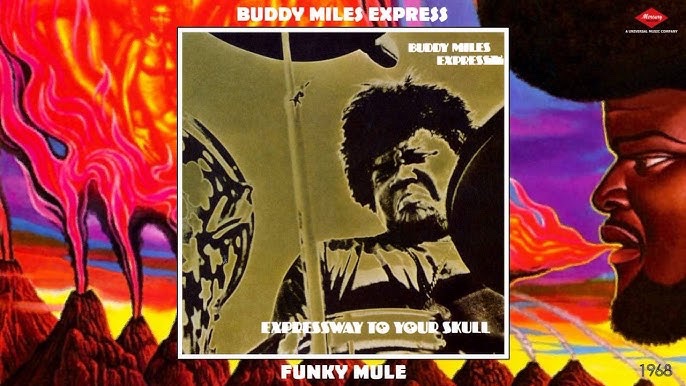
 Brace for the Obscure (60s rock)! / Off the Charts: 60s Rock Revelations😊